

Entertainment
England thrash South Africa by 10 wickets at Women’s World Cup

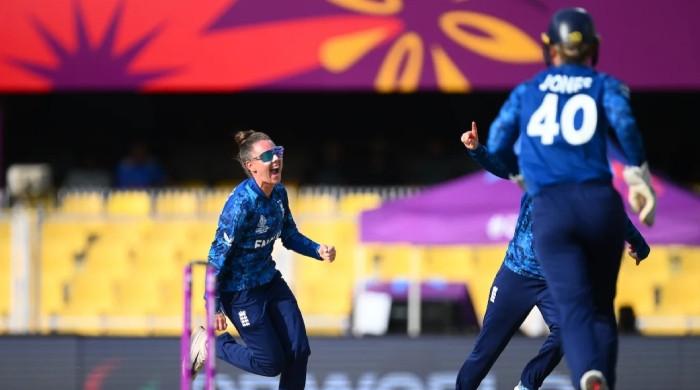
GUWAHATI: After bowling out the Proteas for a paltry 69 in just 20.4 overs, England’s openers Tammy Beaumont and Amy Jones made light work of the chase, cantering home in 14.1 overs.
Electing to bowl first, England rolled the dice early by tossing the new ball to spin, a move captains often shy away from in the power play. But left-arm tweaker Linsey Smith turned out to be the ace up their sleeve, exploiting a tacky surface that had South Africa groping in the dark.
“To get that start was very special. I only found out yesterday that I was opening the bowling and I was excited for the challenge. The conditions suited me well,” said Smith.
It was just Smith’s fifth ODI, but the 30-year-old is no stranger to international cricket, having been part of England’s T20 side since 2018. Now a permanent fixture in the 50-over team, her willingness to bowl in the danger zone of the power play could be a trump card for England going forward in this campaign.
Smith struck in each of her first three overs and was unlucky not to bag a fourth when a stumping chance off Sinalo Jafta went begging. Jafta clung on grimly for 22, the lone South African to reach double figures in a sorry tale of collapse.
It was the Proteas’ third lowest total in ODIs and their worst against England.
The chase was little more than a formality, though Jones survived a let-off on 31 when Masabata Klaas spilled a return catch. She finished unbeaten on 40 with Beaumont on 21 not out.
“Not the way we wanted to start the tournament. We’ve shown resilience in the past and we’ll bounce back,” South African skipper Laura Wolvaardt insisted as her batters were left searching for answers.
England’s dominance was such that Heather Knight, marking her 150th ODI appearance was not required to bat or bowl as her team-mates were so dominant against South Africa. She became only the second player from England to feature in 150 women’s ODIs.
The emphatic win vaulted England to the top of the points table with all eight teams now having played one game each.
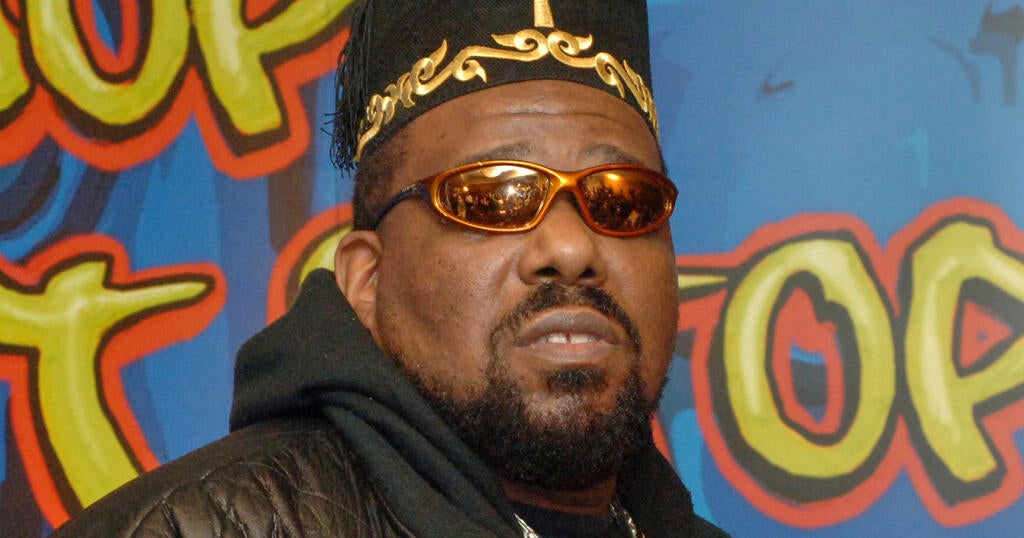
Afrika Bambaataa, a man widely considered one of the main pioneers of hip-hop, died in Pennsylvania of prostate cancer on Thursday, according to his lawyer. He was 68.
Bambaataa’s sudden death was met with an outpouring of condolences from friends, family and fans across the world, who paid tribute to his profound and unmistakable impact on one of the world’s most popular and politically influential music genres. But others have said that his impact was overshadowed in recent years after numerous men who knew Bambaataa when they were boys accused him of sexual abuse.
The rapper and producer is best known for breakthrough tracks like 1982’s “Planet Rock” and for founding the Universal Zulu Nation art collective.
“Hip Hop will never be the same without him — but everything hip hop is today, it is because of him. His spirit lives in every beat, every cypher and every corner of this globe he touched,” his talent agency, Naf Management Entertainment, wrote in an emailed statement on Tuesday.
Henny Ray Abrams / AP
Bambaataa was born Lance Taylor in 1957 in the South Bronx, and he came of age at a time when the New York City neighborhood was rapidly deteriorating after intensifying segregation and years of economic neglect. By the 1970s and 1980s, landlords were burning apartment buildings to collect insurance money instead of investing in repairs, leaving low-income, mostly Puerto Rican and Black families without socioeconomic opportunity.
Bambaataa had Jamaican and Barbadian heritage, and he was raised in a low-income public housing complex by his mother, according to an interview he gave Frank Broughton in 1998. He was exposed to music at an early age through his mother’s vinyl record collection.
The ability to repurpose and mix old hits became one of his signatures at the parties he began to throw in community centers across the neighborhood in the early 1970s, Bambaataa said in the interview. He was deeply inspired by the work of Kool Herc, who is often deemed the father of hip-hop.
Bambaataa and the parties where he DJ’ed swelled in popularity throughout the decade and well into the 1980s, when he released a series of electro tracks that helped shape the burgeoning hip-hop and electro-funk music movements. He was also one of the first DJs to use beat breaks, incorporating the iconic Roland TR-808 drum machine.
“We was playin’ everything, everything that was funky,” he said. He later added that what set his parties apart was that “other DJs would play they great records for fifteen, twenty minutes. We was changing ours every minute or two. I couldn’t have no breakbeat go longer than a minute or two.”
At that time, Bambaataa said in previous interviews that he was able to leverage his affiliation with the local street gang the Black Spades to form a group he called the Zulu Nation, a nod to a South African ethnic group that he drew inspiration from. His slogan eventually became known as “peace, love, unity and having fun,” and he said that he sought to use hip-hop’s ballooning popularity to resolve local gang conflicts.
Later, Bambaataa changed the name to the Universal Zulu Nation to signal the inclusion of “all people from the planet earth.”
“At the core our music made people feel like they belong to a movement and not a moment, our music offered Hope something positive to believe in, it gave people identity, unity, and a way out,” Ellis Williams, a producer known as Mr. Biggs, wrote in an email to the AP. Mr. Biggs was a member of the group Afrika Bambaataa and Soulsonic Force that included Bambaataa.
In recent years, numerous people have accused Bambaataa of sexual abuse.
In 2016, Bronx political activist and former music industry executive Ronald Savage accused Bambaataa of abusing him in 1980, when he was Savage was a young teen.
“I was scared, but at the same time I was like, ‘This is Afrika Bambaataa,’ ” Savage told the AP in 2016. At the time he recalled, in detail, that encounter and four others that he said followed.
Bambaataa has vehemently denied those allegations.
After Savage went public with his claims, numerous other men came forward to share similar experiences about Bambaataa. In June 2016, the Universal Zulu Nation released a public letter apologizing to “the survivors of apparent sexual molestation by Bambaataa,” saying that some members of the group knew about the abuse but “chose not to disclose” it.
“We extend our deepest and most sincere apologies to the many people who have been hurt,” the organization wrote.
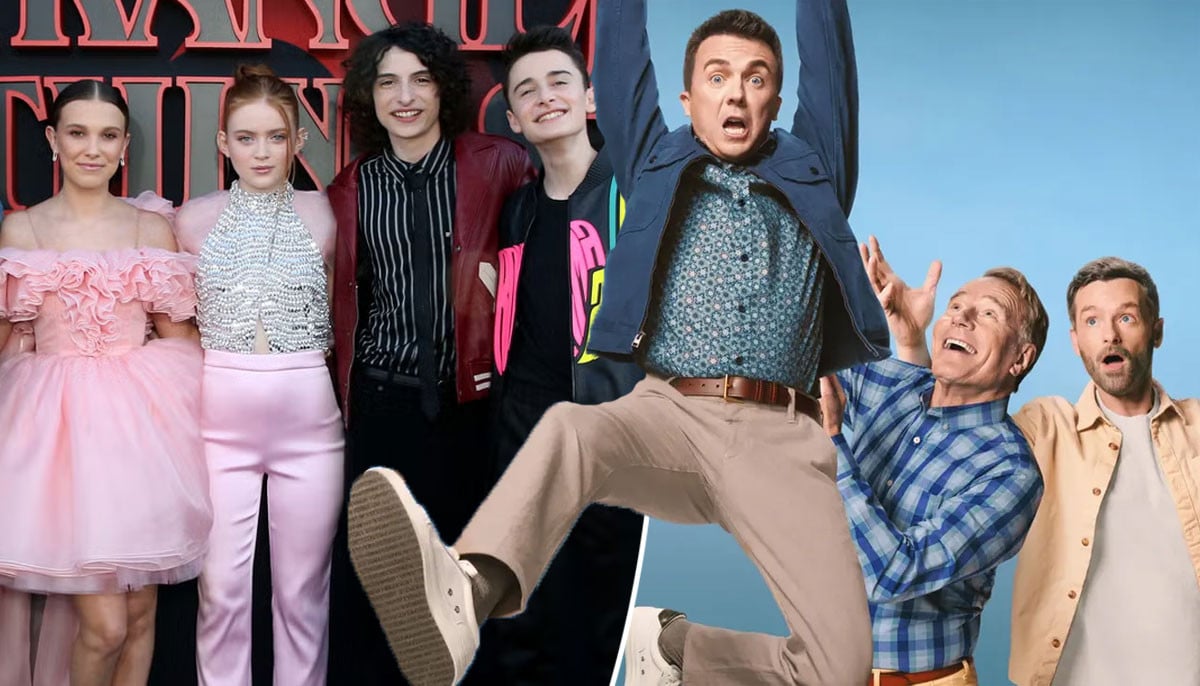
Fans of Malcolm in the Middle might have to do a double take at a major cameo in the finale of the show’s four-part revival.
While discussing Malcolm in the Middle: Life’s Still Unfair, all episodes of which are now available to stream on Hulu, creator Linwood Boomer revealed how “big fan” Finn Wolfhard‘s cameo happened.
“His agent called us and said, ‘Can Finn visit the set?’ We go, ‘Shit, yeah,’” recalled Boomer.
“He loves the show, he’s such a big fan of the show, and we’re like, ‘Well, there’s a part we haven’t cast yet. Does he wanna do that? I mean, it’s a small part.’ And he said, ‘F— yeah, he wants to do it.’ And we were like, ‘F— yeah, we want you to come, that’d be awesome.’”
In Malcolm in the Middle: Life’s Still Unfair, Frankie Muniz reprises his once-angsty teenage character, who is now a father of his own.
When his parents Hal (Bryan Cranston) and Lois (Jane Kaczmarek) demand his presence at their anniversary party, Malcolm is forced to stop avoiding his dysfunctional family while attempting to protect his daughter Leah (Keeley Karsten) from their chaotic dynamic.
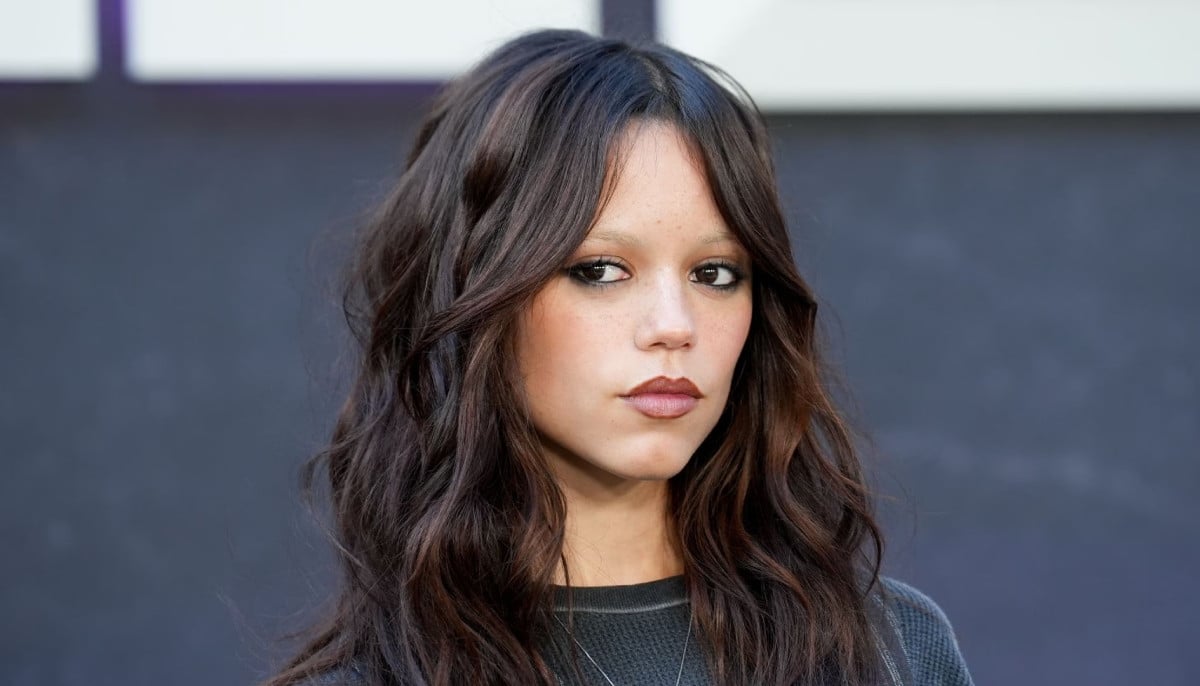
Imagine Jenna Ortega in Hereditary. Creepy, right? Also… almost real.
The Wednesday star just dropped a surprising confession while chatting with Kid Cudi on his podcast – she auditioned for Ari Aster’s now-iconic horror film when she was just 12.
“I think I auditioned for Hereditary, which obviously wouldn’t have made any sense, especially for, like, my disposition as a kid, so I understood,” she said.
She did not even have the full script – just a couple of mysterious pages.
“I didn’t know what I was looking at… it was like two pages of just ominous words that as a 12-year-old went over the head,” she explained. Still, something clicked: “I feel like this is an important movie.”
She was not wrong.
The role eventually went to Milly Shapiro, while Toni Collette led the film – and horror history was made.
Watching it later in theaters, Ortega had a full-circle moment: “This is the one that I said was going to be in.”
Rejection, though? Never her villain origin story. “I never really question it… what’s meant to be mine will come to me.”
In fact, she almost quit acting altogether – until YOU happened. On set, one experience, and suddenly: “Yeah, there’s no way I could let this go.”
Fast forward, she’s now booked, busy… and finally learning how to cook.
Hollywood almost lost her. Imagine that horror story.


Afrika Bambaataa, hip-hop pioneer and founder of Universal Zulu Nation, dies at 68

Sights and sounds from the second round of the Masters
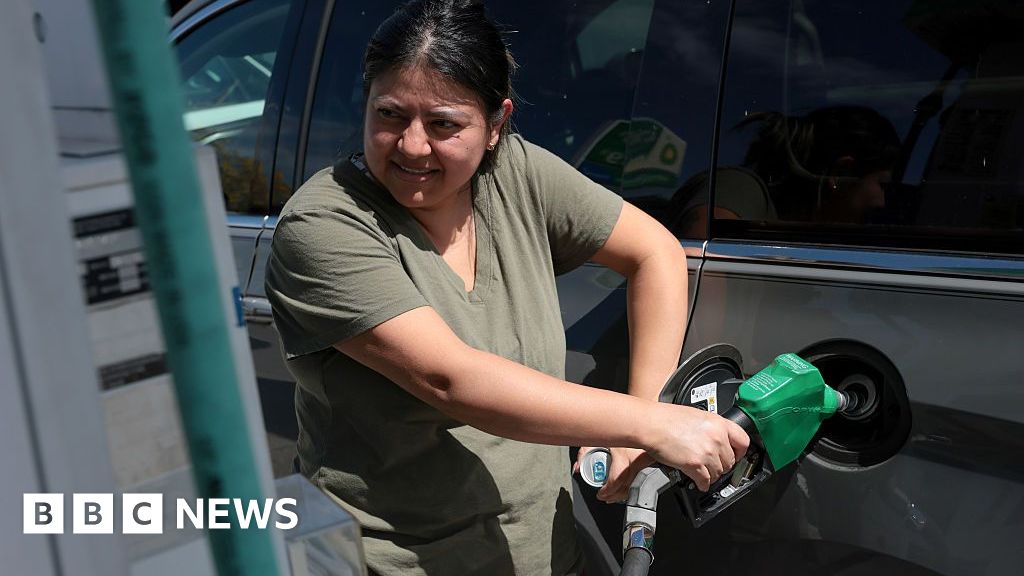
US inflation jumps to highest level in almost two years

-
 Business1 week ago
Jaguar Land Rover sees sales recover after cyber attack
-
Uncategorized1 week ago
[CinePlex360] Please moderate: “Trump signals p
-

 Entertainment7 days ago
Joe Jonas shares candid glimpse into parenthood with Sophie Turner
-

 Tech7 days ago
Our Favorite iPad Is $50 Off
-
 Sports7 days ago
UConn Final Four run could trigger a $50M furniture giveaway for Massachusetts-based Jordan’s Furniture
-
 Business7 days ago
Video: Why Is the Labor Market Stuck?
-

 Entertainment7 days ago
Blake Lively reacts to harassment claims dismissal against Justin Baldoni
-

 Politics7 days ago
Iran can sustain Strait of Hormuz closure for years, will cut US military logistics: Official