

Fashion
EU FMs agree on road map for launching digital euro currency

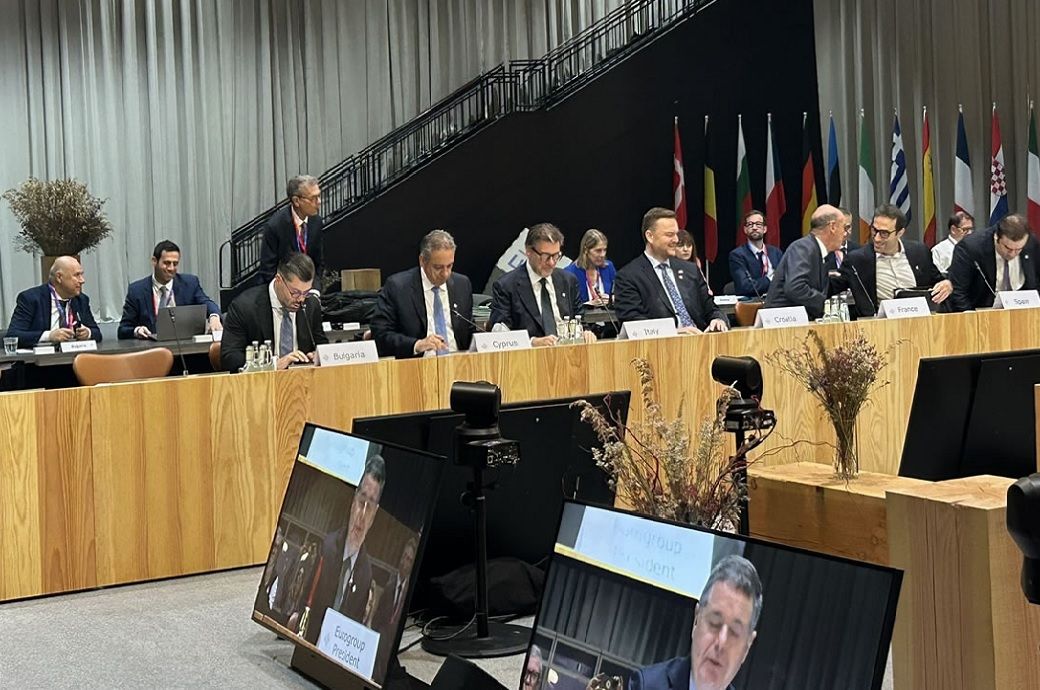
The decision is expected to give the ministers a say on whether a digital currency is issued and how many such euros each resident will be able to hold, which is seen as crucial for assuaging fears of a run on bank deposits.
EU Finance Ministers recently met in Copenhagen and agreed on a road map for launching a digital euro currency that may turn an alternative to the US-based credit card systems.
The decision is expected to give the ministers a say on whether a digital currency is issued and how many such euros each resident will be able to hold.
A compromise was reached on the procedure for setting the holding limit.
The meeting was also attended by ECB president Christine Lagarde and European Commissioner Valdis Dombrovskis.
“The compromise that we reached is that before the ECB makes a final decision in relation to issuance…there would be an opportunity for a discussion in the Council of Ministers,” Paschal Donohoe, who chaired meetings of Finance Ministers, told a joint press conference.
Donohoe, Lagarde and Dombrovskis also celebrated a compromise on the procedure for setting the holding limit, without offering details, global media reported.
Discussions on a digital euro gathered momentum this year as the EU is now keen to reduce its dependence on other countries in strategically important sectors.
But the ECB is yet to secure legislative approval for it, with lawmakers and bankers complaining it may erode banks’ coffers, may prove expensive or reduce privacy.
Though the European Commission proposed digital euro legislation in June 2023, the other two institutions that have to sign off on it, the European Parliament and the European Council, have yet to do so. The Council aims at wrapping up its side of the work by the year end.
“The digital euro is not just a means of payment, it is also a political statement concerning the sovereignty of Europe and its capacity to handle payment, including on a cross-border basis, with a European infrastructure and solution,” Lagarde told the press conference.
“The digital euro must guarantee the strategic autonomy and resilience of our financial system in the face of external threats. In short, it is a tool to defend our financial sovereignty,” said Italian Minister of Economy and Finance, Giancarlo Giorgetti, calling the joint Commission-ECB proposal “a solid compromise, which takes into account political and economic factors”.
Giorgetti feels having clear and appropriate spending limits on holdings is essential as “it will encourage their use, prevent them from becoming a sort of store of value, and allow for a meaningful response to private sector concerns about the potential impact on financial stability.”
Today “we have reached a political agreement on how to define the entire process between the ECB and the member states. The hope is that the digital euro project will materialise quickly,” he added.
Fibre2Fashion News Desk (DS)










Kenneth Straka, Senior Product Development Manager at Deckers Outdoor Corporation, said that Deckers places strong emphasis on sustainability, noting that founder John Luke often reminded the team that the French word for sustainability is durability. This idea aligned with discussions at the Global Fashion Summit, where the theme centred on “Building Resilient Futures” in the sustainable and circular economy.
Durability has helped UGG become one of the most sought-after boot brands and a key sales driver for Deckers, alongside its sportswear brand Hoka. “One of the things we think about in terms of circularity is making products that last a long time and remain with consumers throughout their lives. We want products that consumers can wear for ** or ** years,” Straka said in an interview with Fibre*Fashion on the sidelines of the Global Fashion Summit in Copenhagen.

In the Tiruppur market, cotton yarn prices increased by ****;*–* per kg in this week despite sluggish local demand. Prices were quoted higher because of limited supply from spinning mills. A trader from the Tiruppur market told Fibre*Fashion, “Domestic demand remained limited, but spinning mills are not relying solely on the domestic market for cotton yarn sales. They are focusing more on exports, where demand and prices remain attractive. Mills have raised yarn prices following higher ICE cotton prices and the CCI’s increase in auction base prices, although ICE cotton has witnessed a sharp decline over the past two days.”
In Tiruppur, knitting cotton yarn prices were noted as: ** count combed cotton yarn at ****;***–*** (~$*.**–*.**) per kg (excluding GST), ** count combed cotton yarn at ****;***–*** (~$*.**–*.**) per kg, ** count combed cotton yarn at ****;***–*** (~$*.**–*.**) per kg, ** count carded cotton yarn at ****;***–*** (~$*.**–*.**) per kg, ** count carded cotton yarn at ****;***–*** (~$*.**–*.**) per kg, and ** count carded cotton yarn at ****;***–*** (~$*.**–*.**) per kg.
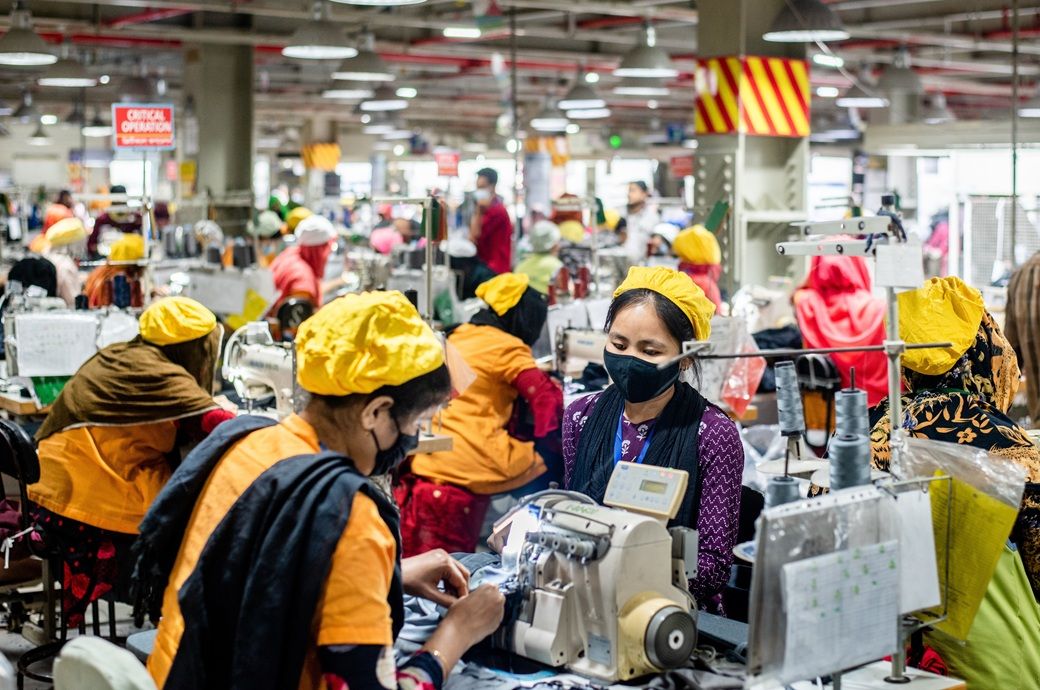
BGMEA president Mahmud Hasan Khan said they discussed export diversification within the garment sector, reopening of closed factories and many factories’ struggle for survival.
Representatives of two top Bangladesh garment trade bodies recently met PM Tarique Rahman and urged him to ensure uninterrupted power and energy supply, quick release of export receipts from banks, reopening of closed factories and easing of customs regulations.
BKMEA raised concerns about misuse of the bond facility and urged action against violators of bond licences.
104 factories have informed the BGMEA about their closure till now, Khan said. BGMEA will scrutinise these cases to identify the genuine reasons for the closures.
Following the scrutiny, the association will send recommendations for reopening these factories, as the government is working to open a Tk 200-billion fund to assist their revival.
BKMEA president Mohammad Hatem said some 400 factories closed in the last three years—nearly 300 of them due to non-cooperation from banks. He said banks release export receipts to exporters’ lien accounts, but delays in payment often force loans into default, leaving exporters unable to pay suppliers on time.
He also demanded uninterrupted supply of power and gas to industrial units as recent shortages of fuel oil have severely affected productivity, according to domestic media ooutlets.
Hatem raised concerns about misuse of the bond facility and urged action against violators of bond licences.
He also called for easing the rules of the National Board of Revenue, particularly customs procedures, to smoothen export and import processes and reduce lead times.
Fibre2Fashion News Desk (DS)


Military jets’ crew members safely eject after Idaho air-show collision

Pete Davidson’s friends support comic against ex Elsie Hewitt allegations

Indy 500: Counting Down The 10 Best Finishes In Race History

-

 Entertainment5 days ago
Conan O’Brien hat tricks as Oscar host
-

 Tech1 week ago
Could Contact-Tracing Apps Help With the Hantavirus? Not Really
-

 Tech1 week ago
I Tried the Best Captioning Smart Glasses, and Only One Leads the Pack
-

 Fashion5 days ago
Italy’s Zegna Group’s Q1 growth boosted by strong organic performance
-

 Sports1 week ago
Bobby Cox, legendary Atlanta Braves manager who led 1995 World Series champions, dead at 84
-

 Entertainment1 week ago
Martin Short: Facing tragedy with joy
-

 Entertainment1 week ago
Tom Brady gets back at Kevin Hart during Netflix roast
-

 Entertainment1 week ago
Martha Stewart: How to make an omelet