

Business
EU-India On Verge Of Historic Trade Pact: Why The Pact Is Called ‘Mother Of All Deals’, How It Will Transform Global Economy

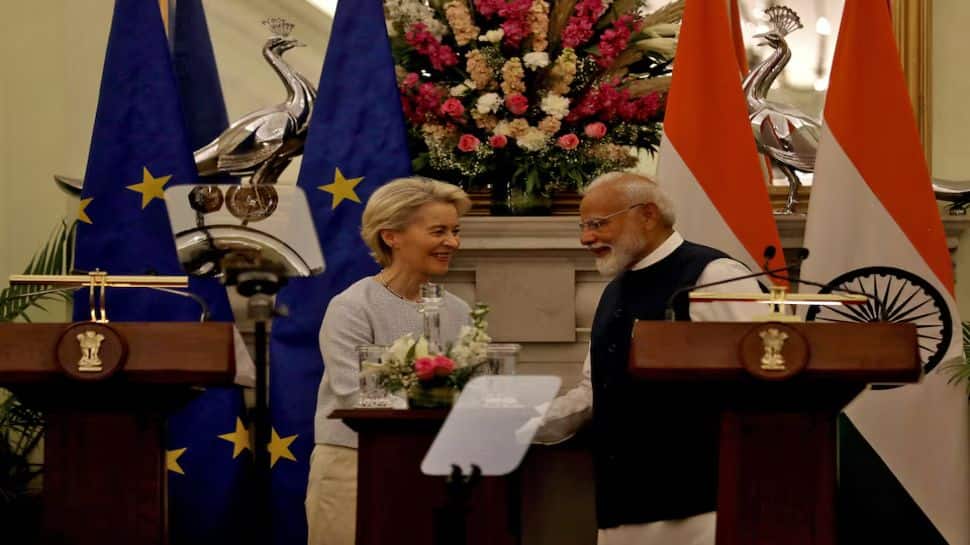
EU-India Trade Deal: European Commission President Ursula von der Leyen said negotiators had made substantial progress, with only final steps remaining before both sides can seal what she described as a potentially historic agreement.
The European Union (EU) and India are moving closer to finalising a free trade agreement, which could rank among the largest economic pacts ever attempted, hinted European Commission President Ursula von der Leyen at the World Economic Forum in Davos on Tuesday.
Her statements pointed to a deal, which has been years in the making and now appears to be approaching a decisive phase. “There is still work to do. But we are on the cusp of a historic trade agreement. Some call it the mother of all deals, one that would create a market of 2 billion people, accounting for almost a quarter of global GDP,” she said, as describing the EU’s push to diversify trade ties and reduce strategic vulnerabilities.
Why This Agreement Carries Global Weight
The proposed pact carries a scale that few trade agreements can match. A formal economic bridge between one of the world’s fastest-growing major economies and a bloc that is central to global commerce would change supply chains at a moment when countries are re-evaluating how and where they trade.
For Brussels, India has emerged as a key partner in its effort to reduce dependence on China and broaden engagement with economies seen as reliable and long term. For New Delhi, access to the EU’s 27-member market, its second-largest trading partner, would support export growth and strengthen India’s push to climb higher in global manufacturing and services.
Talks Back In Fast Lane
Discussions on an India-EU free trade agreement began in 2007 and then lost momentum for almost a decade. The discussions were revived in 2022, backed by fresh political commitment on both sides. Since then, negotiations have advanced along with the India-EU Trade and Technology Council, a forum established to align cooperation on critical technologies, digital rules and supply-chain resilience.
This parallel engagement has helped narrow regulatory differences and expanded the scope of talks beyond tariffs, giving negotiators room to address newer economic realities.
Why The Deal Is Moving Fast
Geopolitical developments are adding urgency. The EU is moving to diversify away from concentrated dependencies, and India is positioning itself as a central player in redesigned global supply networks.
Trade numbers highlight the momentum. Goods trade reached 124 billion euro in 2023, and services trade, led largely by digital and IT services, is estimated at 60 billion euro. Officials on both sides believe a comprehensive agreement could unlock far greater potential, especially in clean energy, pharmaceuticals, advanced manufacturing and digital services.
Issues Still On The Table
Optimism from Davos has not erased the remaining challenges. European negotiators continue to seek tariff reductions on automobiles, wines and spirits, sectors India has traditionally protected to shield domestic industries.
India is pressing for improved conditions for the movement of skilled professionals, an issue that is sensitive within the EU because visa and mobility policies differ across member states.
Sustainability standards, access to public procurement and regulatory alignment are also under discussion. These issues are politically sensitive; and therefore, von der Leyen stressed that “there is still work to do”.
Her visit to India early next week is expected to be crucial. Diplomats view the trip as a chance to settle the most difficult questions at the political level and provide clear direction to negotiators. The timing is important, coming ahead of a planned India-EU leaders’ meeting later this month, where both sides aim to show tangible progress and possibly point to a breakthrough.
Why The Deal Matters
A final agreement would stand among the EU’s most consequential trade achievements in recent years and strengthen India’s integration into global supply chains.
It would strengthen flows of goods, services and investment, offer more predictable market access, expand cooperation on technology and standards and send a strong signal of strategic alignment at a time when global trade is being changed.
A combined market representing nearly a quarter of global GDP would immediately place the EU-India pact among the most influential trade agreements in the world, with ripple effects far beyond Europe and South Asia.
Business
Life sciences lab real estate is clawing back from disaster. Here’s what that means for investors
Business
Trump administration in advanced talks for a rescue package for Spirit Airlines, source says

A Spirit commercial airliner prepares to land at San Diego International Airport in San Diego, California, U.S., January 18, 2024.
Mike Blake | Reuters
The Trump administration is in advanced talks for a financing package for Spirit Airlines as the carrier is facing the risk of a liquidation, according to a person familiar with the matter.
Spirit had been facing a potentially imminent liquidation, people familiar with the matter told CNBC last week, speaking on the condition of anonymity to discuss matters that had not yet been made public. The Dania Beach, Florida-based carrier in August filed for its second Chapter 11 bankruptcy in less than a year, after it struggled to increase revenue to cover rising costs.
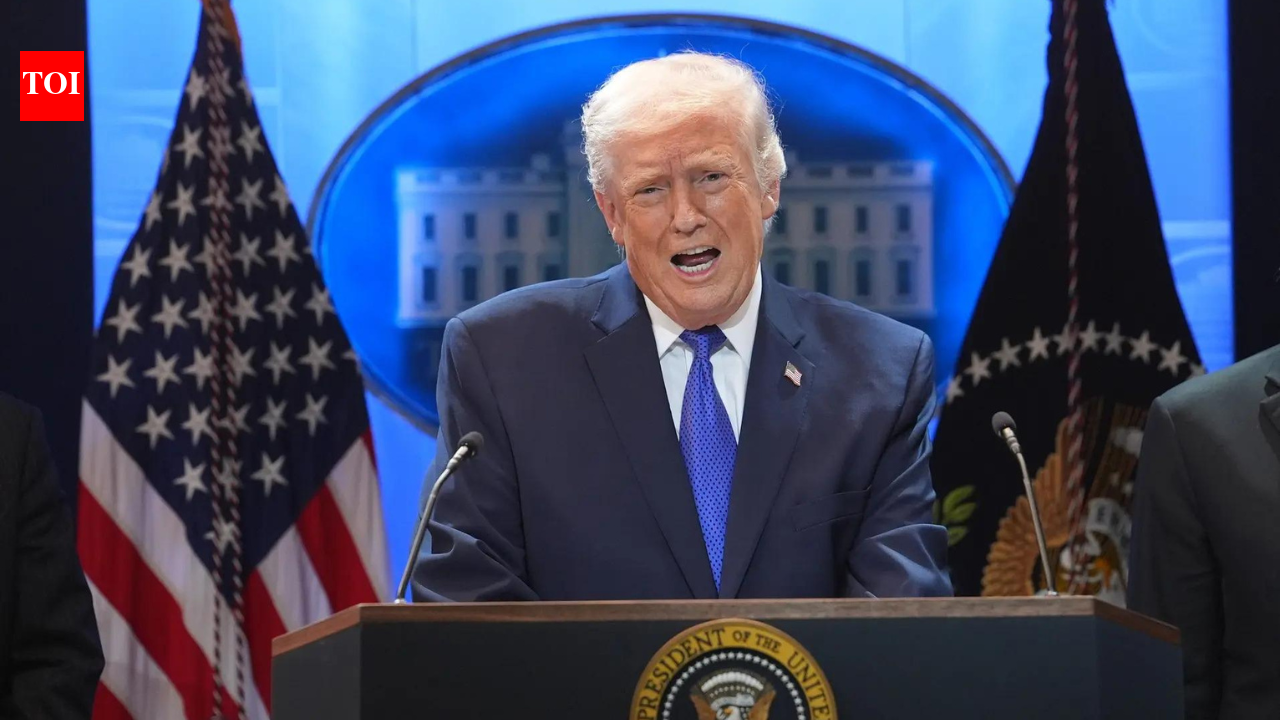
President Donald Trump hinted at potential government aid on Tuesday, telling CNBC’s “Squawk Box“, “Spirit’s in trouble, and I’d love somebody to buy Spirit. It’s 14,000 jobs, and maybe the federal government should help that one out.”
The White House didn’t immediately comment.
“We are hopeful that the government will recognize the needs for emergency funds especially in the current economic environment,” a spokesperson for the Associated of Flight Attendants-CWA, which represents Spirit’s cabin crews, said in a statement. “The last thing our economy needs is tens of thousands more people out of work and the last thing the travelling public needs is fewer choices in air travel.”
The terms of the financing deal weren’t immediately known. The Wall Street Journal earlier reported that the talks were in an advanced stage.
The U.S. airline industry accepted more than $50 billion in taxpayer aid to weather the Covid-19 pandemic, which is still its biggest-ever crisis, but those funds weren’t handed to one specific airline. Some of the aid gave the U.S. government stock warrants for airlines.
Airlines also received a government bailout following the Sept. 11, 2001, terrorist attacks, but that money was also for more than one company. The U.S. in 2008-2009 also bailed out the auto industry during the financial crisis and took stakes in manufacturers.
The Trump administration has taken equity stakes in some companies it deemed critical to national security like Intel and USA RareEarth, though Spirit stands out as it is in bankruptcy.
In February, Spirit said it expected to exit bankruptcy in late spring or early summer, telling a U.S. court that it would shrink and focus its planes on high-demand routes and travel periods. Pilot and flight attendant unions had also made concessions, including going on furlough in recent months, in a bid to help Spirit survive.
But jet fuel prices have nearly doubled in some parts of the U.S. since then, further adding to challenges for Spirit and the rest of the airline industry.
As a low-fare airline that also faces competition from larger carriers with their own no-frills, basic economy offerings, it has grown harder for Spirit to cover expenses. Spirit had introduced extra-legroom seats and other premium options to try to cater to higher-spending customers.


5 AI Models Tried to Scam Me. Some of Them Were Scary Good
Tesla widens India bet with launch of Model Y L – The Times of India

Life sciences lab real estate is clawing back from disaster. Here’s what that means for investors

-

 Fashion6 days ago
France’s LVMH Q1 revenue falls 6%, shows resilience amid Iran war
-

 Entertainment1 week ago
Is Claude down? Here’s why users are seeing errors
-

 Tech1 week ago
The Deepfake Nudes Crisis in Schools Is Much Worse Than You Thought
-

 Sports1 week ago
PSL 11: Peshawar Zalmi win toss, opt to field first against Quetta Gladiators
-

 Tech1 week ago
Bremont Is Sending a Watch to the Moon’s Surface
-

 Tech1 week ago
Human-machine teaming dives underwater
-
 Business1 week ago
BP sees ‘exceptional’ oil trading result as Iran war sends crude costs soaring
-

 Fashion1 week ago
What no one is saying about the 2026 apparel slowdown