

Tech
EU unveils implementation strategy for VAT in the Digital Age package


The European Commission has published its implementation strategy for the VAT in the Digital Age (ViDA) package, setting out actions to help businesses and Member States with the practical roll-out of upcoming VAT framework updates.
The European Commission has released its implementation strategy for the ViDA package, outlining actions and timelines for rollout.
ViDA introduces digital reporting, platform economy VAT rules, and single VAT registration to simplify compliance.
Expected benefits include €172– 214 billion (~$201.6–250.9 billion) over ten years, with €51 billion (~$59.8 billion) in business savings.
The ViDA package introduces new digital reporting requirements, targeted VAT adaptations for the platform economy, and a streamlined single VAT registration process, aiming to simplify compliance and reduce administrative burdens. The strategy provides a roadmap with key action points and timelines to ensure coordinated implementation across the EU.
By aligning ViDA measures with broader EU digital policies, the Commission seeks to enhance transparency in digital transactions and support businesses operating across borders, European Commission said in a release.
The approach also emphasises close monitoring of ViDA’s integration with other legislative efforts to maximise efficiency and strengthen the Single Market.
The Commission estimates that the ViDA package could generate economic benefits of €172– 214 billion (~$201.6–$250.9 billion) over ten years, including around €51 billion (~$59.8 billion) in savings for businesses. The strategy underscores the EU’s commitment to modernising its VAT system to meet the demands of the digital economy while boosting competitiveness.
Fibre2Fashion News Desk (HU)




 "EPFO, India Post Launch FREE Doorstep Digital Life Certificate For EPS Pensioners — How To Book Home Visit")
 "Indias Private Equity Market Rebounds 44% In Q4 2025: Report")



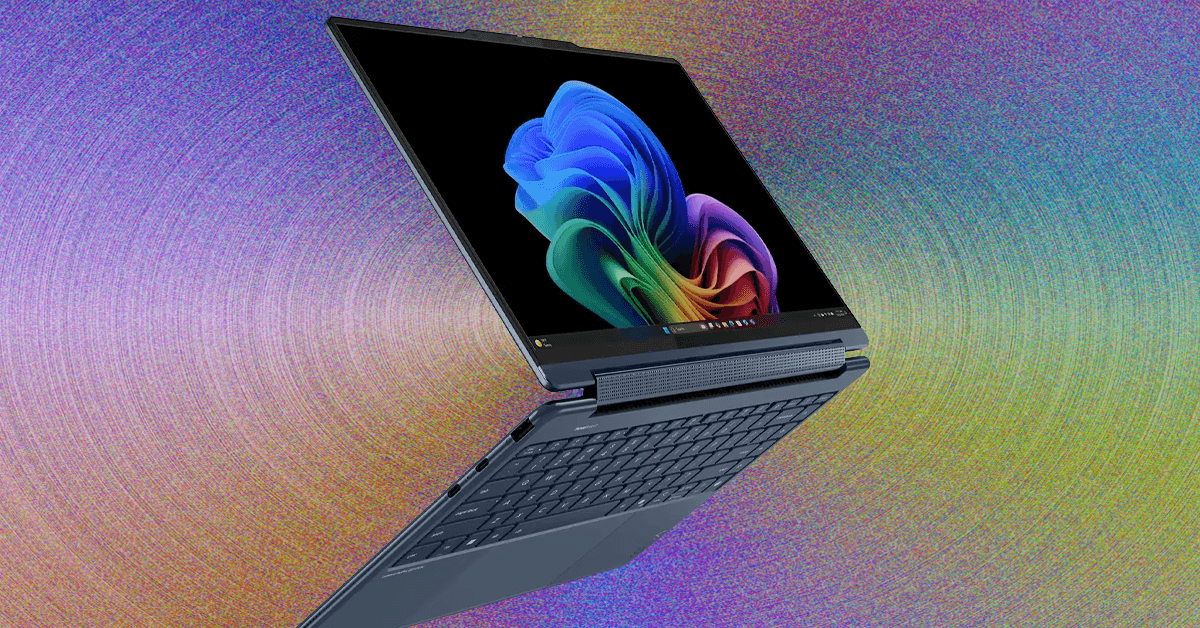
Compare Top 6 2-in-1 Laptops
Other 2-in-1 Laptops to Consider
Photograph: Luke Larsen
Framework Laptop 12 for $549: The Framework Laptop 12 (7/10, WIRED Recommends) isn’t just the smallest, cheapest, and most repairable Framework Laptop to come out. It’s also a 2-in-1. The device has a 360-degree hinge that lets you flip the screen all the way around. That’s fitting for a smaller device that’s meant to go everywhere with you. The Framework Laptop 12 is much more than that. Its accessibility is unbeatable, allowing you to upgrade and swap out virtually every component imaginable. That even includes the CPU and motherboard. The starting configuration is just $549, too.
Lenovo Chromebook Duet Gen 9 for $244: The Lenovo Chromebook Duet Gen 9 (8/10, WIRED Recommends) was one of my favorite pieces of tech when it came out for one reason: its size. This diminutive detachable laptop is only 11 inches, which sounds painful at first. But this isn’t a productivity machine. Rather, it’s better viewed as a companion you can take anywhere for light web browsing, writing, and watching videos.
Lenovo Flex 5i Chromebook Plus for $490: If you want to dip more into the budget range, we’re big fans of the Lenovo Flex 5i Chromebook Plus (8/10, WIRED Recommends). While it usually goes for $500, you’ll frequently find it on sale for under $400. That’s excellent value if all you need is solid performance, a web browser, and the occasional Android app.

Photograph: Luke Larsen
Lenovo IdeaPad 5i 2-in-1 for $650: You might think a 16-inch 2-in-1 laptop sounds silly. It’s not portable enough to use as a tablet, that’s for sure. But if you need a large touchscreen on your laptop, there’s reason to pick up something like the Lenovo IdeaPad 5i 2-in-1 (6/10, WIRED Review). The flexibility of having a 360-degree hinge is useful in all sorts of scenarios too. This 16-inch 2-in-1 balances price, portability, and performance with just enough finesse to be worth it.
Asus ProArt PZ13 for $1,300: Another detachable, the Asus ProArt PZ13 (6/10, WIRED Recommends) veers toward mimicking Microsoft’s Surface Pro playbook but at a much more affordable price. For $1,100, you get a Copilot+ PC that can go up to around 19 hours on a single charge. Unfortunately, the performance leaves much to be desired, and its three-piece design is confounding. Still, it’s a nice alternative to the Surface Pro if you’re dead set on the style.
Power up with unlimited access to WIRED. Get best-in-class reporting and exclusive subscriber content that’s too important to ignore. Subscribe Today.

Following its Silver Award win at the UK Digital Excellence Awards in the Standout Platform/ Technology/Tool category earlier in the year, this global recognition highlights Coats Digital’s ongoing mission to accelerate the digital transformation of the fashion supply chain. The company’s flagship SaaS platform, GSDCost, continues to redefine how brands and manufacturers plan production, set costs, and maintain ethical and efficient operations across complex supply chains.
Coats Digital’s GSDCost won the Software Innovation Award at the Global Digital Excellence Awards 2025, recognising its impact on digitalising fashion supply chains.
Judges praised GSDCost for combining scientific benchmarking, fair wage compliance, and SaaS scalability.
Coats Digital also unveiled GSDQuest, an AI-powered evolution for automated garment costing and ethical production planning.
The Global Digital Excellence Awards 2025 took place on 16th October as a virtual event organised by Don’t Panic Events. This prestigious programme recognises exceptional digital websites, campaigns, tools, and teams from around the world. The awards celebrate creative thinking, innovative use of data, technical excellence, pioneering research tools, and technologies that drive growth and efficiency. Judged by a panel of industry experts, the process is rigorous and transparent. The Global Digital Excellence Awards are part of the wider Digital Excellence Awards series, which also includes the UK Digital Excellence Awards.
Kunal Kapur, Managing Director, Coats Digital, said: “Winning the Software Innovation Award at the Global Digital Excellence Awards is a tremendous honour to the creativity, dedication, and expertise of our team. GSDCost tackles some of the fashion industry’s most complex challenges — from inconsistent costing and planning to embedding ethical standards across global supply chains. Being acknowledged on a global stage validates the impact our platform is already having and motivates us to continue driving innovation and transformation across the industry.”
Comment from Award Judges: “GSDCost is a powerful example of software driving both operational and social responsibility. This tool addresses a global industry challenge with clarity and purpose, combining scientific benchmarking, fair wage compliance and SaaS scalability. Backed by strong case studies and real-world results, it demonstrates true innovation in a sector long overdue for transformation.”
Building on the success of GSDCost, Coats Digital is investing in next-generation technology with the launch of GSDQuest, an AI-powered evolution of the platform. GSDQuest automates complex garment costing processes, generating highly accurate Bills of Labour in seconds from garment images and tech packs. This enables brands, manufacturers, and suppliers of all sizes to plan production faster, make data-driven decisions, and maintain ethical compliance across their supply chains. By combining the proven scientific methodology of GSDCost with AI-driven efficiency, GSDQuest represents the future of intelligent, transparent, and scalable garment costing.
Adrian Elliott, CEO Apparel & Group Commercial Officer, Coats Group, added: “We are absolutely delighted with this prestigious accolade for software innovation. At Coats Digital, we are committed to shaping the future of the fashion supply chain through strategic investment in next-generation technology. GSDCost has already helped brands and manufacturers work more efficiently, plan capacity with confidence, and uphold ethical standards. With the launch of GSDQuest, we are extending these capabilities with AI-driven intelligence, enabling faster, more accurate decision-making, improved collaboration across the supply chain, and equipping businesses to respond more effectively to an increasingly complex and dynamic industry.”
Note: The headline, insights, and image of this press release may have been refined by the Fibre2Fashion staff; the rest of the content remains unchanged.
Fibre2Fashion News Desk (MS)

AIDA Cruises has engaged Cisco Services to deploy Wireless Broadband Alliance (WBA) OpenRoaming technology across its fleet.
The cruise industry is currently experiencing rapid growth, but from a networking perspective, ships operate in some of the most challenging environments and remote locations in the world, and with Wi-Fi a staple of any modern holiday offering, AIDA Cruises’ wireless network needs to operate 24/7, span 12-20, manage densely packed connections, and sustain them as users move around the ship.
The WBA’s overall stated aim is to drive “seamless”, interoperable service experiences via Wi-Fi within the global wireless ecosystem, and AIDA is the first cruise brand to introduce OpenRoaming at sea, offering what it calls “seamless” Wi-Fi for staff and passengers as they move around ships, wherever they are in the open sea.
OpenRoaming is designed to offer an automatic and secure connection of billions of devices to millions of Wi-Fi networks, providing a global standards-led approach, removing public-guest Wi-Fi connectivity barriers, and bringing greater convenience and security to the wireless ecosystem.
The WBA insists that OpenRoaming can simplify Wi-Fi, much like the cellular roaming experience. It says companies that join WBA OpenRoaming can allow end-users to automatically connect on any Wi-Fi network managed by a federation member. This, it claims, creates a world where Wi-Fi users move from one network to another without needing to constantly re-register or sign in.
The OpenRoaming framework and standards are based on a number of key features. For cloud federation, this consists of a global database of networks and identities, dynamic discovery and the Wireless Roaming Intermediary Exchange.
AIDA Cruises is using the Cisco Wireless family of products to enable OpenRoaming across 11 ships, including Cisco Wireless 9800 series controllers and the Cisco Wireless 9100 series access points. The OpenRoaming AIDA network supports operational systems, entertainment and safety. It also provides critical guest services including the onboard information portal for daily programmes, next port information, onboard chat and booking services.
Implemented as part of a broader modernisation of AIDA Cruises’ network architecture, the WBA says OpenRoaming can enable a “frictionless” user experience by eliminating repeated logins in future, supporting seamless, secure Wi-Fi access for passengers and ship staff.
Passengers can connect instantly to Wi-Fi using pre-existing profiles, removing the need for login screens, and enjoy a consistent connectivity experience as they move around the ship. Users with OpenRoaming natively on their phone, via an existing profile or their preferred app, can access Wi-Fi automatically with no usernames or passwords, safe in the knowledge that the connection is secure.
OpenRoaming is also claimed to support uninterrupted streaming and social sharing for guests, and reliable connectivity for crew workflows throughout vessels, including mission-critical tasks such as servicing and safety-related tasks.
The onboard experience was validated on the first ship fitted out as part of a 14-day repeatable dry-dock programme, in which AIDA and Cisco Services executed a complete network overhaul within a tight window of opportunity before returning the ship to sea.
Commenting on the deployment, AIDA Cruises CIO Gordon Poppe said: “We’re in the middle of the open ocean, but we actually exceed the connection standards you would experience in many places on land. If you’re on a FaceTime call and you move around the ship from deck to deck, you will always be connected and won’t drop. Connectivity is not only about being connected to the internet, but it’s also being able to connect to our digital touch points on board, from the minute you enter the ship.”
Tiago Rodrigues, president and CEO of the Wireless Broadband Alliance, added: “Cruise guests want connectivity that feels effortless and secure from the moment they step onboard to access ship services and use their own devices. With their OpenRoaming profile, they can even seamlessly connect to OpenRoaming-enabled Wi-Fi at each port and city they visit.
“AIDA Cruises is showing how open, interoperable Wi-Fi roaming can remove friction at scale, improve the guest experience and support operational performance in one of the most demanding connectivity environments.”


Why secrecy? PTI adamant on personal doctors access after Imran administered eye injection

We’ve Tested Dozens of 2-in-1 Laptops. Here Are the Very Best

Home Depot tops earnings estimates for the first time in a year as demand for projects remains muted

-

 Entertainment7 days ago
Queen Camilla reveals her sister’s connection to Princess Diana
-

 Tech1 week ago
Rakuten Mobile proposal selected for Jaxa space strategy | Computer Weekly
-

 Politics7 days ago
Ramadan moon sighted in Saudi Arabia, other Gulf countries
-

 Entertainment1 week ago
Robert Duvall, known for his roles in "The Godfather" and "Apocalypse Now," dies at 95
-

 Politics1 week ago
Tarique Rahman Takes Oath as Bangladesh’s Prime Minister Following Decisive BNP Triumph
-
 Business1 week ago
Tax Saving FD: This Simple Investment Can Help You Earn And Save More
-

 Tech1 week ago
Businesses may be caught by government proposals to restrict VPN use | Computer Weekly
-

 Sports1 week ago
Usman Tariq backs Babar and Shaheen ahead of do-or-die Namibia clash