

Fashion
European luxury groups hedge bets on predicting China comeback


By
Reuters
Published
October 22, 2025
Europe’s luxury companies, from LVMH to Hermes and L’Oreal, are tentatively pointing to signs of a revival in China, but are also cautious about calling the turn on one of their biggest markets after a two-year slump.
The $400 billion luxury sector has been hit hard by the downturn in China, which accounts for around a third of global luxury sales as Chinese shoppers snapped up Louis Vuitton and Birkin bags in Shanghai malls as well as in New York and London.
Now there are glimmers of hope that the worst may be over even though China’s troubles continue, with economic growth that is likely to have slowed to a one-year low in the third quarter as a prolonged property downturn and trade tensions hit demand.
LVMH’s more upbeat sales report last week spurred an $80 billion rally in luxury shares on optimism about a China revival, but luxury companies reporting this week have painted a mixed picture.
“I’m always very careful about China because one quarter doesn’t make a trend. But overall the market has gone into positive territory,” L’Oreal chief executive Nicolas Hieronimus said after the company reported its first China growth in two years, though missed sales forecasts, sending its shares down around 6% on Wednesday.
Hieronimus said the key driver had been the beauty group’s luxury division, which includes high-end brands like Lancome and Helena Rubinstein skincare. He said investors should not get over-excited given China’s tough economic conditions. The big focus was the mega Singles Day shopping festival on November 11. “Many times at the end of the year it’s between China’s 11/11 and the holiday season in America and Europe. So fingers crossed,” he said.
French luxury goods group Hermes on Wednesday flagged a “very slight improvement” in China, but its third-quarter sales came in below expectations, hitting its shares which fell more than 4%.
Eric du Halgouet, executive vice-president Finance, told analysts that the important October Golden Week holiday in Mainland China had seen “more dynamic activity”.
“We can’t extrapolate to the entire quarter, but it’s an encouraging sign,” he said, adding there had been a marginal improvement in foot traffic helped by a focus on higher-value products from more expensive watches to jewellery. “That said, we must remain cautious,” he added. “There are some positive signs, such as the evolution of stock markets and the stabilisation of the real estate market in certain major cities. These are elements that are encouraging us.”
The focus on high-end luxury could curb the benefits for more mainstream luxury and consumer product companies, which are under pressure in China as consumers shift to local brands and tighten their belts given general economic uncertainty. Deutsche Bank said in a research note that companies like L’Oreal had limited upside in China with credit growth waning, and growth skewed towards certain provinces.
LVMH has been the most bullish so far on China. The luxury group’s shares had their best day in over two decades last week after signs of improved demand in mainland China where sales turned positive for the first time this year.
Hermes, Gucci-owner Kering, Richemont, Burberry and Moncler all gained on hopes the industry’s two-year downturn was bottoming out.
Cecile Cabanis, LVMH chief financial officer, said last week China was stabilising, with mid-to-high single-digit local growth. Chinese tourist spending was still sliding but less than before. There were signs of restocking of cognac brand VSOP.
She said Vuitton had seen a “very steep improvement” in China sales, while Dior and Sephora had seen a better performance.
“It’s very encouraging,” she said, though highlighted that the economic picture in China had not changed fundamentally.
“We still have the real estate market, which is complex. We still have a high unemployment,” Cabanis said. “So we consider it’s still going to take time until we have a rebound on China as a whole.”
© Thomson Reuters 2025 All rights reserved.









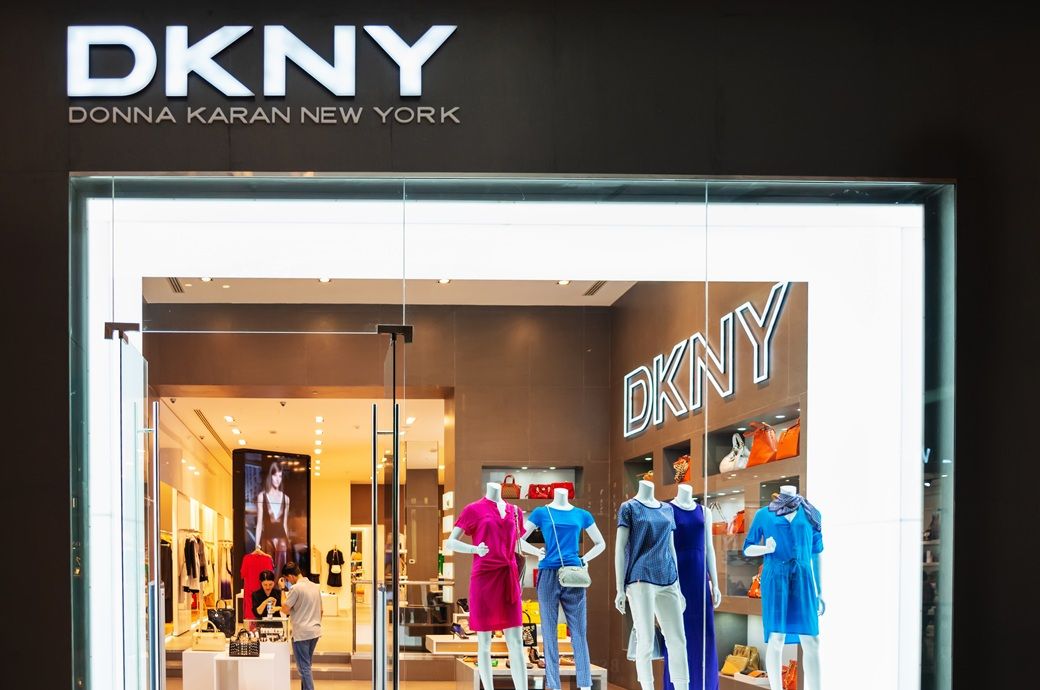
Despite the revenue drop, the company said its core owned brands recorded mid-single-digit growth, supported by stronger full-price sell-through and improving global brand relevance.
G-III Apparel Group has reported net sales of $2.96 billion in FY26, down 7 per cent YoY due to $254 million in lost PVH brand sales.
Net income fell to $67.4 million.
Owned brands posted mid-single-digit growth.
The company expects FY27 sales of about $2.71 billion amid exits from Calvin Klein and Tommy Hilfiger businesses, while focusing on cost savings and margin expansion.
Net income for FY26 fell to $67.4 million, or $1.51 per diluted share, compared with $193.6 million, or $4.20 per share, in the previous year. Results included $46.1 million in non-cash asset impairment charges and $17.5 million in bad debt expense, largely related to the bankruptcy of Saks Global, G-III said in a press release.
On an adjusted basis, non-GAAP diluted earnings per share (EPS) were $2.61, compared with $4.42 in fiscal 2025.
Meanwhile, in the fourth quarter (Q4), net sales decreased 8.1 per cent to $771.5 million from $839.5 million in the same quarter a year earlier. The company reported a net loss of $31.9 million, or $0.76 per share, in the fourth quarter, compared with net income of $48.8 million, or $1.07 per share, in the prior-year period. Quarterly results included $45 million in non-cash asset impairment charges and $17.5 million in bad debt expense linked mainly to the Saks Global bankruptcy.
Non-GAAP diluted EPS for the quarter were $0.3, compared with $1.27 in the same period last year.
G-III ended fiscal 2026 with cash and cash equivalents of $406.7 million, up from $181.4 million a year earlier. Inventories declined 3.8 per cent to $460 million. During the year, the company returned $54 million to shareholders, including $49.8 million through share repurchases and $4.2 million in dividends. To improve profitability, G-III has launched operational initiatives expected to deliver annual run-rate cost savings of $25 million by fiscal 2028.
Morris Goldfarb, G-III’s chairman and CEO said, “Fiscal 2026 was a pivotal year for G-III. The strength and global recognition of our brands, together with a disciplined operating model and strong balance sheet, enabled us to deliver solid performance despite a challenging environment. For the full year, our go forward portfolio produced strong results, led by our key owned brands, with higher quality revenue, improved full-price sell-throughs, and accelerating global relevance throughout the year. I am proud of the results our team delivered and the meaningful progress we made advancing our long-term strategy.”
Looking ahead, the company expects fiscal 2027 (FY27) net sales of around $2.71 billion, reflecting the loss of approximately $470 million in sales from Calvin Klein and Tommy Hilfiger businesses. Net income for FY27 is projected between $88 million and $92 million, translating to EPS of $2-2.1, compared with $67.4 million and $1.51 per share in FY26. For the first quarter of FY27, G-III expects net sales of about $530 million, down from $583.6 million in the same quarter last year, and forecasts a net loss of $13-18 million, or $0.3-0.4 per share.
Goldfarb added, “Looking to fiscal 2027, we are building on the momentum of our go-forward portfolio, which we expect to deliver high-single digit growth for the year, helping to offset the significant lost sales as we exit the Calvin Klein and Tommy Hilfiger businesses. We are focused on driving gross margin expansion while streamlining our cost structure to unlock productivity and profitability across the business. With over $400 million of cash on the balance sheet, we enter fiscal 2027 from a position of strength, giving us the flexibility to invest in our own business as well as strategic opportunities, while continuing to return capital to shareholders.”
Fibre2Fashion News Desk (SG)
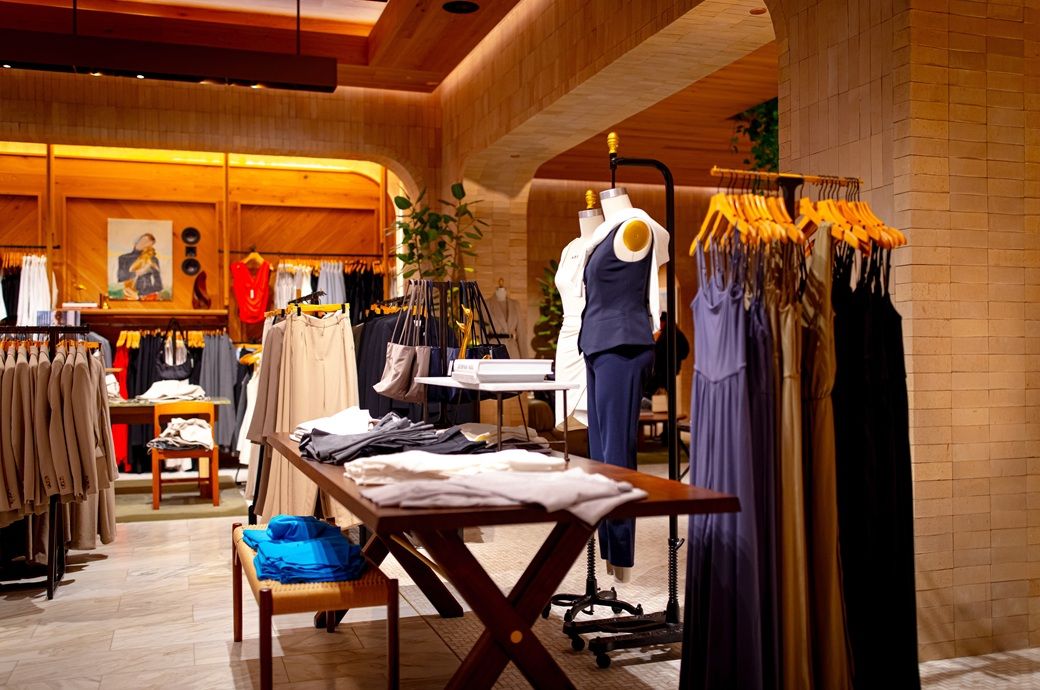
According to advance estimates released by the US Census Bureau, total retail and food services sales reached $733.5 billion in January 2026. The figure was down 0.2 per cent from December 2025 but rose 3.2 per cent compared with January 2025.
US retail trade sales in January this year were down by 0.2 per cent month on month (MoM) and up by 3 per cent year on year (YoY), according to advance estimates by the Census Bureau.
Sales at US apparel and clothing accessories increased by 4 per cent YoY in the month, while sales at furniture and home furnishing stores decreased by 3.5 per cent YoY.
Retail trade sales also declined 0.2 per cent from the previous month but increased 3 per cent on an annual basis, indicating stable consumer demand across several segments.
For the three-month period from November 2025 to January 2026, total retail sales increased 2.9 per cent compared with the same period a year earlier, showing moderate growth in consumer spending during the holiday and post-holiday season.
Among retail categories, nonstore retailers—which include e-commerce platforms—recorded the strongest growth, with sales rising 10.9 per cent YoY.
The monthly estimates are adjusted for seasonal variation and holiday and trading-day differences but are not adjusted for price changes, the Census Bureau said.
Fibre2Fashion News Desk (DS)
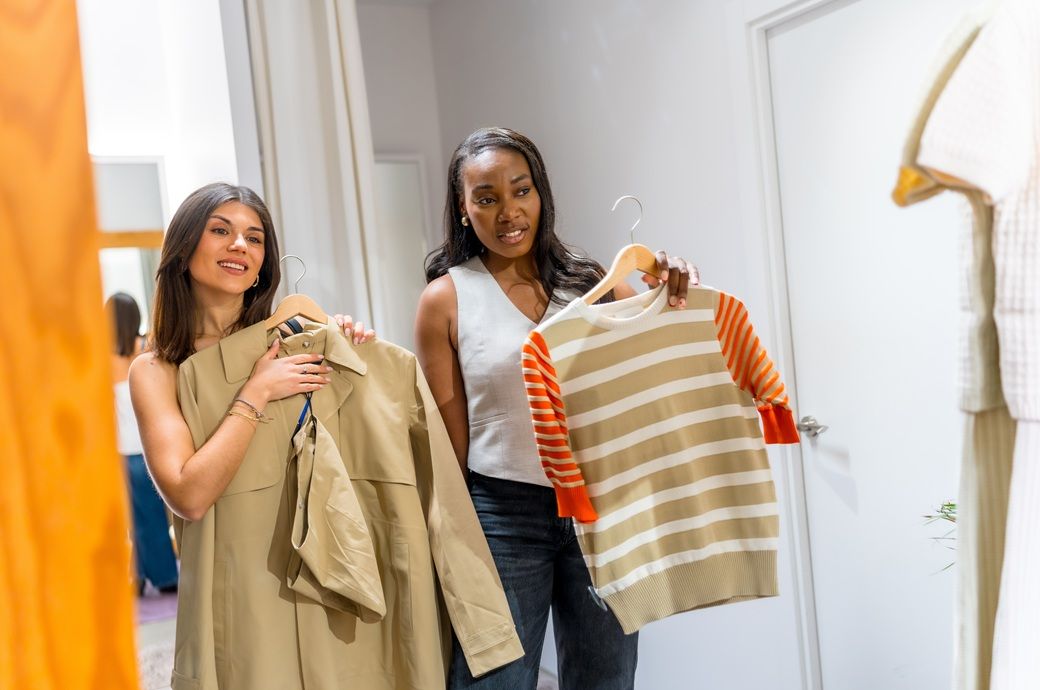
During the quarter, active clients totalled 2.29 million, reflecting a 0.8 per cent decline quarter on quarter (QoQ) and a 3.5 per cent decrease YoY. However, net revenue per active client rose 7.4 per cent YoY to $577, indicating higher spending levels among existing customers.
Stitch Fix has reported net revenue of $341.3 million in Q2 FY26, up 9.4 per cent YoY, despite active clients falling 3.5 per cent to 2.29 million. Revenue per active client rose 7.4 per cent to $577.
Gross margin stood at 43.6 per cent, while net loss narrowed to $2.7 million.
The company expects FY26 revenue of $1.33-1.35 billion with positive free cash flow.
The company reported a gross margin of 43.6 per cent, down 90 basis points YoY, while net loss narrowed to $2.7 million, translating into a net loss margin of 0.8 per cent and a diluted loss per share of $0.02. Meanwhile, adjusted EBITDA reached $15.9 million, representing a 4.7 per cent margin, Stitch Fix said in a press release.
Operational performance also reflected stable liquidity. Net cash from operating activities stood at $7.3 million, while free cash flow totalled $3.4 million during the quarter. The company ended the period with cash, cash equivalents and investments of $240.5 million and no outstanding debt.
For the third quarter (Q3) of fiscal 2026 FY26) ending May 2, 2026, Stitch Fix expects net revenue between $330 million and $335 million, representing 1.5 per cent to 3.1 per cent YoY growth. The company projects adjusted EBITDA between $7 million and $10 million, with a margin of 2.1 per cent to 3 per cent.
“Our client experience enhancements, improvements to the quality and breadth of our assortment, and new AI features are resonating and driving increased client engagement,” said Matt Baer, CEO of Stitch Fix. “We delivered a strong Q2 with 9.4 per cent revenue growth year over year. We are gaining market share and strengthening our role as our clients’ retailer of choice for apparel, footwear and accessories as we remain focused on offering the most client-centric and personalised shopping experience in apparel retail.”
Looking ahead to the fiscal 2026 (FY26), Stitch Fix forecasts net revenue in the range of $1.33 billion to $1.35 billion, reflecting 5 per cent to 6.5 per cent YoY growth. The company expects adjusted EBITDA between $42 million and $50 million, corresponding to a margin of 3.2 per cent to 3.7 per cent.
The company also expects gross margin between 43 per cent and 44 per cent in FY26, while advertising expenses are projected at 9 per cent to 10 per cent of revenue. Stitch Fix anticipates positive free cash flow for the full fiscal.
Fibre2Fashion News Desk (SG)


US’ G-III Apparel’s FY26 sales fall 7% to $2.96 bn

Iran’s top security official, Ali Larijani, martyred in American-Israeli aggression

Humanscale’s New $15K Lounge Chair Is the Ultimate Home Office Workstation

Stock market crash today (March 12, 2026): Nifty50 opens below 23,600; BSE Sensex down over 900 points on continuing US-Iran war – The Times of India

Intertextile Shanghai 2026: Fringe events spotlight market trends

What time will NASA’s 600 kg satellite crash to Earth today— 14 years after launch?

-
Business6 days ago
Stock market crash today (March 12, 2026): Nifty50 opens below 23,600; BSE Sensex down over 900 points on continuing US-Iran war – The Times of India
-
 Fashion1 week ago
Intertextile Shanghai 2026: Fringe events spotlight market trends
-
 Entertainment1 week ago
What time will NASA’s 600 kg satellite crash to Earth today— 14 years after launch?
-
 Fashion1 week ago
German brand Adidas posts 13% revenue growth in 2025
-

 Fashion1 week ago
UK’s Topshop unveils Tolu Coker capsule collection
-
 Tech7 days ago
Meta Developed 4 New Chips to Power Its AI and Recommendation Systems
-
 Fashion1 week ago
Bangladesh Brand Forum, BGMEA sign MoU to transform RMG sector
-
 Business1 week ago
8th Pay Commission: How Much Will Central Govt Employees’ Salaries Rise? What We Know So Far