

Tech
Europe’s data protection supervisors warn over plans to ‘narrow’ privacy rights | Computer Weekly

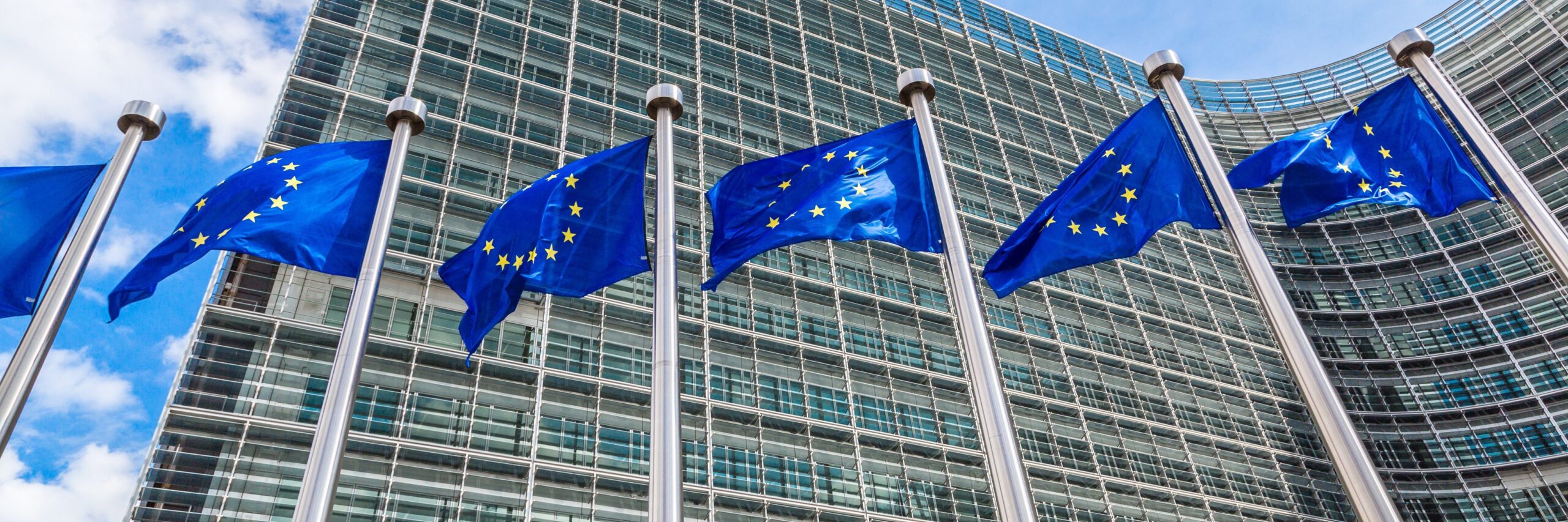
Europe’s data protection supervisors have warned that proposals by the European Commission to reform privacy law by narrowing the definition of personal data could erode privacy rights for EU citizens.
The regulators said in a joint response with the European Data Protection Board, that the proposed changes raise “significant concerns” and could adversely affect the level of protection for individuals’ personal data.
The warning comes as the European Commission presses ahead with proposals to reform a raft of EU data protection laws through a “Digital Omnibus” regulation which it says will simplify compliance for businesses and will boost EU competitiveness.
The European Data Protection Board, and national European Data Protection Supervisors warned in a joint opinion that some of the proposed measures could damage privacy rights of individuals, create legal uncertainty and make data protection law more difficult to apply.
The contested proposals include changes to the definition of personal data that would weaken privacy rights by allowing organisations to treat personal data as non-personal data if they processed it in a way that did not identify individuals.
Proposals ‘go beyond’ European law
Although the proposals had been welcomed by many data protection practitioners as a way to simplify compliance with data protection and privacy regulations, the regulators have sounded a warning bell.
They “strongly urge” legislators not to adopt the proposed changes to personal data, arguing that they “go far beyond a targeted or technical amendment” and go far beyond EU case law by “significantly narrowing the concept of personal data”.
The regulators also raise concerns about proposals that could water down individual’s rights not to be subject to automatic decision-making by AI or software through a proposed “exhaustive list” of cases where automatic decision making would be allowed.
Another proposal that would allow the European Commission new powers to determine whether pseudonymized data should no longer be classed as personal data, has also sparked calls for clarification.
The regulators warn that proposals to restrict the right of people to make subject access requests to people motivated by ‘data protection’ concerns is not compatible with EU law.
If implemented, this proposal is likely to exclude access requests made by journalists, academics or policy makers, for non-data protection purposes, such as journalistic or academic research.
They also call for the Commission to fine-tune proposals that would allow organisations to use special categories of data – including data on political opinions, religious beliefs, trade union membership, health and sexual orientation – when they are used in “incidental” and “residual” way to train our use AI systems.
Reporting data breaches simplified
The EDPB and the data protection supervisors support many of the EU’s proposals, including plans to make reporting data breaches less painful for companies.
The European Commission proposes raising the threshold of risk before companies need to make a notification and extending the deadline to file a notification from 72 to 96 hours.
“This change is not expected to substantially affect the level of protection for data subjects but would significantly reduce the administrative burden for controllers, given that they would only have to notify data breaches that are likely to result in a high risk to the rights and freedoms of data subjects,” they said.
Another proposal to offer alternative ways for people to consent to cookies to avoid “consent fatigue” and a “proliferation of cookie banners,” for example by consenting to cookies once on a particular computer, have also been welcomed.
However the regulators remain concerned about the proposed changes to the definition of personal data.
The European Data Protection Supervisor, Wojciech Wiewiórowski said, “These changes are not in line with the Court’s case law and would significantly narrow the concept of personal data.”
Anu Talus, chair of the European Data Protection Board, said any changes to EU Data protection law must bring legal certainty while maintaining a high level of protection of individual rights and freedoms.
“We strongly urge the co-legislators not to adopt the proposed changes to the definition of personal data. These changes are not in line with the Court’s case law and would significantly narrow the concept of personal data,” she added.
Isabelle Roccia, managing director for Europe for IAPP, a professional association with 90,000 members, said that privacy and data protection professionals were in favour of the EU’s proposals.
“The Commission proposal to narrow the scope of personal data definition was welcomed by many practitioners as a sign of pragmatism in the interpretation of the GDPR. If adopted, it would have consequential impact in easing many friction points across contractual obligations and data transfer rules among others,” she said.
“With this joint opinion, EDPS and EDPB are signaling that they want to preserve the conservative and data-subject-first approach they have established in the past decade,” she added.
She said that business leaders would also welcome legal certainty around the legal basis for when developers can use “legitimate interest” to process personal data to train AI models.
Commission proposals benefit US big tech
The campaign group, noyb, said that the “Digital Omnibus” proposed sweeping changes to the GDPR and the ePrivacy Directive that were disguised as simplification measures.
The group claims that the changes would not help EU businesses that have to complete “useless” paperwork to comply with data protection laws, but would mainly be useful to big US tech companies.
Max Schrems, privacy lawyer and honorary chair of noyb, said, “the independent authorities have called out key changes for what they are: neither ‘technical change’ nor ‘simplification’, but limitations of the right to data protection for EU residents”.
Tech
The Catastrophic Swatch x Audemars Piguet Launch Was Entirely Predictable and Utterly Avoidable
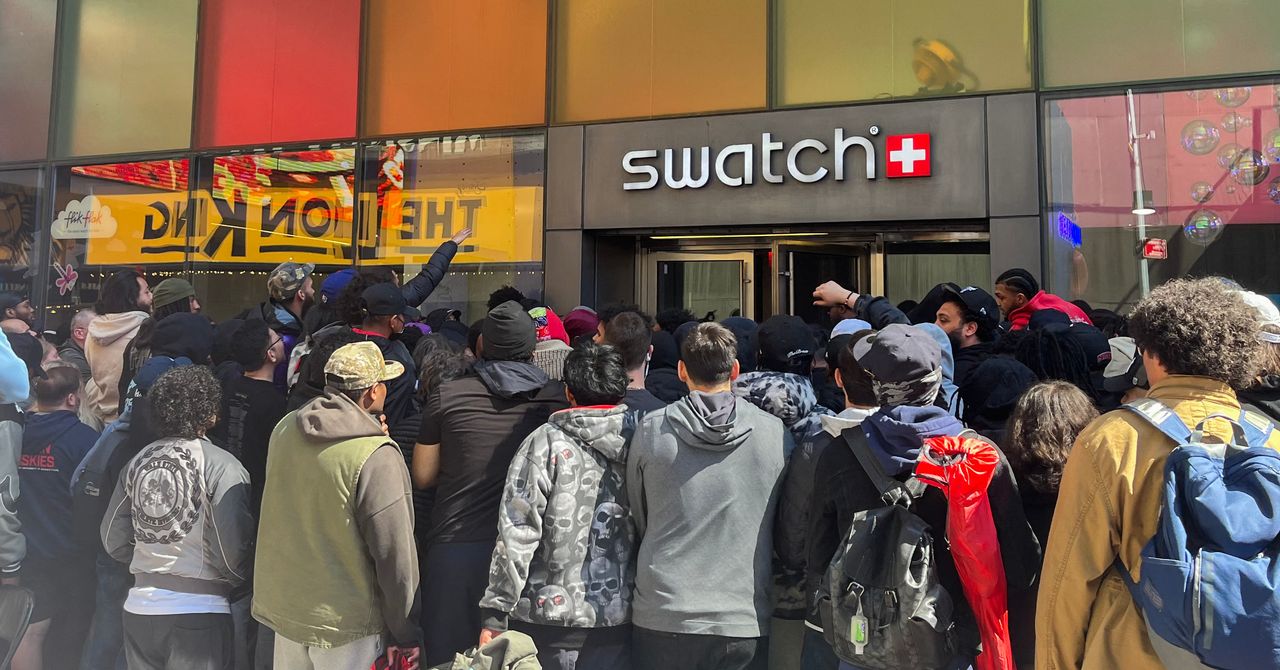
The note from the communications team then, quite remarkably, lists some stats in an attempt to paint the launch in a positive light, as opposed the retail bin-fire it seemingly was: “We have received millions of clicks on our website. This new collaboration is literally making social media explode, with over 6 billion views within one week; by now, it is already 11 billion. All in all, the Royal Pop Collection is captivating the entire world, not least because the Royal Pop is, quite surprisingly, not a wristwatch.”
Audemars Piguet seems unhappy with how Swatch has handled the launch of its collaboration on the Royal Pop. AP told WIRED that “we understand the questions around the Royal Pop launch experience. As retail operations are handled by Swatch and their local teams, Swatch is best placed to comment on the operational handling of the launch. From AP’s perspective, safety and a positive experience for clients and teams remain the priority.” The brand did not respond when asked if it considered Swatch’s handling of the Royal Pop launch a “safe and positive experience”.
The madness of the Royal Pop launch is that, considering all that could have been learned from the MoonSwatch release in 2022, Swatch decided to repeat the playbook that went so badly wrong four years ago. This is a move, according to experts, that was entirely avoidable and utterly unnecessary.
Hype With No Control
“Luxury drops cannot rely on surprise, scarcity and social frenzy as the strategy, then act surprised when human behaviour follows,” says Kate Hardcastle, author of The Science of Shopping and advisor to brands including Disney, Mastercard, Klarna and American Express. “Retailers are already dealing with heightened tensions around theft, aggression and crowd management globally. Add a highly restricted product, long queues, resale economics, social media amplification and the emotional intensity attached to luxury access, and the environment can escalate very quickly if not expertly managed.”
Hardcastle confirms that what is particularly difficult for Swatch here is that the MoonSwatch launch already provided a live blueprint of the risks. “Once a brand has experienced scenes involving crowd surges, disappointment and policing,” she says, “the obligation shifts from reacting to proactively engineering a safer customer experience. Successful luxury houses increasingly control the experience with far greater precision.”
Neil Saunders, managing director of retail at Global Data, is even more candid. “The chaos does not reflect well on Swatch, and it probably makes Audemars Piguet wonder what on Earth it has gotten itself into,” he says. “Wanting to create some hype is understandable, but not being able to control it becomes damaging both commercially and for the brand image. Swatch should understand this better than most as it has been through this before with MoonSwatch.”
Not only Saunders and Hardcastle, but scores of commenters on Swatch’s Instagram post, point out well-known and obvious solutions that would have mitigated or entirely avoided the Royal Pop’s shambolic release.
“We have seen other premium or limited launches use staggered collection windows, verified appointment systems, geo-ticketing, VIP allocation tiers, timed QR access, private client previews and controlled queue technology to reduce volatility while preserving excitement,” says Hardcastle, adding that some combine digital ballots with curated in-store experiences so consumers feel part of an occasion rather than participants in a scramble.

Anyone who has had chickenpox shares one distinct memory: the relentless, all-consuming itch.
Ciara DiVita was only 3 years old when she caught the virus, but she remembers it well—along with the oven mitts she was made to wear to stop herself scratching. She also recalls being taken to hang out with her cousin while covered in blisters, in the hopes of deliberately infecting them.
DiVita, now 30, was actually the second in the chain, having been taken by her parents to catch chickenpox from an infectious friend. “I imagine the chain continued and my cousin gave it to someone else at a chickenpox play date,” she says.
A lot has changed over the past three decades, most notably the development of a chickenpox vaccine, meaning the virus is no longer the childhood rite of passage it once was.
Thanks to the vaccine’s success, children today are much less likely to be exposed to the infection at school or on the playground.
Chickenpox parties are also largely considered a relic of the past—a strategy many Gen X and millennial children were subjected to before vaccines became routine. But much like the virus itself—latent, opportunistic—they haven’t disappeared entirely.
Before a vaccine existed, chickenpox, which is caused by the varicella-zoster virus, felt unavoidable. In temperate countries like the UK and the US, around 90 percent of children caught the virus before adolescence (in tropical countries the average age of infection is higher).
It’s nothing to do with chickens. The splotchy, scratchy, highly contagious disease is possibly named after the French word for chickpea, pois chiche, according to one theory, because the round bumps caused by the virus resemble their size and shape. While most infant cases are mild, adolescents and adults are more likely to develop severe complications.
This is where the idea of “getting it over and done with” emerged from, according to Maureen Tierney, associate dean of clinical research and public health at Creighton University in Omaha, Nebraska.
“You were trying to have your child get the disease when they were at the greatest chance of not having complications,” Tierney says, explaining that, generally speaking, the older the patient, the more severe the infection can be.
While varicella-zoster is usually a mild, self-limiting disease in children, it can be much more severe—and sometimes life-threatening—in adults.
“I had an otherwise healthy adult patient who died of chickenpox pneumonia when I was first practicing,” Tierney says. “You never forget those scenarios.”
The virus spreads rapidly through respiratory droplets and contact with fluid from its characteristic blisters, meaning if one child contracts it, siblings and classmates are likely to be next, if unvaccinated.
Before the existence of social media, the idea that children should deliberately infect each other spread just as rapidly around communities—in conversations in the school yard, church groups, and pediatric waiting rooms—leading to the popularity of so-called chickenpox parties.
Parents swapped advice about oatmeal baths and calamine lotion and arranged to bring children together when one was thought to be infectious—despite the practice never being an official medical recommendation.
“They thought, well, if it’s going to happen to my kid anyway, it might as well happen in a controlled environment,” says Monica Abdelnour, a pediatric infectious disease specialist at Phoenix Children’s Hospital. “The families were ready to encounter this infection, deal with it, and then move on.”
While the majority of children who develop chickenpox feel well again within a week or two, around three in every 1,000 infected experience a severe complication such as pneumonia, serious bacterial skin infections, encephalitis (inflammation of the brain), or meningitis.
In 1996, Guinea-Bissau seemed like an ideal research post for budding pediatrician Lone Graff Stensballe. Her supervisor, a fellow Dane named Peter Aaby, had spent nearly two decades collecting data on 100,000 people living in the mud brick homes of the West African country’s capital.
Aaby and his partner, Christine Stabell Benn, believed that the years of research in the impoverished country had yielded a major discovery about vaccines—and what they described as “non-specific effects”: The measles and tuberculosis vaccines, which were derived from live, weakened viruses and bacteria, they said, boosted child survival beyond protecting against those particular pathogens.
But, the scientists said, shots made from deactivated whole germs, or pieces of them, such as the diphtheria-tetanus-pertussis (DTP) shot, caused more deaths—especially in little girls—than getting no vaccine at all.
The World Health Organization repeatedly and inconclusively examined these astonishing findings. They tended to elicit shrugs from other global health researchers, who found Aaby’s research techniques unusual and his results generally impossible to replicate.
Then came Donald Trump, Covid, and the administrative reign of anti-vaccine advocate Robert F. Kennedy Jr.
Suddenly, Aaby and Benn weren’t just sending up distant smoke signals from a far corner of the planet. They were confidently voicing their views and policy prescriptions online and in medical journals. The “framework” for “testing, approving, and regulating vaccines needs to be updated to accommodate non-specific effects,” their team wrote in a 2023 review.
And the Trump administration has taken notice.
“They became more strident in saying that their findings were real and that the world needed to do something about it,” said Kathryn Edwards, a Vanderbilt University vaccinologist who has been aware of Aaby’s work since the 1990s. “And they became more aligned with RFK.”
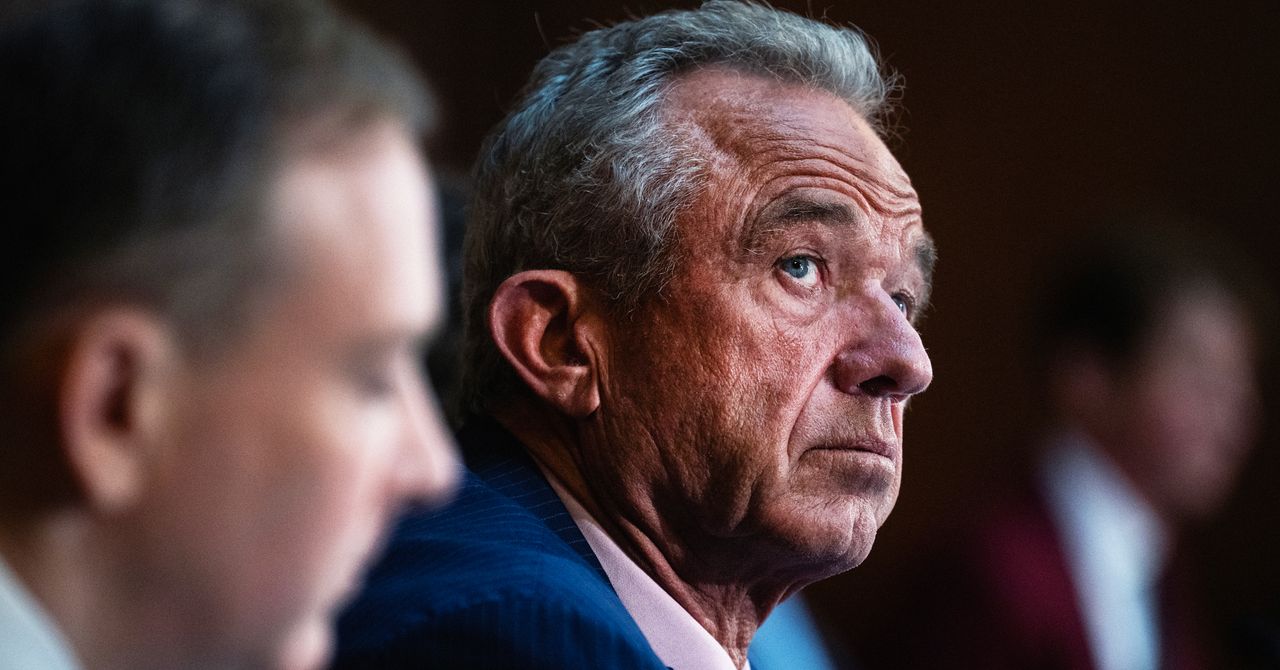
Kennedy, as secretary of the Department of Health and Human Services, cited one of Aaby’s papers to justify slashing $2.6 billion in US support for Gavi, a global alliance of vaccination initiatives. The cut could result in 1.2 million preventable deaths over five years in the world’s poorest countries, the nonprofit agency has estimated. Kennedy has frozen $600 million in current Gavi funding over largely debunked vaccine safety claims.
Kennedy described the 2017 paper as a “landmark study” by “five highly regarded mainstream vaccine experts” that found that girls who received a diphtheria-tetanus-pertussis, or DTP, shot were 10 times more likely to die from all causes than unvaccinated children.
In fact, the study was far too small to confidently make such assertions, as Benn acknowledged. In a study of historical data that included 535 girls, four of those vaccinated against DTP in a three-month period of infancy died of unrelated causes, while one unvaccinated girl died during that period. A follow-up published by the same group in 2022 found that the DTP shot by itself had no effect on mortality. Critics say the 2017 study, rather than being a landmark, exemplified the troubling shortfalls they perceive in the Danish team’s research.
As Aaby and Benn’s US profile has risen, scientists in Denmark have set upon the work of their compatriots. In news and journal articles published over the past 18 months, Danish statisticians and infectious disease experts have said the duo’s methods were unorthodox, even shoddy, and were structured to support preconceived views. A national scientific board is investigating their work.
Stensballe, who worked with Aaby and Benn for 20 years, has been among those voicing doubts.
“It took years to see what I see clearly today, that there is a strange concerning pattern in their work,” Stensballe said in a phone interview from Copenhagen, where she treats children at Rigshospitalet, the city’s largest teaching hospital. She said their work is full of confirmation bias—favoring interpretations that fit their hypotheses.


CDC says American tests positive for Ebola in Africa, risk in the U.S. remains low
Elon Musk just lost another lawsuit. Will he keep fighting?

India will become history if it attempts any future misadventure, warns defence czar

-

 Entertainment6 days ago
Conan O’Brien hat tricks as Oscar host
-

 Tech1 week ago
Could Contact-Tracing Apps Help With the Hantavirus? Not Really
-

 Fashion5 days ago
Italy’s Zegna Group’s Q1 growth boosted by strong organic performance
-

 Entertainment1 week ago
Martin Short: Facing tragedy with joy
-

 Entertainment1 week ago
Tom Brady gets back at Kevin Hart during Netflix roast
-

 Sports1 week ago
Jacob Fatu unleashes vicious assault on Roman Reigns after World Heavyweight Championship loss at WWE Backlash
-

 Entertainment1 week ago
Martha Stewart: How to make an omelet
-

 Tech1 week ago
Papa Johns Is Getting Into Drone Delivery—but Not for Pizza