

Fashion
Eurozone manufacturing hits 45 month high in March amid cost surge


The S&P Global Eurozone Manufacturing PMI rose to 51.6 in March from 50.8 in February, marking a 45-month high and signalling continued expansion. The Output Index also edged up to 52.0, its strongest level in seven months, supported by modest gains in production and new orders.
Eurozone manufacturing expanded in March 2026, with PMI rising to 51.6, a 45-month high, supported by modest gains in output and orders.
Export demand stabilised and backlogs increased.
However, Middle East conflict-driven disruptions lengthened delivery times and pushed input cost inflation to a 41-month high.
Firms raised prices, employment declined, and business confidence weakened.
A key positive development was the stabilisation of export demand after eight months of contraction, while backlogs of work increased for the first time in nearly four years, indicating emerging capacity pressures. Purchasing activity also expanded for the first time since June 2022, reflecting improved business activity, S&P Global said in a press release.
However, supply-side disruptions dominated the outlook. Suppliers’ delivery times lengthened to the greatest extent in over three-and-a-half years, largely due to logistics disruptions stemming from the ongoing Middle East war. At the same time, input cost inflation surged to a 41-month high, driven by rising energy and raw material prices.
The impact of these pressures was visible across the region. Greece and Ireland led growth, while Spain remained in contraction. Germany and Italy recorded their strongest readings in 46 and 37 months, respectively, while France’s manufacturing sector stagnated.
Despite rising backlogs, employment declined at a faster pace, suggesting firms remain cautious amid uncertainty. Inventories of both inputs and finished goods were reduced more sharply, reflecting tighter supply conditions.
Manufacturers passed on higher costs to customers, with output price inflation accelerating to a more than three-year high. Meanwhile, business confidence weakened to a five-month low, falling below the long-term average as geopolitical risks cloud the outlook.
Joe Hayes, principal economist at S&P Global Market Intelligence, said the Middle East conflict has already disrupted logistics and pushed input costs sharply higher. He noted that while the sector had been gradually recovering in early 2026, rising inflation and reduced competitiveness could dampen demand if disruptions persist.
Overall, while eurozone manufacturing remains in expansion territory, the balance between recovery and renewed pressure appears increasingly fragile amid escalating geopolitical and cost challenges.
Fibre2Fashion News Desk (SG)












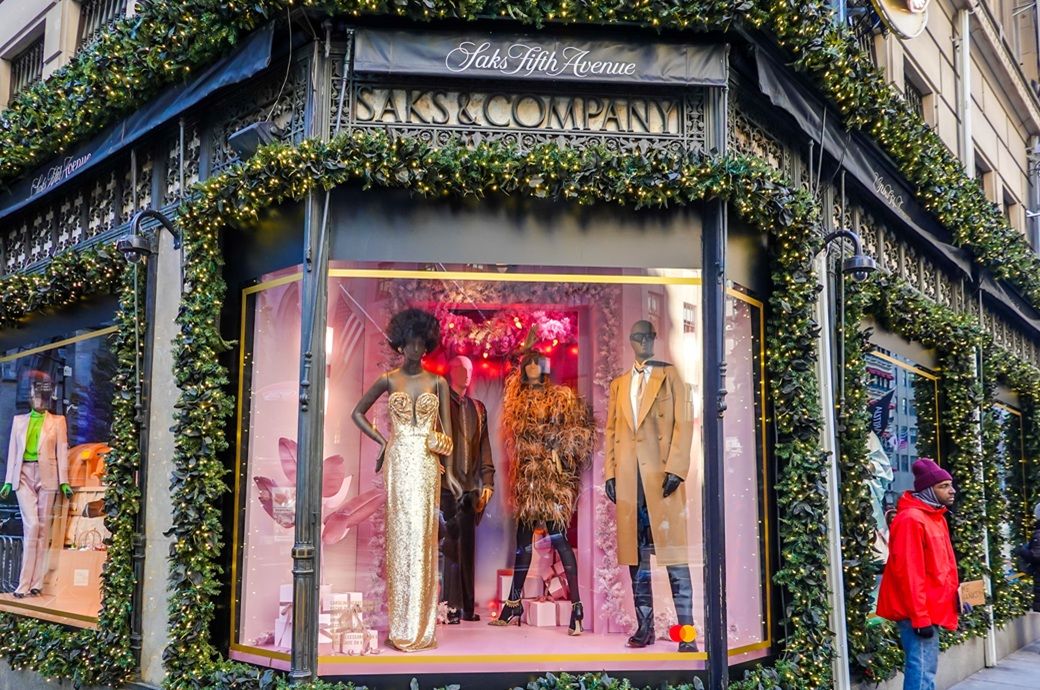
The company’s business plan, centred on growth and profitability supported by a strong liquidity position, will form part of its reorganisation strategy. Saks Global expects to file this plan with the US Bankruptcy Court for the Southern District of Texas in the coming weeks, Saks Global said in a press release.
Saks Global has secured an additional $300 million, completing its $1.75 billion pre-emergence financing to support operations and transformation.
The company is strengthening liquidity, improving inventory flow, and optimising stores and supply chains.
Nearly 600 brands have resumed shipments, boosting receipts.
Its reorganisation plan will be filed soon, as it focuses on long-term profitable growth.
“We have made significant progress over the past two months as we work to position Saks Global for the future, quickly stabilising our business, improving inventory flow and investing in our transformation,” said Geoffroy van Raemdonck, CEO of Saks Global. “With continued strong support from our capital partners, we are laying the path to realise the combined full potential of our three banners, achieve double-digit adjusted EBITDA margin and drive profitable and sustainable growth. As we continue to secure a bright future for Saks Global, guided by our relentless devotion to the luxury customer, we are focused on delivering an expertly curated assortment and personalised service across Saks Fifth Avenue, Neiman Marcus and Bergdorf Goodman.”
Since mid-January, the company has undertaken several strategic initiatives to strengthen its operations. These include rebuilding brand partner relationships, which has led to the resumption of shipments by nearly 600 brands and unlocked $1.4 billion in retail receipts. As a result, merchandise receipts have risen by nearly 60 per cent month-to-date in March compared to the same period last year.
Saks Global has also progressed with optimising its Saks Fifth Avenue and Neiman Marcus store network, focusing on high-performing locations in key luxury markets. Additionally, it has streamlined its off-price business to 12 locations, positioning them as channels for residual inventory from its core luxury banners.
Supply chain efficiencies remain a key focus, with the company prioritising three major distribution and service centres in Texas, Pennsylvania and California to enhance delivery speed, improve customer experience and reduce costs.
“This is tremendous progress in a very short period of time,” added van Raemdonck. “I am incredibly proud of our entire leadership team and colleagues across the organisation whose collective strength and focus have enabled us to continue to serve our customers and brand partners as we take decisive steps to build a stronger Saks Global. We remain focused on building on this momentum as we work towards emerging later this year.”
Fibre2Fashion News Desk (SG)

The seasonally-adjusted S&P Global US manufacturing PMI recorded 52.3 in March. That was an improvement from 51.6 in February and indicative of a moderate rate of expansion. It was the eighth successive month that the PMI has posted above the critical 50 no-change mark.
However, with tariffs continuing to hit new export sales, US growth was principally driven by higher domestic demand. Moreover, this in part reflected some client safety stock building due to the war in the Middle East, which drove up inflation and added to supply-chain stress.
US manufacturing performance improved in March, with growth solid and picking up since February amid better gains in both output and new orders, S&P Global US manufacturing PMI data show.
However, with tariffs continuing to hit new export sales, US growth was principally driven by higher domestic demand.
Firms are hopeful that March’s overall increase in sales will be sustained over the coming months.
March’s survey signalled notable accelerations in both input and output price inflation, whilst the time taken to deliver inputs to manufacturers deteriorated to the greatest degree since October 2022, a release from S&P Global said.
Meanwhile, confidence in the outlook softened fractionally, with firms noting worries over higher energy prices and tariffs.
Employment numbers were little changed overall.
Higher output and new orders helped to support the PMI in March. In both instances, growth rates were solid.
Firms are hopeful that March’s overall increase in sales will be sustained over the coming months. Confidence in the outlook remained positive overall.
However, worries over energy prices and tariffs meant expectations softened slightly since February.
Fibre2Fashion News Desk (DS)
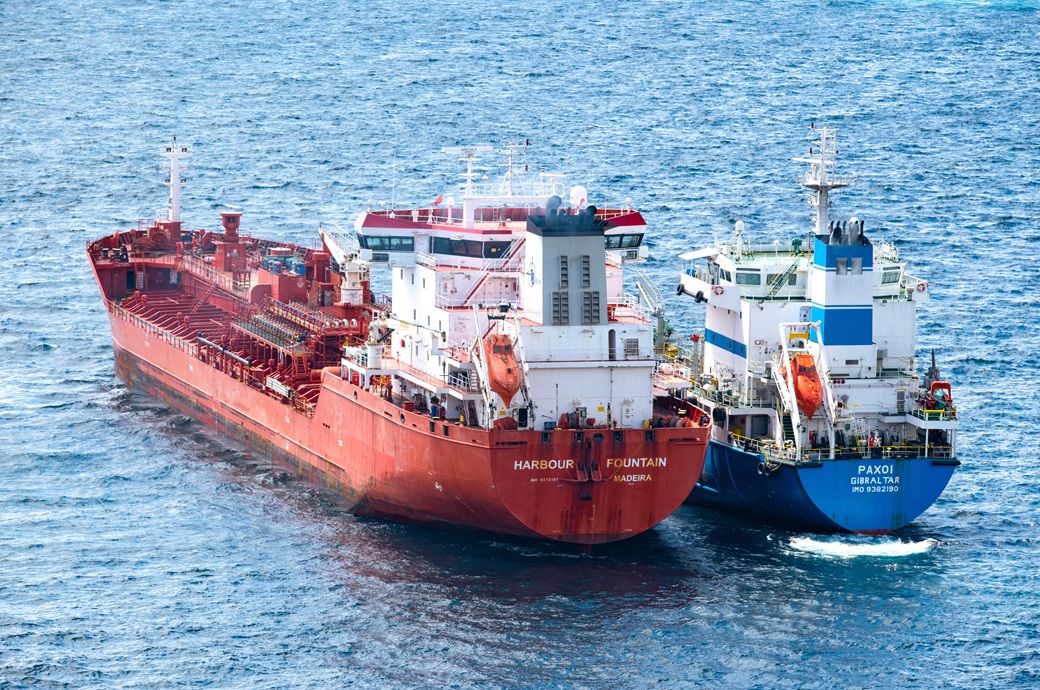
Lighterage operators complained that diesel supply from state-owned depots has dropped to nearly a fourth of the daily demand, delaying the offloading of mother vessels at the outer anchorage and affecting the entire supply chain of industrial raw materials and imported goods.
Lightering vessel operations at Bangladesh’s Chittagong Port have been hit due to a severe fuel shortage triggered by the Iran war.
Diesel supply has dropped to a fourth of the daily demand, delaying the offloading of mother vessels at the outer anchorage and hitting the supply chain of industrial raw materials and imported goods.
Offloading from mother vessels is being prioritised to avoid demurrages.
The Bangladesh Water Transport Coordination Cell (BWTCC), which regulates around 1,200 lightering vessels, the daily requirement for ships booked to offload cargo is nearly 250,000 litres.
Marine fuel dealers, however, are currently providing only 60,000 to 70,000 litres.
Operators said they are trying to prioritise the offloading process from mother vessels to avoid heavy demurrages.
However, once the goods are loaded, the vessels lack sufficient fuel to reach their inland destinations or return to the port for the next shipment, according to domestic media outlets.
BWTCC has written to the relevant ministries seeking an urgent solution, but operators say they are yet to get a response.
Fibre2Fashion News Desk (DS)


US’ Saks Global secures final $300 mn to complete $1.75 bn funding

From thrillers to feel good tv series

Eurozone manufacturing hits 45 month high in March amid cost surge

-

 Fashion1 week ago
Ho Chi Minh City bizs adjust production plans, seek new supply chains
-

 Entertainment7 days ago
Lee Sang-bo dies at 45: Funeral details revealed
-

 Sports7 days ago
Illinois defense gets tough, ousts Houston to reach Elite Eight
-

 Sports5 days ago
2026 NCAA men’s hockey tournament: Schedule, results
-

 Fashion7 days ago
China rolls out tariff cuts on Congo imports from April 1
-

 Fashion6 days ago
EU apparel imports slump 15.48% YoY in Jan; Bangladesh hardest hit
-
 Business7 days ago
How do you spot a fake online review?
-

 Sports5 days ago
USMNT handed reality check by Doku, Belgium ahead of World Cup