

Business
‘Every day feels like firefighting’: Hit by EU sanctions over Russian oil – Indian refinery Nayara Energy struggles to sustain operations – The Times of India

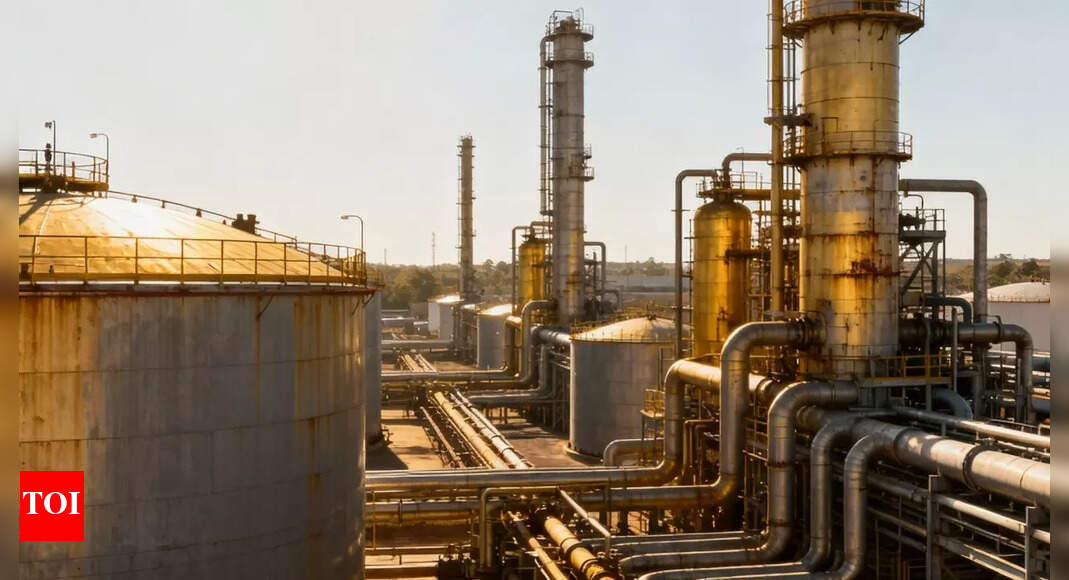
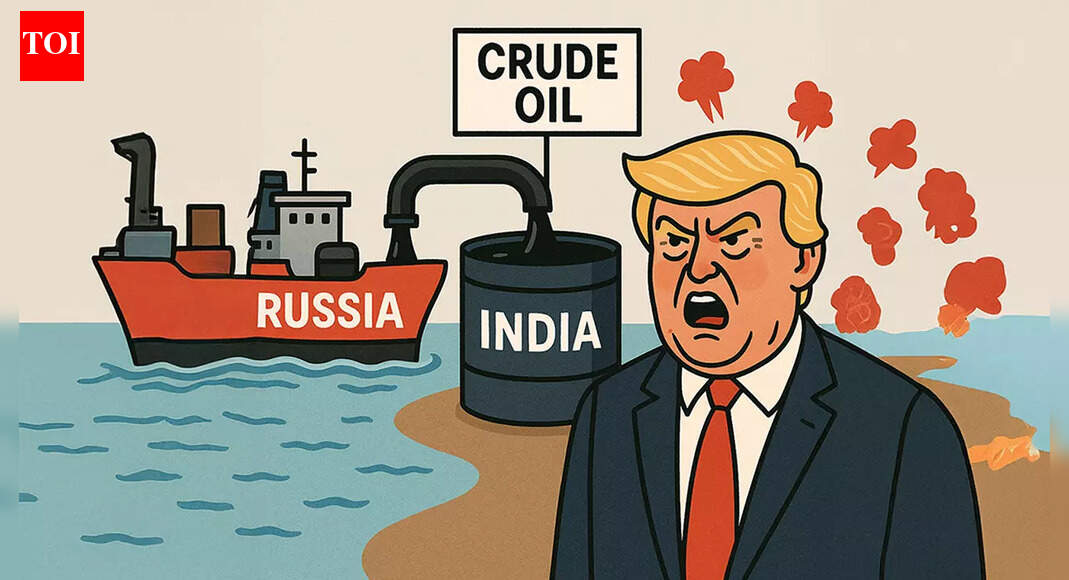
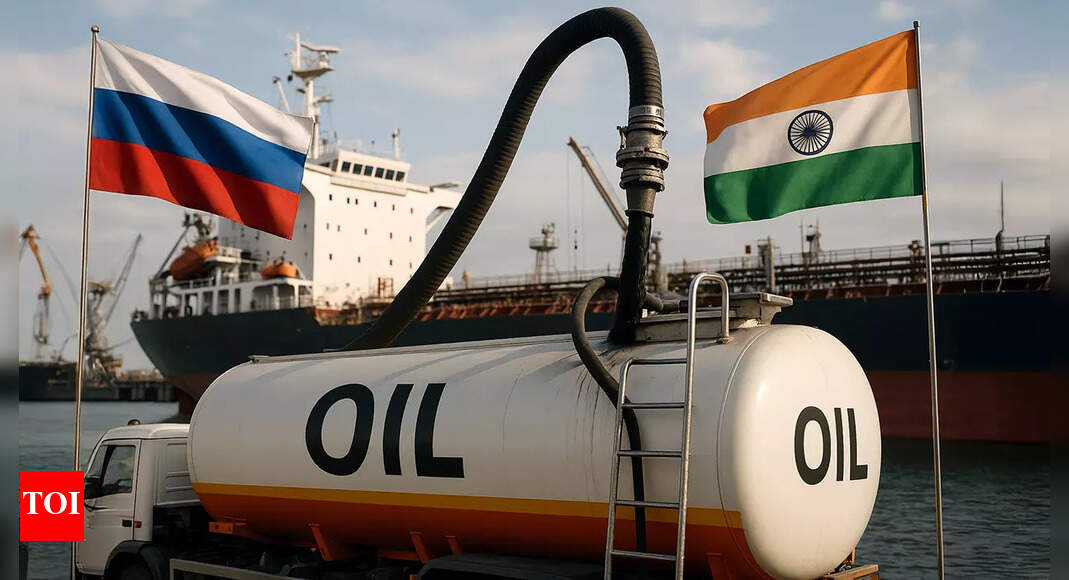
Nayara Energy, the Indian refinery with major Russian ownership, is scrambling to sustain operations after being hit by European Union sanctions. The Russian-owned refinery, facing exclusion from many international markets due to severe EU sanctions implemented on July 18, has been compelled to redirect additional fuel towards domestic consumption whilst seeking alternative export destinations, amongst various necessary adaptations required by the EU restrictions.According to a Reuters report, from late August onwards, Nayara Energy’s refinery has intensified its railway usage, dispatching two to three trains daily, each comprising 50 tanker cars to transport fuel to inland storage facilities. This is more than twice its previous railway utilisation for diesel and petrol transportation.Nayara’s Russian ownership exemplifies the enduring close relationship between New Delhi and Moscow, a connection that positions India differently from Western allies.The government has found itself managing a delicate situation with Nayara’s ongoing difficulties, providing essential operational support whilst being cautious not to trigger Western opposition, according to government and company officials quoted in the report. The administration’s assistance includes allocation of tank wagons and authorisation for coastal vessels to transport the refinery’s products.The refinery, with Russian state oil corporation Rosneft as its primary stakeholder, now sources its crude oil requirements exclusively from Russia, following the cessation of Iraqi and Saudi Arabian supplies post-EU sanctions. This dependency creates potential vulnerabilities should supply chains face disruption from enhanced sanctions or increased pressure from the Donald Trump administration.The UK government is evaluating dual strategies: supporting Nayara whilst being cognisant of mounting international pressure for stricter sanctions, according to Amitendu Palit, senior research fellow at the National University of Singapore’s Institute of South Asian Studies quoted in the report.“Long-term support might not be sustainable unless the whole global dynamics change – like a resolution between Russia and the U.S.A. or progress in Russia-Ukraine conflict,” he said.The Mumbai-based Nayata holds significant influence in India’s expanding fuel industry, contributing 8% of refined products output and managing over 6,500 petrol stations.The company has been compelled to decrease crude processing at its 400,000-barrel-per-day Vadinar refinery to 70-80% capacity – down from its previous 104% – as it encounters difficulties securing export customers for its fuel and banking institutions to process payments, according to sources familiar with refinery operations.
What Nayara is doing to sustain operations?
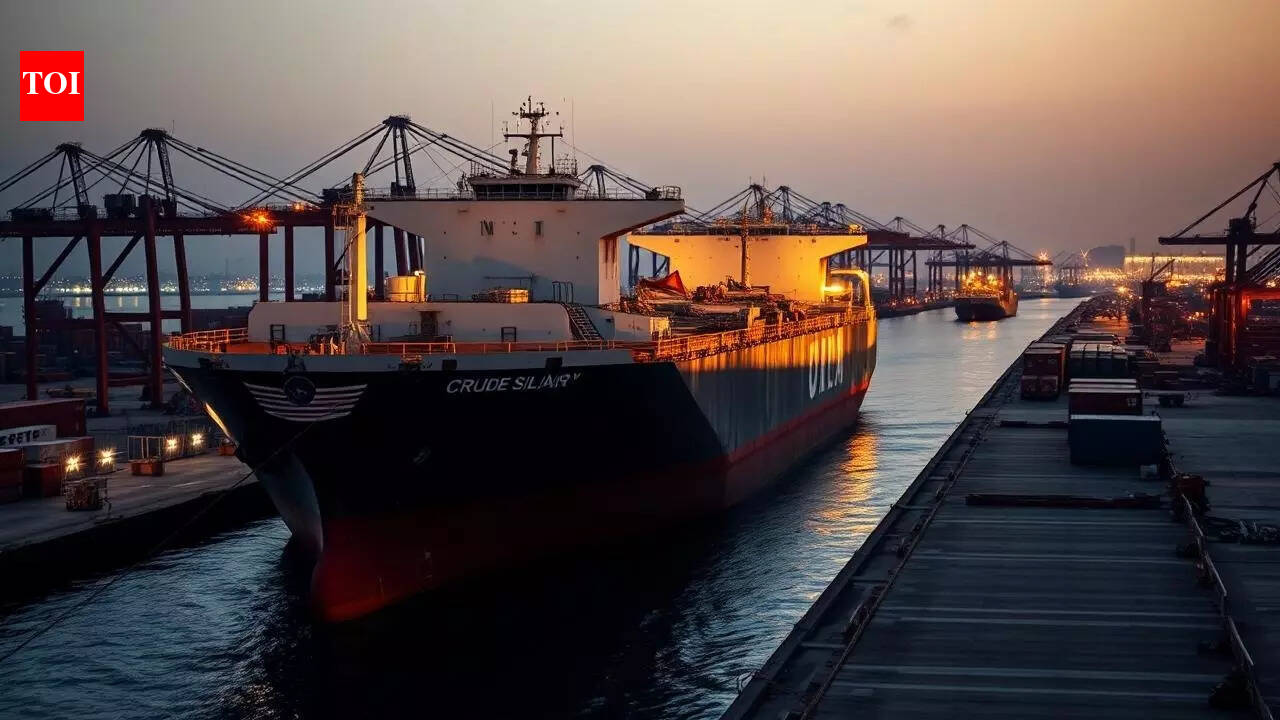
Nayara adapted its operations by increasing railway transportation after sanctions impeded its coastal shipping and export capabilities, necessitating domestic distribution of its products, the Reuters report said. The refinery, lacking pipeline connectivity, received assistance from the government to access additional railcars and temporary permission to operate four coastal vessels, including the sanctioned Leruo and two vessels from the shadow fleet: the Garuda (Guinea-Bissau flag) and Chongchon (Djibouti flag), the report said.The company has requested governmental authorisation for two additional coastal vessels. Additionally, Nayara seeks official support to acquire equipment and materials, currently restricted by sanctions, for its maintenance closure initially planned for February. Sources indicate the company might postpone the shutdown until April whilst searching for alternative materials.“We are under constant threat,” a senior company official said on condition of anonymity, citing the worry that vessels the company is now using could come under future Western sanctions.“We never anticipated that we would be hit so directly. Now, every day feels like firefighting.”Nayara – the name is a mix of Hindi and English for “New Era” – previously operated as Essar Oil before its 2017 acquisition by Rosneft alongside a consortium including Russian fund UCP and Trafigura, with the latter later divesting its stake. The company sourced oil from diverse nations until 2022. Subsequently, India increased its Russian oil imports at discounted rates following Western sanctions on Moscow post the Ukraine invasion, becoming the primary buyer of Russian seaborne crude.The refiner’s primary concerns centre on maintenance issues and international payment capabilities, according to internal sources at Nayara quoted in the Reuters report.Since August, the state-owned SBI has halted processing of trade and forex transactions for Nayara, citing concerns about EU sanctions.Despite meetings between Nayara officials, finance ministry representatives and banks to address these banking complications, a resolution remains pending. This situation hampers the company’s ability to conduct international crude imports and fuel exports, as per government sources.Recent shipments have been directed to the Middle East, Turkey, Taiwan and Brazil, with 16 cargo loads of diesel, gasoline and jet fuel transported via EU-sanctioned vessels, according to available data.


From the UK, flights have also been cancelled for many Middle East destinations, including all flights to Israel and Bahrain, three-quarters of the day’s scheduled flights to the United Arab Emirates, and more than two-thirds (69%) of flights to Qatar.
Business
IIP sees 4.8% YoY growth in January; manufacturing & electricity support rise – The Times of India

India’s Index of Industrial Production saw a 4.8% increase year-on-year in January 2026, according to the Ministry of Statistics & Programme Implementation. The rise in industrial output was largely driven by a 4.8 per cent expansion in manufacturing and a 5.1 per cent improvement in electricity generation. Mining activity also supported overall growth, registering a 4.3 per cent uptick during the month.Estimates placed IIP at 169.4 for January 2026, compared with 161.6 in January 2025. This follows a stronger reading in December 2025, when industrial production had grown by 7.8 per cent. For January 2026, the sector-specific indices stood at 157.2 for mining, 167.2 for manufacturing and 212.1 for electricity.Within manufacturing, 14 of the 23 industry groups at the NIC two-digit level posted year-on-year gains in January. The strongest contributors were manufacture of basic metals, which rose 13.2 per cent; manufacture of motor vehicles, trailers and semi-trailers, up 10.9 per cent; and manufacture of other non-metallic mineral products, which increased 9.9 per cent. Growth in basic metals was supported by items such as flat products of alloy steel, MS slabs, and hot-rolled coils and sheets of mild steel.The automobile category advanced on the back of higher output of auto components and spare parts, commercial vehicles, and bus and minibus bodies or chassis. In the non-metallic mineral products segment, cement of all types, cement clinkers and stone chips were key contributors.According to use-based classification, output of primary goods grew 3.1 per cent, capital goods rose 4.3 per cent and intermediate goods increased 6 per cent compared with January 2025. Infrastructure and construction goods recorded the sharpest rise at 13.7 per cent, while consumer durables expanded 6.3 per cent. In contrast, consumer non-durables declined by 2.7 per cent. The ministry identified infrastructure and construction goods, intermediate goods and primary goods as the leading drivers of growth under this classification.

There might also be a more direct impact on food. “Some elements of crude oil are used in fertiliser, and so there could be a cost implication in terms of food prices,” Benjamin Goodwin, partner at banking advisory firm PRISM Strategic Intelligence told the BBC.


US’ Old Navy launches little navy, a new newborn essentials collection

Super-rich pay up to $350,000 for private jet evacuations as Middle East conflict escalates

5 key takeaways from Pete Hegseth’s Pentagon press conference on Iran-US war

-

 Politics1 week ago
Pakistan carries out precision strikes on seven militant hideouts in Afghanistan
-

 Tech1 week ago
These Cheap Noise-Cancelling Sony Headphones Are Even Cheaper Right Now
-

 Sports1 week ago
Kansas’ Darryn Peterson misses most of 2nd half with cramping
-

 Entertainment1 week ago
Viral monkey Punch makes IKEA toy global sensation: Here’s what it costs
-
Sports1 week ago
Mike Eruzione and the ‘Miracle on Ice’ team are looking for some company
-
 Business6 days ago
Households set for lower energy bills amid price cap shake-up
-
 Entertainment1 week ago
Talking minerals and megawatts
-

 Fashion1 week ago
India, Switzerland review TEPA implementation & boost investment ties