

Tech
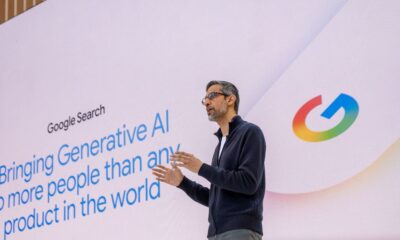
Everything Announced at Google I/O 2026


Much weirder is voice editing in Google Docs, in a new feature called Docs Live. By describing with your voice what you want to write, an agent will dictate your words, generate text, pull in citations from the web, and aim to turn your stream-of-consciousness wishes into a coherent document.
(Reminder: All this stuff may eventually have ads.)
For Gemini power users, Google is creating a new subscription tier, the AI Ultra plan, for $100 a month. It is also dropping the price of its top Gemini AI Ultra from $250 a month to $200.
Gemini Omni
Google announced Gemini Omni, an AI video generator akin to Sora 2. That was OpenAI’s generator that let you deepfake yourself but was eventually killed by the company.
Google’s approach is building out a far more realistic video generator that can incorporate real video and extrapolate all manner of AI-powered weirdness on top of that. Google is eager for you to turn Omni’s eye on yourself, putting your face front and center. As such, selfie videos can be modified to add different backgrounds, styles, or environments, making it appear that you are somewhere other than your actual location.
The feature was demoed onstage with a video of someone recording themselves walking through a metal sculpture. They then asked Omni to change the structure to look like it was made of bubbles. You can also add images and video of yourself from your camera roll and generate just about any variety of cinematic style. Google says Omni is capable of advanced animations and fun typography.
Google’s approach is focusing Omni on video creation first, though it says still-image and text capabilities will be coming later. Eventually, Google says it wants to let Omni create any output with any input.
Read more about Omni in Reece Rogers’ story on WIRED. OmniFlash, a starter version of Omni, is available starting today for Google AI+ Pro and Ultra subscribers.
Gemini Spark
Gemini Spark is Google’s answer to OpenClaw, the viral AI-powered helper bot that could be used to help with real life needs like buying groceries or researching vacation options (and occasionally causing you to wind up in a scam).
Spark can write emails or plan a block party and pull information from files in your Google Drive. It is meant to be a personal agent just for you, keeping up with your schedule so it knows the rhythms of your life, learns what major events are coming up, and can help manage long-term or recurring tasks for you.
Spark runs entirely on Google Cloud, which Google says means it can process background requests without having to leave your device on. For now Spark just works with other Google software, though not with the Chrome browser quite yet. Google says that is coming, along with third-party support, later this summer.
WIRED’s Reece Rogers has a deeper dive into Spark.
Agents Love Shopping
To help you manage all of your online shopping, Google will start deploying an agentic-powered shopping experience. As you search for products, Google will show you listings that it hosts for products for sale at various retailers. You can also shop the old-fashioned way, by going to various websites and perusing the listings there.
The big difference is that now, Google will offer a universal shopping cart. Just add the products you’re interested in as you surf, and Google’s agent will keep your wish list organized. It can alert you to price changes and tell you when there’s a newer version or a new color option available. While products are sitting in your cart, you can engage Gemini to ask for more details about your potential purchases, add other products to the cart, or try to find better deals at other retailers.











At first, the winners of the prestigious Commonwealth Short Story Prize for 2026 enjoyed the envy of their peers. But since their works of fiction earned this distinction, these authors have found themselves facing harsh scrutiny from the literary community, with several accused of enlisting generative artificial intelligence to write for them.
The allegations have come from numerous readers, many of them writers themselves, expressing bafflement and dismay that the prize jury could have overlooked potential signs of inauthentic authorship.
Each year, the Commonwealth Foundation, a nongovernmental organization in London, awards its short story prize to one writer in each of five regions: Africa, Asia, Canada and Europe, the Caribbean, and the Pacific. One overall winner is then selected from that short list. Regional winners take home £2,500 (about $3,350), while the top winner, to be announced next month, claims £5,000 (about $6,700).
On May 12, the respected UK literary magazine Granta published the top five 2026 entries—all previously unpublished, per the rules of the contest—on its website. (It has hosted the winning submissions for the prize since 2012.)
Within days, however, one entry aroused suspicion. “The Serpent in the Grove,” a story by Jamir Nazir of Trinidad and Tobago, which had taken honors for the Caribbean region, struck a few people as bearing the stylistic tells of AI-generated text.
“Well, this is a first: a ChatGPT-generated story won a prestigious literary prize,” wrote researcher and entrepreneur Nabeel S. Qureshi, a former visiting scholar of AI at the Mercatus Center at George Mason University, in a post on X on Monday. “‘Not X, not Y, but Z’ sentences everywhere, the ‘hums’ trope, and plenty of other obvious markers of AI writing. A major milestone for AI, at any rate…”
“They say the grove still hums at noon,” Nazir’s mysterious and atmospheric tale begins. In his screenshot of the opening paragraphs, Quereshi highlighted the second line as what he considered to be a signature example of AI syntax: “Not the bees’ neat industry or the clean rasp of cutlass on vine, but a belly sound—as if the earth swallows a shout and holds it there.”
As the literary community undertook a closer read of Nazir’s story, many criticized its language and metaphors as nonsensical, wondering how the Commonwealth judges could have seen any merit to them. Others shared screenshots showing that the AI-detection tool Pangram flagged “The Serpent in the Grove” as 100 percent AI-generated, a result that WIRED independently confirmed. (While no AI-detection software is perfect, third-party analysis has consistently determined Pangram to be the most accurate, with a near-zero rate of false positives.)
Nazir did not return a request for comment relayed through an email address listed on his Facebook page. The posts on that account and the LinkedIn profile of a Jamir Nazir in Trinidad and Tobago also scan as AI-generated on Pangram. Although some speculation had it that Nazir himself could have been an entirely AI-created persona, a 2018 article in the Trinidad and Tobago edition of the The Guardian about his self-published poetry collection Night Moon Love—which includes a photograph of Nazir holding the book—suggests that he is a real person.
WIRED contacted both Granta and the Commonwealth Foundation about Nazir’s story; neither commented directly, but both issued public statements.
‘We are aware of allegations and discussion regarding generative AI and our Short Story Prize,” wrote Razmi Farook, director-general of the Commonwealth Foundation, in a statement on the organization’s website. “We take these claims seriously and are committed to responding to them with care and transparency.” Farook defended the judging process for the prize as “robust,” with multiple rounds of readers and the top-level judges selected for their “expertise.”

Gemini Spark is Google’s take on a steroided-out assistant agent that knows everything about you, announced as part of the company’s updates to its Gemini chatbot app at this year’s I/O developer conference.
Software companies have been talking up AI agents for some time now, but I wasn’t impressed until I tried Anthropic’s Claude Cowork in January. I sat back as the bot organized the scattered screenshots littering my desktop into labeled folders without a single click, and felt convinced that this might be a turning point for how people interact with their computers.
Many other early adopters in San Francisco experienced similar moments when they set up the mega-viral OpenClaw bot earlier this year, not just to help complete a few tasks but to run their whole online lives. Power users attempted to fully automate their inboxes, calendars, and text messages, and even run a vending machine to varying levels of success via OpenClaw. It’s not without risks—you have to give these agents control of your data and computer, and OpenClaw almost deleted an entire trove of emails for one Meta employee who was experimenting with it
Whether it’s my daily schedule via Google Calendar or my date-night dinner spots through Gmail confirmations, Gemini Spark can dive deep into the well of my personal info before I even connect to a third-party integration. While the standard Gemini app can complete many of the same tasks, Sparks’ differentiator is that it proactively gathers details and takes action while you’re away, rather than waiting for you to prompt it.
Google pitches Gemini Spark as a one-stop shop for completing tasks people previously handled manually or did in other apps. The agent can look through your credit card bill regularly to flag surprise fees—sorry, RocketMoney app, won’t be needing you anymore. Spark can be calibrated to automatically skim every email about your preschooler and highlight key dates for a morning digest report. You can even throw all your meeting notes at Spark and ask it to draft a Google Doc and generate follow-up emails to the right people.
This agent is getting a slow rollout, arriving for a small group of early testers this week and launching next week in beta for subscribers to Google’s $100+ per month AI plan. It’s pricey to be one of the first people to experiment with Spark! The company plans to allow Spark to connect through Gemini to third-party apps, like OpenTable and Instacart, for additional automation opportunities in the coming weeks. Other features imminent on the Spark road map include allowing the agent to manipulate your local browser and the ability to text or email commands to the agent.
Being able to text commands to your agent sounds like a key factor in actually making the Spark experience feel seamless. Rather than opening the Gemini app and getting distracted, I’ll spend all day texting Spark my increasingly niche requests, as if it were assistant Andrea from The Devil Wears Prada.
One of the main measures of success when trying this agent will be how often it goes off the rails. “Spark operates under your direction,” reads Google’s announcement blog about the agent. “You choose whether to turn it on and what apps it connects to, and it’s designed to ask you first before performing high-stakes actions like spending money or sending emails.” Anyone who tries the tool is taking a risk by using experimental software that’s powered by personal data.
Google plans to expand the agentic shopping feature to allow users to set spending limits and preferred merchants that Spark will adhere to, though exercising caution is critical. “We think of it as if you’re giving a teenager their first debit card,” says Josh Woodward, vice president of Google Labs and the head of the Gemini app.
Much like the changes Google is implementing in Search, which brings agentic task automation without needing to leave the search experience, Spark is Google’s chance to push AI agents further into the public zeitgeist. Let’s see if it has the necessary spark to pull it off.

Approximately 31% – close to a third – of all data breaches now begin with the exploitation of some form of software vulnerability by a malicious actor, surpassing credential theft as the number one network entry point for the first time.
This is according to the 19th annual Data Breach Investigations Report (DBIR) from US telecoms giant Verizon, and although the data were gathered and the report largely compiled prior to the industry-wide shakeup prompted by the release of Anthropic’s Claude Mythos frontier model, the firm’s analysts said the signal was clear – artificial intelligence (AI) is fundamentally remodelling cyber security before the industry’s very eyes.
Verizon said the rapid weaponisation of known vulnerabilities was creating a capacity crisis for cyber professionals, underscoring an “urgent need” to prioritise the fundamental tenets of cyber security and risk management.
“While the velocity of cyber threats – driven by AI and faster vulnerability exploitation – is increasing, the foundational principles of security and strong risk management remain the most effective defence,” said Daniel Lawson, Verizon Business senior vice president of global solutions. “The DBIR reinforces that these fundamentals still hold as organizations strive for resilience.”
As such, the 2026 DBIR – which can be downloaded in its entirety here – contains a number of recommendations tailored with AI in mind. These include taking steps to prepare for an influx of patches, integrating AI into secure-by-design frameworks, and leveraging AI within defence-in-depth strategies.
Patrick Münch, chief security officer at Mondoo – a supplier of vulnerability management services – said the DBIR confirmed pain points defenders are already feeling.
“31% of breaches now start with an unpatched vulnerability, overtaking stolen credentials as the number one way in. Only 26% of Cisa Kev vulnerabilities were fully remediated last year, and the median time to patch rose from 32 to 43 days,” he said.
“The industry has spent a decade improving at identifying and analysing problems [but] admiring the findings doesn’t help anyone. The breach happens in the gap between knowing and fixing, and that is where the work has to move.
“Our own research shows why that gap is widening. 62% of teams still run remediation manually, only 2% are fully automated, and just 9% are confident they can fix what matters in time. Verizon found that 60 to 70% of Cisa Kev issues remain open a week after detection, regardless of team maturity. You don’t close that gap with another scanner. You close it with transparent agentic AI: humans in the loop on decisions, AI automation on remediation and mitigation execution, and a clear audit trail from identifying the issue to verifying it’s fixed,” said Münch.
AI as agent of chaos
But it was not merely in the area of vulnerability discovery and exploitation that AI models are making their presence known.
This year’s edition of the Verizon DBIT also shared insight into how shadow AI usage in the workplace has surged, making unapproved AI tools the third most common non-malicious source of data leakage. As the number of employees who say they frequently use AI tools also grows, this highlights the potential for accidental data loss to become more prevalent going forward.
Verizon also fund that AI bots are also increasing in volume, with the number of automated internet crawlers growing by a fifth every month, compared to flat human-led traffic growth, heralding the possibility of more bot-led threats in the future.
EMEA trends
Acknowledging that by the nature of Verizon’s business, its data skew towards the North American theatre, the report’s authors said that they were attempting to rebalance their coverage in regions such as Europe, the Middle East and Africa (EMEA), with some success. It analysed 8,245 incidents between October 2024 and November 2025, with 6,060 of those resulting in confirmed data leakage, compared to 12,371 in North America and 5,229 in APAC.
Across EMEA, system intrusion accounted for 57% of breaches during the period, up from 53% last year. Breaches that arose from miscellaneous errors dropped from 19% to 14%, and social engineering held steady at 22%.
EMEA stood out for being the region that saw the heaviest use of malware, which occurred in 66% of all cases, but at the same time, 59% of all breaches involved some element of hacking, a little lower than the rest of the world. Verizon said neither of these stats were especially earth-shattering but pointed out that they are moving EMEA closer to the global average.
The most substantive difference vis-à-vis EMEA and the rest of the world was the prevalence of phishing, which shows up in 84% of social engineering intrusions. This may in turn reflect a slightly higher prevalence of nation state-linked intrusions, 23% of all EMEA breaches observed compared to 14% in the rest of the world, something Verizon’s analysts linked to the “complex current political landscape” in Europe and the Middle East.


Jonas Brothers to launch a new project for fans

UK loosens Russian oil sanctions as fuel prices rise

UK inflation rate set to fall as lower household energy bills offset fuel surge

-

 Entertainment1 week ago
Conan O’Brien hat tricks as Oscar host
-

 Fashion7 days ago
Italy’s Zegna Group’s Q1 growth boosted by strong organic performance
-

 Fashion1 week ago
EC clears €5-bn German state aid to back decarbonisation of industry
-

 Tech1 week ago
Papa Johns Is Getting Into Drone Delivery—but Not for Pizza
-

 Tech1 week ago
Chevron Wants a School District Tax Break for a Data Center Power Plant in Texas
-

 Tech1 week ago
CUDA Proves Nvidia Is a Software Company
-

 Fashion1 week ago
India’s Raymond Lifestyle’s FY26 income tops $743 mn for 1st time
-
 Business1 week ago
Pound wobbles and bonds suffer as Starmer battles on