

Tech
FAA’s Plan to Cut Flights Might Not Be an Utter Nightmare


The US Federal Aviation Administration plans to cut 10 percent of flights in 40 high-traffic airports on Friday morning if Congress fails to reopen the federal government by then, Transportation Secretary Sean Duffy and FAA chief Bryan Bedford said Wednesday.
The announcement came days after the US agency said it faced widespread shortages of air traffic controllers in half of the country’s 30 busiest airports, and hours-long security lines caused by absences of Transportation Security Administration agents. Federal workers have now gone 35 days without a paycheck amid the longest government shutdown in US history.
Which flights might be canceled, and where, “is data-based,” Duffy said Wednesday. “This is based on, where is the pressure and how do we alleviate the pressure?”
When passengers fly, “they are going to make it to their destinations safely because we’ve done our work,” Duffy said.
The FAA did not immediately respond to WIRED’s questions, and it’s unclear whether the flight cut will affect only commercial airlines, or cargo and private flights, as well. A 10 percent reduction in scheduled commercial flights at 40 airports could lead to some 4,000 to 5,000 canceled flights per day.
For airlines and travelers, a sudden cut in flights will likely lead to some serious logistical headaches. Duffy has warned this week of air travel “mass chaos” should the shutdown drag on.
But airlines have some experience responding to sudden flight reductions due to staffing issues, says Michael McCormick, a former FAA official who now heads the Air Traffic Management program at Embry-Riddle Aeronautical University.
In the spring of 2023, during another period of air traffic controller shortages, the FAA allowed airlines to reduce their capacities in New York-area airports. (Such reductions usually force airlines to forfeit the right to a takeoff or landing; the FAA temporarily nixed that penalty.) In response, airline schedulers were able to quickly “up-gauge,” compensating for the reduced number of flights by replacing small aircraft with larger ones. That way, cutting flights didn’t necessarily reduce the number of passengers flying overall.
Should the FAA follow through on Friday, airlines will likely be able to pull off a similar “up-gauging” process, says McCormick. While flights will be canceled and passengers moved around, this could mean that plenty are still able to get to their destinations. The move might actually give airlines more time to prepare.
“Under the current state, it’s unpredictable which airports are going to be impacted tomorrow,” he says. “This restores some predictability.”








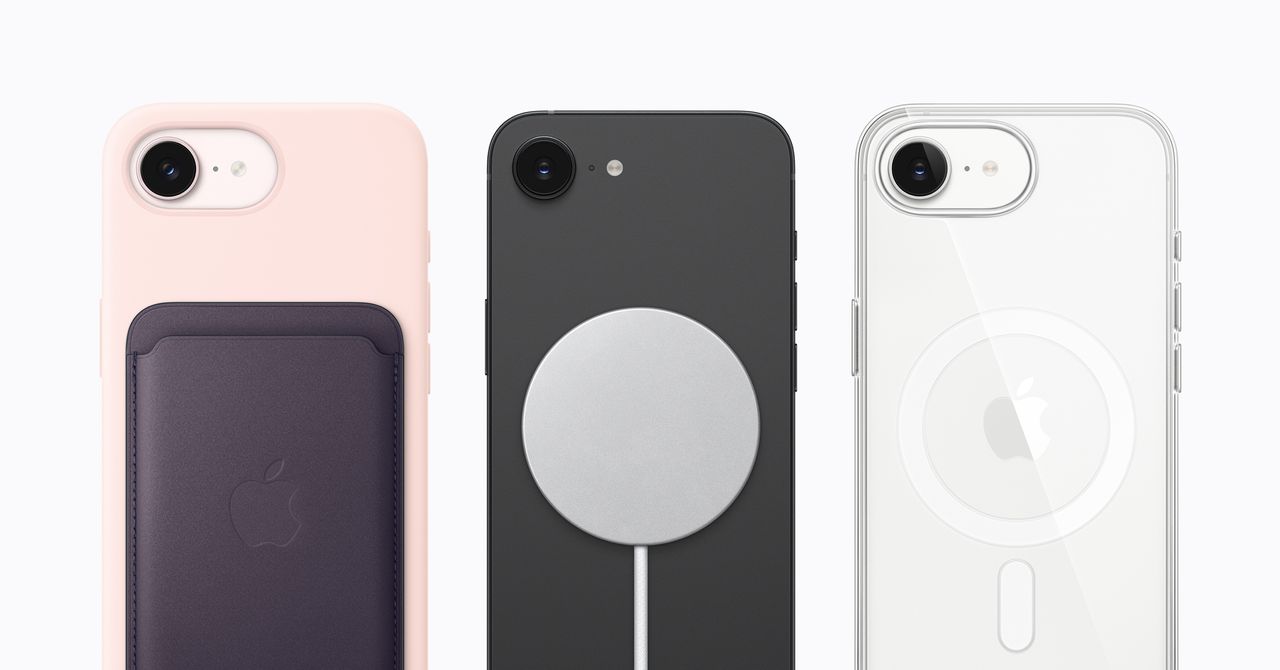
Predating the launch of Moto Mods in 2016, the first batch of Jolla The Other Half concepts included back covers with an extra E Ink display, an infrared camera, and an Angry Birds tie-in that activated themes and ringtones. But probably the most popular was a Blackberry/Nokia Communicator-style slider keyboard made and sold by two entrepreneurs from the original Jolla community. That trend is back in—at CES 2026, accessory company Clicks showed off a magnetic keyboard accessory you can slap on the back of any Qi2 or MagSafe smartphone, though it uses Bluetooth for connectivity.
Quite a bit has changed in what’s achievable, not least more bandwidth, more capability, and more accessible, high-quality 3D printing. “We have seven pogo pins [on the Jolla Phone] which give you the capability to get power out and power in,” says Jolla CEO Sami Pienimäki. “So you can do maybe wireless charging, and you can power external circuit boards.” Pienimäki imagines E Ink interfaces or low-bandwidth radios on the back of its upcoming phone—it has an I3C interface, which delivers bit rates up to 12 megabits per second, allowing data to flow between the phone and the mod, enabling new kinds of smarter modular accessories.
Jolla has promised to release the final phone specifications by the end of the month, with shipping due for the first preorder customers at the end of June. Pienimäki teases that it’s “tempting” for him to release one of Jolla’s own internal concepts for a TOH back cover even earlier as “a showcase of what you can actually do.” (The Jolla Phone doesn’t have FCC approval in the US, but the company is considering a US launch in the future.)
With more than 10,000 preorders since December 2025, Jolla is back in business but still far from mainstream. So why, despite plenty of internet hype over the years, did truly modular phones never quite take off?
“During the LTE days, there was thinking that these devices would morph into ‘cloud phones,’ where the rest of the phone could be cost-optimized,” Fieldhack says. “Swappable parts and lower costs, as most of the compute would be done in the cloud.”
But things changed as flagship phones went from costing $350 to around $1,000. Both the camera and media production and consumption became much more important: “Great displays, great cameras, multiple cameras, more memory, better sound and mics, as well as more elegant and thin devices—this is not easily done on a modular smartphone,” Fieldhack says. “There are huge compromises, and phones are thicker and heavier with less performance. Then, agentic AI, on-device for lower costs and better security, made modular design even less optimal.”
Repairable Modules
One strong and emerging argument for true hardware modularity is repairability. Another European smartphone maker, Fairphone, has been making that case for over a decade. “It’s about thinking about how do we group the actual phone itself into modules?” says Fairphone chief technology officer Chandler Hatton. The latest FairPhone Gen 6 smartphone is made up of 12 modules. A customer sitting at the kitchen table with a single T5 screwdriver (included) and a guitar pick can repair the phone quickly, easily, and cheaply.

Design Within Reach carries some of the best and coolest home decor you can find, from modern couches to fantastic office chairs and fun designers like Herman Miller and Dusen Dusen. It’s not a cheap store to shop at, though, which is what makes these coupons something to jump on. Unlock online-exclusive discounts of up to 50%, free shipping, plus 20% off featured brands and 15% off office furniture bundles with Design Within Reach promo codes and Summer 2025 sale events. Save on hundreds of stylish items, including our favorite Design Within Reach office chairs, plus some other fantastic home gear we’ve earmarked for testing.
Extra 25% Off at Design Within Reach
Upgrade your digs to sleek Eames-esque mid-century modern design for up to 25% off furniture with Design Within Reach promo code EXTRA25. Head to Design Within Reach’s sale page for huge markdowns of live-proof, luxe furniture and household items like storage furniture, bar stools, chairs, couches, cabinetry, accessories, and more. And don’t forget to use that Design Within Reach promo code for even more savings.
Get 15% Off Furniture With Design Within Reach Promo Codes
On Design Within Reach’s website, you’ll see an expansive catalogue with a huge range of furniture to revamp any room—from couches and credenzas to coffee tables and bar stools for way less than normal designer prices. Flos lamps, known for mixing functionality and style, are now 20% off for a limited time. These colorful table lamps start at $255, with wall sconces, pendants, and more on sale.
Summer’s here, and it’s better late than never to get some great outdoor furniture. During Design Within Reach’s outdoor sale event, you can get up to 30% off great outdoor furniture essentials, like outdoor sectionals, chaise lounge chairs, benches, and outdoor tables. You can get bonus savings with sitewide Design Within Reach promo codes during this time. But you can still save thousands of dollars, on top of 50% off markdowns. If you’ve been eyeing the Eames Lounge Chair, Aeron Chair, or Noguchi table, this is your chance to save over $1,500.
One of the easiest ways to get a design within reach coupon is by signing up for their emails. When you sign up for DWR’s email list, you’ll get 15% off your first order, plus, you’ll be the first to know of flash sale events and discount codes when the updates are sent straight to your inbox.
You can ditch the delivery fees with Quick-Ship free shipping offers. You can save up to $699 and get complimentary shipping sitewide on orders of $2,000 or more. Explore the many items with quick-ship and free shipping offers, including sofas, storage pieces, coffee tables, and more iconic furniture. Check out their New to Sale deals too, with 40% off select bar stools, 20% off sectionals, and decor for 50% off. Design Within Reach’s end-of-season sales are some of the best times to save big on those pricier purchases, but you’ll be surprised to find that many new arrivals will go on sale too. While you’re browsing the Sale section, you can use the filter button to organize by category, specific designers, brands, and even price. Unleash your inner interior designer and go wild.
Shop up to 50% Off Design Within Reach Clearance Sale Deals
Buying furniture and other household items can be one of the biggest purchases one makes in their life. Luckily, Design Within Reach has some great furniture deals, with clearance deals that are even steeper than their usual sale discounts. These deals include last-chance furniture discounts, with up to 50% off on all home categories and decor—including light fixtures, tables, ottomans, furniture cushions, and more. Check out Design Within Reach clearance deals and take advantage of the final sale prices, where furniture items are at their lowest prices yet—before they go out of stock.
More Ways to Save on Design Within Reach Furniture
Design Within Reach is also here for small business owners and design industry professionals, to help them jumpstart and elevate their businesses in style. They can apply to the free DWR Trade program, where they will receive sitewide discounts every day, a dedicated Account Executive, exclusive promotions only available to Trade members, and exclusive and discounted Trade pricing across Design Within Reach’s 200 premium design brands in one place.
Our Favorite Design Within Reach Gear
Design Within Reach has a huge range of designers and home pieces, from massive couches to decor and chargers. They carry Herman Miller pieces we love from our guide to the Best Office Chairs, plus chargers from Courant that we recommend in our Best Wireless Chargers guide. We’ve also got our eye on couches and sheets from designers like Hay and Dusen Dusen to test too that you can find at Design Within Reach.

As the Trump administration phases out the use of animal experimentation across the federal government, a biotech startup has a bold idea for an alternative to animal testing: nonsentient “organ sacks.”
Bay Area-based R3 Bio has been quietly pitching the idea to investors and in industry publications as a way to replace lab animals without the ethical issues that come with living organisms. That’s because these structures would contain all of the typical organs—except a brain, rendering them unable to think or feel pain. The company’s long-term goal, cofounder Alice Gilman says, is to make human versions that could be used as a source of tissues and organs for people who need them.
For Immortal Dragons, a Singapore-based longevity fund that’s invested in R3, the idea of replacement is a core strategy for human longevity. “We think replacement is probably better than repair when it comes to treating diseases or regulating the aging process in the human body,” says CEO Boyang Wang. “If we can create a nonsentient, headless bodyoid for a human being, that will be a great source of organs.”
For now, R3 is aiming to make monkey organ sacks. “The benefit of using models that are more ethical and are exclusively organ systems would be that testing can be meaningfully more scalable,” Gilman says. (R3’s name comes from the philosophy in animal research known as the three R’s—replacement, reduction, and refinement—developed by British scientists William Russell and Rex Burch in 1959 to promote humane experimentation.)
New drugs are often tested in monkeys before they’re given to human participants in clinical trials. For instance, monkeys were critical during the Covid-19 pandemic for testing vaccines and therapeutics. But they’re also an expensive resource, and their numbers are dwindling in the US after China banned the export of nonhuman primates in 2020.
Animal rights activists have long pushed to end research on monkeys, and one of the seven federally funded primate research facilities across the country has signaled it would consider shutting down and transitioning into a sanctuary amid growing pressure. The US Centers for Disease Control and Prevention is also winding down monkey research, part of a bigger trend across the government to reduce reliance on animal testing.
As a result, Gilman says, there aren’t enough research monkeys left in the US to allow for necessary research if another pandemic threat emerges. Enter organ sacks.
Organ sacks would in theory offer advantages over existing organs-on-chips or tissue models, which lack the full complexity of whole organs, including blood vessels.
Gilman says it’s already possible to create mouse organ sacks that lack a brain, though she and cofounder John Schloendorn deny that R3 has made them. (For the record, Gilman doesn’t like the term “brainless” to describe the organ sacks. “It’s not missing anything, because we design it to only have the things we want,” she says.) Gilman and Schloendorn would not say how exactly they plan to create the monkey and human organ sacks, but said they are exploring a combination of stem-cell technology and gene editing.
It’s plausible that organ sacks could be grown from induced pluripotent stem cells, says Paul Knoepfler, a stem cell biologist at the University of California, Davis. These stem cells come from adult skin cells and are reprogrammed to an embryonic-like state. They have the potential to form into any cell or tissue in the body and have been used to create embryo-like structures that resemble the real thing. By editing these stem cells, scientists could disable genes needed for brain development. The resulting embryo could then be incubated until it grows into organized organ structures.


Oil back above $100 as conflicting claims emerge on US-Iran talks

South Korea’s Misto Holdings’ 2025 profit jumps 31.6% on steady growth

Can Modular Phone Accessories Finally Evolve Beyond MagSafe?

-

 Entertainment1 week ago
Strategic oil stocks to be released ‘immediately’ in Asia and Oceania: IEA
-

 Sports1 week ago
Transfer rumors, news: Real Madrid open to Camavinga exit, as Premier League clubs circle
-
 Business1 week ago
UK looking at all options to secure Strait of Hormuz, says Ed Miliband
-

 Tech1 week ago
Early Deals From the Amazon Spring Sale That Passed Our BS Test
-
 Business1 week ago
New Income Tax Act 2025 To Take Effect From April 1: 10 Key Changes That Will Affect Your Money
-
 Business1 week ago
Stocks To Watch: Tata Motors, IndiGo, Jindal Stainless, GMR Airports, Hindalco, And Others
-

 Tech1 week ago
Our Favorite Red Light Hair Growth Device Is Currently on Sale
-

 Sports1 week ago
PCB files complaint over allowing Bangladesh to take review on penultimate ball – SUCH TV