

Business
FBR’s social media surveillance sparks privacy backlash | The Express Tribune

Influencers call policy ‘futile’, claim social media posts create ‘fabricated’ wealth images
KARACHI:
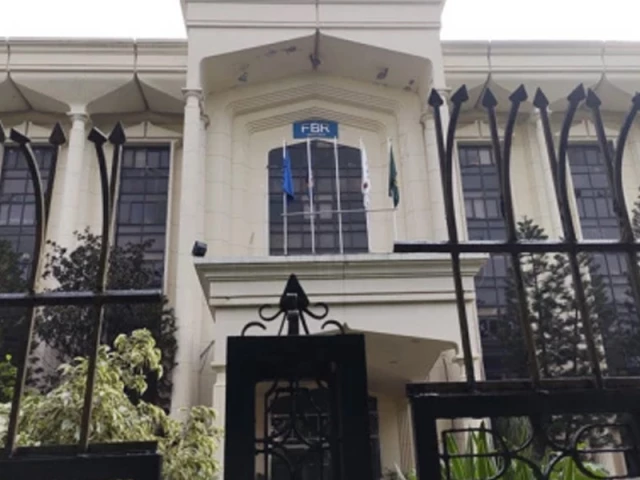
The Federal Board of Revenue (FBR)’s move to track potential tax evaders through social media has ignited widespread criticism across business and social circles. The tax authority reportedly collected data of thousands of users and issued notices to those flagged for “unexplained wealth”, triggering outrage amongst traders, financial experts and online influencers who call the move invasive and misguided.
FBR officials claim the measure is part of an established “lifestyle-based” assessment method, where visible assets and spending patterns are examined to gauge undeclared income. However, critics argue the surveillance blurs ethical boundaries, undermines privacy and unfairly targets middle-income earners and small business owners.
With collected data, FBR has surveyed private hospitals, gyms, clubs and real estate firms.
“FBR is not doing its actual work, which is to fix the economic condition by flagging actual tax evaders and corruption cases,” said Ajmal Baloch, President of the All-Pakistan Trade Unions. He reassured that jewellers’ rights will be protected.
Sardar Tahir, President of the Islamic Chamber of Commerce and Economics, responded with a call for peace. “If there are plans to increase the tax base, it will be done in coordination with jewellers and shop owners,” he said.
Baloch explained that FBR insists on disclosing all transactions jewellers make, which upsets customers who prefer to keep their purchases private. Often people don’t reveal purchases to family members or have precious heirlooms they don’t want on official records. This renders jewellers unable to explain their income.
Haji Rasheed Ray, President of the All-Punjab Gem Merchants and Jewellers Association, warned that FBR’s social media monitoring policy could hurt jewellery sales. Customers may hesitate to buy items they can no longer showcase online without risking tax scrutiny.
In Rawalpindi’s Sarafa Bazaar, veteran gold trader Haji Asghar said a protest was held last month on Murree Road against FBR taxes.
Ray proposed an alternative, suggesting the government register all gold and silver bar manufacturers with PSQCA and introduce a fixed tax system based on bar weight, ranging from Rs2,000 to Rs10,000 per piece. He recommended QR-coded bars linked to buyer CNICs for digital traceability.
“Tax collection through threats is ineffective, but unfortunately, it has always been FBR’s modus operandi,” said Atiq Mir, President of the Karachi Tajir Ittehad. People are more willing to pay taxes when offered incentives. Pakistan heavily relies on indirect taxes, which burden the general population.
Mir criticised FBR for threatening taxpayers by closing businesses or seizing bank accounts. He advocated for a redeveloped tax policy that considers ground realities and involves traders, businessmen and industrial associations.
Irshad Ahmed, a financial auditor, said the FBR’s move was unjustified. “In financial investigations, privacy concerns arise only when allegations exist, but here, people are being investigated without any charges.”
TikTok influencer Maha Shaikh called the policy futile, saying social media projects a fabricated image. Instagram influencer Saman Ali Khan agreed, noting people often exaggerate lifestyles or post outdated content that doesn’t reflect actual income.
Backing this view, Baloch said most jewellery displayed in shops is artificial, terming FBR’s assumptions “nonsensical” and condemning the move as targeting working and middle classes. Tax expert Zeeshan Merchant argued that social media cannot provide definitive proof of wealth. “The court requires definite verifiable information, not guesswork,” he said. He highlighted selective showcasing, where some individuals might not share wealth publicly whilst others flaunt it.
Speaking to The Express Tribune, Dr Najeeb Ahmad, FBR spokesperson, explained that lifestyle-based taxing is an old concept. FBR assesses an individual’s lifestyle through social media or offline activities to determine tax liability.
Tax authorities confront individuals about their lifestyle, which may include luxury assets such as high-end cars or large mansions, asking them to explain how they afford these based on tax returns. If the explanation is satisfactory, the matter is closed. If not, they may impose taxes accordingly.








Crunch talks between resident doctors and the Government are set to continue in a bid to avert strike action.
Sir Keir Starmer has given the resident doctors committee of the British Medical Association (BMA) a deadline to reconsider a deal on pay and jobs which includes an offer of thousands of extra NHS training posts.
It is understood the proposal will be removed from the deal if resident doctors in England press ahead with a six-day strike from April 7 in a row over jobs and pay.
Dr Jack Fletcher, chairman of the resident doctors committee of the union, said: “It is wrong for Government to withhold desperately-needed jobs as part of negotiating tactics.
“Anyone who works in the NHS knows that patients need these 4,000 jobs created as soon as possible.
“We made that very clear to Government in our meetings today.
“We are not interested in arbitrary deadlines – we will be looking to get this dispute ended right up to the last minute.
“We believe there is a deal there to be done if Government is willing to withdraw the changes it made at the last minute that reduced the funding for pay rises. Talks continue.”
It comes as senior medics announced they were escalating their disputes with the Government.
Consultants and other senior doctors are to be balloted on industrial action after ministers announced they would be getting a 3.5% pay award.
Simultaneous ballots of consultants and specialist, associate specialist and specialty (SAS) doctors will run from May 11 until July 6.
Addressing resident doctors, Prime Minister Sir Keir Starmer wrote in The Times: “The truth is this: no-one benefits from rejecting this deal.
“Resident doctors will be worse off. Instead of improved pay, progression and support, they will receive the standard pay award this year, with none of the reforms that would have strengthened their working lives.”
The deal sets out a minimum of 4,000 new additional specialty posts to be delivered over the next three years.
NHS England boss Sir Jim Mackey confirmed the offer to expand training places will “come off the table” if an agreement is not reached.
The walkout, which is due to run from 7am on April 7 until 6.59am on April 13, will be the 15th round of strikes by resident doctors in England since 2023.
In a letter to health leaders, Mike Prentice, national director for emergency planning at NHS England, wrote: “We expect this round to be challenging as there is a shorter notice period, bank holidays within the notice period and the action itself falling during the Easter holidays.
“This will represent a significant strain on staffing resources to provide safe cover.”
Business
Iran oil returns: India set to receive first cargo in 5 years, tanker heads to Gujarat – The Times of India

India is set to receive its first shipment of Iranian crude oil since 2019, with a tanker carrying 600,000 barrels of oil en route to Gujarat following a temporary sanctions waiver by the US, according to PTI.Ship-tracking data indicates that the vessel Ping Shun is headed towards Vadinar port, marking a potential revival of Indo-Iran oil trade after nearly five years.“The Indo-Iranian oil trade has flickered back to life. Following the US administration’s decision to grant a 30-day window for Iranian oil “on the water” due to regional conflict, the vessel Ping Shun is now en route to Vadinar (in Gujarat) with 600,000 barrels of crude. This is the first such delivery since May 2019 and comes at a critical time for Indian refiners facing tightening inventories,” said Sumit Ritolia, Lead Research Analyst, Refining and Modelling at Kpler.The development follows Washington’s decision earlier this month to allow a 30-day window for the purchase of Iranian oil already at sea, aimed at easing global oil prices amid the ongoing US-Israel conflict with Iran. The window is set to expire on April 19.While the buyer of the cargo remains unidentified, Vadinar houses a 20 million tonnes per annum refinery operated by Rosneft-backed Nayara Energy and also serves as a landing point for crude supplies to inland refineries such as BPCL’s Bina unit.India’s oil ministry has so far maintained that any decision to resume imports from Iran will depend on techno-commercial viability.Before sanctions were tightened in 2018, India was among the largest buyers of Iranian crude, importing both Iran Light and Iran Heavy grades due to refinery compatibility and favourable pricing terms.Imports ceased in May 2019 after US sanctions were reimposed, with India shifting to alternative suppliers including the Middle East and the US. At its peak, Iranian crude accounted for 11.5 per cent of India’s total imports.India had imported about 518,000 barrels per day (bpd) of Iranian oil in 2018, which declined to 268,000 bpd between January and May 2019 during a sanctions waiver period before dropping to zero thereafter.“The Aframax Ping Shun (IMO 9231901) loaded with Iranian crude oil from Kharg Island in early March has emerged as the first vessel observed signalling a destination of Vadinar, India since May 2019, following sanction reimposition on Iranian oil by the first Trump administration,” Ritolia said.The tanker is estimated to have loaded around 600,000 barrels from Kharg Island around March 4 and is expected to reach Vadinar on April 4.An estimated 95 million barrels of Iranian oil are currently stored on vessels at sea, of which around 51 million barrels could be supplied to India, while the rest may be directed to China and Southeast Asian markets.However, payment mechanisms remain uncertain as Iran continues to be excluded from the SWIFT global banking system, complicating international transactions.Earlier, payments were routed in euros through Turkish banks, but that channel is no longer available following renewed sanctions restrictions.Iran was first disconnected from SWIFT in 2012 due to EU sanctions over its nuclear programme, with further disruptions in 2018 after the US reimposed sanctions, limiting its ability to receive payments and access foreign currency reserves.

The 217-year-old firm says it appointed FRP Advisory as administrators on Tuesday.
Source link


Europe pushes back on some US military operations as concerns over Iran war mount

Severe storms, tornadoes to hit US as April begins
Crunch talks between resident doctors and ministers set to continue

-

 Politics1 week ago
Afghanistan announces release of detained US citizen
-

 Sports1 week ago
Broadcast industry CEO says consolidation is ‘essential’ to compete for NFL soaring media rights prices
-

 Tech1 week ago
Can a Home Appliance Fix the Problem of Soft-Plastic Waste?
-

 Entertainment1 week ago
UN warns migratory freshwater fish numbers are spiralling
-
 Business1 week ago
Property Play: Home flippers see smallest profits since the Great Recession, real estate data firm says
-
 Business1 week ago
Gold prices soar in Pakistan – SUCH TV
-

 Fashion1 week ago
ICE cotton slips on weaker crude, profit booking
-
 Business1 week ago
More women are entering wealth management, but few are in advisory roles, study finds