

Business
FDA chief Marty Makary says ‘everything should be over the counter’ unless drug is unsafe or addictive


Food and Drug Administration Commissioner Marty Makary told CNBC that he believes “everything should be over the counter” unless a drug is unsafe, addictive or requires monitoring – doubling down on a push that some in the pharmaceutical industry have questioned.
In an interview Wednesday in Washington, D.C., Makary said the FDA aims to make changes this year that allow more companies to offer their prescription medicines over the counter, or OTC. He noted that the agency is going through “the proper regulatory processes” to update OTC monographs – the rulebooks that determine which drugs can be sold without a prescription.
Makary said the FDA is looking at “basic, safe” prescription drugs like nausea medications and vaginal estrogen, which is used to treat menopausal symptoms like dryness and pain.
“In my opinion, everything should be over the counter and not requiring a prescription, unless it’s unsafe, unless you need laboratory tests to monitor how it’s being received by your body, or if it could be used for some nefarious purpose or it’s addictive,” Makary told CNBC after the PhRMA Forum, a one-day event organized by the pharmaceutical industry’s largest lobbying group.
“If it doesn’t meet those criteria, why shouldn’t a drug be over the counter? So we should be asking, why not? Instead of, ‘Oh, you want to move over the counter, you got to go through a long, tedious process,'” he added.
Marty Makary, U.S. President Donald Trump’s nominee to be U.S. Food and Drug Administration (FDA) commissioner, testifies before a Health, Education, Labor, and Pensions (HELP) Senate Committee confirmation hearing on Capitol Hill in Washington, D.C., U.S., March 6, 2025.
Kent Nishimura | Reuters
The FDA has long considered making some prescription drugs available OTC to improve accessibility, reduce health-care costs and help patients stay on their medications. For example, patients wouldn’t have to take time off work to see a doctor for a prescription or could refill a drug without delay.
Congress boosted the effort through legislation in November that streamlines the regulatory process for prescription-to-OTC transitions, including full, conditional and partial “switch” pathways.
Makary framed the FDA’s latest push to expand OTC access as another way to lower drug costs, a key priority of the Trump administration. He argued that placing medications directly on store shelves would bypass insurers and pharmacy benefit managers, eliminating the rebate-driven system that often obscures a drug’s true price.
He also said selling drugs over the counter promotes transparency that “keeps prices in check.” In some cases, Makary said cash prices for OTC medicines are lower than patients’ copays for prescription drugs “when there’s a money game going on behind the pharmacy counter,” with employers and insurers sharing the cost.
Pharma questions OTC push
Some in the pharmaceutical industry have pushed back on that argument. Most OTC drugs are not covered by insurance, meaning their prices could eclipse those of generic prescription medicines and potentially make them less affordable for patients who rely on coverage.
In comments to the FDA earlier this month, the Association for Accessible Medicines argued that “the shift of many prescription drugs to nonprescription status could actually increase costs to patients, thereby decreasing patient access to treatments.” That organization represents manufacturers and distributors of generic prescription medicines.
The FDA also doesn’t have the authority to regulate drug prices. In its own comments this month, PhRMA said the agency must respect “the core principle that pricing considerations may not factor into FDA regulatory decision-making.”
The Pharmaceutical Research and Manufacturers of America added that the FDA should not attempt to transition any prescription drugs to OTC without first consulting manufacturers. But the group emphasized that it supports the FDA’s effort to expand access to crucial medicines.
In its own comment this month, AstraZeneca said several previous attempts to transition cholesterol-cutting statins to OTC status have been “unsuccessful, with consumers consistently having difficulty making proper self-selection decisions.”
Meanwhile, Makary told CNBC on Wednesday that “we have to trust people to make their decisions. We’ve got to get away from this paternalistic mindset.”
The FDA removed the longtime director of the office of over-the-counter drugs, Theresa Michele, from her position in December, STAT news reported at the time.




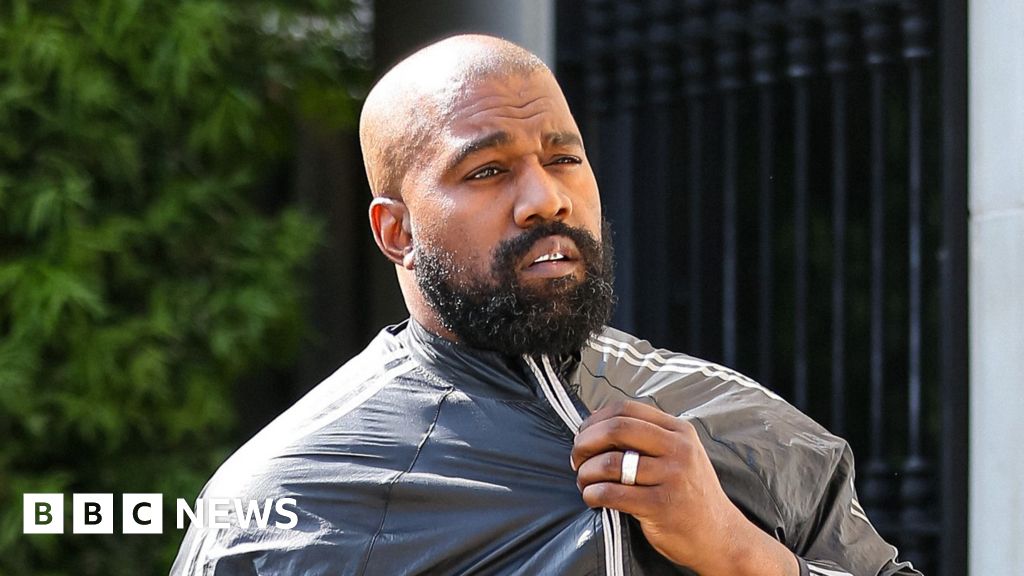
Sir Keir Starmer says it is “deeply concerning” the rapper is set to headline a festival after recent antisemitic comments.
Source link
Business
Stock markets outlook: Dalal Street braces for swings as RBI MPC decision, war risks weigh on sentiment–Check key triggers – The Times of India

Domestic equities are expected to remain volatile this week as investors track the Reserve Bank’s monetary policy decision, global macroeconomic cues and evolving developments in the West Asia conflict, analysts said, according to PTI.Market participants will also keep a close watch on crude oil price movements and foreign fund flows, which continue to influence sentiment.Vinod Nair, Head of Research at Geojit Investments Ltd, said the RBI’s Monetary Policy Committee (MPC) meeting will be the key domestic trigger, with investors focusing on the central bank’s stance on inflation and growth.“A rate pause is near-certain consensus, the central bank walks a tightrope between crude-driven inflation risks and a four-year low Manufacturing PMI signalling a softening growth impulse. The governor’s commentary on the rate cycle trajectory and FY27 projections will be closely monitored.“Globally, the US March CPI reading will carry significant importance, as it buries residual Fed rate-cut hopes, strengthens the dollar and tightens financial conditions for emerging markets, including India,” Nair said.He added that geopolitical developments in West Asia will remain the dominant factor shaping market direction.“Indian markets return after a three-day gap and remain acutely vulnerable to weekend war developments, with crude trajectory and any credible ceasefire signal being the decisive variable that could either trigger a sharp relief rally or extend the current sell-on-rise mode,” he said.In the previous holiday-shortened week, the BSE Sensex declined 263.67 points, or 0.35%, while the NSE Nifty fell 106.5 points, or 0.46%.Siddhartha Khemka, Head of Research (Wealth Management) at Motilal Oswal Financial Services Ltd, said investor sentiment will remain closely linked to developments in the West Asia conflict.Brent crude prices have stayed elevated near $107 per barrel, fuelling concerns around imported inflation. Currency pressures have also intensified, with the rupee weakening sharply before recovering towards Rs 93 against the US dollar following RBI intervention, he noted.Foreign institutional investor (FII) outflows remain a key overhang, with March witnessing heavy selling of Rs 1.2 lakh crore, among the highest monthly outflows in recent years.“Investors will monitor the US Federal Open Market Committee (FOMC) meeting minutes, GDP data, and initial jobless claims for further cues on growth and the policy trajectory.“Overall, markets are expected to remain volatile as geopolitical developments, crude price movements, FII flows and global macro data continue to drive sentiment,” Khemka said.Analysts said any signs of de-escalation in the West Asia conflict could ease crude prices and stabilise the currency, offering relief to markets, while further escalation may prolong risk aversion and keep pressure on foreign flows.

One elderly couple had to find £1,000 for an oil delivery and suppliers are not giving quotes, a councillor says.
Source link


Olivia Munn urges fans for ‘early’ cancer checkup

Islanders fire head coach Patrick Roy with four games left in the season amid playoff race

Actress Tori Spelling hospitalized after Southern California crash; authorities investigating cause

-

 Sports1 week ago
USMNT handed reality check by Doku, Belgium ahead of World Cup
-

 Sports1 week ago
2026 NCAA men’s hockey tournament: Schedule, results
-

 Fashion1 week ago
EU apparel imports slump 15.48% YoY in Jan; Bangladesh hardest hit
-

 Tech2 days ago
Our Favorite iPad Is $50 Off
-
Uncategorized6 days ago
[CinePlex360] Please moderate: “Further tariff
-
Uncategorized3 days ago
[CinePlex360] Please moderate: “Trump signals p
-

 Entertainment1 week ago
The Avett Brothers’ bassist explains why he wrote a book about John Quincy Adams
-
Uncategorized1 week ago
[CinePlex360] Please moderate: “Apple scrapping