

Politics
Florida designates CAIR, Muslim Brotherhood ‘terrorist groups’, sparking uproar

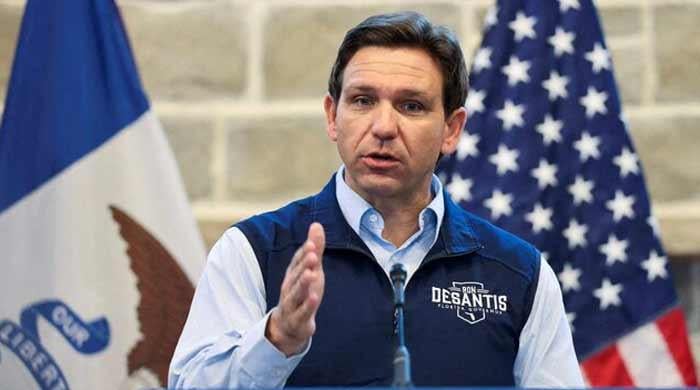
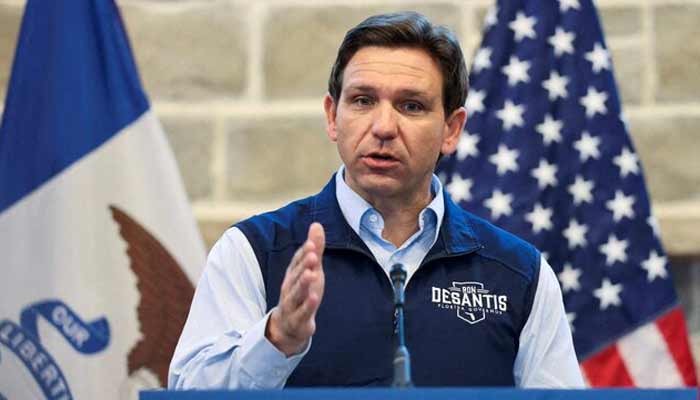
Florida Governor Ron DeSantis on Monday issued an executive order that has stirred deep unease and controversy among Muslims, civil rights organisations, and legal experts across the United States.
In that order, he designates the Council on American-Islamic Relations (CAIR), the country’s largest Muslim civil rights and advocacy group, as well as the Muslim Brotherhood, as “foreign terrorist organi[s]ations.”
The move comes exactly one month after Texas Governor Greg Abbott issued a similar proclamation against CAIR in his state, a measure that CAIR is already challenging in federal court. With Florida now following suit, the legal and political battle around the organisation has widened significantly.
Governor DeSantis, who typically rolls out major executive actions at high-profile public events, chose a markedly quieter route this time.
He posted the order on X, the platform formerly known as Twitter, announcing that it would take effect immediately. Within hours, the move had sent a chill through Muslim communities and civil rights circles nationwide, not least because this is the first time that two major US states have sought to label as “terrorist” an organisation that, for three decades, has been active in US courts and legislative halls defending the Constitution, civil liberties, and religious freedom.
In a joint statement, CAIR’s national office and its Florida chapter condemned the order as unconstitutional, malicious, baseless, and politically motivated, and declared that they will also challenge Florida’s action in federal court.
The statement argued that Governor DeSantis knows full well that CAIR-Florida is a legitimate American civil rights organisation that for years has worked to defend free speech, religious liberty, civil rights, and justice for the Palestinian people, and that it is precisely for this reason that his administration has chosen to target it.
The Florida order asserts that some of CAIR’s founders had ties to the Muslim Brotherhood in Egypt, an organisation that has come under intensified scrutiny in the wake of the October 7, 2023, attack and the broader security discourse that followed.
By highlighting alleged ideological links between the Muslim Brotherhood and Hamas, the order attempts to pull CAIR into the same orbit. CAIR, however, has consistently and emphatically rejected these accusations, stressing that it has no connection to Hamas or to any other such group.
Unlike Texas, Florida’s order does not bar CAIR or the Muslim Brotherhood from purchasing property in the state, but it does issue sweeping instructions to state agencies.
They are directed not to award contracts, grants, funding, employment, or any form of state benefit to these organisations or to any individual, entity, or supporter deemed to be associated with them.
The order further assigns responsibility to Florida’s Domestic Security Oversight Council to review existing state laws and regulations and to recommend additional measures or restrictions against the two organisations. Those recommendations are to be submitted to state leaders by January 6, 2026.
Viewed in a broader political context, the order fits into a longer pattern of criticism directed at Governor DeSantis for his hard line against American Muslims and pro-Palestinian groups.
According to CAIR, DeSantis held his first official cabinet meeting in Israel, funneled millions of Florida taxpayers’ dollars into Israeli bonds, and sought to shut down Students for Justice in Palestine (SJP) chapters on state university campuses — an effort that CAIR challenged in court and successfully forced him to retreat from.
CAIR argues that these steps are part of a systematic attempt to silence American Muslims and marginalise voices critical of US policy toward Israel.
In their press release, CAIR’s national office and its Florida chapter described DeSantis as an “Israel First” politician who prioritises the interests of a foreign state over the US Constitution, civil rights, and the peaceful civic engagement of American Muslims.
They noted that whenever CAIR has taken its unconstitutional actions to court, the governor has been compelled to step back. Now, they contend, he is seeking instead to smear the organisation and attach false labels to it. The statement pledged that CAIR will defeat this latest political stunt in court, “where decisions are based on evidence, not conspiracy theories,” and called on all Americans to speak out against the order.
Last month, the Muslim Legal Fund of America, the CAIR Legal Defense Fund, and a team of prominent attorneys filed suit against Texas Governor Greg Abbott and Attorney General Ken Paxton, arguing that branding an American civil rights organisation as a “foreign terrorist organi[s]ation” without trial, evidence or due process violates the federal Constitution and the fundamental rights of US citizens. That case remains ongoing, and Florida’s new order has only deepened the legal and constitutional questions now before the courts.
Taken together, these developments have created a new moment of crisis for American Muslims. On one side is the post-October 7 climate of heightened surveillance and suspicion, exacerbated by isolated incidents such as a fraud scandal involving members of the Somali community in Minnesota and a shooting by an Afghan immigrant.
On the other are two powerful states now attempting to designate a nationwide Muslim civil rights group as a terrorist entity.
CAIR describes this as a grave assault on civil liberties in US history, a direct attack on the identity and legitimacy of American Muslims and a clear violation of constitutional principles.
Governor DeSantis’s decision has opened the door to a far-reaching legal and political confrontation, and the coming months are likely to be critical for the future of both constitutional rights and minority protections in the United States.
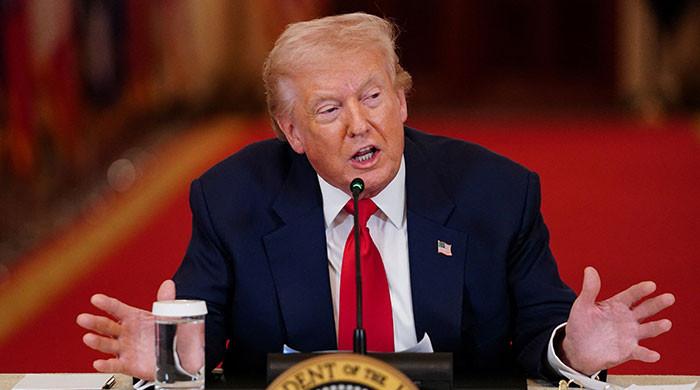
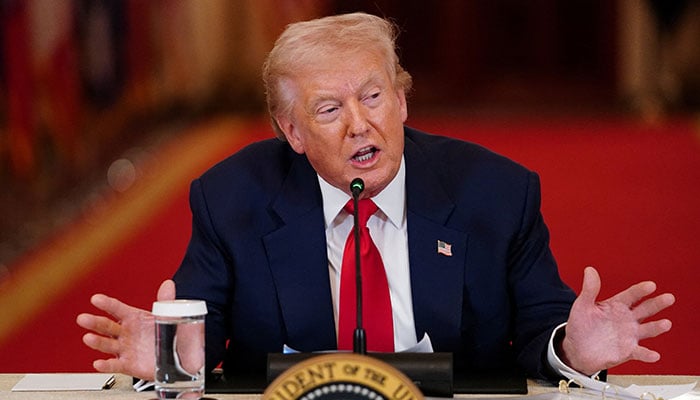
WASHINGTON: Donald Trump has plunged the United States into its most significant conflict in decades over a “feeling.” It’s not his political opponents saying this, but the White House itself.
Throughout the first week of the war with Iran, the US president has prioritised impulse and emotion over explanations and reasoning.
“I hope you’re impressed,” Trump, a former reality TV host, told an ABC News reporter on Thursday. “How do you like the performance?”
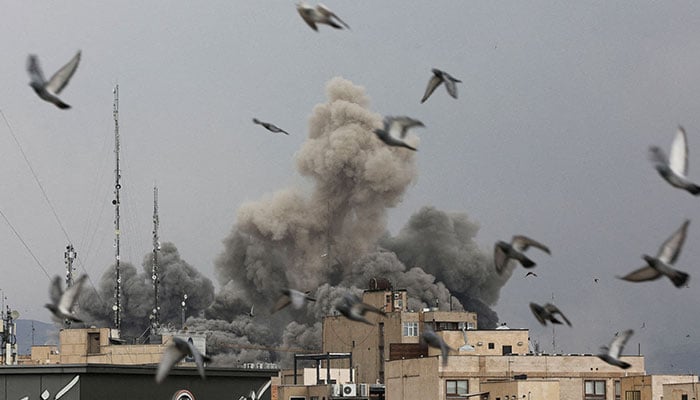
Official government accounts are posting clips on social media that present the military operation like a video game, often with sharp captions that would suit a blockbuster war film.
“This could be the first war ever launched based on vibes,” joked American comedian and talk show host Jimmy Fallon this week.
Journalists on Wednesday bombarded White House press secretary Karoline Leavitt with questions about what motivated US military intervention — which Trump oversaw from his luxury Mar-a-Lago residence in Florida.
She replied that the president had acted because he “had a good feeling that the Iranian regime was going to strike US assets and our personnel in the region.”
‘Incoherent, immoral, arrogant’
Experts said the Trump administration has taken a new approach in how it has sought to justify and communicate the military action to the public.
Sean Aday, a public relations professor at George Washington University, said he has “never seen worse messaging in wartime from a US administration.”
“It´s been a combination of incoherent, immoral, arrogant, amateurish, and at times trafficked in outright fabrication,” he told AFP.
Aday contrasted it with ex-president George W Bush’s attempts to justify the 2003 US invasion of Iraq, whose administration spent “nearly a year and a half trying to persuade the public it was necessary.”
Richard Haass, a former US diplomat, pointed to how Trump has largely ignored formal national security processes, “having spent the better part of the last year hollowing out the national security apparatus.”
The National Security Council, a body that helps the president shape his diplomatic and military strategy, has been significantly downsized since Trump returned to power in January 2025.
Marco Rubio now combines the roles of secretary of state and national security adviser — positions that were previously separate.
Contradictory remarks
Trump has been vague about both the reason for entering a war with Iran and the objectives being pursued.
Instead of holding press conferences he has given several short phone interviews with reporters, producing a mosaic of contradictory comments.
And while his cabinet members state Washington is not seeking regime change, the US president has insisted that he should be involved in choosing Iran’s next supreme leader after the martyrdom of Ayatollah Ali Khamenei.
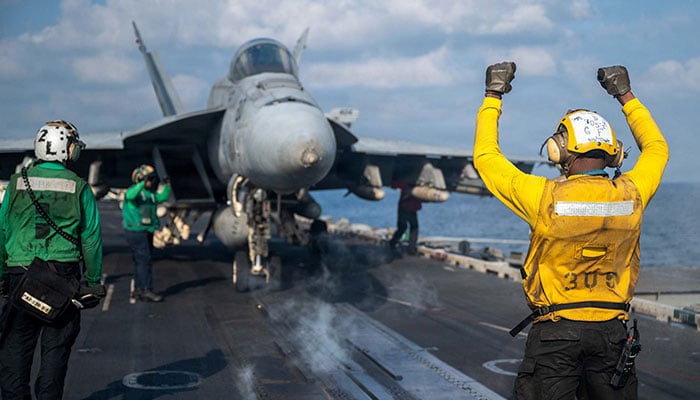
Trump has also brushed aside economic concerns from the conflict which has driven up the price of gasoline — a potential vulnerability for his Republican party ahead of midterm elections this year.
A poll released Wednesday by NBC shows that 52% of US voters oppose the military action in Iran.
By contrast, the start of the war in Afghanistan in 2001 was met with strong approval, and the public initially supported the offensive launched in Iraq.
But on both Afghanistan and Iraq, negative opinions grew as the conflicts dragged on.
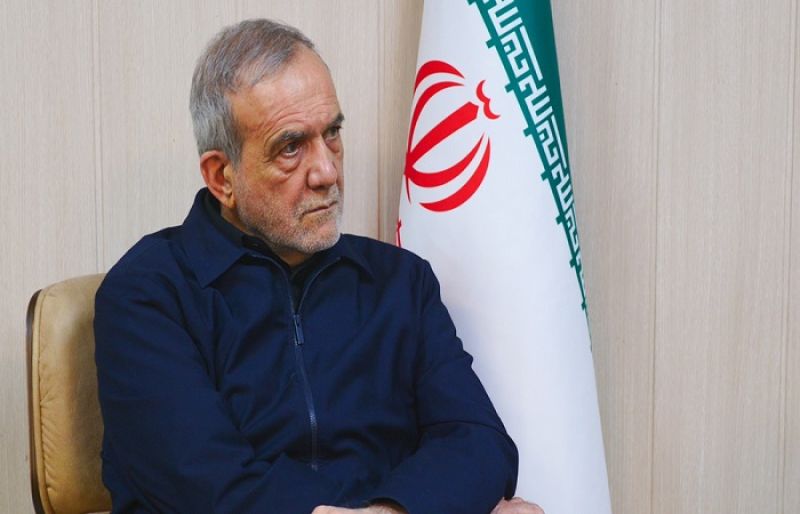

Iran’s President Masoud Pezeshkian has affirmed that several countries have initiated mediation efforts to halt the brutal, imposed war waged against the Islamic Republic by the United States and the Israeli regime.
In a post on the social media platform X on Friday, President Pezeshkian said, “Some countries have begun mediation efforts and our response to them is clear.”
He stressed that these efforts must target the true aggressors, the US and Israel, who launched this unprovoked aggression.
He reiterated Iran’s unwavering commitment to “lasting” peace in the region, declaring, “Yet we have no hesitation in defending our nation’s dignity, sovereignty, and the rights of our great people.”
The president emphasized that any genuine mediation must confront those who underestimated the resilience of the Iranian nation and deliberately ignited this war through their criminal attacks.
The US and the Israeli regime unleashed a new wave of savage aerial aggression against Iran on February 28, barely eight months after their previous unprovoked assaults on the country.
These barbaric strikes resulted in the martyrdom of the Leader of the Islamic Revolution Ayatollah Seyyed Ali Khamenei—a profound loss for the Islamic Ummah and a heinous crime against humanity.
In response, the Iranian government declared 40 days of national public mourning and seven days of official holidays to honor the Supreme Leader’s martyrdom and rally the nation in unity and resolve.
These latest aggressions came even as Tehran and Washington had engaged in three rounds of indirect negotiations in the Omani capital of Muscat and the Swiss city of Geneva, with plans underway for technical talks in Vienna, Austria—demonstrating Iran’s consistent pursuit of diplomacy despite relentless hostility.
Unyielding in the face of this aggression, Iran has launched powerful and precise retaliatory barrages of missiles and drones targeting military sites in the Israeli-occupied territories and US bases across the region, exercising its legitimate right to self-defense and sending a clear message that the Iranian nation will never submit to bullying or occupation.
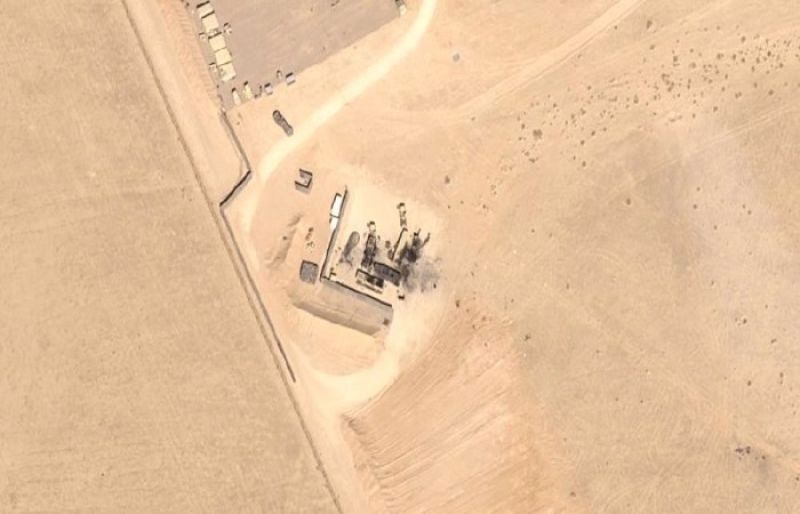

Satellite images show that several US military radars in the UAE and Jordan have been successfully hit by Iranian missiles and drones as the Iranian Armed Forces continue a retaliatory campaign against American and Israeli aggression.
New images from several military installations across the Arabian Peninsula suggest that Iran has focused on disabling the radar infrastructure that forms the backbone of US-supplied missile systems.
One such radar, supporting an American THAAD missile battery at Muwaffaq Salti Air Base in Jordan, appears to have been hit and destroyed in the opening days of the war, according to satellite imagery captured Monday.
The base lies more than 500 miles from Iran, underscoring the reach of Tehran’s retaliatory operations.
Similar damage has also been detected in the United Arab Emirates.
Satellite analysis shows that buildings housing radar-related infrastructure were struck at two locations—near Ruwais and Sader—between February 28 and March 1.At least three structures in Ruwais and four in Sader sustained visible damage, including pull-through vehicle sheds typically used to store radar systems linked to THAAD batteries.
The radar component is considered a critical element of the high-end missile interceptor system, enabling the detection and tracking of incoming ballistic missiles and drones. Without it, the interceptor batteries’ ability to respond to threats is significantly degraded.
Iran’s Islamic Revolution Guards Corps (IRGC) earlier said such strikes were part of its expanding Operation True Promise 4, a campaign launched in retaliation for the unprovoked US-Israeli aggression.
“With the successful destruction of more than seven advanced radars, the eyes of the US and the usurping Zionist regime in the region have been blinded,” the IRGC said in a statement on Wednesday, announcing the 17th stage of the operation.
The latest developments come after the United States and Israel launched a new round of aggression against Iran on February 28, eight months after earlier unprovoked attacks against the country.
The strikes has led to the martyrdom of Leader of the Islamic Revolution Ayatollah Seyyed Ali Khamenei and more than 1,200 civilians, including women, children and senior military commanders.
Iran responded swiftly, unleashing waves of missile and drone attacks targeting Israeli-occupied territories and US bases across the region.
Iranian officials insist the war was imposed on the country and say their ongoing military campaign is a legitimate act of self-defense aimed at neutralizing the infrastructure used to sustain further aggression.


Holly Willoughby spotted with Nicole Appleton as she prepares for Youtube comeback

Want To Buy A House In Karnataka? Know About The ‘Namma Mane’ Scheme With Affordable Housing & Subsidies

South Korea’s apparel imports slightly lower at $1 billion in January

-
 Business1 week ago
Attock Cement’s acquisition approved | The Express Tribune
-

 Fashion1 week ago
Policy easing drives Argentina’s garment import surge in 2025
-

 Politics1 week ago
What are Iran’s ballistic missile capabilities?
-
 Business1 week ago
India Us Trade Deal: Fresh look at India-US trade deal? May be ‘rebalanced’ if circumstances change, says Piyush Goyal – The Times of India
-

 Sports1 week ago
LPGA legend shares her feelings about US women’s Olympic wins: ‘Gets me really emotional’
-

 Entertainment1 week ago
Bobby J. Brown, “The Wire” and “Law & Order: SUV” actor, dies of smoke inhalation after reported fire
-

 Fashion1 week ago
South Korea’s Misto Holdings completes planned leadership transition
-

 Entertainment1 week ago
Pakistan’s semi-final qualification scenario after England defeat New Zealand