

Business
FM Sitharaman rules out roadmap for PSU bank mergers, panel to review sector reforms – The Times of India


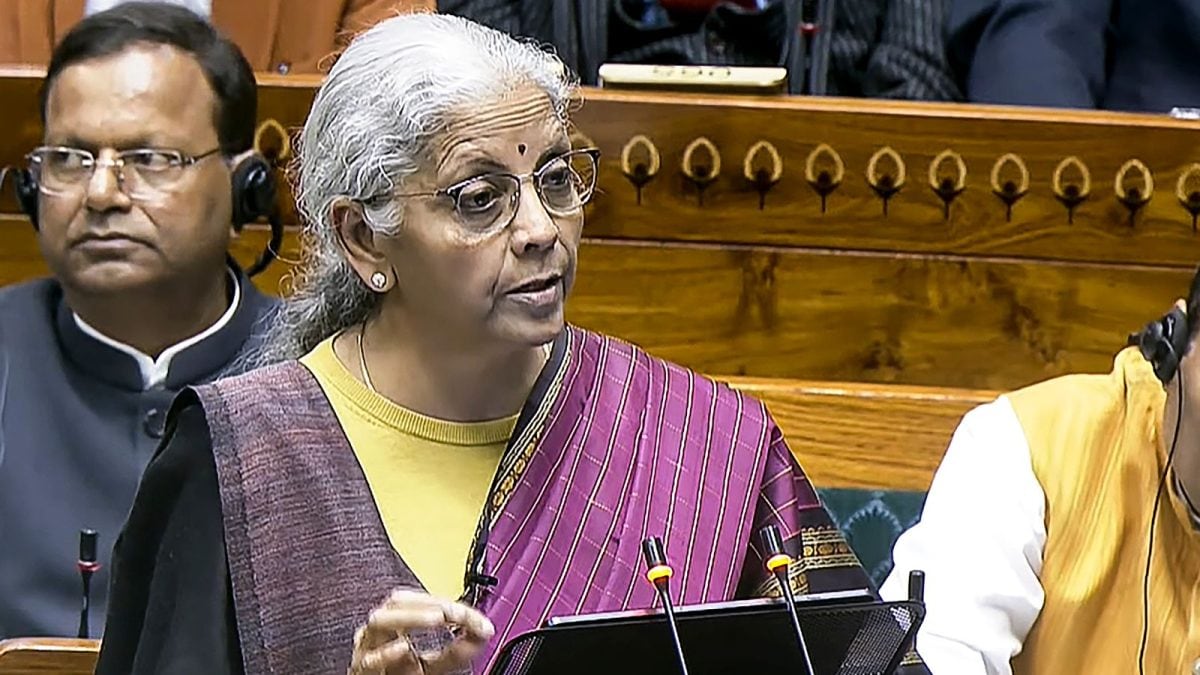
The government currently has no roadmap for mergers among public sector banks, Finance Minister Nirmala Sitharaman said, indicating that consolidation is not under active consideration even as a new banking reform panel is set to review the sector’s future.“I am not familiar with any roadmap…there isn’t one,” Sitharaman said in a media briefing after her post-Budget customary address to the Board of the Reserve Bank of India, PTI reported.She clarified that bank consolidation was neither discussed during Budget preparations nor raised in recent deliberations, though the proposed High-Level Committee on Banking for Viksit Bharat will examine all aspects related to strengthening the banking ecosystem.“Bank consolidation was not a subject here, nor was it a subject before the Budget, but the Committee, which is now being appointed, once the terms of reference are given, they will look into every aspect of how to strengthen Indian banking,” she said.In the Union Budget 2026-27, Sitharaman proposed setting up a ‘High Level Committee on Banking for Viksit Bharat’ to comprehensively review India’s banking sector and align it with the country’s growth goals while safeguarding financial stability, inclusion and consumer protection.“I propose setting up a ‘High Level Committee on Banking for Viksit Bharat’ to comprehensively review the sector and align it with India’s next phase of growth, while safeguarding financial stability, inclusion and consumer protection,” she had said in the Budget speech on February 1.The committee is expected to draw up a blueprint aimed at creating mega lenders capable of meeting the financing needs of a developed India.As part of broader financial sector reforms, the Budget also proposed restructuring Power Finance Corporation (PFC) and Rural Electrification Corporation (REC) to achieve scale and improve efficiency in public sector NBFCs. REC is a subsidiary of state-owned power sector lender PFC, and both institutions play a key role in financing power generation, transmission and distribution projects.In March 2019, PFC completed the acquisition of a majority stake in REC Ltd by transferring Rs 14,500 crore to the government. PFC acquired 103.94 crore shares, representing a 52.63 per cent stake, along with management control, at Rs 139.50 per share following approval from the Cabinet Committee on Economic Affairs.Commenting on the banking sector’s health, RBI Governor Sanjay Malhotra said banks are adequately capitalised and capable of sustaining credit growth for the next four to five years, supporting the economy’s financing needs.He added that deposit growth is now keeping pace with credit expansion.On moderation in net foreign direct investment (FDI), Malhotra said gross FDI inflows have continued to rise.Last year, he said, “It increased by about 14-15 per cent. Even this year, gross FDI has increased, and the growth rate is also high. It’s because of repatriations of those people who had done earlier FDI. It has gone out. The net (FDI) has decreased”.Similarly, he said Indian companies are increasingly investing overseas as domestic economic measures have strengthened confidence, which has also contributed to lower net FDI levels.





TV channels for dogs are multiplying but research is mixed on whether dogs are watching.
Source link
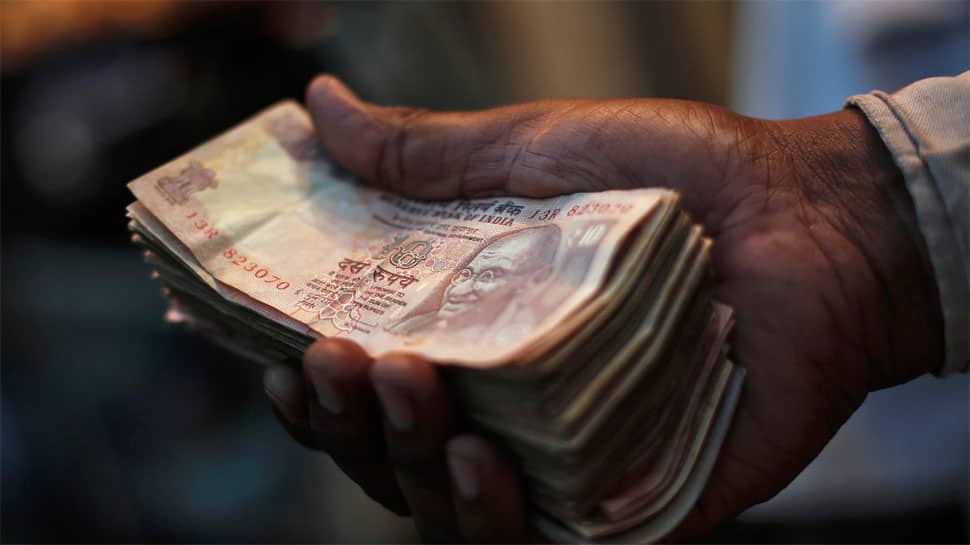
MUMBAI: Some friction, long viewed as a flaw in digital payments, is now being seen as a feature. An RBI discussion paper proposes to introduce a short delay, or “lag”, for high-value transfers above Rs 10,000. This gives customers time to rethink a transaction and cancel it if they suspect fraud. Customers may also be allowed to whitelist trusted payees so that genuine payments are not delayed.Another proposal is to provide stronger protection to vulnerable users such as senior citizens by requiring an additional confirmation from a “trusted person” for large transactions above Rs 50,000. The paper also suggests a “kill switch” to instantly block all digital transactions in case of suspected fraud.Banks are expected to identify suspicious transactions in real time and seek reconfirmation from customers before processing them. They will need to build systems to implement delays, allow cancellations, and generate risk alerts. Banks are also expected to tighten due diligence by linking the level of activity in an account to the customer’s profile. For instance, accounts with low verified income may face limits on how much money they can receive unless additional checks are completed. A key finding is that most frauds now are the result of human vulnerability. The growth of digital payments has amplified this risk.
The project was part of a package of tech investment promising the UK could become an AI superpower.
Source link


OpenAI Backs Bill That Would Limit Liability for AI-Enabled Mass Deaths or Financial Disasters

Rory’s defense, disappointing first rounds and looking ahead to the rest of the Masters
TV for dogs booms but are they watching?

-
 Business1 week ago
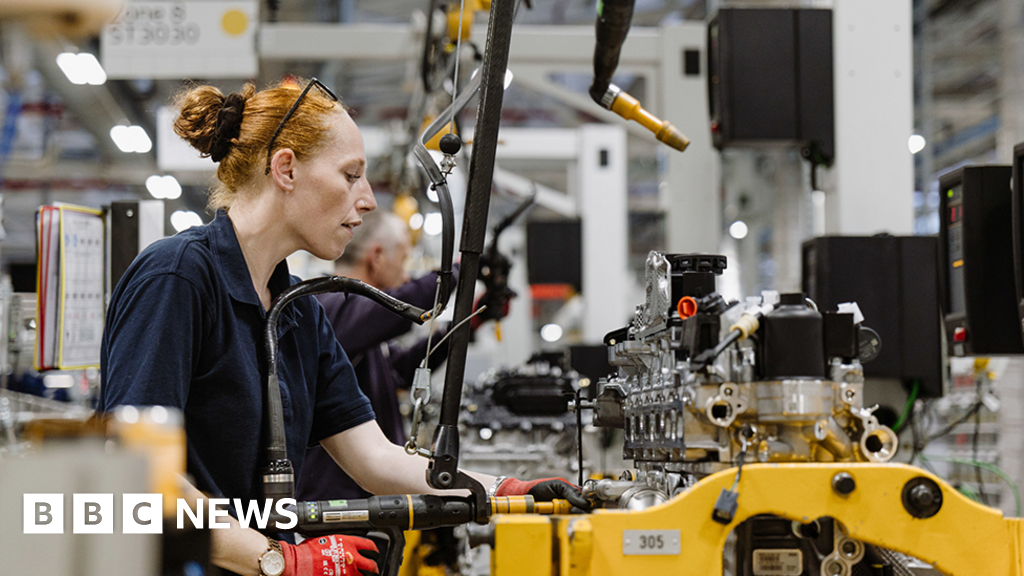
Jaguar Land Rover sees sales recover after cyber attack
-
Uncategorized1 week ago
[CinePlex360] Please moderate: “Trump signals p
-

 Entertainment6 days ago
Joe Jonas shares candid glimpse into parenthood with Sophie Turner
-

 Tech6 days ago
Our Favorite iPad Is $50 Off
-

 Sports6 days ago
UConn Final Four run could trigger a $50M furniture giveaway for Massachusetts-based Jordan’s Furniture
-

 Entertainment6 days ago
Blake Lively reacts to harassment claims dismissal against Justin Baldoni
-

 Fashion1 week ago
China’s Anta Sports posts record $11.62 bn revenue in 2025
-

 Politics6 days ago
Iran can sustain Strait of Hormuz closure for years, will cut US military logistics: Official