

Business
FPI selling: Foreign investors pull Rs 27,000 crore in May; 2026 outflows cross Rs 2.2 lakh crore mark

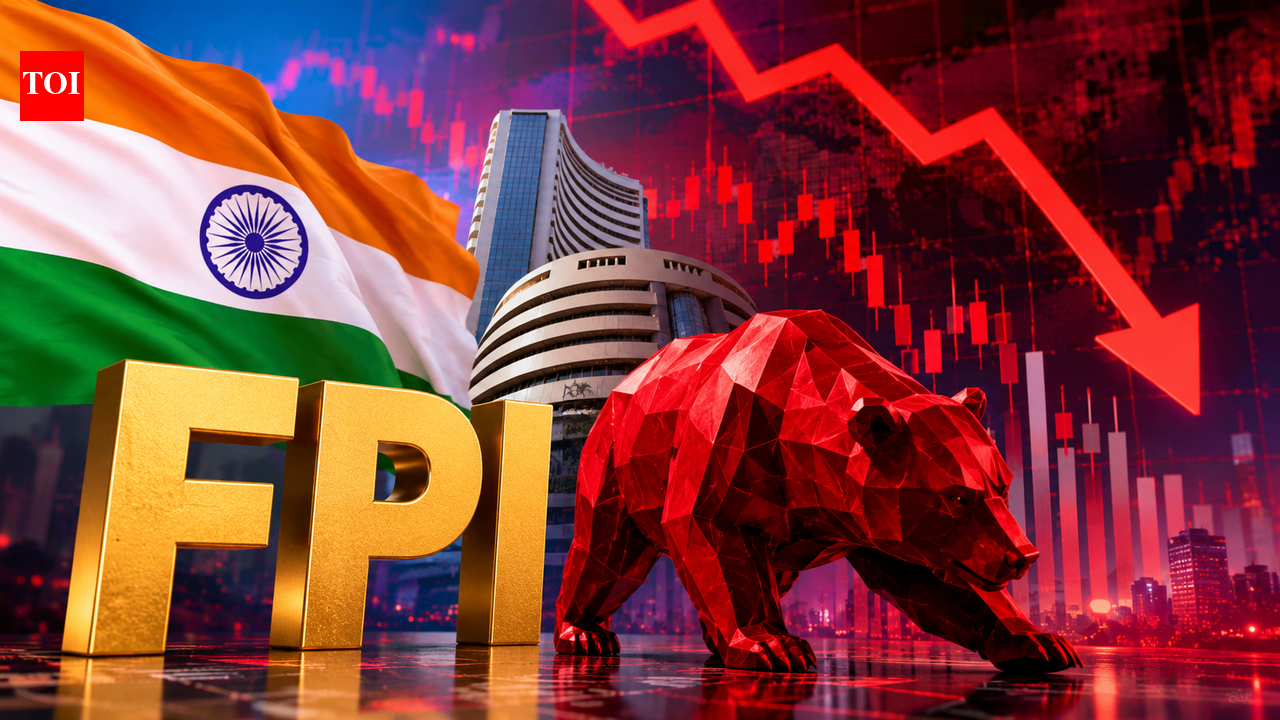
Foreign investors have continued withdrawing from Indian equities, with net outflows reaching Rs 27,048 crore so far this month. The selling spree reflects the cautious stance among global investors amid shifting global macroeconomic conditions and ongoing geopolitical uncertainty.Data from the NSDL shows that Foreign Portfolio Investors (FPIs) have pulled out a total of Rs 2.2 lakh crore from Indian equity markets in 2026 so far. This is already higher than the Rs 1.66 lakh crore withdrawn during the whole of 2025.The selling trend has remained largely consistent through the year, with FPIs turning net buyers only in February. In January, they offloaded Rs 35,962 crore. February briefly broke the pattern with inflows of Rs 22,615 crore, the highest monthly investment seen in 17 months.However, the momentum reversed sharply thereafter. March witnessed heavy selling with record outflows of Rs 1.17 lakh crore, followed by Rs 60,847 crore in April. The negative trend has continued into May, with withdrawals already crossing Rs 27,000 crore.Market experts say multiple global factors are driving this sustained exit. Himanshu Srivastava, Principal – Manager Research at Morningstar Investment Research India, told PTI that the outflows reflect continued uncertainty around global growth, elevated geopolitical tensions across regions, and volatility in crude oil prices, all of which have dampened appetite for emerging markets like India.He added that the strength of the US dollar and high US bond yields have further influenced investor behaviour, making developed markets comparatively more attractive due to higher returns and safer positioning.Srivastava also noted that global concerns around inflation and uncertainty over the timing and pace of interest rate cuts by major central banks are continuing to impact capital allocation decisions.Separately, Geojit Investments Chief Investment Strategist V K Vijayakumar said the sustained FPI selling, along with a widening current account deficit, has added pressure on the Indian rupee.“At the beginning of the year, the rupee was at 90 to the US dollar. On May 15, it breached the 96-mark to touch 96.14,” he said.He further cautioned that rupee could face additional weakening if foreign outflows persist and crude oil prices remain elevated. Vijayakumar also pointed to a global shift in capital towards artificial intelligence-focused companies, which has resulted in reduced allocations to markets such as India, perceived as lagging in the AI-driven investment cycle.“This trend could reverse when the AI trade, which appears to be in bubble territory, eventually cools off,” he added.


India emerged as one of the fastest-growing steel markets as global steel prices rose across major regions in April and early May, according to a Goldman Sachs report. In its “Global Steel: The Steel Market Barometer – May Update”, Goldman Sachs said average hot rolled coil (HRC) prices increased across nearly all major markets in April, led by Brazil with a 10 per cent month-on-month rise, followed by Japan at 6.5 per cent and China at 2.9 per cent. “On a YTD basis, Brazil’s HRC steel price performance has been the strongest in our sample (+21%), followed by the US (+15%) with other regions also showing price increases from 6%-13%,” the report said, as quoted by ANI.India continued to show strong rise within this global uptrend, with crude steel production rising 11 per cent year-on-year in March, compared with 10 per cent year-to-date growth and 7 per cent in February, the report said. Meanwhile, long steel prices also firmed in April across key regions, with Brazil recording a 12 per cent rise in rebar prices, followed by Europe at 6.9 per cent and the Black Sea region at 6.1 per cent. On the supply side, China’s steel output continued to contract, falling 3.2 per cent year-on-year in the first two weeks of May. Commenting on the sector, Goldman Sachs said, “On the industry level, while the anti-involution effort and long-term capacity cut plan for the Chinese steel sector remain intact, we see delayed execution in 2026E in terms of both capacity and production discipline.” Region-wise trends showed mixed performance across major producers. Europe’s crude steel output rose 16 per cent month-on-month in March, though it remained lower year-on-year and on a year-to-date basis. In the US, average weekly steel production increased 3 per cent in April, while utilisation rates averaged 79.6 per cent. Goldman Sachs added that infrastructure activity in China remained resilient despite weakness in the property sector, while manufacturing improved and construction softened. It projected broadly stable steel prices across major global markets through 2026, with US prices expected to remain stronger than those in Europe, China and Brazil.

Alex Baldock is about to take on a heck of a job.
It will soon be up to him to spruce up Boots, the beloved chemist, part of the fabric of Britain since 1849, and persuade a new breed of customers that Amazon and rivals such as Superdrug just aren’t as good.
His fans, of which there are plenty in the City, would say that he has done harder jobs before.
When he arrived as chief executive of Currys eight years ago it was widely thought to be heading for the retail graveyard. Instead it is back as a staple of the high street and perhaps the first name people think of when they want to buy a new TV.
Baldock, 55, is an unusual retailer. He isn’t like the Sir Philip Green mavericks of the golden age of shops.
Nor is he one of the battle-hardened old traders who started on the shop floor, worked their way up, and were happy for their whole life to be consumed by retailing.
He is, he would admit, a bit posh.
Baldock has a double first degree from Worcester College, Oxford, is a history buff, and grew up in Paris before attending boarding school in Northamptonshire.
“I had a really privileged upbringing,” he told one interviewer. Not defensively, it’s just a fact.
He is also, say folk who have worked with him, quite a lot of fun.
If he flew under the radar somewhat as the boss of Shop Direct, now the Very Group, which owns Littlewoods and was founded by the infamous Barclay brothers David and Frederick, at Currys, he was outspoken.
He thought government policies on employment costs and business rates were daft, and he said so. The gist was: Why are you making it harder for me to employ more people?
Writing in The Times earlier this year, he said: “Growth is the only way to fund more schools, hospitals and anti-drone defences. It boosts jobs, too, and we need more of those. As the prime minister has said, 3m people of working age on sickness benefits isn’t just an economic emergency, it’s a moral one.”
My memory of him from a private lunch – it was years ago – is that he was unguarded for a CEO, open about naming the people in government and in business who he thought weren’t up to the job. It was a fairly long list.
At Boots he has a different set of problems. For a start he has to deal with the mercurial Italian billionaire Stefano Pessina, a part-owner who is charismatic and unlikely to take a back seat. How Pessina fits in with Baldock is not clear.
Baldock is to lead Boots in the UK, Ireland and Thailand, but is not responsible for the operations in Mexico and Germany. City analysts expect they will be sold before any float.
The advantage Boots in the UK has over Currys is that it has already got at least some of its sparkle back.
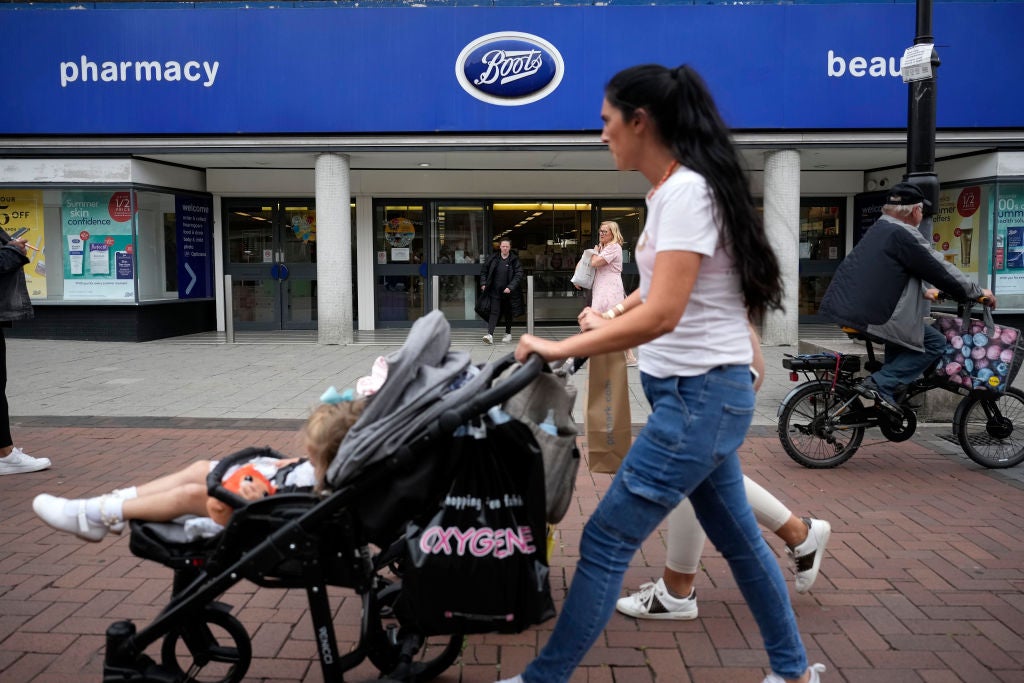
Beauty is always in fashion, but the “wellness” trend has brought new shoppers into the stores, who might well splash out on some No 7 make-up while they are there.
Other Boots plus points: 52,000 staff, 17 million members of the Boots Advantage Card, 8 million regular users of the App. And 80 per cent of the population lives within 10 minutes of a store.
Even shoppers who think they can get all they need from Amazon want Boots at least sometimes. Buying shaving products online is one thing. If you have a rash, perhaps you want to talk to the skilled pharmacist at Boots before you medicate.
Boots also has a significant social function as a near offshoot of the NHS.
Its role in delivering prescriptions and regular health advice makes it two things: A national treasure. A resource the rest of us would not like to see obviously exploited.
The word on the street is that Mr Baldock is to gear the business up for a flotation on the stock market that might value the company at £7bn. It is not certain he will do this, but that seems the way to bet.
The big question is, does he use old investors’ money to spruce up the stores before the float, or new investors’ money afterwards? There is no question that a chunk of the 1800 stores need a refresh. The shiny new Boots shops enjoyed in London don’t bare much relation to the rest of the estate.
Moreover, if a dowdy pub near you gets a makeover you might make a visit just to look.
Would you do the same for a local, made-over, chemist? How much might he waste on spruce-ups of stores that exist on high streets that are dying anyway?
One City fan of Baldock says: “Boots at its best is very good, but it isn’t always at its best. And there is the very long shadow of Pessina in the background.”
Another offers: “He has an unfair reputation for being terribly serious. He is more fun than people think he is and has a fantastic ability to connect with people. He just has high expectations.”
As CEO of Boots, the expectations will now be on him.
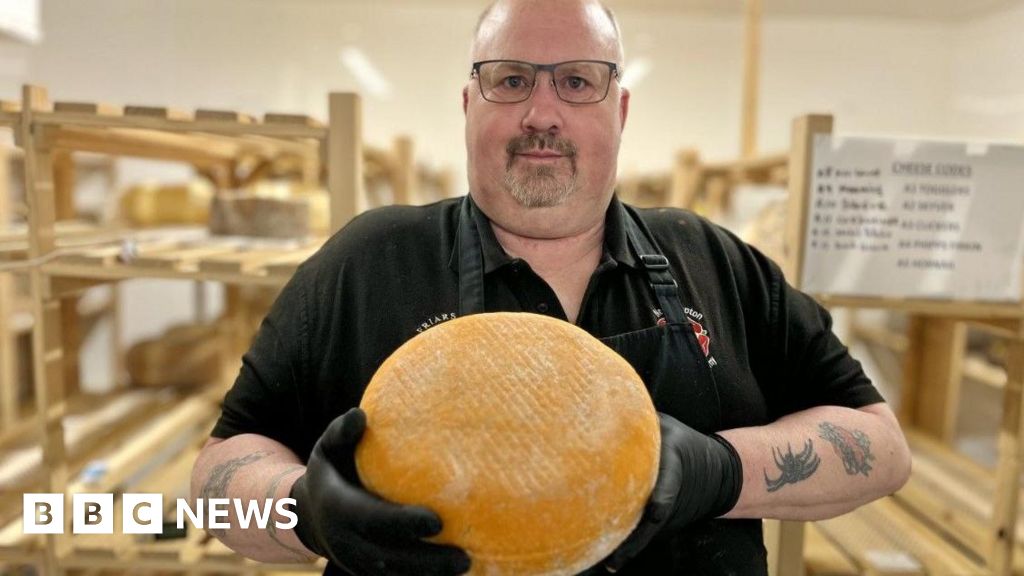
“Dried apricots 12 months ago were £35 for a 12kg box, now they’re £100 a box,” says cheesemonger.
Source link


Sindh govt to conduct random drug testing in schools: minister

Princess of Wales praised as ‘step ahead’ of royal family

5/17: Sunday Morning "By Design"

-

 Entertainment5 days ago
Conan O’Brien hat tricks as Oscar host
-

 Tech1 week ago
I Tried the Best Captioning Smart Glasses, and Only One Leads the Pack
-

 Tech1 week ago
Could Contact-Tracing Apps Help With the Hantavirus? Not Really
-

 Fashion4 days ago
Italy’s Zegna Group’s Q1 growth boosted by strong organic performance
-

 Entertainment1 week ago
Rihanna embraces new tattoo given by children
-

 Sports1 week ago
Bobby Cox, legendary Atlanta Braves manager who led 1995 World Series champions, dead at 84
-

 Entertainment1 week ago
Martin Short: Facing tragedy with joy
-

 Entertainment7 days ago
Tom Brady gets back at Kevin Hart during Netflix roast