

Fashion
France abandons bid for the total suspension of Shein’s website


Published
December 5, 2025
On Friday, France demanded a series of measures from Shein to demonstrate that the products sold on its website comply with the law, but dropped its initial request for a total three-month suspension of the online platform, which had been based on the sale of child-like sex dolls and prohibited weapons.
At a hearing before the Paris court, a lawyer representing the state said that Shein must implement controls on its website, including age verification and filtering, to ensure that minors cannot access pornographic content. The state asked the court to impose a suspension of Shein’s marketplace until Shein has provided proof to Arcom, the French communications regulator, that these controls have been implemented.
Shein deactivated its marketplace- where third-party sellers offer their products- in France on November 5, after authorities discovered illegal items for sale, but its site selling Shein-branded clothing remains accessible. The state invoked Article 6.3 of France’s Digital Economy Act, which empowers judges to order measures to prevent or halt harm caused by online content.
“We don’t claim to be here to replace the European Commission,” the state’s lawyer said. “We are not here today to regulate; we are here to prevent harm, in the face of things that are unacceptable.” At the time of writing, the hearing is still ongoing.
In a statement issued last week, the Paris public prosecutor’s office said that a three-month suspension could be deemed “disproportionate” in light of European Court of Human Rights case law if Shein could prove that it had ceased all sales of illegal products. However, the public prosecutor’s office said it “fully supported” the government’s request that Shein provide evidence of the measures taken to stop such sales.
France’s decision comes against a backdrop of heightened scrutiny of Chinese giants such as Shein and Temu under the EU’s Digital Services Act, reflecting concerns about consumer safety, the sale of illegal products, and unfair competition. In the US, Texas Attorney General Ken Paxton said on Monday that he was investigating Shein to determine whether the fast-fashion retailer had violated state law relating to unethical labour practices and the sale of dangerous consumer products.
This article is an automatic translation.
Click here to read the original article.
Copyright © 2025 FashionNetwork.com All rights reserved.









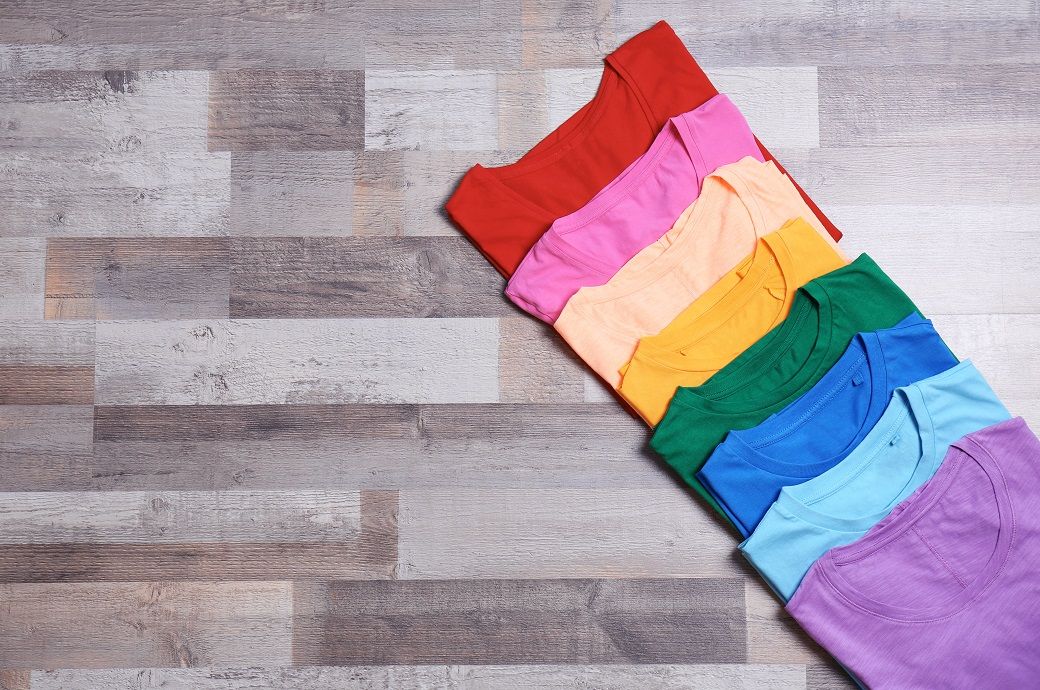
Imports of knitted apparel and clothing accessories (Chapter **) were valued at $***.*** million in January ****, slightly lower than $***.*** million a year earlier. The imports of non-knitted apparel and clothing accessories (Chapter **) totalled $***.*** million, down *.** per cent from $***.*** million in January ****.
South Korea typically exports fabrics and textile materials while importing readymade garments. During January ****, exports of man-made filaments, strips and similar materials (Chapter **) were valued at $***.*** million, down *.** per cent from $***.*** million a year earlier. Exports of knitted or crocheted fabrics (Chapter **) reached $***.*** million, easing *.** per cent from $***.*** million.

The additional week in the fourth quarter of fiscal 2025, compared to the fourth quarter of fiscal 2024, contributed approximately $37.0 million in consolidated net sales. On a comparable week basis, net sales grew 3.4 per cent. On a reported basis including the extra week in fiscal 2025, the US retail, international, and US wholesale segments grew 9.4 per cent, 10.2 per cent, and 3.4 per cent, respectively. US retail comparable net sales increased 4.7 per cent. Changes in foreign currency exchange rates used for translation in the fourth quarter of fiscal 2025, as compared to the fourth quarter of fiscal 2024, had a favourable effect on consolidated net sales of approximately $3.0 million, or 0.3 per cent.
Carter’s reported Q4 fiscal 2025 sales of $925.5 million, up 7.6 per cent, boosted by a $37 million extra week; on a comparable basis, sales rose 3.4 per cent.
Growth spanned US retail, international, and wholesale segments.
Operating income edged up to $84.7 million, though margin dipped to 9.2 per cent.
Full-year sales increased 1.9 per cent to $2.9 billion.
Operating income increased $1.5 million, or 1.8 per cent, to $84.7 million, compared to $83.2 million in the fourth quarter of fiscal 2024. Operating margin decreased 50 basis points to 9.2 per cent, reflecting incremental tariff costs, investments in product mix and make, and higher performance-based compensation provisions, partially offset by higher pricing, lower corporate expenses, and an asset impairment charge in the prior year period.
“Carter’s delivered improved fourth quarter results with each of our business segments posting sales growth over last year. We see momentum building behind our products and demand creation initiatives, which have driven an improvement in the rate of traffic, new customer acquisition, higher realised pricing, and increased penetration of the best portions of our product assortments. All of this gives us confidence that our strategies are gaining traction,” said Douglas C Palladini, chief executive officer & president.
“2025 was a year of meaningful progress in stabilising our business while responding to significant new tariffs. We took actions to right-size our cost structure and we launched several important initiatives to improve the productivity of our merchandise assortments and store fleet. We also strengthened our balance sheet and liquidity with the successful refinancing of our long-term debt and a new asset-based revolving credit facility in place,” Palladini added.
Consolidated net sales increased $54.3 million, or 1.9 per cent, to $2.90 billion, compared to $2.84 billion in fiscal 2024, reflecting growth in our US retail and international segments that were partially offset by a decline in the US wholesale segment. The additional week in fiscal 2025, compared to fiscal 2024, contributed approximately $37.0 million in consolidated net sales. On a comparable week basis, net sales grew 0.6 per cent. On a reported basis including the extra week in fiscal 2025, the company’s US retail and international segments grew 3.5 per cent, and 6.3 per cent, respectively, while US wholesale net sales declined 2.0 per cent. US retail comparable net sales increased 1.4 per cent. Changes in foreign currency exchange rates used for translation in fiscal 2025, as compared to fiscal 2024, had an unfavourable effect on consolidated net sales of approximately $6.7 million, or 0.2 per cent, the company said in a press release.
“While we are encouraged by our progress, much work remains. Excluding the recent tariff developments, for 2026 we are planning growth in net sales as we build on the momentum of our product and demand creation strategies. We are also planning growth in operating income. We will remain focused and disciplined in our investments and overall spending and expect solid contributions from productivity initiatives. We believe the recent news regarding tariffs will be net positive for Carter’s, but it will take some time to fully understand the implications for our business and the broader marketplace. Our talented and dedicated teams and I are committed to returning Carter’s to long-term sustainable, profitable growth over time,” Palladini concluded.
Fibre2Fashion News Desk (RR)

The model will be fuelled by both domestic and foreign direct investment. The country’s tax-to-GDP ratio currently sits at the bottom level globally.
Rashed Al Mahmud Titumir, Prime Minister’s Adviser Finance and Planning, recently outlined a comprehensive road map to overhaul the country’s economic framework, setting a target to raise the tax-GDP ratio to 15 per cent by 2035, while taking the nation forward on a path of investment-led growth.
A key pillar of this transition is a significant increase in internal resource mobilisation, he said.
A key pillar of this transition is a significant increase in internal resource mobilisation, he said.
“The previous consumption-led growth model was unsustainable and had left the country burdened by a mountain of debt accumulated particularly between 2009 and 2024,” he told a recent roundtable on the government’s priorities in the short-to-medium term.
The roundtable was organised by the Centre for Policy Dialogue (CPD) and The Daily Star newspaper.
There is a need for a tax culture rooted in investment, production and employment, he was cited as saying by domestic media reports.
He identified several systemic maladies in the current revenue structure that require urgent reform.
The government intends to move from greenfield incentives (based on identity and influence) to performance-based subsidies (ex-post subsidies), he said, adding that this model, which proved successful in the garments sector, will reward actual results rather than potential.
Fibre2Fashion News Desk (DS)


South Korea’s apparel imports slightly lower at $1 billion in January

Emirates resumes some Dubai flights – what’s the latest on travel to UK?

Vibes war? Trump pitches Iran conflict on ‘feeling’

-
 Business1 week ago
Attock Cement’s acquisition approved | The Express Tribune
-

 Politics1 week ago
US arrests ex-Air Force pilot for ‘training’ Chinese military
-
 Business1 week ago
India Us Trade Deal: Fresh look at India-US trade deal? May be ‘rebalanced’ if circumstances change, says Piyush Goyal – The Times of India
-

 Fashion1 week ago
Policy easing drives Argentina’s garment import surge in 2025
-

 Politics1 week ago
What are Iran’s ballistic missile capabilities?
-

 Sports1 week ago
Sri Lanka’s Shanaka says constant criticism has affected players’ mental health
-

 Entertainment1 week ago
Bobby J. Brown, “The Wire” and “Law & Order: SUV” actor, dies of smoke inhalation after reported fire
-

 Sports1 week ago
LPGA legend shares her feelings about US women’s Olympic wins: ‘Gets me really emotional’