

Fashion
France’s LVMH to propose Ariane Gorin for board seat at April AGM


“I warmly thank Marie-Laure Sauty de Chalon for her valuable contributions to the Group over the past twelve years. Her recognized expertise in digital and on topics of governance and sustainability, her strategic vision, and her deep knowledge of the Group have been assets, enriching the discussions within the Board as well as the various Committees in which she participated.
LVMH will propose Ariane Gorin’s appointment to its board at the April 23, 2026 AGM after Marie-Laure Sauty de Chalon decided not to renew her mandate following twelve years.
Chairman and CEO Bernard Arnault praised Sauty de Chalon’s contributions and highlighted Gorin’s international experience and expertise in technology and travel as key strengths for the Group.
“I am delighted that Ariane Gorin has agreed to join our Board. Ariane Gorin is an experienced and visionary leader, whose ability to tackle complex challenges is widely recognized. Her remarkable international career, enriched by her dual French-American nationality, as well as her sharp expertise in the technology and travel sectors, will be of undeniable value in the coming years,” said Bernard Arnault, Chairman and CEO of the LVMH Group.
Note: The headline, insights, and image of this press release may have been refined by the Fibre2Fashion staff; the rest of the content remains unchanged.
Fibre2Fashion News Desk (RM)












ICE cotton futures recovered due to technical buying and short covering on yesterday. Although, gains were capped by stronger US dollar and persistent inflation worries driven by rising global energy prices which continued to weigh on market sentiment throughout the session. US dollar also made US cotton purchase expensive for overseas buyers.
The most traded May 2026 contract settled at 67.62 cents per pound, up 0.44 cent. The market indicated recovery despite underlying macroeconomic pressure. During the session, the contract touched an intraday low of 66.65 cents, marking its lowest level since March 16, reflecting early weakness before recovery.
The strengthening US dollar index added further pressure, as it makes US cotton more expensive for international buyers, thereby reducing export competitiveness.
The trading session remained highly volatile and mixed, with prices dipping initially and then recovering due to technical buying and short covering.
Technically, the market is showing signs of stabilisation as the May contract has managed to close above its 200-day moving average in 5 out of the last 7 sessions, which is considered a supportive signal for trend recovery.
Trading activity remained subdued with total volume at 52,002 contracts, the lowest in nearly one month, indicating reduced participation and lack of strong conviction among traders. As per ICE data released on March 23, the certified stock of deliverable No.2 cotton remained unchanged at 115,640 bales, indicating a neutral supply-side factor with no fresh pressure from inventories.
Market direction was influenced by uncertain geopolitical developments, particularly conflicting signals around US–Iran diplomacy and fluctuations in crude oil prices, which impacted broader commodity sentiment.
Rising crude oil and energy prices are increasing concerns that inflation will remain elevated, which could spread across commodities and impact cotton pricing dynamics.
According to market analysts, the inflation is unlikely to decline significantly, and sustained higher costs may start affecting cotton demand globally.
Elevated energy prices are expected to increase costs across the entire cotton supply chain, including production, processing, and transportation, which may reduce mill buying interest.
Financial markets have shifted expectations, now indicating no interest rate cuts by the US Federal Reserve in 2026, whereas earlier there were expectations of at least two rate cuts before escalation of Middle East tensions.
Although US President Donald Trump postponed planned strikes on Iranian energy infrastructure, market participants remained sceptical about any quick resolution to Middle East tensions, keeping uncertainty elevated.
The recent upward movement in cotton prices towards 68–69 cents followed by a pullback is being viewed as a normal technical correction, after a sharp rally over the past few weeks.
This morning (Indian Standard Time), ICE cotton for May 2026 was traded at 68.26 cents per pound (up 0.64 cent), cash cotton at 65.62 cents (up 0.44 cents), the July 2026 contract at 70.31 cents (up 0.54 cent), the October 2026 contract at 71.77 cents (up 0.46 cent), the December 2026 at 72.61 cents (up 0.33 cent) and the March 2027 contract at 73.60 cents (up 0.25 cent)). A few contracts remained at their previous closing levels, with no trading recorded so far today.
ICE cotton futures rebounded on technical buying and short covering, with the May 2026 contract settling at 67.62 cents/lb.
However, gains were capped by a stronger US dollar and inflation concerns linked to rising energy prices.
Low trading volumes and geopolitical uncertainty kept sentiment cautious despite signs of technical stabilisation.
Fibre2Fashion News Desk (KUL)
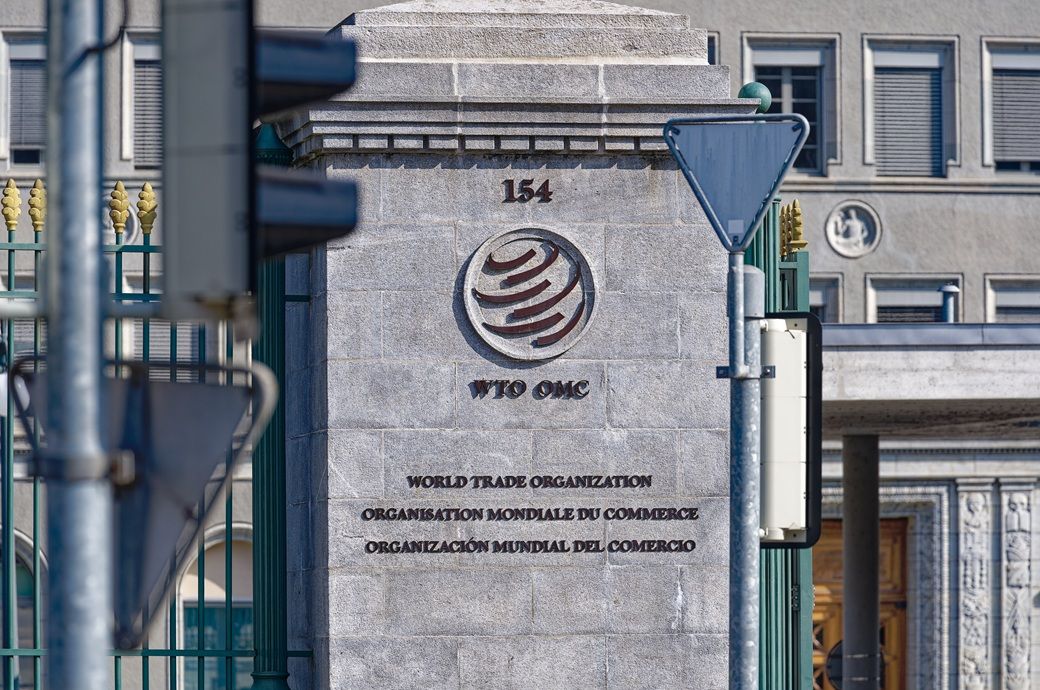
“The WTO needs to change if it intends to have any relevance as the international trading system transitions to focus on reciprocity and balance. The United States, with this report, continues to lead on concrete proposals to promote member-driven reform discussions,” said US Trade Represenative Jamison Greer in a statement.
The US believes WTO members can take a step toward levelling the playing field by strengthening incentives to comply with existing obligations to submit notifications, said a report from the US delegation at the WTO circulated among members.
The report addresses transparency, eligibility for special and differential treatment, plurilateral negotiations, the role of the MFN principle and the Secretariat.
“Our report addresses key issues such as transparency, eligibility for special and differential treatment, plurilateral negotiations, the role of the most favoured nation principle, the role of the Secretariat, and essential security.”
The report builds on an initial paper issued by the United States in December 2025 and is intended to give impetus to reform discussions during and after MC14.
Washington believes that WTO members should seek to restore the purpose of special and differential treatment (SDT) by agreeing to objective criteria for determining eligibility and efforts should focus on finding a more flexible pathway to incorporate plurilateral agreements into the WTO architecture.
Members need to rethink how the most favoured nation (MFN) principle functions in its current form and embark on a frank discussion of the link between MFN and reciprocity, which itself is a bedrock WTO founding principle, the report noted.
Members should ensure the WTO Secretariat serves the interests of the members, and not of the institution or any abstract trading ‘system’, it said.
Fibre2Fashion News Desk (DS)
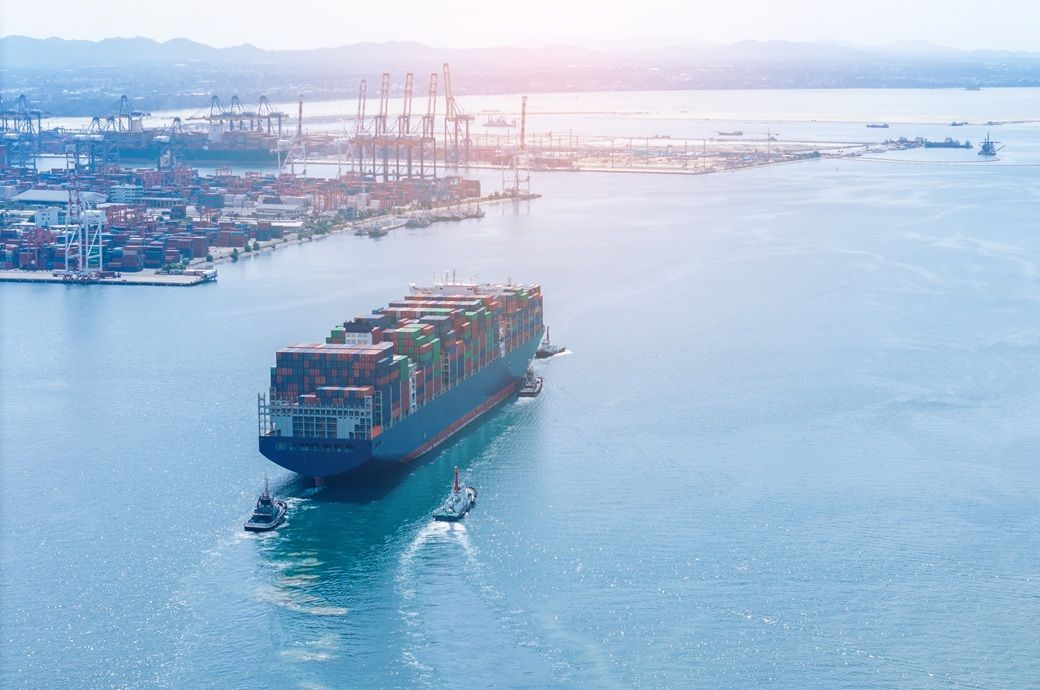
Shipping schedules have been frequently adjusted recently at Saigon Port’s Hiep Phuoc terminal, reducing operational stability.
Ho Chi Minh City businesses are adjusting production plans, diversifying markets and seeking new supply chains due to disruptions in shipping routes and soaring logistics costs arising out of the Iran war.
Shipping schedules have been frequently adjusted at Saigon Port’s Hiep Phuoc terminal, reducing operational stability.
Cargo turnover has slowed as incoming and outgoing shipments have become uneven.
Cargo turnover has slowed as incoming and outgoing shipments have become uneven, affecting businesses’ cash flow, according to a report by a domestic media outlet.
Vessel calls drop has also reduced workload of port operators, shipping lines, freight forwarders and logistics companies. Port workers engaged in container handling and operations have been directly hit.
Due to a diversified customer base and a significant share of intra-Asia cargo, the port’s throughput remains within controllable levels, said Nguyen Anh Hao, acting director of Hiep Phuoc terminal.
Pham Van Xo, chairman of the city’s Import-Export Association, said longer shipping routes had reduced vessel availability while demand for cargo transport remained high. This resulted in shortages of container space and rising fuel costs, insurance premia and security surcharges.
The situation has hit cash flow of businesses and created pressure to maintain payroll and labour stability.
If the disruptions persist, apart from the logistics sector, major export industries like garments, footwear, wood products, agriculture and seafood may face ripple effects, experts cautioned.
Falling orders or rising costs could force companies to scale down production, directly affecting workers’ income and employment.
Despite the challenges, businesses in Ho Chi Minh City are seeking solutions like diversifying shipping routes, expanding markets and strengthening negotiations with partners.
Fibre2Fashion News Desk (DS)


Trump to visit China in May after Iran war delay

Video: How Kharg Island May Change the Trajectory of the Iran War

Oil prices volatile as Trump talks up Iran negotiations

-

 Fashion1 week ago
Sales at US apparel, clothing accessories stores up 4% YoY in Jan 2026
-

 Tech1 week ago
Justice Department Says Anthropic Can’t Be Trusted With Warfighting Systems
-

 Sports1 week ago
March Madness 2026 – How to watch in SA, start time, schedule, TV channel for NCAA championship basketball tournament
-
 Business1 week ago
Stocks and pound rise as US rate call approaches
-

 Entertainment1 week ago
Val Kilmer revived 1 year after death through AI
-
 Business1 week ago
Brits cashing in jewellery as gold price hits record high
-

 Politics1 week ago
Iran strikes Tel Aviv with cluster-warhead missiles in retaliation of Larijani’s martyrdom
-

 Sports1 week ago
WBC championship: USA-Venezuela preview, live updates, analysis