

Fashion
French label Brut Archives accelerates international expansion with New York boutique

Published
December 23, 2025
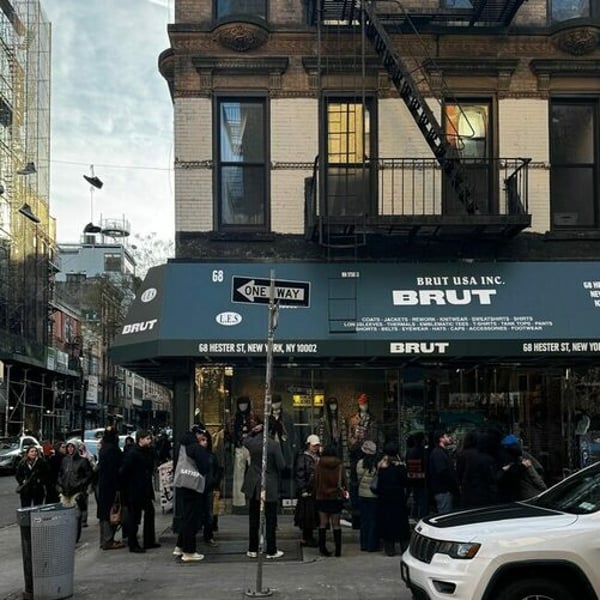
Brut Archives announces the opening of its second boutique worldwide, in New York, following its historic establishment in Paris. This launch marks a new milestone in the brand’s international development strategy.
Founded in Paris by Paul Ben Chemhoun, Brut Archives launched in 2017 with the creation of a vintage showroom designed exclusively for fashion industry professionals. This first space brought together a tightly curated selection of textile archives, drawn mainly from workwear, Americana, and denim.
In March 2019, the brand took another step with the opening of its first Paris boutique at 3 rue Réaumur, in the 3rd arrondissement. For three years, the offer available to the public consisted exclusively of second-hand pieces and rare vintage archive pieces, while maintaining a B2B activity serving industry professionals. This address became a hybrid space at the crossroads of boutique, archive and the transmission of textile know-how.
In 2022, Brut Archives made a major strategic shift, bringing its vintage activity to a definitive close to focus fully on developing its own clothing line. All creative work, as well as the upcycling studio, was then centralised in Paris under the direction of managing director and creative director Paul Ben Chemhoun. The collections are founded on raw, durable materials, combining new fabrics with archive materials- an approach that has become the brand’s signature.
Originally conceived as a menswear brand, Brut Archives now appeals to an ever-growing female audience, thanks to timeless pieces and a cross-cutting vision of the wardrobe. The brand currently employs more than 40 people worldwide and remains 100% owned by its founder.
With the US now Brut Archives’ largest online market, and New York’s energy an integral part of its DNA, opening a shop in the city was an obvious move. The New York boutique, located at 37A Orchard Street, near Chinatown, offers a total floor area of around 144 square metres, with 74 square metres dedicated to retail space and 70 square metres to logistics. This is the brand’s second boutique worldwide. The brand deliberately distributes its collections exclusively via its official website and its two boutiques, with no wholesale network.
Brut Archives now operates two boutiques worldwide, in Paris and New York. The brand plans to reach turnover of €10 million by the end of 2025, a projection that accompanies the structuring and international expansion of the house.
This article is an automatic translation.
Click here to read the original article.
Copyright © 2025 FashionNetwork.com All rights reserved.










While trends in high frequency indicators for January-February 2026 appear favourable, the heightened uncertainty around the duration of the Middle East conflict casts a shadow on the near-term macroeconomic outlook for India amid high import dependency for items like crude oil, natural gas and fertilisers, it noted.
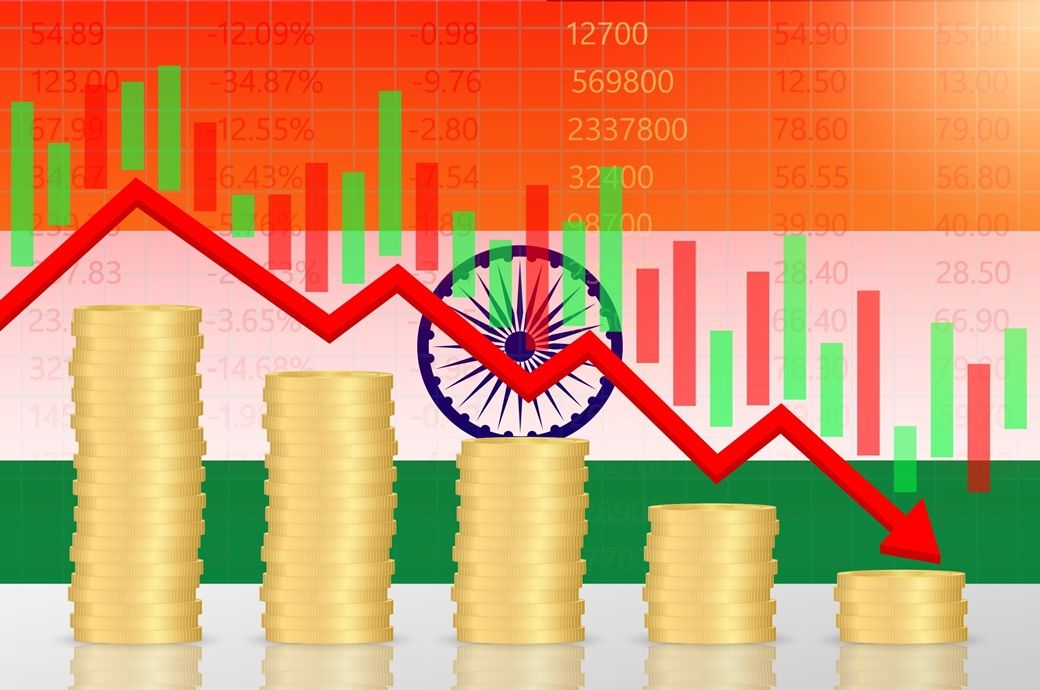
India’s FY27 GDP growth is likely to slow to 6.5 per cent from the projected 7.5 per cent in FY26 owing to the impact of higher energy prices and concerns around energy availability, ICRA Ratings said.
The heightened uncertainty around the duration of the Iran war casts a shadow on the near-term macroeconomic outlook for India.
If the conflict lasts longer, the adverse effects could widen across sectors.
If the conflict lasts for an extended period, the adverse implications of the same could widen across sectors, amid an uptick in input costs and the consequent impact on profitability of the India corporate sector.
Amid the projected uptrend in the consumer price index-based inflation in FY27 with risks tilted to the upside, ICRA Ratings expects an extended pause on the policy rates by the central bank’s monetary policy committee in the fiscal despite the anticipated softening in the GDP growth. However, it expects the Reserve Bank of India to continue to intervene on the liquidity front during FY27.
The available data for January–February FY2026 indicate a positive trend across most non-agricultural indicators, with the year-on-year performance of 12 out of 18 indicators improving compared to the third quarter of FY26, while the remaining six deteriorated.
Fibre2Fashion News Desk (DS)
Indonesia’s apparel exports rose modestly to $8.705 billion in 2025 from $8.316 billion in 2024, reflecting gradual recovery.
The US remained dominant, accounting for over 56 per cent of shipments, highlighting growing market dependence.
While Japan, South Korea and Europe offered stability, exports stayed concentrated in key products and segments.
Source link

Methanol prices in India have surged nearly 150 per cent from pre-Iran–US tension levels, tracking a sharp rise in crude oil and tightening global energy markets.
Hormuz disruption risks, limited rerouting capacity, rising freight and insurance costs, and constrained imports are fuelling volatility, with prices seen approaching ₹90 per kg.
Source link


Italy veterans aware 2026 World Cup is their ‘last chance’

Iran air defenses shoot down MQ-9 drone in Isfahan, LUCAS drone over Qeshm Island

Iran oil returns: India set to receive first cargo in 5 years, tanker heads to Gujarat – The Times of India

-

 Politics1 week ago
Afghanistan announces release of detained US citizen
-

 Sports1 week ago
Broadcast industry CEO says consolidation is ‘essential’ to compete for NFL soaring media rights prices
-

 Entertainment1 week ago
UN warns migratory freshwater fish numbers are spiralling
-

 Tech1 week ago
Can a Home Appliance Fix the Problem of Soft-Plastic Waste?
-
 Business1 week ago
Property Play: Home flippers see smallest profits since the Great Recession, real estate data firm says
-
 Business1 week ago
Gold prices soar in Pakistan – SUCH TV
-

 Fashion1 week ago
ICE cotton slips on weaker crude, profit booking
-
 Business1 week ago
More women are entering wealth management, but few are in advisory roles, study finds