

Fashion
French ready-to-wear ends 2025 caught between collapse and hope


By
AFP
Published
December 29, 2025
Under pressure from fast fashion and the second-hand market, the French ready-to-wear sector is faltering, with bankruptcies, receiverships, and liquidations punctuating 2025. Even so, experts believe a rebound is possible, driven by a refocus on brand DNA, innovation, and an upmarket shift.
As the year draws to a close, the IKKS brand has just changed hands but will lose half its staff; JOTT (Just Over The Top) has been placed in receivership; and Anne Fontaine has had its safeguard plan approved. With Camaïeu, Kookaï, Jennyfer, André, San Marina, Minelli, Comptoir des Cotonniers, Princesse Tam Tam, and Kaporal, there are countless French companies in difficulty in this sector, or that have simply disappeared.
Brutal “impoverishment” and “downfall”
Nearly 1,500 clothing boutiques closed in France in 2024, according to a parliamentary report. The Union des Industries Textiles reports that the workforce has shrunk from 400,000 in the 1970s to 60,000 today. This figure does not, however, include in-store employees- 70,000 at the end of 2023, according to the Fédération nationale de l’habillement.
Having weathered the difficult shift to online sales, as well as Covid-19 and inflation, traditional players are now facing competition from second-hand and ultra-fast fashion- a “profound upheaval”, according to Gildas Minvielle, Director of the Economic Observatory at the French Fashion Institute (IFM). According to the IFM, these two channels now account for 13% of sales by value and nearly 30% of volumes purchased.
Historic players shaken up
Gildas Minvielle tells AFP: “The market share taken by these new entrants is very significant, and very damaging for the more established players. If the market had been buoyant, we could have hoped there would be room for everyone, but that’s not the case.” With an average price per item on Shein or Temu of €9- around one third of traditional mid-range prices- these Asian groups are causing a brutal “impoverishment,” “in a context where purchasing power is weak,” he says.

To get to the root of the “downfall,” we need to travel back to the 1990s with the “arrival of first-generation fast-fashion brands” such as Zara and H&M, offering “collections that change every week to force people to buy,” says Benoît Heilbrunn, a philosopher and marketing professor at ESCP Business School.
Clear positioning and an industrial model for survival
“French chains haven’t been able to keep up, because they didn’t have and still don’t have an industrial model,” points out the brand specialist, while 97% of textiles consumed in France are imported. The other problem is that “French textile brands have had nothing to say for years,” he laments. “No one talks about innovation, no one talks about product.”
Françoise Clément, a fashion and retail expert, agrees and points to brands that have remained in their “comfort zone,” seeking to “buy the consumer with promotions” but that ultimately “have not created value.” According to this consultant, a former textile director at Carrefour, brands must reconnect with their “core DNA” and offer “clear positioning” to survive.
A “death spiral” of prices at the low end
The ready-to-wear sector is like “an hourglass,” she says, using a metaphor: the top of the hourglass (luxury and “heritage” brands) remains solid thanks to prestige. At the lower end, it’s a race to the bottom on price, with a “death spiral” that nonetheless finds its audience. In between, the mid-range is the segment “most in difficulty.”
Mid-range brands must “diversify and premiumise” and above all avoid imitating fast fashion, says Françoise Clément. The future requires a balance between “quality, attractiveness, innovation, and desirability,” as seen at “Lacoste or Aigle,” or Le Slip Français, for made-in-France production, or at Decathlon, which combines “accessibility and innovation.” The clothing crisis is “not inevitable,” she insists. Far from the prevailing “gloom,” “opportunities” exist for “brands that get moving.”
The annual State of Fashion BoF-McKinsey report lists several strategic areas for development: the “necessary” use of artificial intelligence, diversification of production sites in the face of the “turbulence” of international tariffs, moving upmarket, and the integration of a second-hand offer. A vast programme.
This article is an automatic translation.
Click here to read the original article.
Copyright © 2025 AFP. All rights reserved. All information displayed in this section (dispatches, photographs, logos) are protected by intellectual property rights owned by Agence France-Presse. As a consequence you may not copy, reproduce, modify, transmit, publish, display or in any way commercially exploit any of the contents of this section without the prior written consent of Agence France-Presses.









The increase was driven primarily by higher reinvested earnings and intra-company loans, indicating continued engagement by existing investors with Bangladesh.
Reinvested earnings rose by 318.25 per cent, from $103.79 million in 2024 to $434.10 million in 2025, while intra-company loans increased by 25.68 per cent, from $621.96 million to $781.68 million.
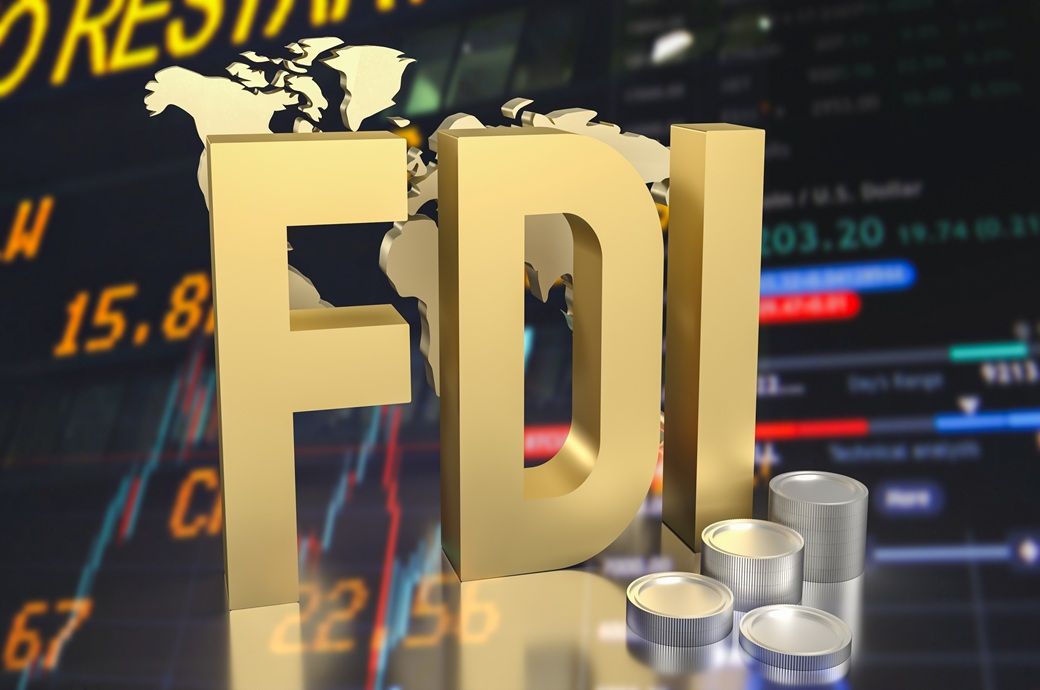
Bangladesh’s net FDI inflows increased by 39.36 per cent last year to $1,770.42 million compared with $1,270.39 million in 2024, the Bangladesh Bank said.
The increase was driven primarily by higher reinvested earnings and intra-company loans.
Reinvested earnings rose by 318.25 per cent, from $103.79 million in 2024 to $434.10 million in 2025, while intra-company loans rose by 25.68 per cent.
Equity capital remained broadly stable, rising by 1.84 per cent, from $544.64 million to $554.64 million in 2025, a release from Bangladesh Investment Development Authority said.
Greenfield project announcements declined by 16 per cent in 2025.
Fibre2Fashion News Desk (DS)
The company’s adjusted EBITDA, excluding Employee Stock Option Plan (ESOP) expenses, rose around 14 per cent YoY to ₹468 crore, while EBITDA margin improved by 20 basis points to around 9.3 per cent. Excluding the reciprocal tariff impact of around ₹36 crore and incremental losses of around ₹13 crore in Bihar and Guatemala, adjusted EBITDA margin stood at around 10.3 per cent.
Pallab Banerjee, managing director, Pearl Global Industries, said: “FY26 marked the company’s second consecutive year of double-digit growth and improved profitability. This performance further solidifies the position of Pearl Global’s diversified operating model and disciplined execution across geographies.”
Pearl Global Industries has reported its highest-ever FY26 revenue of ₹5,025 crore (~$523.93 million), up 11.5 per cent YoY, driven by volume growth and value-added products.
PAT rose 17 per cent to ₹270 crore (~$28.15 million), while Q4 revenue hit ₹1,314 crore (~$137 million).
The company shipped 78.1 million pieces.
Its net worth stands at ₹1,438 crore (~$149.93 million).
He said that geopolitical shifts and Gulf conflicts could lead to energy cost escalation, affecting raw material and logistics costs. However, the company remains prepared to manage these headwinds, supported by its diversified manufacturing base, strong order book, and broad market presence.
The profit after tax (PAT) increased 17 per cent YoY to ₹270 crore (~$28.15 million), the company said in a press release.
On a standalone basis, FY26 revenue stood at ₹1,081 crore, while adjusted EBITDA was ₹67 crore, with EBITDA margin improving by 60 basis points to 6.2 per cent, mainly due to cost restructuring. Standalone PAT rose to ₹69 crore from ₹55 crore in the previous year.
The company’s net worth stood at ₹1,438 crore (~$149.93 million) as of March 31, 2026, compared with ₹1,146 crore a year earlier.
“In FY26, Group delivered another year of resilient performance against a complex geopolitical backdrop. Group achieved, among others, two major milestones this year: revenue crossed INR 5,000 crore mark and installed capacity surpassed 100 million pieces per annum,” said Pulkit Seth, vice-chairman and non-executive director, PGIL.
Seth added that the global apparel industry faced tariff-related disruptions during FY26, with the company’s India operations impacted by tariffs and penal duties imposed by the US. However, he added that Pearl Global leveraged its diversified, multi-country manufacturing presence to mitigate these challenges and deliver double-digit growth.
For the fourth quarter (Q4) of FY26, PGIL posted its highest-ever quarterly revenue of ₹1,314 crore (~$137 million), up 6.9 per cent YoY. Adjusted EBITDA rose 13.7 per cent to ₹135 crore, with margin at 10.3 per cent, the highest EBITDA margin recorded by the company in any quarter. PAT for the quarter stood at ₹81 crore, up 24.6 per cent YoY, PGIL said in a press release.
Standalone revenue during the quarter stood at ₹304 crore, adjusted EBITDA at ₹24 crore, and PAT at ₹14 crore.
PGIL shipped its highest-ever volumes in Q4 FY26 and FY26, at 22 million pieces and 78.1 million pieces respectively. Its annual installed capacity crossed 100 million pieces, reaching around 101 million pieces.
The ongoing capex in Bangladesh is expected to be completed by the first half of FY27 and will add around 6-7 million pieces of capacity during the year.
Fibre2Fashion News Desk (SG)
PTA prices recorded notable declines across key Asian benchmarks, tracking crude oil weakness rooted in evolving geopolitical signals. The correction was broad-based, spanning China, Southeast Asia, and South Korea, while India**;s CIF price held steady reflecting the lag in import contract structures and limited spot availability in the domestic market on the day.
The *** per cent Polyester Yarn market witnessed a slightly negative trend during the assessed period, with mild price corrections observed across both yarn grades in the Asia Free on Board (FOB) China market. Prices for **s (*** per cent polyester yarn) declined from around $*.***/kg to nearly $*.***/kg, registering a decrease of approximately *.** per cent.


Bangladesh net FDI inflows up 39.36% in 2025

US weighs drone threat from Cuba: report

India’s Pearl Global’s FY26 revenue crosses $521 mn milestone

-

 Entertainment5 days ago
Conan O’Brien hat tricks as Oscar host
-

 Tech1 week ago
Could Contact-Tracing Apps Help With the Hantavirus? Not Really
-

 Tech1 week ago
I Tried the Best Captioning Smart Glasses, and Only One Leads the Pack
-

 Fashion5 days ago
Italy’s Zegna Group’s Q1 growth boosted by strong organic performance
-

 Sports1 week ago
Bobby Cox, legendary Atlanta Braves manager who led 1995 World Series champions, dead at 84
-

 Entertainment1 week ago
Martin Short: Facing tragedy with joy
-

 Entertainment1 week ago
Tom Brady gets back at Kevin Hart during Netflix roast
-

 Entertainment1 week ago
Martha Stewart: How to make an omelet