

Business
From Gridlock To Global City: How Karnataka Budget Charts Bengaluru’s Next Leap

Last Updated:
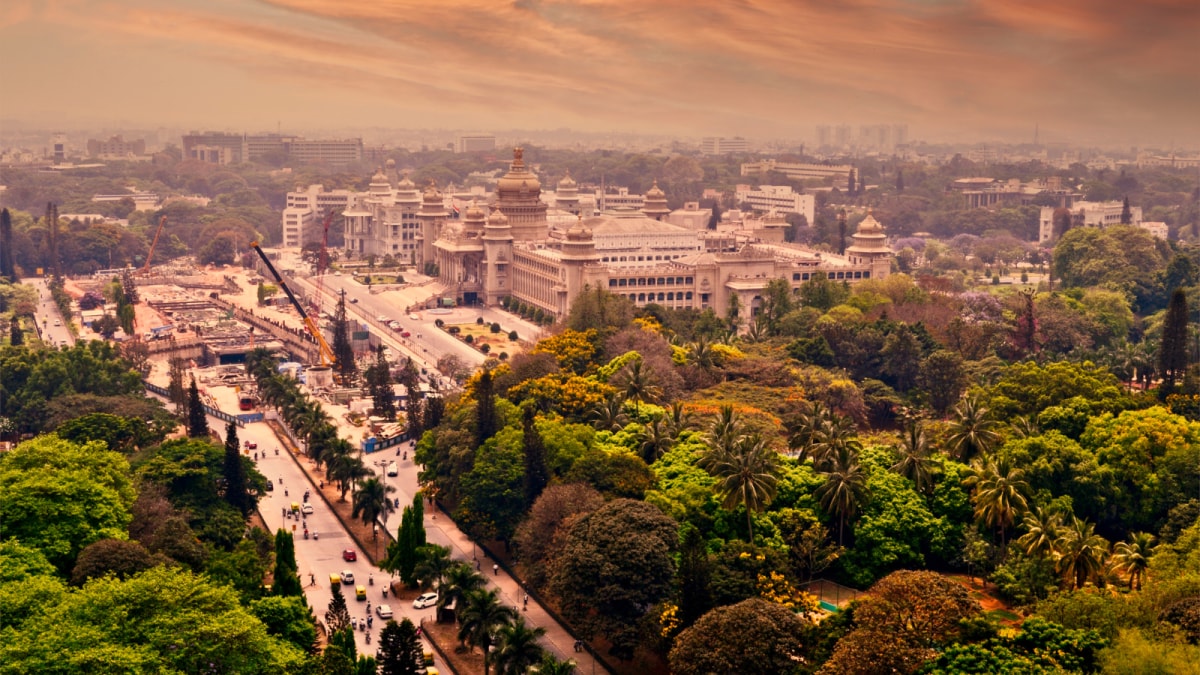
Recognising Bengaluru as both a global startup hub and a land of immense aspiration, the government has maintained an aggressive development grant of Rs 7,000 crore




Addressing the city’s burgeoning population of 1.40 crore, the government has formalised the Cauvery Phase VI project. File image
The Karnataka State Budget for 2026-27 has unveiled a transformative financial roadmap for Bengaluru, aimed at elevating the state capital into a “world-class liveable city.” Recognising the metropolis as both a global startup hub and a land of immense aspiration, the government has maintained an aggressive development grant of Rs 7,000 crore. This sustained investment seeks to address the twin challenges of urban sprawl and traffic congestion that have long shadowed the city’s rapid economic rise.
The Rs 40,000 Crore Subterranean Shift
In perhaps the most ambitious infrastructure proposal in the city’s history, the government has approved a 40 km tunnel road network. Designed to cut through the city’s densest areas, the network will feature north-south and east-west corridors at an estimated cost of Rs 40,000 crore.
The project will be executed under a Build-Own-Operate-Transfer (BOOT) model, with the first phase—a 17 km stretch of the North-South corridor—already moving toward implementation. Tenders for this initial phase have been invited at a cost of Rs 17,780 crore. This subterranean strategy is complemented by the Bengaluru Business Corridor Phase-1, a 73 km stretch connecting Tumakuru Road to Hosur Road, which the government aims to complete within four years.
Scaling Mass Transit and Pedestrian Access
“Namma Metro” continues its trajectory as India’s second-largest network. The budget proposes the completion of an additional 41 km of metro lines within the current financial year, a milestone expected to push daily ridership to 15 lakh commuters. Notably, the government highlighted a significant fiscal imbalance in the project’s funding, pointing out that the state has shouldered 88% (Rs 59,376 crore) of the total expenditure to date, compared to the central government’s 12% contribution.
To bridge the gap between mass transit and the “last mile”, a new 9 km pedestrian walkway will be constructed along the Outer Ring Road (ORR) metro viaduct. This Rs 160 crore initiative is a landmark partnership with the Outer Ring Road Companies Association, reflecting a new model of corporate-government collaboration in urban design.
Durability and Urban Aesthetics
The budget moves away from quick-fix road repairs towards long-term durability. Over the next three years, the government plans to white-top more than 450 km of roads at a cost of Rs 3,000 crore. The urban experience will be further enhanced through:
- The beautification of 175 major junctions.
- The construction of 100 new skywalks.
- The renovation of 500 km of footpaths using city corporation resources.
- An investment of Rs 450 crore to upgrade the Silk Board to KR Puram corridor into a global-standard thoroughfare.
Water Security and Environmental Resilience
Addressing the city’s burgeoning population of 1.40 crore, the government has formalised the Cauvery Phase VI project. Assisted by JICA, this Rs 6,939 crore initiative will secure an additional six TMC of drinking water. To mitigate the recurring threat of urban flooding, Rs 2,000 crore has been earmarked for storm water drain upgrades under a World Bank-assisted programme. The city’s long-term growth will be guided by the Revised Master Plan-2041, scheduled for completion by late 2027.
Sports and Cultural Landmarks
In a move to bolster Bengaluru’s status as a sporting and cultural capital, the budget announced two massive landmark projects:
Anekal Cricket Stadium: A new, state-of-the-art 80,000-seater cricket stadium will be built in Anekal, significantly expanding the city’s capacity for international sporting events.
Malleswaram Convention Centre: A world-class convention centre will be developed on land owned by the Mysore Lamp Works in Malleswaram under a Public-Private Partnership (PPP) model.
By combining deep-tunnel engineering with massive mass transit expansion and environmental safeguards, the 2026-27 budget represents a definitive attempt to future-proof Bengaluru against the pressures of its own success.
March 06, 2026, 18:00 IST
Read More






People walk past a Nike store in New York City, on April 2, 2025.
Kylie Cooper | Reuters
Nike announced a new round of layoffs Thursday affecting approximately 1,400 employees across the organization, mostly concentrated in its technology department.
In a note from COO Venkatesh Alagirisamy, the company said the layoffs were part of Nike’s broader “Win Now” turnaround strategy aiming to reshape its technology team, modernize its Air manufacturing, move some of its Converse Footwear operations and integrate its materials supply chain work into its footwear and apparel supply chain teams.
“Collectively, these changes will result in a reduction of approximately 1,400 roles in global operations, with the majority in technology,” Alagirisamy wrote. “These reductions are very hard for the teammates directly affected and for the teams around them, too.”
A Nike spokesperson said the layoffs are about better positioning the organization for the current pace of sports and accelerating its growth. The layoffs affect employees across North America, Asia and Europe and represent less than 2% of the company’s total global head count.
“This is not a new direction,” Alagirisamy wrote. “It is the next phase of the work already underway.”
Affected employees will be notified beginning Thursday, Nike added.
CEO Elliott Hill has been working to turn Nike around after years of slumping sales. While Hill has made some initial progress, it’s come with some bumps in the road.
Nike announced 775 job cuts in January, primarily at its U.S.-based distribution centers, due to the company’s work in accelerating its use of automation. At the time, the company said the cuts are part of Nike’s goal to return to “long-term, profitable growth.”
Those layoffs came on top of a round of cuts last summer that affected less than 1% of Nike’s corporate staff as part of the company’s efforts to realign the business.
In its third fiscal quarter earnings report last month, the retailer warned that sales will continue to fall for the rest of the year, primarily led by an anticipated 20% decline in China during the current quarter.
— CNBC’s Jessica Golden contributed to this report.
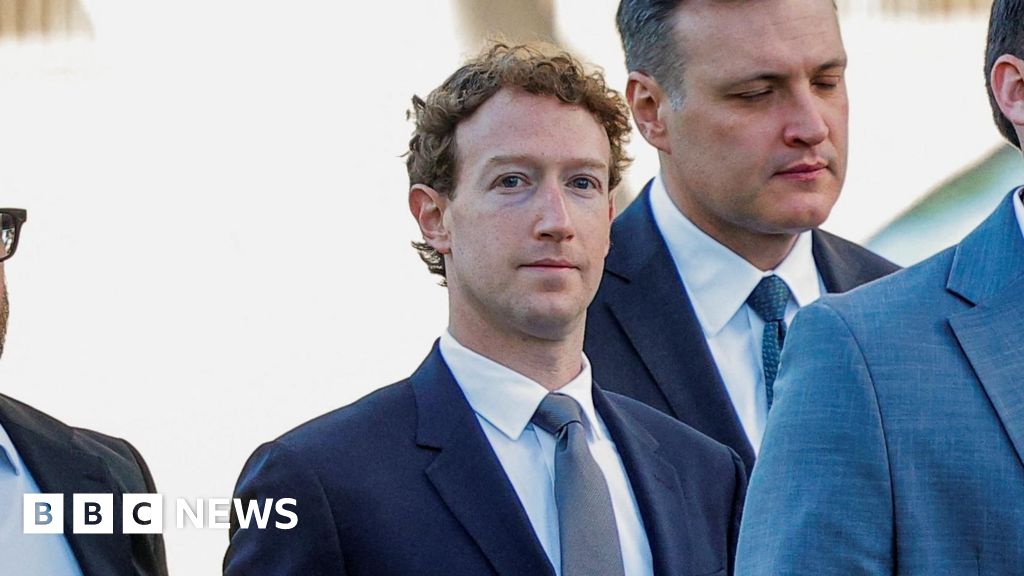
A key reason for the layoffs is Meta’s increased spending in other areas of the company, including AI, for which it will this year spend $135bn (£100bn). This is roughly equal to the amount it has spent on AI in the previous three years combined, according to a person who viewed the memo.
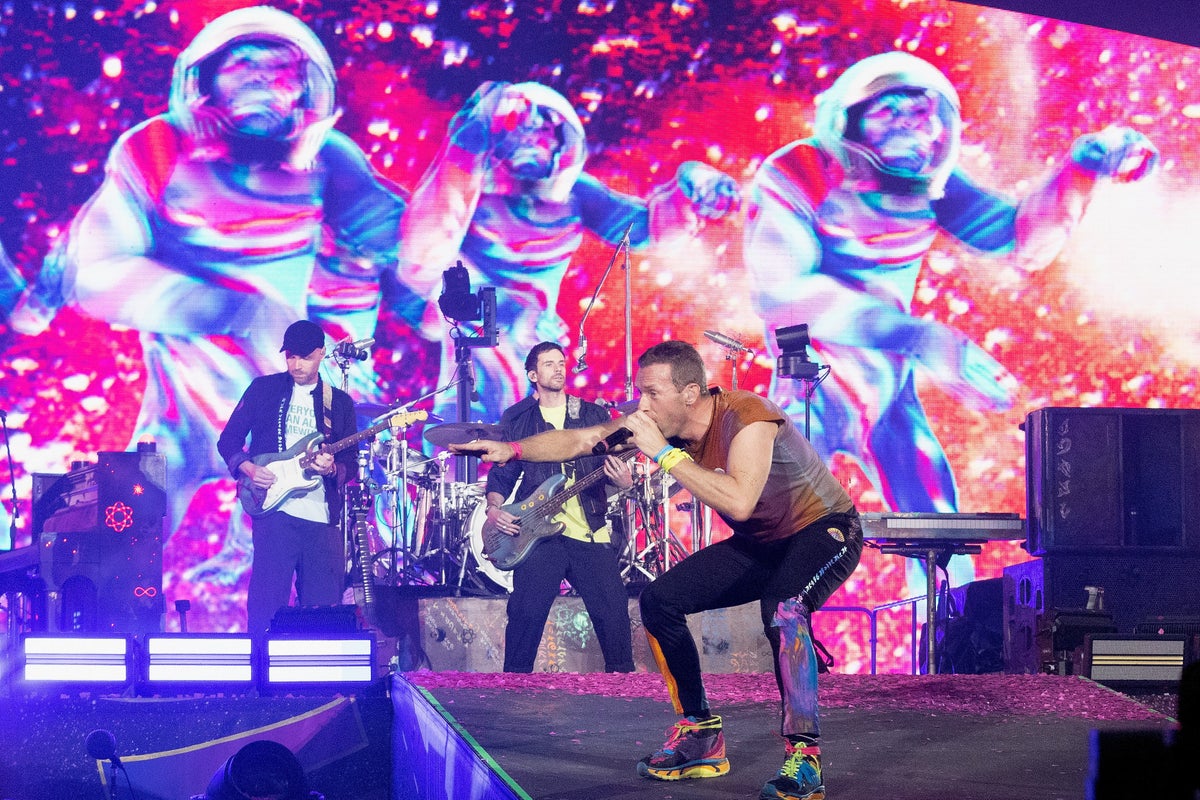
The Government has been urged to stick to its pledge to ban ticket touting amid concerns the policy will be left out of next month’s King’s Speech.
In November, the Government announced that new rules making it illegal to resell tickets for live events for profit would end the “industrial-scale” touting that has caused misery for millions of fans.
Ministers confirmed plans to make it illegal for tickets to concerts, theatre, comedy, sport and other live events to be resold for more than their original cost.
The Labour manifesto promised stronger protections to stop consumers being scammed or priced out of events by touts, who frequently use bots to buy tickets in bulk the moment they go on sale, which they can then sell on for huge mark-ups on secondary ticketing websites.
The proposed rules make it illegal for tickets to be sold at a price above the face value – defined as the original price plus unavoidable fees including service charges.
Service fees will be capped to prevent the price limit being undermined by platforms, which will have a legal duty to monitor and enforce compliance, and individuals will be banned from reselling more tickets than they were entitled to buy in the initial sale.
A host of globally renowned artists have backed the plan, including Radiohead, Dua Lipa and Coldplay.
Following a report in the Guardian that the minister responsible for the policy, Ian Murray, had told music industry groups not to worry if the measure was not part of the King’s Speech on May 13, the Government said it required new primary legislation that it was working to deliver at the earliest opportunity.
A Government spokeswoman said: “Ticket touts are a blight on the live events industry, causing misery for millions of fans.
“We set out decisive plans last year to stamp out touting once and for all, and we are committed to delivering on these for the benefit of fans and industry.”
The music industry and Which? raised concerns about the suggestion of any delay, as sites appeared to show touts selling tickets for the Radio 1 Big Weekend in Sunderland well above the two-ticket limit for buyers and at vastly inflated prices.
Annabella Coldrick, chief executive of the Music Managers Forum, said: “2026 was supposed to mark this Government moving ‘from announcements to action’ but we have little evidence of this to date.
“A ban on ticket touting was one of only two music-related commitments in the Labour manifesto, alongside fixing EU touring.
“These are widely supported, pro-growth measures that will deliver tangible benefits to the British public. However, if ticket resale legislation is not presented in the King’s Speech, it will have the opposite effect and continue to cost those constituents hundreds of millions of pounds a year.
“This Government needs to stand by its promises and get it done.”
Adam Webb, campaign manager at FanFair Alliance, said: “The Government has a big decision to make: will they ‘put fans first’ or not?
“Last November, ministers committed to ‘bold new measures’ to ban online ticket touting and support consumers.
“Enacting these measures should be a no-brainer but, if legislation is not presented in the upcoming King’s Speech, the cycle of industrial-scale exploitation will continue.”
Lisa Webb, consumer law expert at Which?, said: “The Government has promised to put fans first but, if this legislation is not included in the King’s Speech, the only ones celebrating will be the rip-off secondary ticketing websites and online touts.”


Newly Deciphered Sabotage Malware May Have Targeted Iran’s Nuclear Program—and Predates Stuxnet

Italy rejects proposal to replace Iran at 2026 World Cup: ‘You qualify on pitch’

Yankees owner Hal Steinbrenner considering factors before debuting new alternate uniforms: report

-

 Fashion1 week ago
France’s LVMH Q1 revenue falls 6%, shows resilience amid Iran war
-

 Entertainment1 week ago
Is Claude down? Here’s why users are seeing errors
-

 Sports1 week ago
PSL 11: Peshawar Zalmi win toss, opt to field first against Quetta Gladiators
-

 Tech1 week ago
The Deepfake Nudes Crisis in Schools Is Much Worse Than You Thought
-
 Business1 week ago
Standard Life buys rival in £2b deal to create savings giant
-

 Tech1 week ago
CYBERUK ’26: UK lagging on legal protections for cyber pros | Computer Weekly
-

 Fashion1 week ago
Raymond unveils luxury Chairman’s Collection Store in Mumbai
-
 Business1 week ago
PepsiCo earnings beat estimates as North American food business improves