

Business
From office desks to dark streets: How the oil crunch is reshaping daily life in different nations – The Times of India

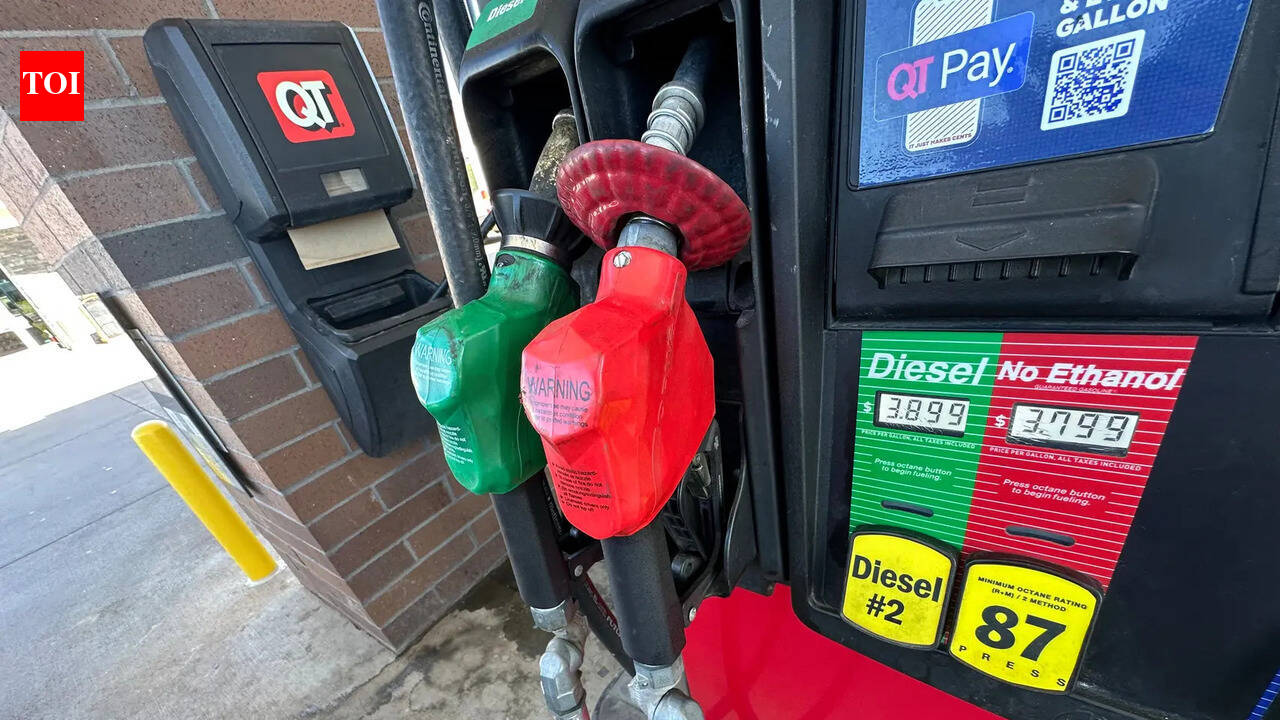
A month into the Middle East conflict, its ripple effects are felt across economies worldwide. The crisis was triggered on February 28, when the United States and Israel launched joint strikes on Iran, setting off a chain of events that has tightened Tehran’s grip over the strategically vital Strait of Hormuz. This narrow sea passage, linking the Persian Gulf with the Gulf of Oman and the Arabian Sea, remains one of the world’s most critical energy routes. At its narrowest, it spans just 29 nautical miles, with limited navigable channels for shipping.Carrying around 20 million barrels of oil daily, nearly a quarter of global seaborne trade, any disruption here has far-reaching consequences. As supplies come under strain, countries are scrambling to manage the fallout while cushioning consumers through a mix of policy responses. While some have raised fuel prices, others restructured taxes to protect consumers.
Vietnam
Vietnam consumers have breathed a sigh of relief as the country has lowered fuel prices. Faced with a sharp spike in fuel costs, Vietnam rolled out emergency measures to bring costs under control. Authorities have suspended environmental protection taxes on petrol, diesel and aviation fuel until mid-April, in a bid to steady the domestic market. The trade ministry described the step as “an urgent and effective solution to stabilize the petroleum market and ensure national energy security amidst the escalating conflict in the Strait of Hormuz, which is creating the ‘biggest energy bottleneck ever’.” The move has led to a steep fall in prices, with petrol dropping by roughly 26% and diesel by more than 15% after earlier surges.
Venezuela
In Venezuela, prolonged high temperatures have intensified pressure on an already strained power system, prompting the government to scale back activity. Interim president Delcy Rodriguez announced a week-long suspension of work across the public sector, including education, as part of an electricity-saving drive. “During this Holy Week, I want to announce that I have decreed days off on Monday, Tuesday, Wednesday, Thursday and Friday for the entire education sector,” she said, adding that the country had endured “45 days of high temperatures.” While essential services will remain operational, the step reflects ongoing challenges in managing electricity demand.
India
In India, the government has taken a range of steps to cushion consumers and companies from the ongoing energy supply crisis. With refining costs climbing sharply, the government reduced excise duty on petrol and diesel by Rs 10 per litre each, despite the impact on state revenues. At the same time, export duties were introduced on diesel and aviation turbine fuel to manage supply pressures. Officials insisted there is no shortage of petrol, diesel or LPG, dismissing claims of disruption as a “coordinated misinformation campaign.” Domestic LPG availability remains stable, with production increased and states asked to expand commercial distribution.
Pakistan
Pakistan is facing mounting pressure from rising fuel costs, with the government adjusting prices selectively while trying to shield consumers. Kerosene prices have been increased by PKR 4.66 per litre to PKR 433.40, effective March 28, even as petrol and diesel rates remain unchanged at PKR 321.17 and PKR 335.86 per litre. Authorities said the decision aims to protect consumers from global price swings, with the state absorbing part of the burden through payments of PKR 95.59 per litre on petrol and PKR 203.88 per litre on diesel to oil marketing companies.At the same time, aviation fuel prices have surged sharply, rising for the fifth time in 28 days. A latest increase of PKR 5 per litre has pushed jet fuel to a record PKR 476.97 per litre, up from PKR 188 at the start of March — a jump of PKR 288. Airlines have already raised fares, with domestic one-way tickets on routes such as Karachi-Islamabad and Karachi-Lahore reaching up to PKR 40,000, while “chance seat” fares have surged by as much as 150%. Amid these pressures, work patterns are also adjusting in response to the energy strain, with measures aimed at reducing overall fuel consumption forming part of the wider response.
Egypt
Egypt has introduced a series of temporary restrictions to reduce energy consumption as fuel costs climb. Retail outlets, restaurants and cafes are now required to shut by 21:00 each night, alongside measures such as reduced street lighting and limited remote working. The government termed these “exceptional measures” in response to mounting pressure on energy supplies. Egyptian PM Mostafa Madbouly said that the country’s petrol expenditure had more than doubled in recent months. Although tourism-related businesses are exempt, the wider economy is feeling the strain, particularly due to reliance on imported fuel.
Sri Lanka
Sri Lanka is tightening energy use as supply disruptions continue to strain the country’s fuel system. With around 60 percent of its energy imported and limited reserves covering barely a month, authorities have reintroduced a QR-based rationing system. Weekly limits have been set, including eight litres for motorbikes, 20 for tuk-tuks, 25 for cars, 100 litres of diesel for buses and 200 for lorries. Fuel prices have also risen by about 33 percent since the start of the war, adding pressure on households.To curb consumption, the government has introduced a no-work-on-Wednesday policy, shutting offices and schools on that day. Alongside fuel shortages, Sri Lankan citizens are also struggling with disrupted fertiliser supplies which could push food prices higher, with estimates pointing to a potential 15% increase, further compounding the cost-of-living strain.

Trump said on Saturday that an agreement would include the reopening of the Strait of Hormuz, without giving further details.
Source link
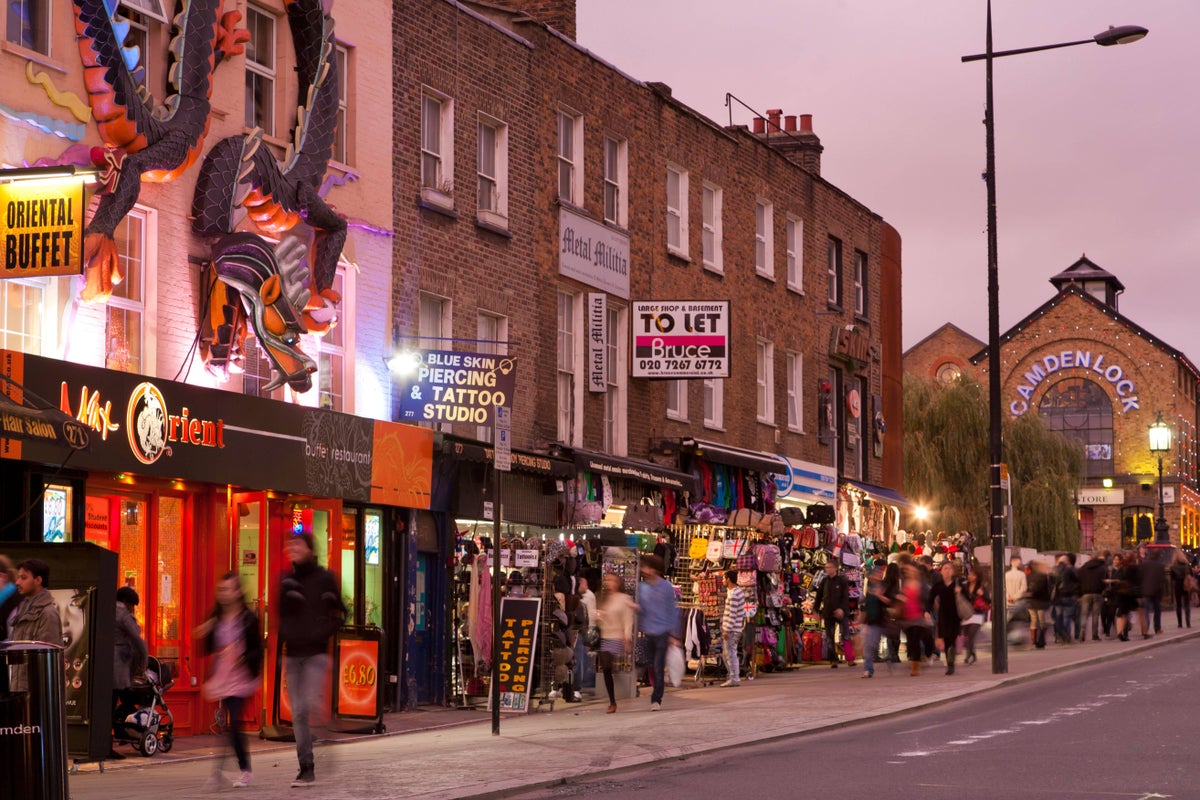
UK high streets and shopping destinations are showing signs of recovery as more than 13 retail stores opened each week over the past year, according to new figures.
However, England and Wales have still seen more than 6,000 retail premises vanish from local communities over the past five years.
Analysis of Valuation Office Agency data by tax firm Ryan, found that there were 507,810 retail premises across England and Wales at the end of 2025.
It said the figures showed that a recent contraction across the sector has appeared to stabilise, with a 723 net increase in the number of retail stores compared with a year earlier.
Property numbers increased across every region of England and Wales, with the exception of the North West, which saw a decline of 41.
It suggests that parts of the sector are now beginning to rebalance following significant structural contraction seen since the pandemic.
The creation of new retail units also comes as many retail real estate firms, such as Hammerson, have turned empty large units, often former department stores, into a greater number of smaller units.
Other retail groups, such as John Lewis, have moved away from ambitions to transform some retail property for other uses such as rental accommodation.
Nevertheless, the retail sector is still facing pressure from higher business rates for many firms, increased labour costs and concerns over consumer sentiment.
The data also shows that there has also been significant decline over the past few years, with a net reduction of 6,045 retail properties since the end of 2020.
London recorded the largest five-year regional reduction, with 1,266 retail premises disappearing over the period, followed by the South East (-1,191), North West (-719) and North East (-672).
The figures show retail premises which have permanently disappeared from communities altogether, having either been demolished or converted for alternative use.
The figures come as Ryan’s 2026 annual business rates review highlighted that the retail sector saw a 9.3% increase in rateable values at the 2026 business rates revaluation despite the major shift in the retail landscape since the pandemic.
Alex Probyn, practice leader for Europe and Asia-Pacific property tax at Ryan, said: “The pandemic accelerated structural changes that were already emerging across the retail sector, including changing consumer behaviour, hybrid working patterns and a reduced reliance on traditional retail floorspace in many locations.
“Many locations were arguably over-retailed before Covid and high streets have evolved towards more mixed-use environments, with retail space being rebalanced alongside growing demand for residential, leisure, hospitality and service-led uses.
“The revaluation outcome does suggest a large proportion of retail premises have seen bigger increases in their assessments than underlying market conditions and rental evidence would have led occupiers to expect.
“Retailers should therefore carefully review and, where appropriate, challenge their assessments.”

Indians sharply cut back on overseas travel spending in March, with remittances for foreign trips dropping by more than $212 million from the previous month, according to Reserve Bank of India data. The fall in outbound travel expenditure came amid rising oil prices linked to the Middle East conflict and persistent pressure on rupee, even as travel remained the single largest component of outward remittances under the Liberalised Remittance Scheme (LRS).In March, travel-related remittances fell to $1.09 billion from $1.3 billion in February and $1.65 billion in January. The decline came at a time when the West Asia conflict pushed oil prices higher and weakened rupee to record lows. Amid the situation, Prime Minister Narendra Modi urged citizens to cut down on foreign travel and adopt measures such as carpooling. Lower overseas travel spending could reduce foreign exchange outflows and help ease pressure on rupee.According to the RBI’s data on outward remittances by resident individuals, travel continued to account for the largest share of money sent abroad under the LRS in March. Total remittances during the month stood at $2.59 billion.The RBI tracks overseas spending across categories including travel, studies abroad, maintenance of close relatives, overseas investments, and property purchases. Under the LRS framework, resident individuals, including minors, can remit up to $250,000 in a financial year for permitted current or capital account transactions.Within the travel segment, the biggest component remained the ‘other travel’ category, which covers holiday spending and international credit card settlements. Indians spent $623.05 million under this category in March, accounting for nearly 57 per cent of total travel-related remittances during the month.Expenditure linked to education travel, including hostel and fee payments, stood at $450.16 million. Business travel, pilgrimage, and overseas medical treatment together accounted for $21.39 million.The data also showed a rise in remittances meant for the maintenance of close relatives abroad. Such transfers increased to $389.78 million in March from $266.18 million in February.At the same time, spending under the ‘studies abroad’ category declined. This category includes payments made for educational services accessed remotely without travelling overseas, such as correspondence courses. Remittances under this head stood at $151.71 million in March, compared to $175.68 million in February and $267.42 million in January.For the financial year 2024-25, Indians remitted a total of $29.56 billion under the LRS. Travel made up the largest portion of this amount at $16.96 billion.The RBI figures further showed that investments by Indians in overseas equity and debt instruments rose significantly to $440.22 million in March from $265.99 million in February.Meanwhile, outward remittances for the purchase of immovable property overseas declined to $38.68 million in March, down from $51.36 million a month earlier.


Net employment in Australia drops by 18,600 MoM in April: ABS

Zayn Malik thanks fans after ‘epic’ Konnakol Tour opening night

Travis Head and wife Jessica suffer online abuse after Kohli spat

-

 Entertainment1 week ago
Where Pete Davidson, Elsie Hewitt stand after breakup: Details revealed
-

 Politics1 week ago
Rising diesel costs from Iran war strain US school budgets
-

 Tech1 week ago
Why Is Your Grill So Dumb? The Best Grills Set Temp Like an Oven
-

 Tech1 week ago
This Solar-Powered Smart Sprinkler Keeps My Lawn Watered Without Any Power Cables
-

 Fashion6 days ago
Nigeria Kwara Garment Factory, KWS Garment Production Village ink pact
-

 Entertainment1 week ago
Princess of Wales praised as ‘step ahead’ of royal family
-

 Fashion1 week ago
India’s Pearl Global’s FY26 revenue crosses $521 mn milestone
-
 Fashion7 days ago
Turkiye’s current account deficit expected to widen in 2026: Minister