

Tech
From trust to turbulence: Cyber’s road ahead in 2026 | Computer Weekly


In 2025, trust became the most exploited surface in modern computing. For decades, cyber security has centered on vulnerabilities, software bugs, misconfigured systems and weak network protections. Recent incidents in cyber security marked a clear turning point, as attackers no longer needed to rely solely on traditional techniques.
This shift wasn’t subtle. Instead, it emerged across nearly every major incident: supply chain breaches leveraging trusted platforms, credential abuse across federated identity systems, misuse of legitimate remote access tools and cloud services, and AI-generated content slipping past traditional detection mechanisms. In other words, even well-configured systems could be abused if defenders assumed that trusted equals safe.
Highlighting the lessons learned in 2025 is essential for cyber security professionals to understand the evolving threat landscape and adapt strategies accordingly.
The perimeter is irrelevant – trust is the threat vector
Organisations discovered that attackers exploit assumptions just as effectively as vulnerabilities by simply borrowing trust signals that security teams overlooked. They blended into environments using standard developer tools, cloud-based services and signed binaries that were never designed with strong telemetry or behavioural controls.
The rapid growth of AI in enterprise workflows was also a contributing factor. From code generation and operations automation to business analytics and customer support, AI systems began making decisions previously made by people. This introduced a new category of risk: automation that inherits trust without validation. The result? A new class of incidents where attacks weren’t loud or obviously malicious, but were piggybacked on legitimate activity, forcing defenders to rethink what signals matter, what telemetry is missing and which behaviours should be considered sensitive even if they originate from trusted pathways.
Identity and autonomy took centre stage
Identity also defines the modern attack surface apart from security vulnerabilities. As more services, applications, AI agents and devices operate autonomously, attackers increasingly target identity systems and the trust relationships between components. Once an attacker had possession of a trusted identity, they could move with minimal friction, expanding the meaning of privilege escalation. Escalation wasn’t just about obtaining higher system permissions; it was also about leveraging an identity that others naturally trust. Considering the attacks targeting the identities, defenders realised that distrust by default must now apply not only to network traffic but also to workflows, automation and the decisions made by autonomous systems.
AI as both a power tool and a pressure point
AI acted as a defensive accelerator and a new frontier of risk. AI-powered code generation sped up development but also introduced logic flaws when models filled gaps based on incomplete instructions. AI-assisted attacks became more customised and scalable, making phishing and fraud campaigns harder to detect. Yet, the lesson wasn’t that AI is inherently unsafe; it was that AI amplifies whatever controls (or lack of controls) surround it. Without validation, AI-generated content can mislead. Without guardrails, AI agents can make risky decisions. Without observability, AI-driven automation can drift into unintended behavior. This highlights that AI security is more about the entire ecosystem, including LLMs, GenAI apps and services, AI agents and underlying infrastructure.
A shift towards governing autonomy
As organisations increase their reliance on AI agents, automation frameworks and cloud-native identity systems, security will transition from patching flaws to controlling decision-making pathways. We will see the following defensive strategies in action:
- AI control-plane security: Security teams will establish governance layers around AI agent workflows, ensuring every automated action is authenticated, authorised, observed and reversible. The focus will expand from guarding data to guarding behaviour.
- Data drift protection: AI agents and automated systems will increasingly move, transform and replicate sensitive data, creating a risk of silent data sprawl, shadow datasets and unintended access paths. Without strong data lineage tracking and strict access controls, sensitive information can drift beyond approved boundaries, leading to new privacy, compliance and exposure risks.
- Trust verification across all layers: Expect widespread adoption of “trust-minimised architectures,” where identities, AI outputs and automated decisions are continuously validated rather than implicitly accepted.
- Zero trust as a compliance mandate: ZTA will become a regulatory requirement for critical sectors, with executives facing increased personal accountability for significant breaches tied to poor security posture.
- Behavioural baselines for AI and automation: Just like user behaviour analytics matured for human accounts, analytics will evolve to establish expected patterns for bots, services and autonomous agents.
- Secure-by-design identity: Identity platforms will prioritise strong lifecycle management for non-human identities, limiting the damage when automation goes wrong or is hijacked.
- Intent-based detection: Since many attacks will continue to exploit legitimate tools, detection systems will increasingly analyse why an action occurred rather than just what happened.
If 2025 taught us that trust can be weaponised, then 2026 will teach us how to rebuild trust in a safer, more deliberate way. The future of cyber security isn’t just about securing systems but also securing the logic, identity and autonomy that drive them.
Aditya K Sood is vice president of security engineering and AI strategy at Aryaka.
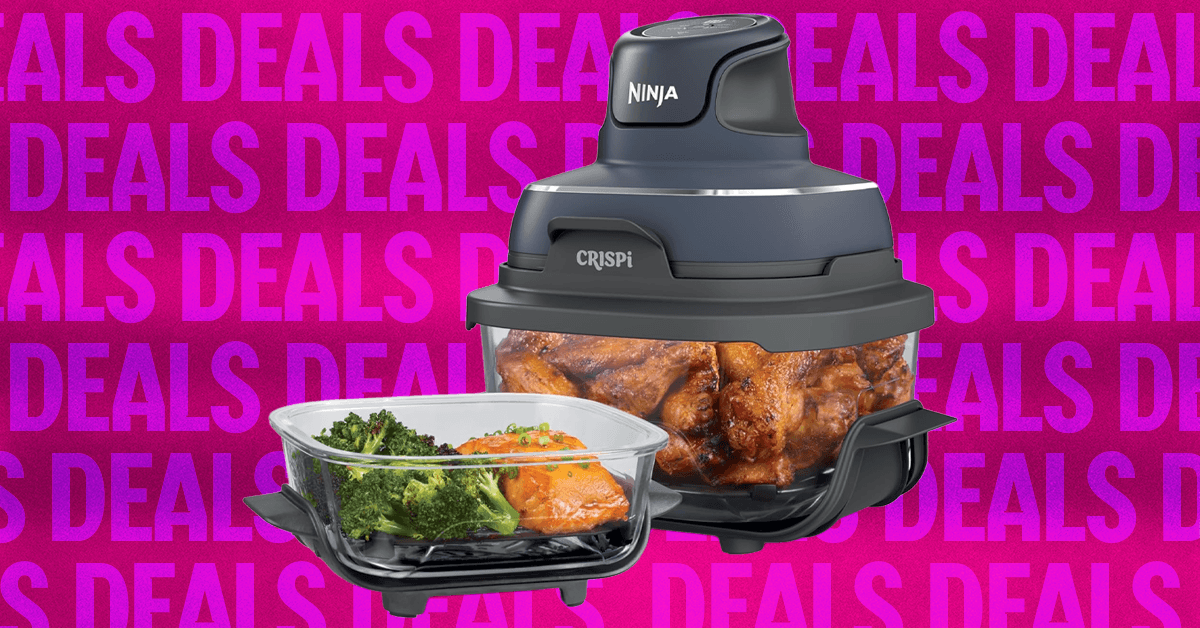
Want to be the hero of your next Super Bowl party? Check out the Ninja Crispi Portable Glass Air Fryer, an intriguing twist on the air fryer that’s a perfect option for air frying your favorite frozen snacks at your next potluck—it’ll help you win the day by frying up a batch of wings at your buddy’s house. It’s currently marked down as low as $150 on Amazon, depending on your color preference.
-
Photograph: Matthew Korfhage
-
Photograph: Matthew Korfhage
-
Photograph: Matthew Korfhage


Ninja
Crispi Portable Glass Air Fryer
Basically, every other air fryer works by circulating hot air through a purpose-built, egg-like basket. But the genius of the Crispi is that its glass fryer tray doubles as a serving tray and a sealable fryer dish. The heating element and fan live in a hat-like unit with clamps that attach to heat-shock-resistant borosilicate glass frying baskets with ceramic-coated trays inside. While the actual “fry” setting can be a little intense, the “bake” setting works perfectly for softer foods like veggies. Either way, the results spoke for themselves in our testing, with crispy fries and nuggets even outside in freezing temperatures.
Our reviewer Matthew Korfhage found the “recrisp” setting particularly useful for bringing leftover pizza slices and noodle dishes back to life. That makes it a great choice for office lunchtimes, where you can leave the Crispi itself in a drawer at your desk and ferry leftovers from home. You only have to wash a normal glass dish, rather than the entire fry basket like most options, so this would also work well for dorms or even camping, if there’s an outlet nearby.
Of course, you’ll have to make a few compromises in order to take your precious air-fried snacks with you on the go. While the glass container does a surprisingly good job of insulating the food during cooking, the temperature range isn’t quite as exact as some of our other favorite air fryers.
You’ll also have to be a little bit flexible on your aesthetic choices. While the pastel-hued Cherry Crush, Frosted Lilac, and Ginger Snap colors are marked down to the lower $150 price, the less pronounced Sage, Stone, and Cyberspace Gray are slightly higher at $160, but still under the usual $180 price tag. There’s also a Racing Green Bundle that includes all three sizes of glass crisping tray for $190, if you think you’ll end up buying them anyway.

All-Clad Deals used to be difficult to find, but thankfully, the Factory Seconds Sale has come back around for a little while. These sales tend to only last for a few days—this one expires at midnight tomorrow, January 21—though they sometimes are extended. In any case, these sales offer a reliable way to score a solid deal on All-Clad kitchenware, which is normally very expensive. We love and swear by All-Clad, as do many professional chefs.
Factory Seconds are products with minor imperfections that still perform as intended. Sometimes an item is “second quality,” meaning it might have some blemishes or dents. Sometimes an item just has packaging damage. Every product page lists the exact reason for the “Factory Seconds” designation, as well as its warranty; most items are backed by All-Clad’s lifetime warranty. Note that you’ll need to enter your email to access the sale, and flat-rate shipping adds $10. Orders ship in 10 to 15 business days. We’ve highlighted our favorite deals below.
Make sure to check out our related buying guides, including the Best Chef’s Knives, Best Meal Kit Subscriptions, and Best Coffee Makers.
Best All-Clad Factory Seconds Deals
We include this pan at every possible opportunity when it’s on sale because it’s such a solid kitchen companion. Many WIRED Reviews team members have it in their kitchens. The shape allows you to make a pan sauce or sear up some steaks. The high walls prevent grease splatter, and you can use it like a wok or Dutch oven in addition to a regular ol’ pan. It’s dishwasher-safe for easy cleanup.
This roaster is a staple in my kitchen during the colder months of the year. It’s safe to use in the oven and under the broiler at up to 600 degrees Fahrenheit, and it has enough room for roasting meats or vegetables in large portions (it can hold up to a 20-pound turkey). You can also transfer it to the stovetop to whip up a quick sauce with the roasted drippings. The manufacturer recommends hand-washing.
This hard-anodized nonstick pan is versatile enough to make just about anything. Eggs, vegetables, a pan sauce, and stir-fries are all contenders. It’s made with a PTFE coating. Make sure not to get it too hot, and use nonstick-safe tools and hand-wash it to preserve that coating for as long as you can.
This nonstick pot has a PTFE coating and therefore should be hand-washed. It can be used to simmer, stew, or steam thanks to its tall sides and included lid. It also comes with a steamer basket for all of your vegetable and/or dumpling needs. The pieces nest together for easier storage.
So technically, this thing isn’t a spatula, but in my house that’s what we’d call it. Whether you’re Team Turner or not, nonstick-safe tools can be difficult to come by and they’re crucial to keep around if you’re cooking on nonstick cookware. I like having backups so I don’t have to constantly do dishes. This turner is heat-safe up to 425 degrees Fahrenheit and will come in handy for everything from eggs to grilled cheese sandwiches.
The exact reasoning for this being a Factory Seconds item isn’t listed, but a good cast-iron skillet is indispensable for every home chef. It has two pour spouts for easier siphoning or serving, and the finish is resistant to scratches and stains. The skillet is oven-safe up to 650 degrees Fahrenheit.
What Are All-Clad Factory Seconds?
The Factory Seconds Event is run by Home and Cook Sales, an authorized reseller for All-Clad and several other cookware brands. The items featured in the sale (usually) have minor imperfections, like a scuff on the pan, a misaligned name stamp, or simply a dented box. Every product on the website lists the nature of the imperfection in the title (e.g., packaging damage). You’ll need to enter an email address to access the sale.
While the blemishes vary, the merchant says all of the cookware will perform as intended. Should any issue arise, nearly every All-Clad Factory Seconds product is backed by All-Clad’s limited lifetime warranty. (Electric items have a slightly different warranty; check individual product pages for details.) We’ve used more than a dozen Factory Seconds pots, pans, and accessories, and they’ve all worked exactly as advertised. Just remember that all sales are final, and note that you’ll have to pay $10 for shipping. It’s also worth noting that the “before” prices are based on buying the items new, but we still think it offers a good indication of how much you’re saving versus the value you’re getting.
Power up with unlimited access to WIRED. Get best-in-class reporting and exclusive subscriber content that’s too important to ignore. Subscribe Today.

Justice for Far Side cartoonist Gary Larson: A team of scientists has observed, for the first time, a cow using a tool in a flexible manner. The ingenuity of “Veronika,” as the animal is called, shows that cattle possess enough intelligence to manipulate elements of their environment and solve challenges they would otherwise be unable to overcome.
Veronika is a pet cow in Austria. Her owners don’t use her for meat or milk production. Nor was she trained to do tricks; on the contrary, for the past 10 years she has developed the ability to find branches in the grass, choose one, hold it with her mouth, and scratch herself with it to relieve skin irritation.
Until now, only chimpanzees had convincingly demonstrated the ability to employ tools to improve their living conditions. Recent studies also point to whales as the only marine animals capable of using complex tools. This European cow is about to join that exclusive group of ingenious animals.
Videos of Veronika circulating online caught the attention of veterinary researchers in Vienna. They visited the farm, conducted behavioral tests, and carried out controlled trials. “In repeated sessions, they verified that her decisions were consistent and functionally appropriate,” a press release stated.
Veronika’s abilities go beyond simply using a point to scratch herself, explain the authors of the study published in Current Biology. In the tests, the cow was offered different textures and objects, and she adapted according to her needs. Sometimes she chose soft bristles and other times a stiffer point. The researchers say she used different parts of the same tool for specific purposes and even modified her technique depending on the type of object or the area of her body she wanted to scratch.
Although they consider using a tool to relieve irritation “less complex” compared to, for example, using a sharp rock to access seeds, the specialists greatly value Veronika’s ability. For now, she demonstrates that she can decide which part of the tool is most useful to her. The finding suggests that we have underestimated the cognitive capacity of cattle, according to the authors.
Why Is Veronika So Skilled?
The team acknowledges that it’s still too early to say that all cows can use tools with the same skill as Veronika. For now, the researchers are trying to determine how this cow developed an awareness of her surroundings.
Researchers believe her particular circumstances played a role. Veronika has lived for 10 years in a complex, open environment filled with manipulable objects—a very different experience from that of cattle raised for milk and meat production. These conditions fostered exploratory and innovative behavior, they say. They are now searching for more videos of cattle using tools to gather further evidence about their cognitive abilities.
“Until now, tool use was considered a select club, almost exclusively for primates (especially great apes, but also macaques and capuchins), some birds like corvids and parrots, and marine mammals like dolphins. Finding it in a cow is a fascinating example of convergent evolution: intelligence arises as a response to similar problems, regardless of how different the animal’s ‘design’ may be,” said Miquel Llorente, director of the Department of Psychology at the University of Girona, who was not involved in the study, in a statement to the Science Media Centre Spain.


This Unique Air Fryer Cooks Your Food in Heat-Proof Glass—It’s on Sale Right Now

Europe vows firm response to Trump’s Greenland threats

Details emerge after Miami star seen throwing punch at Indiana player following national title loss

-

 Tech1 week ago
New Proposed Legislation Would Let Self-Driving Cars Operate in New York State
-

 Entertainment1 week ago
X (formerly Twitter) recovers after brief global outage affects thousands
-

 Sports6 days ago
Pak-Australia T20 series tickets sale to begin tomorrow – SUCH TV
-

 Politics4 days ago
Saudi King Salman leaves hospital after medical tests
-
 Business4 days ago
Trump’s proposed ban on buying single-family homes introduces uncertainty for family offices
-

 Tech5 days ago
Meta’s Layoffs Leave Supernatural Fitness Users in Mourning
-

 Tech6 days ago
Two Thinking Machines Lab Cofounders Are Leaving to Rejoin OpenAI
-

 Fashion4 days ago
Bangladesh, Nepal agree to fast-track proposed PTA