

Business
FTSE 100 at new high amid US shutdown optimism


The FTSE 100 hit an all-time best on Monday, passing 9,800 for the first time, as hopes grow for an end to the US government shutdown.
The FTSE 100 Index closed up 104.58 points, 1.1%, at 9,787.15, a record closing peak.
It had earlier set a new intra-day best level of 9,800.35.
The FTSE 250 ended 194.88 points higher, 0.9%, at 21,968.27, and the AIM All-Share climbed 8.07 points, 1.1%, at 757.54.
The risk-on mood came as the US Senate cleared the way for a formal debate on a motion to resume funding to federal agencies.
The Republican-led chamber approved a procedural vote after a handful of Senate Democrats crossed over to permit debate on a measure that could end the longest shutdown in US history.
“The prospect that the longest US government shutdown in history may end in the next few days has bolstered risk appetites,” said Marc Chandler, at Bannockburn Capital Markets.
In European equities on Monday, the CAC 40 in Paris closed up 1.5%, while the DAX 40 in Frankfurt soared 1.7%.
In New York, the Dow Jones Industrial Average was little changed at around the time of the London close.
The S&P 500 index was 0.7% higher, while the Nasdaq Composite advanced 1.3%.
Nvidia rose 3.9% ahead of results next week while Advanced Micro Devices climbed 5.7% ahead of Tuesday’s analyst day at which new financial targets are expected to be unveiled.
Morgan Stanley said the developments mean the government shutdown could end this week.
The bank thinks the first major data print post-shutdown is likely to be the September employment report, with other data on inflation and spending probably taking a further one to two weeks.
“We think the data in-hand by the time of the December Fed meeting will be enough for them to cut,” Morgan Stanley added.
Kathleen Brooks, at XTB, said the end of the US government shutdown “comes at the right time”, just before Thanksgiving.
“This should allow American families to fly all over the country for the holidays and it should mean that supply chains are fully functioning for the biggest shopping weekend of the year,” she observed.
Sterling was quoted at 1.3160 dollars at the time of the London equities close on Monday, lower compared with 1.3166 dollars on Friday.
The euro stood at 1.1554 dollars, down against 1.1582 dollars. Against the yen, the dollar was trading higher at 153.97 yen, compared with 153.07 yen.
The yield on the US 10-year Treasury was at 4.11%, widened from 4.07% on Friday. The yield on the US 30-year Treasury was quoted at 4.70%, stretched from 4.68%.
Back in London, the countdown to the Budget at the end of November continues.
Speaking to the BBC, Chancellor Rachel Reeves said the Budget will be focused on the cost of living, getting government debt down and cutting NHS waiting lists.
Speaking to Radio 5 Live, Ms Reeves would not be drawn on specific measures but said tax and spending decisions will be influenced by a productivity review by the Office for Budget Responsibility and ongoing conflicts and disruptions to trade.
It will be a “difficult” Budget, she said, but one focused on “fairness” and growing the economy.
Diageo rose 5.2% after it appointed former Tesco boss Dave Lewis as its new chief executive.
The London-based owner of Guinness stout and Johnnie Walker whisky said Mr Lewis, who led Tesco from 2014 to 2020, will join Diageo at the start of 2026.
Prior to his time at Tesco, Mr Lewis spent nearly three decades at Marmite owner Unilever, where he earned the moniker “drastic Dave” in recognition of his reputation as a cost cutter and turnaround specialist.
Jefferies analyst Edward Mundy said the appointment “ends the uncertainty over leadership transition and brings a heavyweight leader with extensive CEO experience on both brand building and transformation”.
“Not only does he have extensive CEO experience, strong brand-building capabilities and a keen cost focus, he played an important role in changing the culture and restoring the Tesco brand,” Mr Mundy commented.
Gains in the gold price lifted blue-chips Fresnillo and Endeavour Mining 5.4% and 4.5% respectively, while on the FTSE 250 Hochschild Mining jumped 8.0%.
Gold traded higher at 4,091.42 dollars an ounce on Monday against 4,012.24 dollars on Friday.
Entain rose 3.0% as Investec upgraded to “buy” from “hold”, while British Airways owner IAG rallied 3.7% after Friday’s heavy falls after third-quarter news.
On the FTSE 250, RHI Magnesita jumped 17% as it said performance has improved in the second half of 2025 despite subdued demand conditions.
The Vienna-based refractory products maker said adjusted earnings before interest, tax and amortisation were 136 million euros in the four months to October, significantly ahead of the run-rate in the first half of 2025 and in line with guidance.
In the first six months of 2025, RHI Magnesita reported Ebita of 141 million euros.
JTC fell 4.3% after agreeing a £2.7 billion all-cash takeover by Permira Advisers worth 1,340 pence per share.
RBC Capital Markets said conversations with shareholders suggested that price expectations were higher at 1,450p, “so we think there will be a degree of disappointment”.
“We are not convinced that this is yet a done deal however,” the broker added.
Brent oil was quoted slightly lower at 63.45 dollars a barrel at the time of the London equities close on Monday, from 63.51 dollars late on Friday.
The biggest risers on the FTSE 100 were Fresnillo, up 118 pence at 2,310p, Diageo, up 90p at 1,816.5p, Endeavour Mining, up 134p at 3,142p, Polar Capital Technology Trust, up 20p at 472p and SSE, up 74.5p at 1,943p.
The biggest fallers on the FTSE 100 were London Stock Exchange, down 198p at 9,072p, Rightmove, down 10.2p at 563.4p, Hikma Pharmaceuticals, down 27p at 1,555p, BT, down 2.25p at 177.1p and Compass, down 26p at 2,479p.
Tuesday’s global economic calendar has UK jobs and average earnings data plus the British Retail Consortium’s retail sales monitor.
Tuesday’s UK corporate calendar has half-year results from telecommunications group Vodafone and sales, marketing and support services provider DCC.
Contributed by Alliance News
Business
Pakistan Petrol Crisis: Petrol shock, free rides & more: How is Pakistan dealing with Hormuz energy crisis – The Times of India
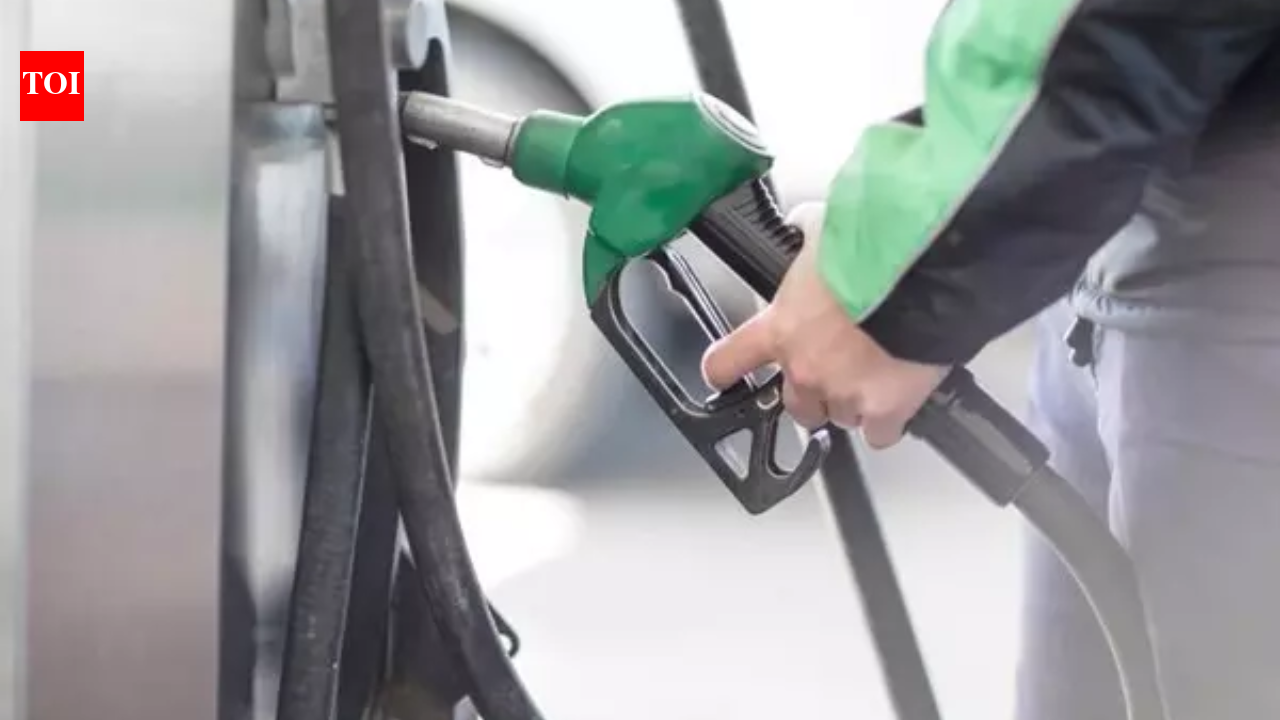
The Middle East crisis has stretched beyond the one month mark, sending ripples across the globe. While somes nations are hiking fuel prices, others are introducing other measures to cushion consumers from the impact while balancing energy reserves. Pakistan is no stranger to the ongoing energy volitality as the country imports almost 85% of its supplies through the Strait of Hormuz. Pakistan government has already raised petrol prices multiple times since the conflict began, with the last raise being on Friday. The sharp rise in fuel prices pushed the government to roll out emergency relief measures, including free public transport in key regions, as public anger spilled onto the streets. Authorities announced on Friday that commuters in Islamabad and Punjab will not have to pay fares on state-run transport for the next 30 days.
Balancing Hormuz crisis and consumer interest
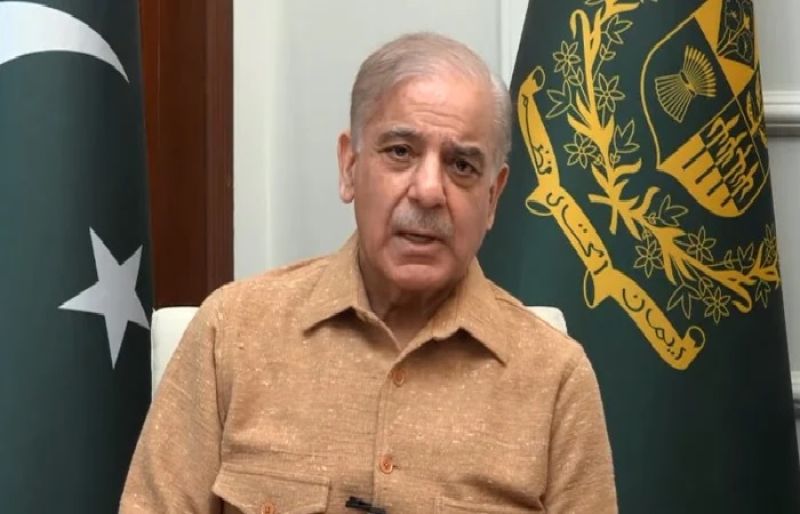
The decision follows widespread unrest after petrol prices were raised overnight by 42.7% to 485 rupees per litre, triggering protests and long queues at fuel stations. However, after public outrage, Pakistan’s PM Shehbaz Sharif later revised the hike, bringing petrol down to 378 rupees per litre. “This decrease will be applicable for at least one month,” he said during a televised address, adding, “I promise I will not rest until your life is back to normal.”Coming to diesel prices, the government had increased HSD price by PKR 184.49 per litre, from PKR 335.86 to PKR 520.35, but abolished the levy, providing some relief to citizens.Detailing the relief measures, interior minister Mohsin Naqvi said, “All public transport in Islamabad will be made free of cost for the general public for the next 30 days, starting tomorrow (Saturday),” noting that the government would shoulder a cost of 350 million rupees.Punjab has mirrored the move, removing fares on public transport and introducing “targeted subsidies” for trucks and buses. CM Maryam Nawaz Sharif also appealed to transport operators not to shift the burden onto passengers, saying, “We promise to relieve the public of economic burden as soon as conditions improve.”In Karachi, similar steps have been taken by the Sindh government, which announced subsidies aimed at motorcyclists and small farmers.
Middle East tensions strain Pakistan
The developments come against the backdrop of rising global energy disruptions linked to the US-Israel war on Iran, which began on February 28. The conflict has led to retaliatory strikes across the Gulf and disrupted movement through the Strait of Hormuz, a vital route for energy supplies, particularly to Asia.To manage the strain, Pakistan has introduced a series of fuel-saving steps, including a four-day workweek for many government offices, extended school holidays and a shift to online classes in some cases.The economic pressure is being felt acutely in a country where about 25% of the population of 240 million lives in poverty, according to World Bank figures. Earlier in March, fuel prices had already been increased by 20 percent, with authorities initially resisting further hikes.Protests broke out on Friday in Lahore, where demonstrators called for the government to withdraw the increase. “The government, overnight, has dropped a ‘petrol bomb’ on its people,” said Naveed Ahmed, a 39-year-old protestor. “Our nation cannot bear this situation right now. This storm of inflation must be stopped, and relief should be provided to the public.”Hafiz Abdul Rauf, another protester, questioned the reasoning behind the hike, saying, “The rise we are seeing is not due to the (Iran) war, but to pressure from the IMF, pressure that must be resisted. For God’s sake, step back from these demands and show some compassion for the people.”The pressure is not limited to Pakistan. Bangladesh has also raised prices of liquefied petroleum gas and compressed natural gas by 29%. Meanwhile, the International Monetary Fund warned earlier this week that vulnerable economies face not only rising energy costs but also disruptions in supply chains. On March 28, it said it had reached an initial agreement with Pakistan on a $1.2-billion support package.

MUMBAI: Credit growth continued to outpace deposit mobilisation for Punjab National Bank, Union Bank of India and IDFC FIRST Bank at the end of the March quarter, reflecting sustained loan demand in a tight liquidity environment.Punjab National Bank reported global advances of Rs 12,61,420 crore as of March 31, 2026, up nearly 13% year-onyear, while global deposits rose 9.3% to Rs 17,11,476 crore. The bank’s total global business stood at Rs 29,72,896 crore, reflecting a 10.8% increase. Domestic advances grew 12.2% to Rs 11,95,811 crore and domestic deposits rose 9.2% to Rs 16,49,409 crore. The global credit-deposit ratio stood at 73.7% at the end of the quarter.Union Bank of India reported global advances of Rs 10,78,779 crore, marking a 9.8% year-on-year increase, while global deposits rose 2.7% to Rs 13,06,900 crore. Total global business stood at Rs 23,85,679 crore, up 5.8%. Growth was led by the retail, agriculture and MSME segments, where advances rose 12.6% to Rs 5,98,620 crore. Domestic CASA deposits increased 7.9% to Rs 4,59,988 crore, with the CASA ratio improving to 35.2%.IDFC FIRST Bank reported loans and advances of Rs 2,90,362 crore at the end of March, up 20% year-on-year, while customer deposits rose 17.2% to Rs 2,84,327 crore. The bank’s CASA ratio improved to 49.8% from 46.9% a year earlier. It said customer acquisition remained stable through March despite year-end tax outflows and tight system liquidity. It said asset quality stress in its microfinance portfolio has normalised, supporting further credit growth.


The Trajectory of the Artemis II Moon Mission Is a Feat of Engineering

Netflix renews ‘Love on the Spectrum’ for season 5

China moves to regulate digital humans, bans addictive services for children

-

 Entertainment1 week ago
Lee Sang-bo dies at 45: Funeral details revealed
-

 Sports1 week ago
Illinois defense gets tough, ousts Houston to reach Elite Eight
-

 Sports6 days ago
USMNT handed reality check by Doku, Belgium ahead of World Cup
-

 Sports6 days ago
2026 NCAA men’s hockey tournament: Schedule, results
-
 Business1 week ago
How do you spot a fake online review?
-

 Fashion1 week ago
China rolls out tariff cuts on Congo imports from April 1
-
 Fashion1 week ago
EU apparel imports slump 15.48% YoY in Jan; Bangladesh hardest hit
-

 Sports6 days ago
Man City show why they are worthy WSL title winners as tired United wilt