

Business
FTSE 100 dips as Unilever falls amid Magnum split

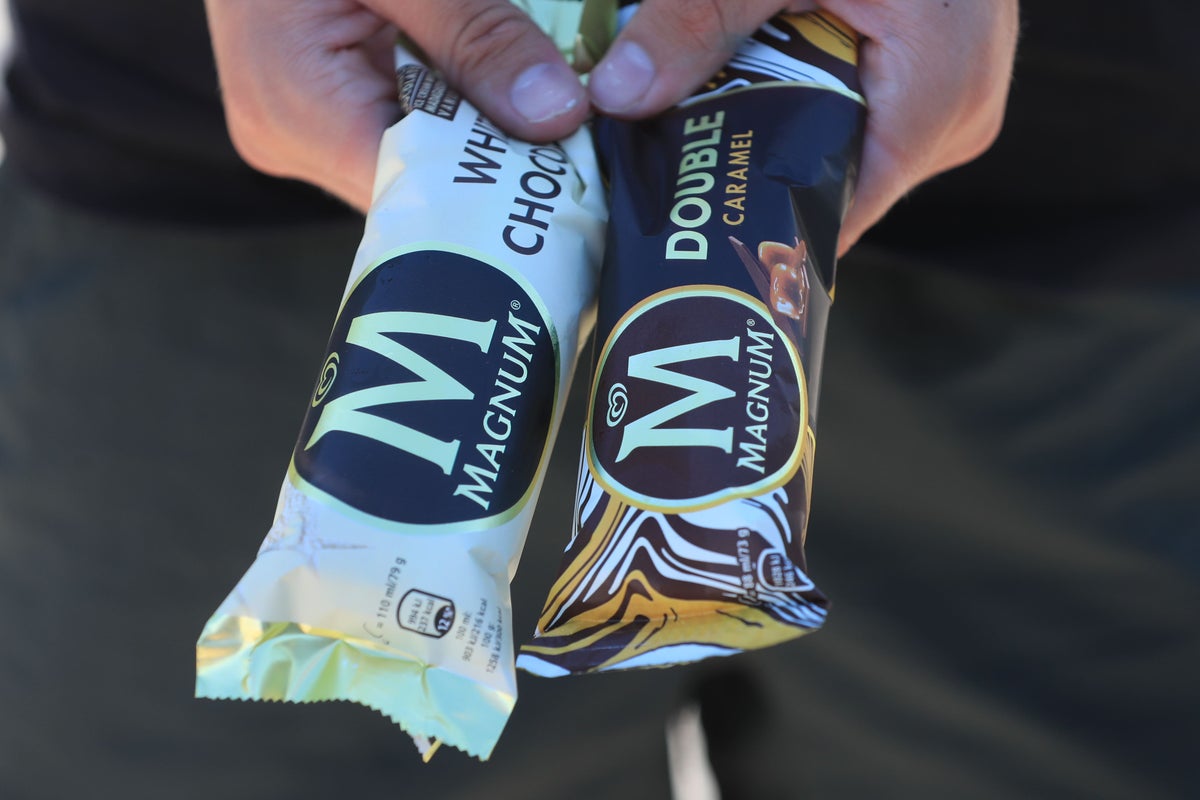
The FTSE 100 started the week on the back foot, weighed by falls in Marmite owner Unilever, while in the US the battle for control of Warner Bros Discovery took another turn.
The FTSE 100 index closed down 21.92 points, 0.2%, at 9,645.09. The FTSE 250 ended 142.67 points lower, 0.7%, at 21,921.28, and the AIM All-Share ended down 2.78 points, 0.4%, at 748.52.
In London, trading was muted ahead of Wednesday’s US interest rate decision.
The US central bank is widely expected to deliver a third consecutive 25 basis points interest rate cut, taking the Federal Reserve’s target range for the federal funds rate to 3.5%-3.75% at what could be a contentious meeting.
Goldman Sachs says the case for a cut is “solid”.
“Job growth remains too low to keep up with labour supply growth, the unemployment rate has risen for three months in a row to 4.4%, other measures of labour market tightness have weakened more on average and some alternative data measures of layoffs have begun to rise recently, presenting a new and potentially more serious downside risk,” the investment bank said.
Barclays expects a “hawkish” cut.
“At the press conference, we expect (Fed) chairman Powell to reinforce the message that a pause is likely at the January meeting, provided the labour market does not suddenly deteriorate, and to mention that the (Federal Open Market Committee) remains very divided about the future course of policy,” the bank said.
The pound was quoted lower at 1.3319 dollars at the time of the London equities close on Monday, compared to 1.3326 dollars on Friday.
The euro stood at 1.1624 dollars, down against 1.1635 dollars. Against the yen, the dollar was trading higher at 155.88 yen compared to 155.42 yen.
In European equities on Monday, the CAC 40 in Paris closed down 0.2%, while the DAX 40 in Frankfurt ended up 0.1%.
Stocks in New York were lower at the time of the London equity close.
The Dow Jones Industrial Average and the S&P 500 index were down 0.3%, while the Nasdaq Composite was 0.2% lower.
In New York, Paramount Skydance launched an all-cash offer to acquire Warner Bros Discovery for 30 dollars per share, trumping a previous bid from streamer Netflix.
The hostile offer sets up a battle between Paramount – whose owner, Larry Ellison, is an ally of US President Donald Trump – and streaming behemoth Netflix to buy one of Hollywood’s most storied studios.
Netflix shocked the industry last week by announcing it had sealed an agreement to buy the Warner Bros studio, drawing bitter reactions from voices in Hollywood worried about the future of their industry.
Mr Trump weighed in on Sunday, saying Netflix’s effort to acquire Warner Bros “could be a problem” as it would be left with a huge market share of the film and TV industry.
“We’re really here to finish what we started,” David Ellison, chairman and chief executive of Paramount, told CNBC as his company made a sixth offer for Warner Bros since the bidding war began.
Netflix fell 4.5%, Warner Bros rose 5% and Paramount Skydance surged 7.3%.
The yield on the US 10-year Treasury was quoted at 4.19%, widened from 4.14%. The yield on the US 30-year Treasury was at 4.83%, stretched from 4.80%.
On the FTSE 100, Unilever fell 6.6% as Magnum Ice Cream started trading in Amsterdam, London and New York.
Shares in the Ben & Jerry’s and Magnum owner, which has been split from Unilever, rose 1.3% in Amsterdam compared to the 12.80 euro reference price, implying a market value of around 7.94 billion euros, below some market forecasts.
Diana Radu, Morningstar equity analyst, said initial valuations are “lower than earlier estimates”, while she noted technical factors could also weigh on Magnum shares in the short-term.
She said: “Magnum is headquartered in the Netherlands and has its primary listing on Euronext Amsterdam, so unlike Unilever, it does not qualify for inclusion in the FTSE UK index series.
“As a result, UK index-tracking funds that receive Magnum shares in the spin-off but benchmark against FTSE UK indices are required to sell, which creates some short-term downward pressure on the share price after listing.
“Still, we remain optimistic on the longer-term outlook. As a standalone company, the ice-cream business gains a refreshed management team and a more focused, category-specific strategy.”
Housebuilders were also another weak feature as UK bond yields pushed higher, with Barratt Redrow down 4% and Persimmon down 3.5%.
Nonetheless, Ami Galla, equity analyst at Citi, believes a spring bounce is likely to drive a sector re-rating, saying: “We continue to have a positive sector view into 2026 for volume housebuilders, which should benefit from a favourable rate outlook as well as a gradual improvement to the planning backdrop.”
Heading upwards, defence stocks rallied on continued geopolitical uncertainty.
Defence contractor Babcock International led the blue-chip risers, up 2.6%, with BAE Systems, up 1.1%.
Aerospace manufacturer Rolls-Royce was in demand, up 2.1%, after receiving an order from defence company KNDS for more than 300 engines for Leopard 2 battle tanks.
On the FTSE 250, Kainos surged 6.6% as Bank of America double-upgraded to “buy” from “underperform”, while Baltic Classifieds, up 5.9%, recouped some of last week’s heavy falls, which followed a downbeat trading update.
Brent oil was quoted at 62.79 dollars a barrel at the time of the London equities close on Monday, down from 63.60 dollars late on Friday.
Gold was quoted at 4,192.10 dollars an ounce on Monday, lower against 4,208.77 dollars.
The biggest risers on the FTSE 100 were Babcock International, up 30p at 1,176p; Scottish Mortgage Investment Trust, up 25p at 1,094.5p; Polar Capital Technology Trust, up 10.5p at 475p; Rolls-Royce, up 22.5p at 1,107p; and Prudential, up 19.5p at 1,097.5p.
The biggest fallers on the FTSE 100 were Unilever, down 296p at 4,160p; Barratt Redrow, down 15p at 363.2p; JD Sports Fashion, down 3.1p at 79.6p; Persimmon, down 46.5p at 1,298.5p; and Entain, down 24p at 735.2p.
Tuesday’s economic calendar has an interest rate decision in Australia overnight and BRC retail sales data in the UK. The two-day FOMC meeting starts in the US.
Tuesday’s UK corporate calendar has half-year results from equipment hire firm Ashtead Group and greetings card and gift retailer Moonpig.
Contributed by Alliance News.

The FDA blocked the publication of several studies supporting the safety of vaccines against Covid and shingles in recent months, a Health and Human Services Department spokesperson confirmed on Tuesday.
It’s the latest effort by the Trump administration to challenge safe and effective shots in the U.S. and make them harder to access for some patients. Under Health and Human Services Secretary Robert F. Kennedy Jr., a prominent vaccine skeptic, federal health agencies have softened Covid shot recommendations, cut back research on vaccine development and attempted to overhaul the childhood immunization schedule, among other efforts.
FDA scientists worked with data firms to analyze millions of patient records for the studies, which found side effects of the shots to be rare, the New York Times first reported on Tuesday.
In October, the scientists were directed to withdraw two Covid shot studies that had been accepted for publication in medical journals, the Times reported. In February, top FDA officials did not sign off on submitting study abstracts on Shingrix, a shingles vaccine, to a drug safety conference, the paper added.
The HHS spokesperson told CNBC the recent studies were “withdrawn because the authors drew broad conclusions that were not supported by the underlying data.”
“The FDA acted to protect the integrity of its scientific process and ensure that any work associated with the agency meets its high standards,” they added.
When asked about the shingles vaccine research, the HHS spokesperson said the design of that study “fell outside the agency’s purview.”
Business
Spirit starts monthslong process of dismantling airline after biggest collapse in a generation

Spirit Airlines‘ more than three-decade run ended over the weekend, but on Tuesday it was just starting the monthslong process of dismantling the company after the biggest U.S. airline collapse in a generation.
Spirit and its stakeholders were in bankruptcy court in White Plains, New York, to start that process, which will take months. The hearing included discussions about airport landing fees, aircraft and staffing.
The carrier filed a cumulative wind-down budget of around $217 million, though that number could change.
The budget went out to February 2028. It included more than $52 million in employee costs through July and another more than $52 million for aircraft-related expenses.
The airline had 59 Airbus A320s in service and 63 in storage, as well as 37 of the larger A321s in service, and 13 of them in storage, according to aviation data firm Cirium. More than three-quarters of its fleet was leased.
Spirit shut down operations after years of struggles, most recently from heavy debt loads and a surge in costs.
Spirit’s lawyer, Marshall Huebner of Davis Polk, told a bankruptcy court on Tuesday that the jump in jet fuel prices following the U.S.-Israel attacks on Iran in February left the carrier with no choice but to shut down. That added $100 million in incremental costs for Spirit in March and April, he said.
U.S. bankruptcy court in White Plains, N.Y.
Leslie Josephs/CNBC
Talks for a potential government bailout in the form of a $500 million loan that could have given the government an up to 90% stake in Spirit fell apart late last week, and the carrier officially shut down at 3 a.m. ET on Saturday.
Spirit passengers scrambled to rebook reservations. American Airlines, JetBlue Airways, Southwest Airlines, United Airlines and others said they have flown tens of thousands of Spirit customers who were stranded by the collapse.
Spirit had flown about 50,000 people in the day leading up to its closure. The airline said about 17,000 direct and indirect employees lost their jobs.
“The closing of Spirit Airlines is a sad and unfortunate event that adversely affects many parties, and that’s particularly true for the thousands of folks who are Spirit employees and families who depend on them,” the presiding judge, Sean Lane, said at Tuesday’s hearing.
“The stress level for these employees and affinities is very high, and they likely have many questions,” he continued. “Hopefully there’ll be some information discussed today to provide some answers to some of those questions, or provides information about where to get those answers. Bankruptcy can be a very difficult process, and today is a sad example of that.”
Under the changed system customers collect points rather than reward coupons, with £1 spent equalling one point.
Source link


Telehealth Abortion Is Still Possible Without Mifepristone
FDA withdrew studies finding Covid, shingles vaccines were safe

Longtime entertainment publicist was 82

-

 Tech1 week ago
A Brain Implant for Depression Is About to Be Tested in Humans
-

 Sports1 week ago
Pro wrestling star Steph De Lander reveals how colleague’s advice helped lead her to title triumph at ACW
-

 Tech1 week ago
Almost 90% of women leave tech industry within 10 years | Computer Weekly
-
 Business1 week ago
‘I had £20,000 stolen and had to fight a 13-month fraud reporting rule to get it back’
-
 Entertainment1 week ago
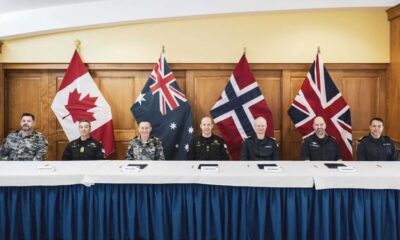
Norway joins Type 26 Frigate Programme to boost NATO naval power
-
 Business6 days ago
PSX plunges over 4,800 points | The Express Tribune
-

 Entertainment1 week ago
Melania Trump says ABC should ‘take a stand’ on late-night host Kimmel
-
 Tech1 week ago
This Ambitious Laptop Doesn’t Leave Much Room for Your Hands