

Business
FTSE 100 edges up ahead of Trump-Zelensky talks

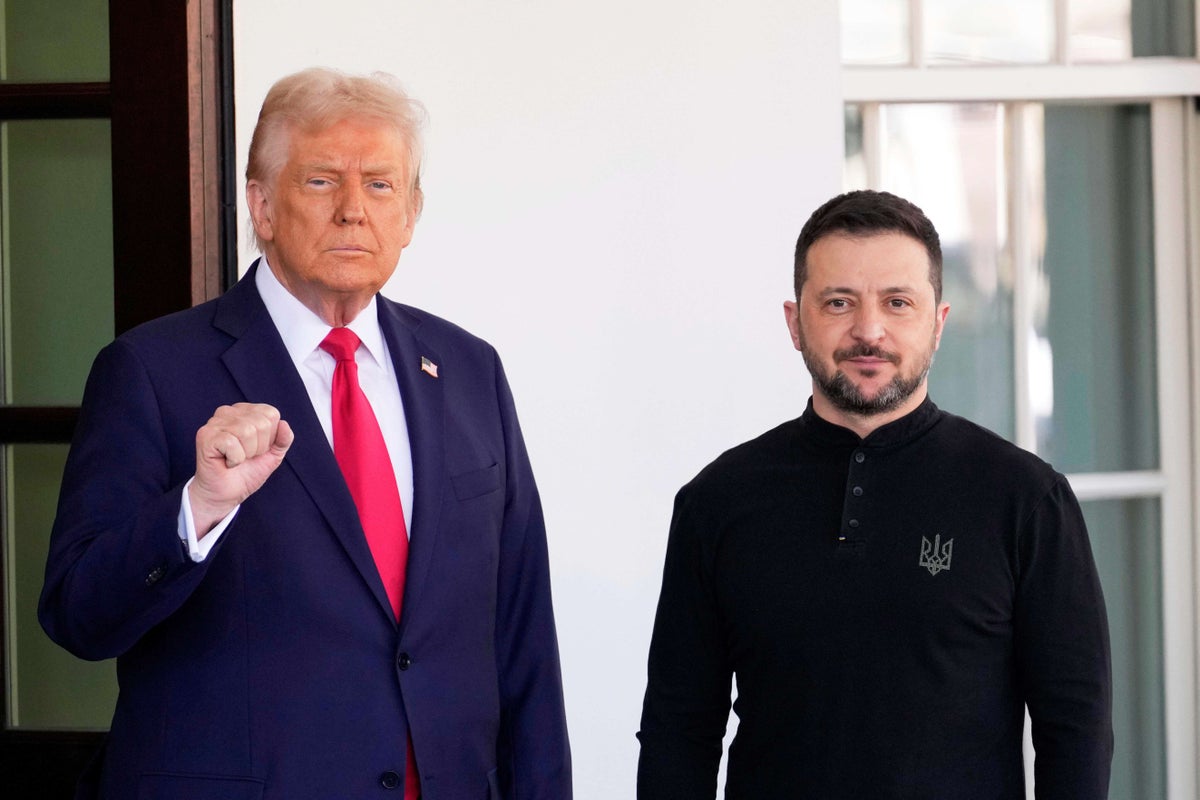
The FTSE 100 made steady progress on Monday ahead of talks between US President Donald Trump, his Ukrainian counterpart Volodymyr Zelensky and European leaders in Washington.
The gathering is a follow-up summit to Mr Trump’s meeting with Russian President Vladimir Putin in Alaska on Friday, which failed to produce a ceasefire in the war in Ukraine.
Michael Brown, senior research strategist at Pepperstone said Friday’s meeting turned out to be a “damp squib”, yielding “nothing by way of concrete progress.”
It “seemed to pretty much be a meeting about having another meeting to arrange more meetings, all while not achieving much,” Mr Brown quipped.
“While Zelensky and Trump will meet today, and that may bear some fruit, I shan’t be holding my breath,” he added.
The FTSE 100 index closed up 18.84 points, 0.2%, at 9,157.74. The FTSE 250 ended down just 8.67 points at 21,749.57 while the AIM All-Share finished 0.59 of a point higher, 0.1%, at 761.16.
In Europe, the CAC 40 in Paris fell 0.6%, while the DAX 40 in Frankfurt closed down 0.2%.
In New York, the Dow Jones Industrial Average was up 0.1%, the S&P 500 was 0.1% lower, and the Nasdaq Composite declined 0.2%.
Investors are also focused on a speech this week by US Federal Reserve chief Jerome Powell at the annual retreat of global central bankers in Jackson Hole, Wyoming.
Markets hope Mr Powell will provide more clues about the Fed’s plans for interest rates when it meets next month, after data last week provided a mixed picture about inflation.
Consumer inflation remained steady last month, but producer prices accelerated.
But JPMorgan said while “highly anticipated, it is useful to recall that several recent Jackson Hole speeches by Fed chairs did not break new ground or send clear policy signals”.
“We don’t think Powell can firmly guide toward easing at the next meeting,” it added.
The pound eased to 1.3517 dollars late on Monday afternoon in London, compared to 1.3566 dollars at the equities close on Friday. The euro dipped to 1.1667 dollars, lower against 1.1712 dollars. Against the yen, the dollar was trading a touch higher at 146.96 yen compared to 146.90 yen.
The yield on the US 10-year Treasury was at 4.35%, widened from 4.31%. The yield on the US 30-year Treasury was 4.95%, stretched from 4.90%.
In the UK, a report showed consumer sentiment improved a little in August, though it remained in negative territory.
The S&P Global UK consumer sentiment index advanced to 47 points in August from 45.1 points in July, still below the neutral 50-point mark.
It was the highest figure since last October’s UK government budget announcement, meaning a 10-month high.
Maryam Baluch, economist at S&P Global Market Intelligence, said: “August CSI data comes hot on the heels of the recent rate cut decision made by the Bank of England earlier in the month. Data collection began just a day after the central bank’s announcement, providing a timely snapshot of sentiment in the wake of monetary policy easing.
“Encouragingly, the data reveals a slight revival in household confidence, which is a telling sign that the easing of monetary policy has been received positively by households across the country. The headline index signalled the strongest reading since last October, greatly bolstered by robust perceptions of labour market conditions, which were the second-strongest in the survey’s history.”
On the FTSE 100, defence stocks Babcock International rose 5.0% and BAE Systems climbed 1.7% amid the Ukraine-Russia uncertainty.
Babcock received an added boost as RBC Capital Markets started coverage with an “outperform” rating and 1,200p per share price target.
The broker flagged Babcock’s strong management team, improved earnings quality and conservative guidance as reasons for upside.
On the FTSE 250, boot maker Dr Martens led the way, up 8.3% as Peel Hunt upgraded to “buy” from “add”.
The broker thinks Dr Martens is making clear progress under new management and believes the shares have not yet factored in the potential for the firm to move back into growth.
But Close Brothers led the fallers, down 3.7% as RBC downgraded to “sector perform” from “outperform” after the strong rally in the wake of the Supreme Court ruling on motor finance.
On AIM, Pantheon Resources leapt 16% after it said results from an appraisal well in Alaska exceeded expectations, highlighting the “enormous potential” in the firm’s portfolio.
Pantheon said the Dubhe-1 pilot hole was successfully drilled, logged and cored to a total measured depth of 12,833 feet.
Analysis of the thickness and quality of the primary target topset confirmed that the SMD-B zone has exceeded the upside pre-drill expectations.
Chief development officer Erich Krumanocker said: “We are delighted to announce the Dubhe-1 pilot hole results as a success. The well confirms the presence and quality of the oil and gas reservoirs in the Ahpun field, exceeding our pre-drill expectations.”
A barrel of Brent fell to 66.07 dollars late Monday afternoon from 66.33 dollars on Friday. Gold ebbed to 3,334.83 dollars an ounce against 3,343.39 dollars.
The biggest risers on the FTSE 100 were Babcock International, up 52p at 1,047p, Standard Chartered, up 34.5p at 1,340p, BAE Systems, up 30.5p at 1,790.5p, British American Tobacco, up 62p at 4,260p and Beazley, up 10.5p at 789p.
The biggest fallers on the FTSE 100 were Glencore, down 11.5p at 288.2p, Centrica, down 3.95p at 162.8p, Berkeley Group, down 80p at 3,712p, Anglo American, down 39p at 2,131p and Mondi, down 18p at 1,053p.
Tuesday’s local corporate calendar has full-year results from miner BHP Group and half-year results from hybrid workspace provider, International Workplace Group.
The global economic calendar on Tuesday has Canadian inflation figures.
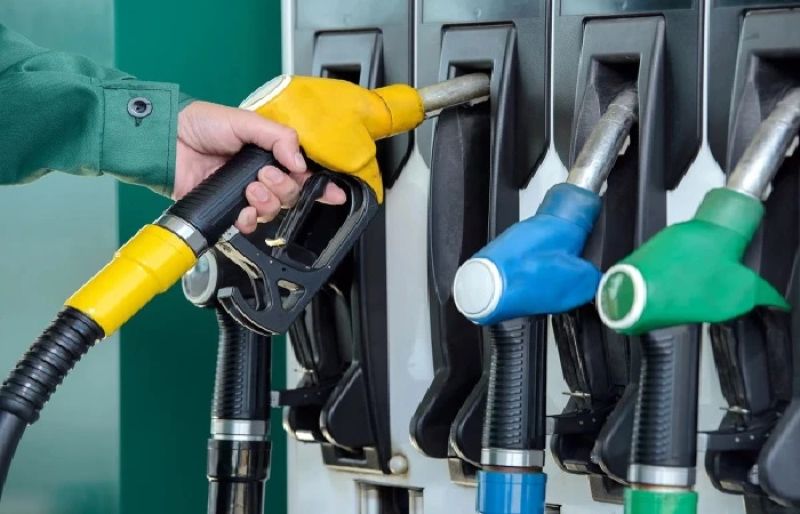
The federal government announced a Rs26.77 per litre hike in the price of petrol and high-speed diesel each on Friday, according to a notification issued by the Petroleum Division.
The new prices will be effective from April 25, 2026 for a week, the notification stated.
Following the increase, the price of HSD has jumped from Rs353.42 to Rs380.19, while the petrol price now stands at Rs393.35.
The government has been reviewing petroleum prices every Friday night following the now-paused US-Israel war on Iran, which began on February 28.
In the previous weekly review, the prime minister announced a reduction of Rs32.12 per litre in the price of high-speed diesel, while the petrol price remained unchanged.
The government jacked up petrol and diesel prices despite oil prices falling globally on Friday after it appeared a second round of Middle East talks was back on, bolstering prospects for an end to a war that has crippled energy shipments from the Gulf.
Oil prices had been climbing earlier as investors worried about a lack of progress in ending the Middle East crisis, with Tehran keeping the Strait of Hormuz closed and the US maintaining a blockade of Iranian ports.
But they dropped on reports that Iran’s Foreign Minister Abbas Araghchi was to arrive in Islamabad on Friday night.
Brent crude, the international benchmark contract, fell back below $100 a barrel.
facebook twitter
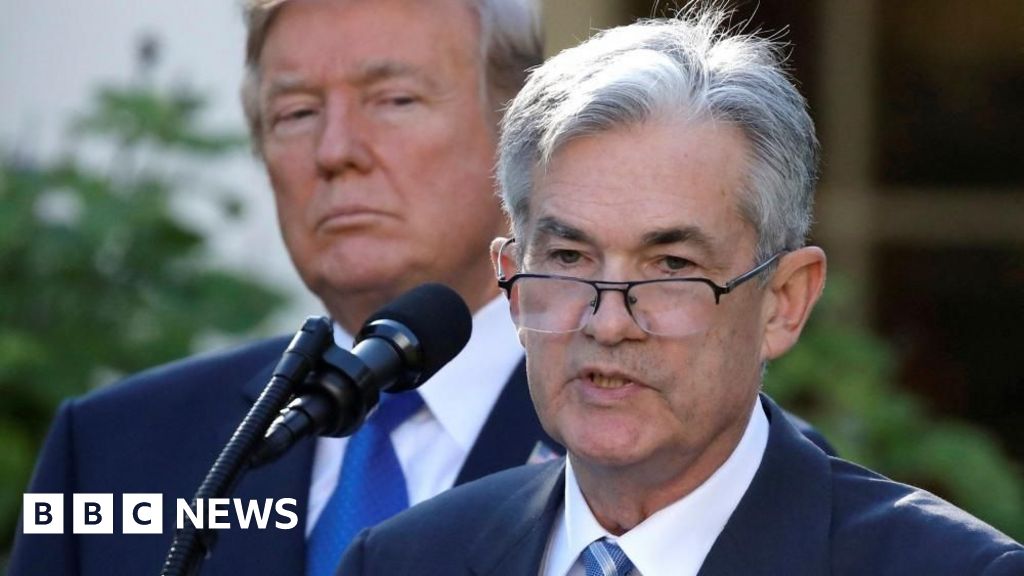
Powell’s term is nearing its end and the US Senate is considering Trump’s nominee for his replacement, Kevin Warsh. A key Republican, Thom Tillis, has withheld his support for Warsh unless the Trump administration would drop its investigation into Powell.
Business
Intel bags big gains! Chipmaker’s shares jump 26% on blockbuster results; how Trump admin benefits – The Times of India
Intel share price soared sharply on Friday after the chipmaker delivered a first-quarter performance that exceeded market expectations. And the win was not just for the chipmaker, but also the whole of US!The stock climbed 26.7% during trading on Friday, marking what could be its strongest single-day gain since 1987. Momentum continued after the closing bell, with shares rising a further 20% in after-hours trading as investors reacted to signs of a sustained turnaround driven by artificial intelligence.Intel reported revenue of $13.58 billion (€11.6bn) for the quarter, ahead of the $12.3 billion (€10.5 bn) forecast and up 7.2% from a year earlier. Adjusted earnings per share came in at $0.29, far exceeding expectations of $0.01.A key contributor to this performance was the company’s Data Centre and AI (DCAI) division, which delivered revenue of $5.05 billion (€4.2bn), up 22.4% year-on-year and well above analyst estimates of $4.41 billion (€3.77bn). The results indicate strong demand for Intel’s Xeon 6 processors and Gaudi 3 AI accelerators, particularly among enterprise clients and cloud service providers.Chief executive Lip-Bu Tan pointed to a broader shift in artificial intelligence usage as a major factor behind the growth. He said, “the next wave of AI will bring intelligence closer to the end user, moving from foundational models to inference to agentic.” He added, “This shift is significantly increasing the need for Intel’s CPUs and wafer and advanced packaging offerings.”The company also issued an upbeat outlook for the second quarter, forecasting revenue in the range of $13.8 billion (€11.8billion) to $14.8 billion (€12.6billion), surpassing investor expectations of $13 billion (€11.1billion).
But how is Washington winning?
The rally has had a direct impact on the US administration’s investment in Intel. In 2025, during a period of severe financial strain for the company, the administration of Donald Trump acquired a 9.9% stake in a move aimed at stabilising the business. The government invested $8.9 billion (€7.8bn) at a share price of $20.47 (€18.01), with $5.7 billion (€5bn) of that amount coming from previously approved but unpaid grants, according to the Euro News.At the time, Intel was facing multi-billion dollar losses and operational challenges, prompting concerns over its viability. As part of the intervention, the company cancelled planned factory projects in Germany and Poland, redirected focus towards US-based manufacturing, and reduced its global workforce by 25%, cutting around 25,000 jobs.Following the latest jump, Intel’s shares are now trading at $81.3 (€71.5), representing an increase of nearly 300% since the government first took its stake. The sharp rise highlights how the company’s improved financial performance has translated into substantial gains for the US administration.


Extended interview: Don Cheadle – CBS News

Charlie Sheen updates on relationship with old pal Jon Cryer

Iranian FM Abbas Araghchi lands in Pakistan ahead of renewed US talks

-

 Fashion1 week ago
France’s LVMH Q1 revenue falls 6%, shows resilience amid Iran war
-

 Tech1 week ago
CYBERUK ’26: UK lagging on legal protections for cyber pros | Computer Weekly
-

 Sports5 days ago
WWE WrestleMania 42 Night 2: Live match results and analysis
-

 Sports1 week ago
Faheem Ashraf backs Islamabad United’s push, calls league a ‘career-changing platform’
-

 Sports5 days ago
NCAA men’s gymnastics championship: All-time winners list
-
 Business1 week ago
PepsiCo earnings beat estimates as North American food business improves
-

 Tech1 week ago
Anthropic Plots Major London Expansion
-
 Business1 week ago
Oil prices fall again amid Middle East ceasefire hopes