

Business
FTSE 100 extends slide as Brent crude tops 90 dollars a barrel


The FTSE 100 ended a bruising week on the back foot with oil heading above 90 US dollars a barrel sending UK bond yields soaring as inflation fears mount.
A soft US jobs report added to the downbeat mood as European and US markets also fell sharply.
The FTSE 100 index ended down 129.19 points, 1.2%, at 10,284.75.
The FTSE 250 closed down 199.25 points, 0.9%, at 22,500.95 and the AIM All-Share dropped 3.66 points, 0.5%, at 784.70.
For the week, the FTSE 100 was down 5.7%, the FTSE 250 fell 5.3% and the AIM All-Share dipped 4.2%.
Brent oil traded sharply higher at 90.85 dollars a barrel on Friday afternoon, up from 84.41 dollars at same time on Thursday.
The latest gains came after Kuwait joined Qatar and said that it was halting energy production, as the crisis in the Middle East deepened.
Kathleen Brooks, research director at XTB, noted US President Donald Trump also brushed off hopes that mediation was taking place to end this war in the Middle East, dashing hopes that the conflict will be averted quickly.
Attacks on oilfields were reported in southern Iraq and in the northern autonomous Kurdistan region, which forced a US-run oil field to shut production.
Earlier this week, Mr Trump pledged to protect ships through the Strait of Hormuz, but shipping companies have exercised caution in the region.
US Energy Secretary Chris Wright said on Friday the US Navy was preparing to escort ships through the Strait of Hormuz “as soon as it’s reasonable to do it”.
Iranian state television on Friday reported a fresh drone strike on a ship in the strategic Strait of Hormuz, resulting in a fire, on the seventh day of the war with the US and Israel.
Bank of America said history suggests only marked and persistent spikes in the price of crude trigger persistent inflationary cycles.
“If the status quo persists, with oil prices around 15 dollars higher than the pre-war level, we would fade (oil induced) inflation concerns. But an escalation driving oil prices persistently above 100 dollars would become more concerning,” the bank said.
Adding to market woes, total non-farm payroll employment in the US fell by 92,000 in February, data published by the US Bureau of Labour Statistics showed, sharply underperforming against FXStreet-cited expectations of a 59,000 rise.
January’s increase was revised down to 126,000 from 130,000, while December’s total was revised down by 65,000, from an increase of 48,000 to a fall of 17,000.
The US unemployment rate increased to 4.4% in February from 4.3% in January, where it had been expected to remain.
Analysts at Wells Fargo said the data will challenge what was a growing view among Fed officials that the labour market is stabilising, while the Iran conflict further compounds the outlook.
“Ultimately, the Federal Reserve cannot do much to combat higher inflation from a supply-side oil price shock. Yet, the inflationary impact of the conflict in Iran makes it harder to be a dove at the moment.
“On balance, we expect the FOMC to remain in wait-and-see mode, and our forecast for 50 bps of rate cuts this year remains unchanged,” Wells Fargo said.
ING said January jobs numbers probably overstated the strength in hiring, while bad weather and strike actions probably mean that the February numbers overstate the weakness.
“Nonetheless, hiring remains subdued, and higher energy costs will squeeze spending power, leaving the door open for Fed rates cuts. But that will be a late second half of the year story,” it added.
Rising energy prices put bonds under pressure amid expectations of delays to interest rate cuts due to expected higher inflation.
The yield on the US 10-year Treasury stretched to 4.16% on Friday from 4.15% on Thursday. The yield on the US 30-year Treasury widened to 4.78% from 4.76%.
Moves were more marked in the UK. The yield on UK 10-year gilts leapt to 4.61% on Friday from 4.48% on Thursday, having traded at about 4.23% a week ago.
“Amid the current energy shock, the UK has twin vulnerabilities given a high dependency on natural gas but also a rapidly weakening labour market,” Allan Monks, analyst at JPMorgan said.
He said a March Bank of England rate cut is “off the table” and April “requires a clear calming of geopolitical tensions”.
“For now we delay the next cut to April, but the risks are already shifting towards a lengthier pause and larger growth impact,” he added.
But Barclays still expects a 25 basis points cut, although it accepts the decision is on a “knife-edge”.
“If geopolitical uncertainty does not subside, or data come in hotter than we expect, then the balance could easily tip to a hold,” Barclays added.
In European equities on Friday, the CAC 40 in Paris closed down 0.9%, as did the DAX 40 in Frankfurt.
On Wall Street, markets also faltered. The Dow Jones Industrial Average was down 1.1%, the S&P 500 index was 1.0% lower while the Nasdaq Composite dropped 0.8%.
The pound was higher at 1.3387 US dollars on Friday afternoon, up from 1.3309 dollars at the equities close on Thursday.
The euro stood higher at 1.1597 dollars, from 1.1574 dollars. Against the Japanese yen, the dollar was trading a touch lower at 157.62 yen, compared to 157.67 yen.
Gold climbed to 5,142.35 dollars an ounce on Friday from 5,075.16 dollars on Thursday.
Stocks making waves on Friday included IMI, up 2.3%.
The Birmingham-based designer of engineering products in fluid and motion control applications announced a new £500 million share buyback as it reported what it called another year of “high-quality” revenue and profit growth.
Pretax profit rose 27% to £419 million in 2025 from £330 million the year prior, while revenue increased 4.1%, or 5% organically, to £2.30 billion from £2.21 billion.
Fading rate cut hopes put rate-sensitive housebuilders on the back foot, with Barratt Redrow down 2.6% and Berkeley down 3.0%, while DIY retailer Kingfisher fell 5.2%.
On the FTSE 250, cruise operator Carnival shed a further 6.4% as travel operators continued to come under pressure.
The biggest risers on the FTSE 100 were: Rightmove, up 24.4p at 466.0p; Autotrader, up 22.1p at 494.8p; BAE Systems, up 64.0p at 2,214.0p; 3i Group, up 85.0p at 3,014.0p; and IMI, up 62.0p at 2,814.0p.
The biggest fallers on the FTSE 100 were: Kingfisher, down 17.7p at 325.7p; Anglo American, down 148.0p at 3,231.0p; Airtel Africa, down 14.8p at 342.2p; Pershing Square Holdings, down 166.0p at 3,966.0p; and Marks & Spencer, down 14.1p at 364.0p.
Monday’s global economic calendar has an inflation reading in China overnight, plus US consumer inflation expectations report.
Monday’s UK corporate calendar has full year results from London-based provider of shipping services, Clarkson.
Contributed by Alliance News

Reforms are needed of the welfare system to tackle the high numbers of young people not in work or education, says Alan Milburn.
Source link

Pets at Home investors will be hoping the retailer’s new boss can lay out a strategy to return it to profit growth despite a challenging consumer backdrop.
Shares in the company currently sit close to its lowest level for almost seven years following a recent downturn in the group’s retail arm.
The dip in the group’s performance contributed to the departure of previous chief executive Lyssa McGowan late last year.
In March, former Waitrose boss James Bailey took the reins in a bid to drive a turnaround in performance.
Shareholders will be hoping the new boss can show early signs of improvement and a long-term strategy to drive growth in Pets at Home’s update on Wednesday May 27.
The pet products retailer and vet chain is expected to report an underlying pre-tax profit of around £93 million for the year to March, according to analysts.
It would represent a roughly 30% fall from last year, after the company came under pressure from weak demand for discretionary products.
Analysts have said investors will be looking at early trading in the current financial year to see how consumer spending is holding up.
AJ Bell’s investment director Russ Mould said: “Pets at Home could badly do with some renewed pep.
“Under executive chair Ian Burke, who has returned to a non-executive role after leading the business on an interim basis, Pets at Home laid out a plan to fix a retail business which has been badly affected by a reduction in discretionary spend on toys and treats for Britons’ furry and feathered friends.
“The country may have a reputation for loving their animal companions but in an environment where households are having to watch their pennies, these nice-to-have items were off the list.”
The group has also seen sales of pet food and similar products face fierce pricing competition from non-specialist retailers, such as supermarkets.
It has since cut prices among around 1,000 products in order to help drive activity, with cash-strapped shoppers looking for value.
Data from the Office for National Statistics (ONS) showed that UK retail sales volumes dropped to an 11-month low in April, with a 1.3% fall for the month.
Pets at Home is predicted to report revenues of £1.47 billion for the past year, just marginally lower than £1.482 billion reported last year.
Business
India’s fuel demand growth may slow sharply in H2 2026 amid price hikes, austerity push: Report
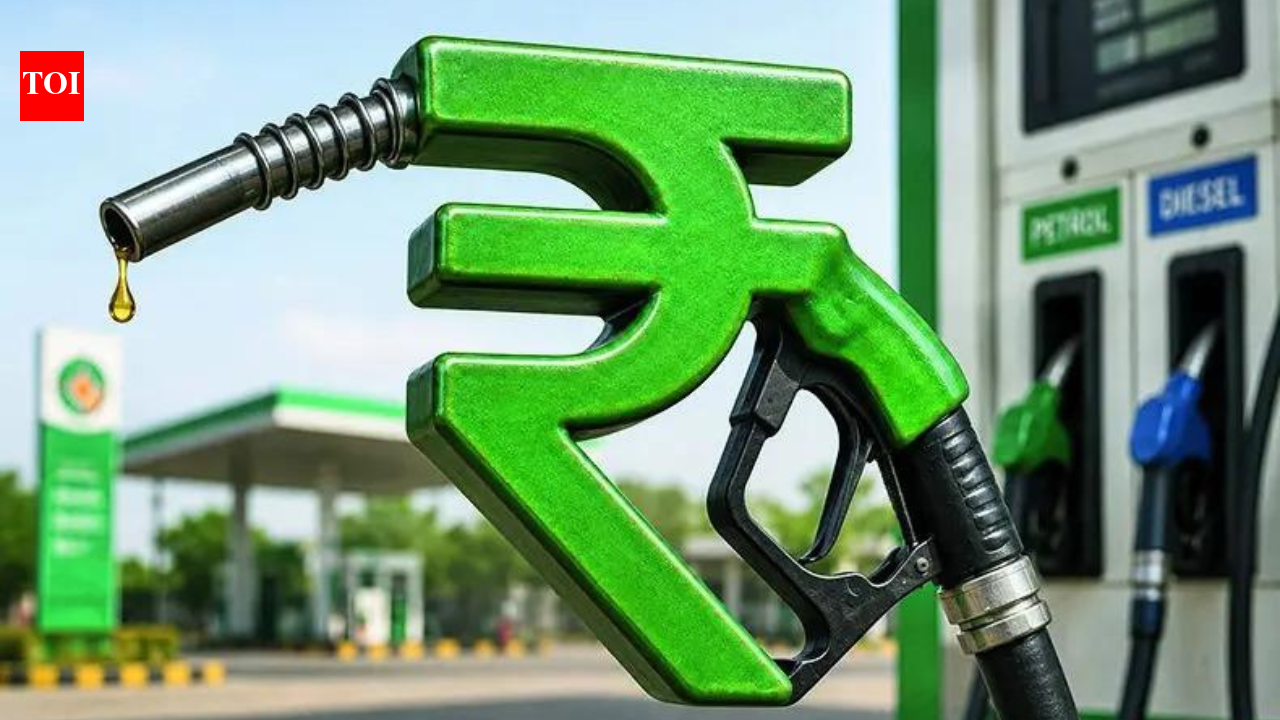
India’s transportation fuel demand growth is expected to slow sharply in the second half of 2026 as higher fuel prices, government-led conservation measures and a weakening rupee weigh on mobility and consumption trends, according to a report.The report by Kpler’s lead analyst (modelling), Elif Binici, revised down India’s 2026 refined products demand growth forecast by around 77,000 barrels per day (kbd), or 39 per cent, to nearly 78 kbd from an earlier estimate of 128 kbd.As per news agency PTI, the downgrade reflects weaker expected growth in petrol and diesel demand due to elevated fuel costs, softer mobility trends and official efforts to conserve fuel amid the ongoing West Asia crisis.Petrol and diesel prices have been increased by around Rs 5 per litre in three instalments since May 15, after oil marketing companies passed on part of the burden of soaring global crude oil prices to consumers.
Petrol demand faces steepest downside risk
The report said petrol demand is likely to see the sharpest slowdown, with projected growth revised down by 25 kbd, from 63 kbd to 38 kbd.Petrol consumption is now estimated at 1,010 kbd, compared to the earlier estimate of 1,035 kbd.According to the report, weaker commuting activity, slower discretionary travel and government fuel-saving campaigns are expected to curb fuel consumption.Annual diesel demand growth was also cut by around 20 kbd, while jet fuel demand growth was nearly halved to about 6 kbd from 11 kbd earlier due to expectations of reduced air travel and tighter spending patterns.“The revisions primarily reflect weaker expected growth in gasoline and diesel demand as higher costs, weaker mobility trends, and recent government-led fuel conservation efforts increasingly feed into domestic transportation activity,” the report said, as quoted by PTI.
Rupee weakness, crude surge add pressure
The report noted that India’s macroeconomic environment has deteriorated since the escalation of the US-Iran conflict, with rising crude import costs, refinery expenses and rupee depreciation increasing inflationary pressure.The rupee has weakened by around 6 per cent since the conflict began and nearly 10 per cent over the past year. Foreign exchange reserves have also reportedly declined by about 4.3 per cent since late February as authorities attempted to stabilise the currency and contain imported inflation.The report said the current average petrol price of around Rs 103 per litre remains well below the estimated breakeven level of nearly Rs 125 per litre.Diesel prices near Rs 94 per litre are also below the estimated breakeven range of Rs 115-120 per litre.Before the recent price revisions, state-run fuel retailers were reportedly losing nearly Rs 1,000 crore daily because rising crude procurement costs and currency weakness outpaced retail fuel prices.“The key issue is the inability of state-run retailers to pass through rising import costs quickly enough to restore profitability,” the report said.
Russian crude continues to support supply security
The report added that India’s dependence on discounted Russian crude imports, estimated at around 1.9-2 million barrels per day, continues to provide stability to the domestic fuel market amid geopolitical uncertainty in West Asia.Policymakers now appear to be prioritising macroeconomic stability, inflation management, foreign exchange preservation and fuel supply security over near-term fuel demand growth.The report warned that unless crude prices ease significantly, the rupee stabilises or additional fiscal support measures are introduced, further fuel price hikes and stricter fuel-conservation measures may become difficult to avoid.


Taylor Swift’s next plans revealed as ‘Showgirl’ era nears end

China rescuers search for missing after mine blast kills 82

India voices concern on US visas but sees alignment with Rubio

-

 Entertainment1 week ago
Where Pete Davidson, Elsie Hewitt stand after breakup: Details revealed
-

 Politics1 week ago
Rising diesel costs from Iran war strain US school budgets
-

 Tech1 week ago
Greg Brockman Officially Takes Control of OpenAI’s Products in Latest Shakeup
-

 Tech1 week ago
Why Is Your Grill So Dumb? The Best Grills Set Temp Like an Oven
-

 Tech1 week ago
This Solar-Powered Smart Sprinkler Keeps My Lawn Watered Without Any Power Cables
-

 Fashion1 week ago
RMG trade bodies seek policy support from Bangladesh PM
-

 Tech1 week ago
Tesla Reveals New Details About Robotaxi Crashes—and the Humans Involved
-
 Business1 week ago
Oil price gains and Westminster worry sink stocks