

Business
FTSE 100 falls despite benign US inflation data


Blue chip stocks in London underperformed European and US peers on Friday, despite stable inflation data in the US, as falls in oil majors BP and Shell weighed.
The FTSE 100 index closed down 43.86 points, or 0.5%, at 9,667.01. The FTSE 250 ended just 7.04 points lower at 22,063.95, but the AIM All-Share closed up 1.87 points, 0.3%, at 751.30.
For the week, the FTSE 100 fell 0.6%, the FTSE 250 ebbed 0.5% and the AIM All-Share declined 0.3%.
In European equities on Friday, the CAC 40 in Paris closed down 0.1%, while the DAX 40 in Frankfurt ended 0.6% higher.
Stocks in New York were higher at the time of the London equity close.
The Dow Jones Industrial Average, S&P 500 index and Nasdaq Composite were all 0.3% higher.
Markets broadly took encouragement from in-line US inflation data, which supports hopes for a US rate cut next week.
According to data from the US Bureau of Economic Analysis, the personal consumption expenditures price index for September increased 0.3% on-month, unchanged from August, and in line with FXStreet consensus.
Excluding food and energy, the core PCE price index, which is the Federal Reserve’s preferred inflation gauge, increased 0.2% in September on-month, unchanged from August, and also in line with consensus.
Year-on-year, the PCE price index cooled to 2.8% growth in September, from 2.9% in August. FXStreet consensus had forecast the rate to remain unchanged.
Core PCE price index picked up to 2.8% year-on-year in September from 2.7% in August, as expected.
“September’s rise in the core PCE deflator should be small enough for most FOMC members to revise down their near-term inflation forecast next week, helping to justify another policy easing,” said Samuel Tombs, chief US economist, Pantheon Macroeconomics.
The CME’s FedWatch tool now places an 87% probability on a quarter-point rate reduction, although the decision could prove contentious.
Minutes from the October Federal Open Market Committee (FOMC) meeting showed officials were at loggerheads and expressed “strongly differing views” about what policy decision would most likely be appropriate at the December meeting.
“The FOMC has grown increasingly split over its near-term course of action, and multiple dissents seem likely,” analysts at Wells Fargo said.
Bank of America thinks Fed chairman Jerome Powell is facing the most “divided committee in recent memory.”
Separate figures showed US consumer sentiment rose for the first time in five months, supported by a more optimistic outlook among younger consumers.
The preliminary December sentiment index rose to 53.3 from 51.0 a month earlier, according to the University of Michigan. The estimate beat FXStreet consensus, which predicted a rise to 52.0.
The pound was quoted lower at 1.3326 dollars at the time of the London equities close on Friday, compared with 1.3353 dollars on Thursday.
The euro stood at 1.1635 dollars, down against 1.1658 dollars. Against the yen, the dollar was trading higher at 155.42 yen compared with 154.75 yen.
The yield on the US 10-year Treasury was quoted at 4.14%, widened from 4.10%. The yield on the US 30-year Treasury was at 4.80%, stretched from 4.76%.
Wall Street’s attention was also gripped by news that Netflix has reached an agreement with Warner Bros Discovery to purchase Warner Bros.
The California-based streaming service said the deal includes the Burbank, California-based media and entertainment company’s film and television studios, HBO Max and HBO.
The cash and stock transaction is valued at 27.75 dollars per Warner Bros Discovery share, with a total enterprise value of around 82.7 billion dollars (£62 billion), and an equity value of 72.0 billion dollars (£54 billion).
Netflix traded down 0.7% in New York while Warner Bros rose 3.8%.
Holding London’s FTSE 100 back were falls in oil majors and index heavyweights BP and Shell, down 2.6% and 1.4% respectively.
Both were downgraded by Bank of America (BofA), which moved BP to ‘underperform’ from ‘neutral’ with a reduced price target of 375 pence, down from 440p, and Shell to ‘neutral’ from ‘buy’ with a lowered target of 3,100p, down from 3,200p.
“Lower oil and gas prices and deflating refining margins will leave the sector grappling for more free cash flow cushions than it is already sitting on. And we see fewer inorganic cushions available that are not already discounted in elevated share prices,” BofA said in a research note on Friday.
The broker cut its 2026 Brent oil price forecast by 14% to 60 dollars per barrel and its 2027 forecast by 11% to 62.0 dollars per barrel.
On the FTSE 250, Trustpilot rallied by 13% after Thursday’s heavy falls following a critical report from Grizzly Research.
On Friday afternoon, Trustpilot issued a response to Grizzly’s report, saying it “contains factual inaccuracies and false claims, which were intended to adversely impact the company’s share price”.
“We are considering all appropriate options in response to (Grizzly’s) demonstrably false statements,” the Copenhagen-based consumer review platform added.
Greggs climbed 5.3%, as JP Morgan (JPM) initiated coverage with an ‘overweight’ rating.
A “re-rating” is “on the menu,” analysts at JPM said about Greggs, with catalysts more resilient than expected like-for-like sales and earnings delivery from financial 2026 onwards, coupled with an inflexion in free cash flow and capital returns.
Ocado rose 0.3%, as it said it will receive a 350 million dollars (£262.5 million) one-off cash payment as compensation following Kroger’s decision to close three customer fulfilment centres in 2026.
“An enhanced compensation payment does at least take the edge off Kroger’s reduced use of Ocado’s technology,” said AJ Bell investment director Russ Mould.
Elsewhere, shares in Big Yellow fell 4.3% after it abandoned takeover talks with Blackstone.
Advanced Medical Solutions, however, jumped 8.9% following a Sky News report that private equity house Bridgepoint is considering making an offer for the company.
Sky said a bid could be pitched at 270 pence to 280p a share, well above the 207.5p closing price on Thursday.
Brent oil was quoted at 63.60 dollars a barrel at the time of the London equities close on Friday, up from 63.45 dollars late on Thursday.
Gold was quoted at 4,208.77 dollars an ounce on Friday, lower against 4,214.64 dollars.
The biggest risers on the FTSE 100 were Rightmove, up 17.4 pence at 540.2p, JD Sports Fashion, up 2.22p at 82.72p, Smith & Nephew, up 33.5p at 1,265.0p, 3i Group, up 78.0p at 3,231.0p and ICG, up 32.0p at 2,084.0p.
The biggest fallers on the FTSE 100 were Smiths Group, down 86.0p at 2,372.0p, BP, down 12.15p at 452.85p, LondonMetric Property, down 3.7p at 186.5p, Severn Trent, down 47.0p at 2,769.0p and Airtel Africa, down 5.2p at 309.0p.
Monday’s economic calendar has Japan’s GDP data and the US consumer inflation expectations report.
Later in the week, interest rate decisions are due in Australia, Canada, Switzerland and the US.
There are no significant events in Monday’s UK corporate calendar. Later in the week, however, half-year results are due from equipment hire firm Ashtead Group and housebuilder Berkeley Group.
Contributed by Alliance News

Last Updated:
Gold is sold at a discount in Dubai due to Middle East conflict disrupting flights. Traders offer up to $30 per ounce less than London prices.




Dubai Gold Selling Cheaper As Iran War Grounds Flights
Gold is being sold at a discount in Dubai as the widening conflict in the Middle East disrupts flights and hampers the movement of bullion from one of the world’s key trading hubs.
According to a Bloomberg report, traders in Dubai are offering discounts of up to $30 per ounce compared to the global benchmark price in London. The unusual price cut comes as shipments remain stranded due to flight disruptions triggered by the escalating conflict involving Iran and Israel.
Dubai is a key global centre for refining and exporting gold to markets across Asia, including India. However, partial airspace restrictions and heightened security risks have slowed the movement of bullion out of the region.
Why Gold Is Being Sold Cheaper
Gold is typically transported in the cargo holds of passenger aircraft. With several flights from the UAE restricted amid regional tensions, traders are struggling to move bullion to international markets.
At the same time, insurance and freight costs have surged, making shipments more expensive and uncertain. Many buyers have therefore stepped back from placing new orders, unwilling to bear high logistics costs without assurance of timely delivery.
To avoid paying prolonged storage and financing costs while shipments remain stuck, some traders are offering gold at discounted prices.
Although transporting bullion by road to airports in neighbouring countries such as Saudi Arabia or Oman is theoretically possible, logistics firms are reluctant due to the risks and complications of moving high-value cargo across land borders during a conflict.
What It Means For India
India, one of the largest buyers of gold shipped from Dubai, could face short-term supply disruptions if the situation continues.
Renisha Chainani, head of research at Augmont Enterprises Ltd., said several cargo shipments have already been delayed, creating temporary tightness in the availability of physical bullion in India.
However, industry experts as reported by Bloomberg say the immediate impact may remain limited as domestic inventories are currently comfortable after heavy imports earlier this year.
Chirag Sheth, principal consultant for South Asia at Metals Focus, said Bloomberg that India has ample stocks for now, but warned that prolonged disruptions could eventually affect supply if the conflict continues for several months.
Meanwhile, global gold prices have surged this year amid geopolitical uncertainty, with spot gold recently trading above $5,000 per ounce.
 Click here to add News18 as your preferred news source on Google.
Follow News18 on Google. Join the fun, play games on News18. Stay updated with all the latest business news, including market trends, stock updates, tax, IPO, banking finance, real estate, savings and investments. To Get in-depth analysis, expert opinions, and real-time updates. Also Download the News18 App to stay updated.
March 08, 2026, 10:03 IST
Read More
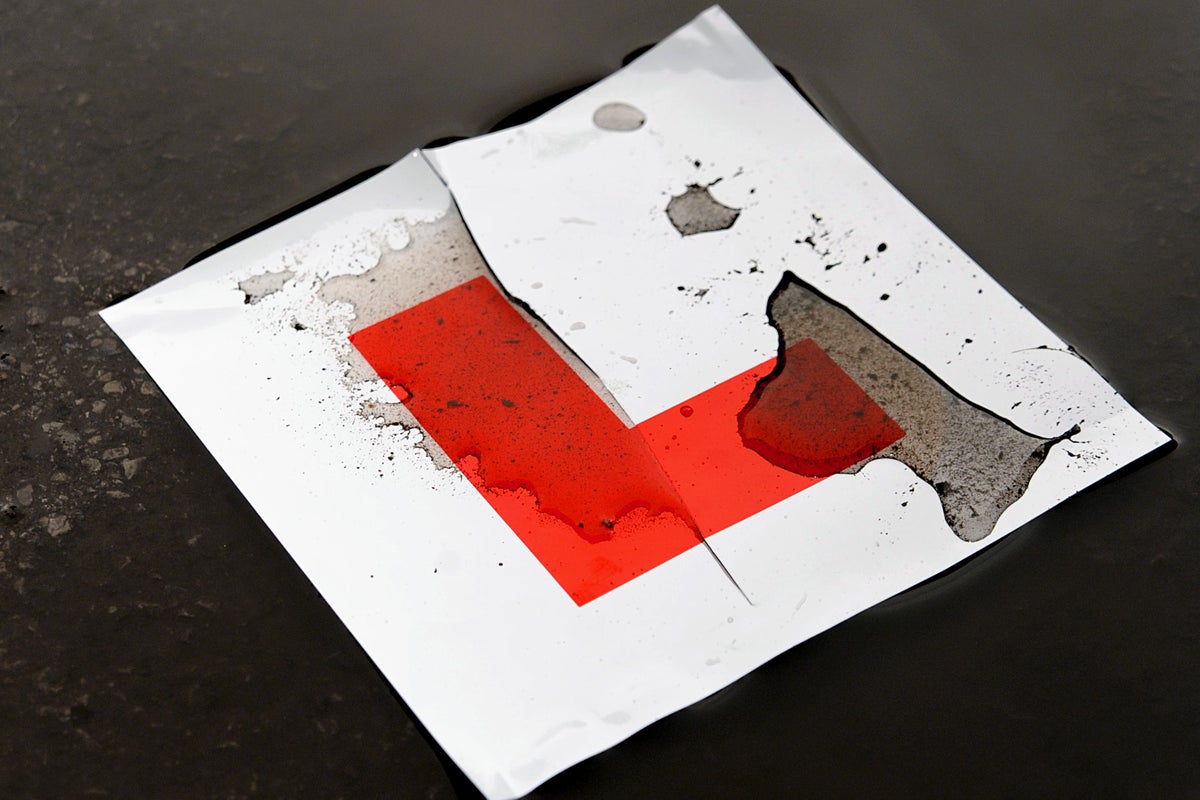
Some seven in 10 British adults without a full driving licence say learning to drive is currently unaffordable, according to a survey.
The figure is even higher among younger people, with 76% of 18 to 29-year-olds without a licence saying driving lessons are financially out of reach, the poll for car insurer Prima found.
Overall, 38% said the cost of driving lessons was the biggest deterrent to learning to drive.
Some 32% were put off by the price of buying a car and 15% said the cost of car insurance was the main barrier to learning to drive.
Almost half (45%) said they would consider learning to drive if it became significantly cheaper.
Nick Ielpo, UK country manager at Prima, said: “For a growing number of people, driving is no longer a symbol of freedom – it’s a financial stretch too far.
“Between lessons, buying a car and insuring it, the upfront and ongoing costs are pricing many people out before they even start.”
Find Out Now surveyed 1,134 adults who do not hold a full driving licence between January 21 and 23.

Go Digit General Insurance on Saturday said it has received a demand notice of about Rs 170 crore for short payment of goods and services tax (GST) for nearly five years. The company has received an order copy from the Office of the Commissioner of GST & Central Excise, Chennai South Commissionerate on March 6, confirming GST demand of Rs 154.80 crore levying penalty of Rs 15.48 crore and Interest u/s 50 of CGST Act, 2017 for the period July 2017 to March 2022, the insurer said in a regulatory filing. The company is in the process of evaluating the legal advice on the implications and would file an appeal, it said.


India forms inter-ministerial group to assess export disruptions

Special loan facility for Feb wages in Bangladesh’s export units

Let girls fly

India Us Trade Deal: Fresh look at India-US trade deal? May be ‘rebalanced’ if circumstances change, says Piyush Goyal – The Times of India

LPGA legend shares her feelings about US women’s Olympic wins: ‘Gets me really emotional’

Pakistan’s semi-final qualification scenario after England defeat New Zealand

-
Business1 week ago
India Us Trade Deal: Fresh look at India-US trade deal? May be ‘rebalanced’ if circumstances change, says Piyush Goyal – The Times of India
-
 Sports1 week ago
LPGA legend shares her feelings about US women’s Olympic wins: ‘Gets me really emotional’
-
 Entertainment1 week ago
Pakistan’s semi-final qualification scenario after England defeat New Zealand
-

 Fashion1 week ago
South Korea’s Misto Holdings completes planned leadership transition
-

 Entertainment1 week ago
Bobby J. Brown, “The Wire” and “Law & Order: SUV” actor, dies of smoke inhalation after reported fire
-
 Business1 week ago
Greggs to reveal trading amid pressure from cost of living and weight loss drugs
-
 Business1 week ago
CNBC To Merge TV And Digital News Operations, Nearly A Dozen Jobs To Be Cut: Report
-

 Entertainment1 week ago
What’s new in Pokémon? Every game, update, surprise from 30th anniversary event