

Business
FTSE 100 flatlines as gold and silver gleam again

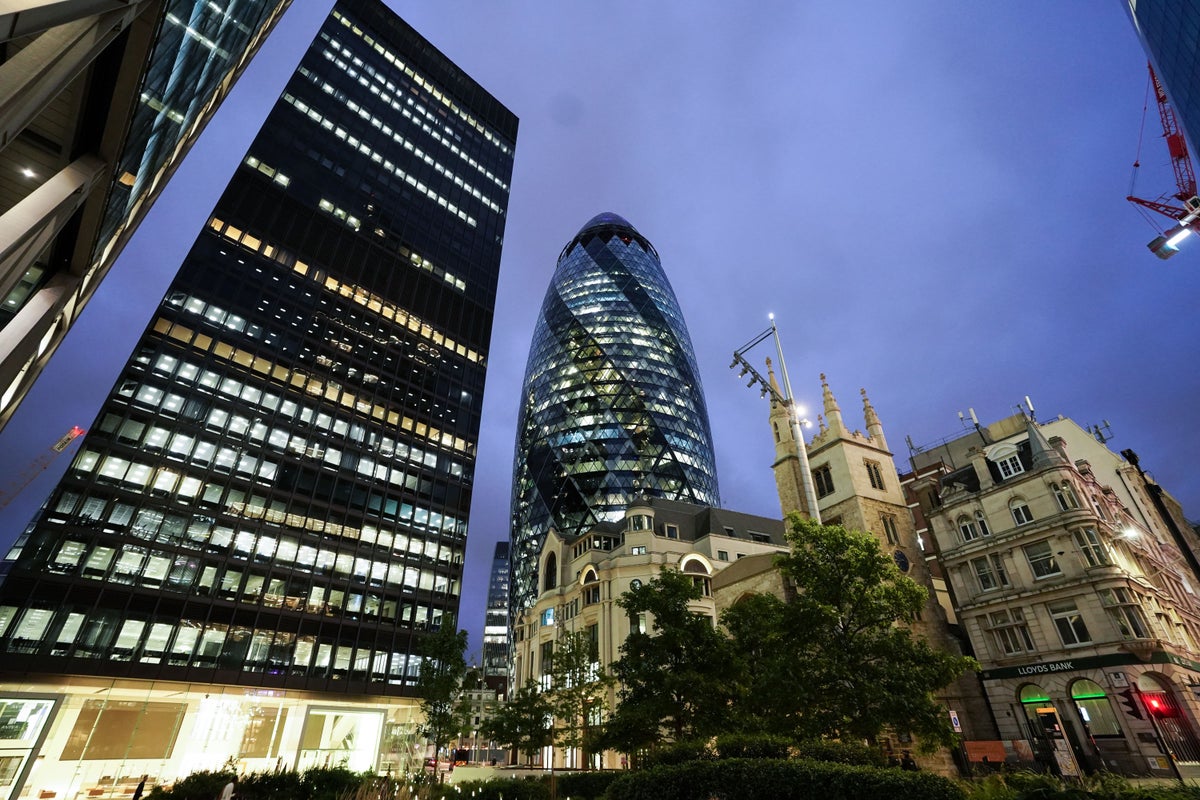
The FTSE 100 ended a volatile week in subdued fashion on Friday, closing slightly lower, despite a batch of encouraging economic data as retail sales, consumer confidence and business activity all picked up.
The FTSE 100 index closed down 6.61 points, 0.1%, at 10,143.44.
The FTSE 250 ended 53.40 points lower, 0.2%, at 23,317.53, and the AIM All-Share closed up 5.08 points, 0.6%, at 822.75.
For the week, the FTSE 100 fell 0.9%, the FTSE 250 was flat, and the AIM-All Share rose 2.5%.
In London, economic data was in focus after UK retail sales unexpectedly rose in December.
The Office for National Statistics said retail sales volumes rose 0.4% in December, following a fall of 0.1% in November, beating an FXStreet-cited forecast for a 0.1% decline.
The 0.1% fall in November was unrevised, while the ONS revised up October’s reading to a 0.8% fall from a 0.9% decline previously.
In addition, UK consumer confidence improved slightly in January, supported by stronger expectations for personal finances over the next 12 months, survey results showed on Friday.
The overall score for the GfK consumer confidence index rose to minus 16 points in January from minus 17 in December, matching the consensus forecast cited by FXStreet.
Completing the trio of better news, growth in UK’s service and manufacturing sectors accelerated in January, flash data published by S&P Global showed.
The UK purchasing managers’ composite output index rose to a 21-month high of 53.9 points in January from 51.4 points in December, easily beating the FXStreet-cited consensus of 51.7.
The composite data is calculated using a weighted average of the services and manufacturing readings.
The flash services business PMI improved to 54.3 points in January from 51.4 points in December, outperforming the consensus of 51.7.
The flash manufacturing PMI climbed to 51.6 points in January, a 17-month-high, from 50.6 points in December.
“With the turn of the year, we are seeing encouraging signs from the UK economy,” said Deutsche Bank chief economist Sanjay Raja.
“Revisions have made the UK outlook a little brighter,” retail spending is “picking up,” survey data have come in “stronger” to start 2026 and there are some “tepid” signs of stabilisation in the labour market, he added.
JPMorgan analyst Allen Monks noted the surge in January’s PMI might typically be associated with annualised GDP growth of 1.9%.
But he added a caveat. “The main issue is that the level has yet to be sustained for longer than one month, which must be factored in when interpreting the UK survey,” he said.
“There was a similar surge in the UK survey back in August, which reversed sharply. As such it’s hard to have much faith in the UK survey until it sustains a shift higher,” Mr Monks added.
But while taking due caution on the PMI data, he said retail sales and consumer confidence figures, are “supportive of the growth outlook”.
The firm data was also supportive of sterling.
The pound was quoted higher at 1.3567 dollars at the time of the London equities close on Thursday, compared to 1.3437 dollars on Wednesday.
The pound was further boosted by comments by Monetary Policy Committee member Megan Greene who argued that looser monetary policy in the US could push up inflation.
“This would, in my view, give even greater cause for concern about a risk of UK inflation persistence over that of weaker demand, warranting a slower withdrawal of monetary policy restriction in the UK,” she said.
The US federal reserve meets next week but is expected to leave interest rates on hold after three consecutive quarter point cuts.
Countering Ms Greene’s fears, analysts at Wells Fargo expects two 25 basis points rate cuts at the March and June Fed meetings, but said “the risks to our forecast look increasingly skewed toward later and possibly less easing this year”.
“In fact, given our view on how growth will evolve this year, there is a sound argument that the longer they wait to cut, the higher the hurdle becomes to justify on economic grounds the need to ease further.”
The euro stood at 1.1758 dollars, higher against 1.1707 dollars.
Against the yen, the dollar was trading at 157.99 yen, lower from 158.18 yen.
In European equities on Friday, the CAC 40 in Paris closed down 0.1%, while the DAX 40 in Frankfurt ended 0.2% higher.
In New York, financial markets were mixed at the time of the London equity market close.
The Dow Jones Industrial Average was down 0.5%, the S&P 500 was 0.2% higher, while the Nasdaq Composite climbed 0.6%.
The yield on the US 10-year treasury was quoted at 4.25%, trimmed from 4.27% on Thursday. The yield on the US 30-year treasury was quoted at 4.84%, narrowed from 4.87%.
On the FTSE 100, gold miners Fresnillo, up 2.1%, and Endeavour Mining, up 2.2%, were once again in vogue as the gold and silver prices closed to push higher.
The yellow metal was quoted at 4,984.07 dollars an ounce on Friday, after hitting another record high and approaching 5,000 dollars an ounce, up from 4,874.8 dollars on Thursday.
Meanwhile, the price of silver rose 4.8% heading above 100 dollars an ounce late on Friday.
“Concerns over US public finances, political pressure on the Fed, and lingering global risks keep gold well bid on dips. Despite short-term overbought signals, the metal is on track for a strong weekly gain, and price action suggests pullbacks are being treated as opportunities rather than trend breaks. This is a high-risk trading environment,” said David Morrison, senior market analyst at Trade Nation.
On silver, Mr Morrison said the metal continues to outperform in the “most extraordinary fashion”.
“This really looks like a market in the midst of a blow-off top, with talk of supply shortages and a massive short squeeze bringing in fresh buying momentum.
“There’s an awful lot of (fear of missing out) out there, and that has the potential to push prices up even further. But of course, the longer this rally extends, the greater the risk of being caught out on a weak limb. Silver looks toppy up here.”
Oil majors BP and Shell were in demand, up 1.6%, and 0.5% respectively, as the oil price rose, after the Financial Times reported that the US threatened to curb the supply of cash for Iraq oil sales.
Brent oil traded higher at 65.76 dollars a barrel on Friday, up from 64.26 dollars late on Thursday.
Insurer Aviva fell 5.2%, while sector peer Admiral extended its losing run, shedding 5.8% on Friday taking its loss for the week to 13%.
Admiral was downgraded by Goldman Sachs and RBC Capital Markets earlier this week.
Elsewhere, C&C shares tumbled 9.3% as it reported weak trading in the period leading up to Christmas because of tepid consumer confidence amid UK budget nerves.
Mecca Bingo owner Rank was knocked down 4.7% while William Hill owner Evoke slid 2.5% as Deutsche Bank moved both to “hold” from “buy” after taking account for tax changes to the betting industry in November’s budget.
The biggest risers on the FTSE 100 were Beazley, up 36.0 pence at 1,152.0p, Glencore, up 10.85p at 501.0p, Endeavour Mining, up 92.0p at 4,366.0p, BAE Systems, up 42.0p at 2,027.0p and Fresnillo, up 84.0p at 4,168.0p.
The biggest fallers on the FTSE 100 were Burberry Group, down 79.0p at 1,195.5p, Admiral Group, down 162.0p at 2,650.0p, Aviva, down 33.8p at 619.4p, easyJet, down 14.80p at 481.9p and IAG, down 12.0p at 418.3p.
Monday’s global economic calendar has the Ifo business climate report in Germany and US durable goods orders data. Later in the week, interest rate decisions are due in the US and Canada.
Next week’s UK corporate calendar has full year results from lender Lloyds Banking Group plus trading statements from accountancy software provider Sage and miner Antofagasta.
– Contributed by Alliance News.
Last Updated:
Budget 2026: FM Nirmala Sitharaman gives a strong push to manufacturing, infrastructure and job creation, while proposing a simpler tax and customs system.



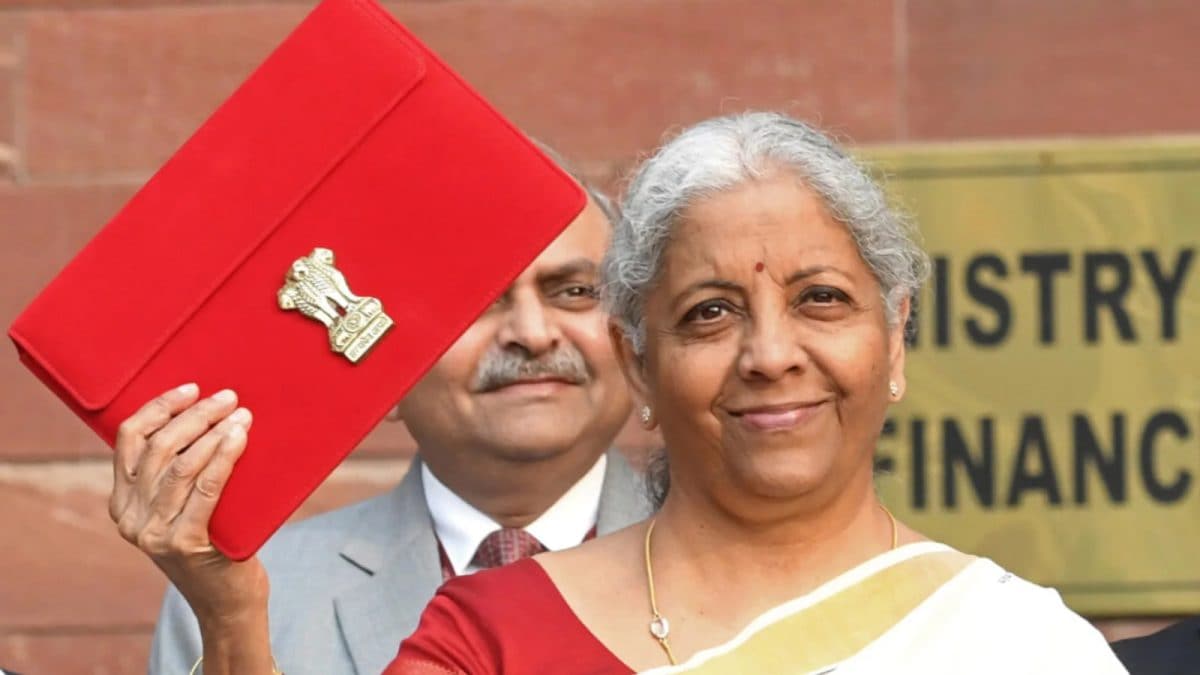
Finance Minister Nirmala Sitharaman presents the Union Budget 2026-27.
Budget 2026 Takeaways: Finance Minister Nirmala Sitharaman on Sunday presented the Union Budget 2026-27, giving a strong push to manufacturing, infrastructure and job creation, proposing a simpler tax and customs regime, and hailing the government’s modernisation drive as a “reforms express”.
The Budget 2026 is anchored around three ‘kartavyas’ — driving growth by enhancing productivity and competitiveness, building people’s capacity, and ensuring inclusive development under the vision of Sabka Saath, Sabka Vikaas.
In her ninth consecutive Budget in Parliament, Sitharaman laid out a multi-pronged strategy to sustain growth amid global uncertainty, including expanding domestic electronics and semiconductor capabilities, de-risking infrastructure projects, skilling India’s youth for emerging technologies, and easing compliance for taxpayers and importers.
Here are the key takeaways from Budget 2026 across manufacturing, infrastructure, skills, AI, taxation and customs duty.
Manufacturing Gets A Boost
Budget 2026 put a special emphasis on the manufacturing landscape in India. The outlay for electronics components manufacturing was raised sharply to Rs 40,000 crore, while new schemes for rare earth magnets, chemical parks, container manufacturing and capital goods seek to reduce import dependency, and strengthen domestic supply chains. Textiles got an integrated, employment-oriented package covering fibres, clusters, skilling and sustainability.
Infrastructure-Led Growth
Infrastructure got a boost with a higher capex allocation and initiatives like a risk guarantee fund to de-risk projects for private developers, new dedicated freight corridors and national waterways, dedicated REITs (real estate investment trusts) for recycling of significant real estate assets of central public sector enterprises (CPSEs), and a seaplane VGF (viability gap funding) scheme.
The Centre’s capital expenditure (capex) target has been increased to Rs 12.2 lakh crore for FY27, up from Rs 11.2 lakh crore earmarked for the current financial year. Moreover, maintaining the fiscal discipline, Sitharaman said the government expects the fiscal deficit to be at 4.3 per cent of the GDP in 2026-27, lower than 4.4 per cent projected for the current financial year.
Tier-II and Tier-III cities were placed at the centre of urban growth via City Economic Regions, backed by reform-linked funding.
“We shall continue to focus on developing infrastructure in cities with over 5 lakh population (Tier II and Tier III), which have expanded to become growth centres,” Sitharaman said in her Budget Speech.
Greater Emphasis On Skilling
The Budget placed renewed emphasis on the services economy as a jobs engine. A high-powered Education-to-Employment and Enterprise Committee will realign skilling with market needs, including the impact of emerging technologies.
Content creation and creative industries get a boost through AVGC labs in schools and colleges, support for animation, gaming and comics, and new institutional capacity for design and hospitality. Tourism-linked skilling, from guides to digital heritage documentation, signals a clear intent to convert culture and content into employment and exports.
“I propose to support the Indian Institute of Creative Technologies, Mumbai in setting up AVGC Content Creator Labs in 15,000 secondary schools and 500 colleges,” FM Sitharaman said. AVGC stands for animation, visual effects, gaming and comics.
AI & Semiconductors Push
Artificial intelligence (AI) was positioned as a cross-sector force multiplier rather than a standalone theme. The Budget provided a push to artificial intelligence (AI) by promoting adoption with governance, agriculture, education and skilling, including proposals for AI-enabled advisory tools for farmers and AI integration in education curricula.
On hardware, the semiconductor strategy expanded decisively under ISM 2.0 (India Semiconductor Mission 2.0), with focus on domestic equipment manufacturing, materials, research centres and workforce development, signalling a long-term commitment to building a resilient chip ecosystem in India.
Taxation, ITR, TDS, TCS
A major structural reform comes with the Income Tax Act, 2025, effective April 1, 2026, containing simpler rules and redesigned forms.
Budget 2026 provided compliance relief for individuals, including extended timelines for revising returns to March 31 from December 31 earlier, staggered ITR due dates, and easier filing of Form 15G/15H through depositories.
Individuals with ITR-1 and ITR-2 returns will continue to file till July 31, and non-audit business cases or trusts are proposed to be allowed time till August 31, according to the Budget Speech 2026-27.
“I propose to extend time available for revising returns from 31st December to up to 31st March with the payment of a nominal fee. I also propose to stagger the timeline for filing of tax returns. Individuals with ITR 1 and ITR 2 returns will continue to file till 31st July and non-audit business cases or trusts are proposed to be allowed time till 31st August,” Sitharaman said.
TDS (Tax deducted at source) rules were clarified for manpower services, while a rule-based system for lower or nil TDS certificates is proposed. TCS rates were cut to 2% for overseas tour packages, education and medical expenses under liberalised remittance scheme (LRS). Litigation is targeted through integrated assessment and penalty orders, lower pre-deposit requirements, and wider immunity provisions.
TDS on the sale of immovable property by a non-resident will be deducted and deposited through resident buyer’s PAN (Permanent Account Number)-based challan instead of requiring TAN (Tax Deduction and Collection Account Number), Sitharaman said.
Customs Duty Tweaks
Customs duty rationalisation continued with a clear focus on domestic manufacturing, energy transition and ease of living. Exemptions have been extended or introduced for capital goods used in lithium-ion batteries, critical minerals processing, nuclear power projects and aircraft manufacturing.
Personal imports will become cheaper with a reduction in duty on goods for personal use from 20% to 10%. Seventeen cancer drugs and additional rare-disease treatments were exempted from customs duty. Process reforms aimed at trust-based, tech-driven clearances, faster cargo movement and lower compliance costs, especially for exporters and MSMEs (micro, small, medium and enterprises).
STT On F&O Hiked
The Budget increased securities transaction tax (STT) on futures trading from 0.02% to 0.05% and on options trading from 0.10% to 0.15%, a move that upset the capital markets with the BSE Sensex crashing more than 2,300 points from the day’s high and the NSE Nifty dropping to 24,571.75.
Securities Transaction Tax (STT) is a direct tax imposed on the buying and selling of securities in India.
Commenting on the Budget, Prime Minister Narendra Modi said, “The Union Budget reflects the aspirations of 140 crore Indians. It strengthens the reform journey and charts a clear roadmap for Viksit Bharat.”
February 01, 2026, 14:43 IST
Read More

Shanghai (China): The Consulate General of India in Shanghai welcomed the resumption of Air India’s direct flight services between Shanghai and New Delhi, marking a major step forward in restoring people-to-people, business and institutional connectivity between India and China.
According to an official release, the inaugural Shanghai-New Delhi flight departed today from Shanghai Pudong International Airport, carrying over 230 passengers on board the Boeing 787 aircraft. The relaunch comes after a gap of nearly six years and represents a significant milestone in normalising bilateral air connectivity following the suspension of services in early 2020.
Speaking on the occasion, Consul General Pratik Mathur said, “The resumption of direct flights between Shanghai and New Delhi is a tangible expression of the renewed momentum in India-China engagement. Enhanced air connectivity is essential for facilitating trade, tourism, academic exchanges and people-to-people contacts, particularly between India and East China. We are pleased to see Air India restoring this important link.”
As per a release, Air India will operate the route four times a week using its Boeing 787-8 Dreamliner aircraft, featuring modernised cabins and enhanced onboard services. The restored service reflects the growing demand for travel between the two countries and the steady recovery of cross-border mobility. It will also support commercial, educational and cultural exchanges between India and the Yangtze River Delta region, one of China’s most economically dynamic clusters.
The Consulate General of India in Shanghai remains committed to supporting initiatives that strengthen connectivity and deepen cooperation across trade, investment, tourism, education and cultural exchange, the release stated.

Last Updated:
Piyush Goyal termed the Budget “economically and fundamentally very strong”, and stated that it “reflects the aspirations of the youth of the country”.
Minister of Commerce and Industry Piyush Goyal. (File photo)
Union Minister Piyush Goyal on Sunday termed Budget 2026 “futuristic and holistic”, and stated that it “reflects the aspirations of the youth of the country and is forward-looking”.
Speaking exclusively to CNN-News18 on Budget 2026, presented by Finance Minister Nirmala Sitharaman, Goyal said, “This is a fabulous budget and it is very futuristic. The Budget 2026 has covered all sectors including technology, infrastructure, etc.”
“The technology sector has been given a thrust. The budget focuses on infrastructure. It is a holistic and forward-looking budget refecting future ready Bharat,” he said, adding, “The budget meets the aspirations of the youth and new India.”
Stating that the Budget is economically and fundamentally very strong, the Union Minister said, “Farmers, animal husbandry and labour-intensive sectors get a major push as this Budget focuses on investment, value addition and jobs.”
#Exclusive | “The Budget is economically and fundamentally very strong,”Preparing India for Viksit Bharat. Farmers, animal husbandry and labour-intensive sectors get a major push as the Budget focuses on investment, value addition and jobs.@Parikshitl in an exclusive… pic.twitter.com/tJr2SItcaW
— News18 (@CNNnews18) February 1, 2026
‘Budget 2026 Is Human-Centric’: PM Modi
Prime Minister Narendra Modi on Sunday said that the Union Budget 2026 is “human-centric and strengthens India’s foundation with path-breaking reforms.” The Prime Minister also described it as historic and a catalyst for accelerating the country’s reform trajectory and long-term growth.
Following the presentation of the Budget in Parliament, PM Modi said the proposals would energise the economy, empower citizens and give India’s youth fresh opportunities to scale new heights.
“This budget brings the dreams of the present to life and strengthens the foundation of India’s bright future. This budget is a strong foundation for our high-flying aspirations of a developed India by 2047,” he said.
Calling the government’s reform agenda a “Reform Express”, the Prime Minister added, “The reform express that India is riding today will gain new energy and new momentum from this budget.”
February 01, 2026, 19:01 IST
Read More


Here’s why Pakistan decide to boycott India in T20 World Cup 2026
From Manufacturing To Infra And AI: Capex Boost Flags Off Budget 2026 ‘Reforms Express’

Pakistan to play T20 World Cup but boycott India match

-

 Sports5 days ago
PSL 11: Local players’ category renewals unveiled ahead of auction
-

 Entertainment1 week ago
Three dead after suicide blast targets peace committee leader’s home in DI Khan
-

 Tech1 week ago
This Mega Snowstorm Will Be a Test for the US Supply Chain
-

 Entertainment5 days ago
Claire Danes reveals how she reacted to pregnancy at 44
-

 Fashion1 week ago
Spain’s apparel imports up 7.10% in Jan-Oct as sourcing realigns
-

 Tech1 week ago
‘Uncanny Valley’: Donald Trump’s Davos Drama, AI Midterms, and ChatGPT’s Last Resort
-

 Tech1 week ago
ICE Asks Companies About ‘Ad Tech and Big Data’ Tools It Could Use in Investigations
-

 Sports5 days ago
College football’s top 100 games of the 2025 season