

Business
FTSE 100 flatlines as gold and silver gleam again

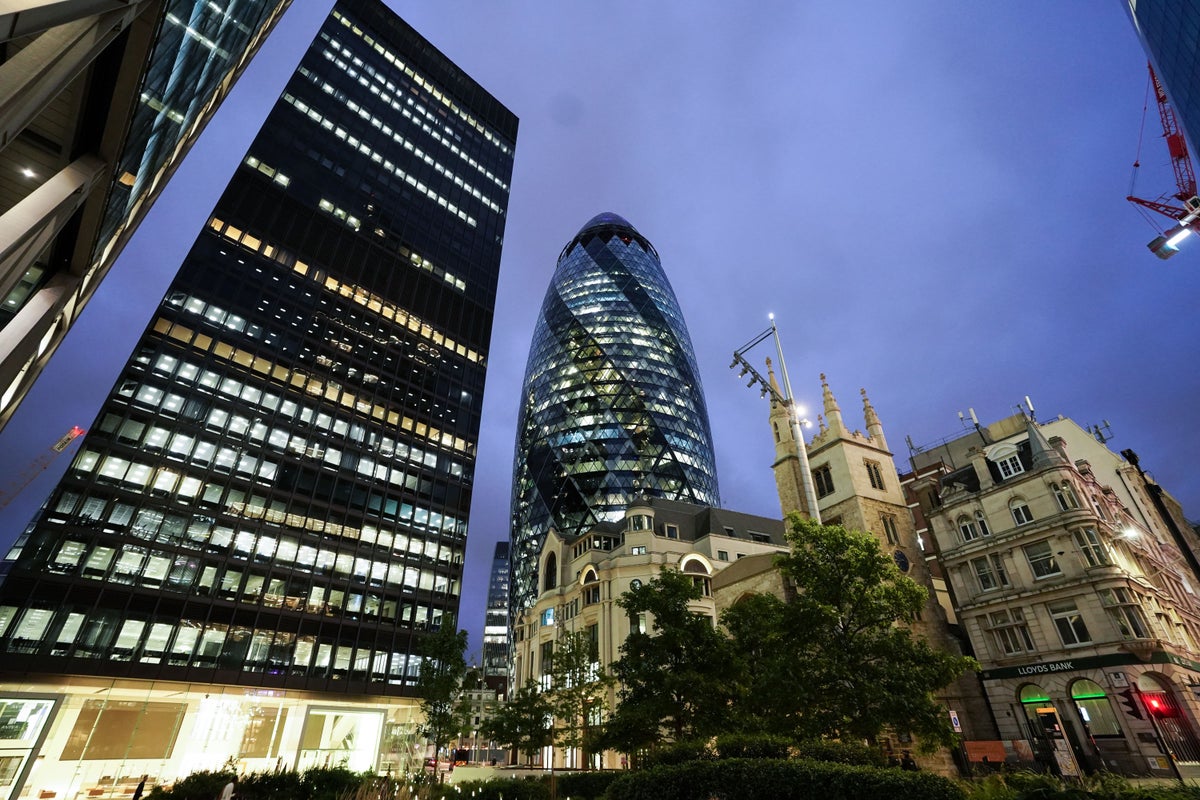
The FTSE 100 ended a volatile week in subdued fashion on Friday, closing slightly lower, despite a batch of encouraging economic data as retail sales, consumer confidence and business activity all picked up.
The FTSE 100 index closed down 6.61 points, 0.1%, at 10,143.44.
The FTSE 250 ended 53.40 points lower, 0.2%, at 23,317.53, and the AIM All-Share closed up 5.08 points, 0.6%, at 822.75.
For the week, the FTSE 100 fell 0.9%, the FTSE 250 was flat, and the AIM-All Share rose 2.5%.
In London, economic data was in focus after UK retail sales unexpectedly rose in December.
The Office for National Statistics said retail sales volumes rose 0.4% in December, following a fall of 0.1% in November, beating an FXStreet-cited forecast for a 0.1% decline.
The 0.1% fall in November was unrevised, while the ONS revised up October’s reading to a 0.8% fall from a 0.9% decline previously.
In addition, UK consumer confidence improved slightly in January, supported by stronger expectations for personal finances over the next 12 months, survey results showed on Friday.
The overall score for the GfK consumer confidence index rose to minus 16 points in January from minus 17 in December, matching the consensus forecast cited by FXStreet.
Completing the trio of better news, growth in UK’s service and manufacturing sectors accelerated in January, flash data published by S&P Global showed.
The UK purchasing managers’ composite output index rose to a 21-month high of 53.9 points in January from 51.4 points in December, easily beating the FXStreet-cited consensus of 51.7.
The composite data is calculated using a weighted average of the services and manufacturing readings.
The flash services business PMI improved to 54.3 points in January from 51.4 points in December, outperforming the consensus of 51.7.
The flash manufacturing PMI climbed to 51.6 points in January, a 17-month-high, from 50.6 points in December.
“With the turn of the year, we are seeing encouraging signs from the UK economy,” said Deutsche Bank chief economist Sanjay Raja.
“Revisions have made the UK outlook a little brighter,” retail spending is “picking up,” survey data have come in “stronger” to start 2026 and there are some “tepid” signs of stabilisation in the labour market, he added.
JPMorgan analyst Allen Monks noted the surge in January’s PMI might typically be associated with annualised GDP growth of 1.9%.
But he added a caveat. “The main issue is that the level has yet to be sustained for longer than one month, which must be factored in when interpreting the UK survey,” he said.
“There was a similar surge in the UK survey back in August, which reversed sharply. As such it’s hard to have much faith in the UK survey until it sustains a shift higher,” Mr Monks added.
But while taking due caution on the PMI data, he said retail sales and consumer confidence figures, are “supportive of the growth outlook”.
The firm data was also supportive of sterling.
The pound was quoted higher at 1.3567 dollars at the time of the London equities close on Thursday, compared to 1.3437 dollars on Wednesday.
The pound was further boosted by comments by Monetary Policy Committee member Megan Greene who argued that looser monetary policy in the US could push up inflation.
“This would, in my view, give even greater cause for concern about a risk of UK inflation persistence over that of weaker demand, warranting a slower withdrawal of monetary policy restriction in the UK,” she said.
The US federal reserve meets next week but is expected to leave interest rates on hold after three consecutive quarter point cuts.
Countering Ms Greene’s fears, analysts at Wells Fargo expects two 25 basis points rate cuts at the March and June Fed meetings, but said “the risks to our forecast look increasingly skewed toward later and possibly less easing this year”.
“In fact, given our view on how growth will evolve this year, there is a sound argument that the longer they wait to cut, the higher the hurdle becomes to justify on economic grounds the need to ease further.”
The euro stood at 1.1758 dollars, higher against 1.1707 dollars.
Against the yen, the dollar was trading at 157.99 yen, lower from 158.18 yen.
In European equities on Friday, the CAC 40 in Paris closed down 0.1%, while the DAX 40 in Frankfurt ended 0.2% higher.
In New York, financial markets were mixed at the time of the London equity market close.
The Dow Jones Industrial Average was down 0.5%, the S&P 500 was 0.2% higher, while the Nasdaq Composite climbed 0.6%.
The yield on the US 10-year treasury was quoted at 4.25%, trimmed from 4.27% on Thursday. The yield on the US 30-year treasury was quoted at 4.84%, narrowed from 4.87%.
On the FTSE 100, gold miners Fresnillo, up 2.1%, and Endeavour Mining, up 2.2%, were once again in vogue as the gold and silver prices closed to push higher.
The yellow metal was quoted at 4,984.07 dollars an ounce on Friday, after hitting another record high and approaching 5,000 dollars an ounce, up from 4,874.8 dollars on Thursday.
Meanwhile, the price of silver rose 4.8% heading above 100 dollars an ounce late on Friday.
“Concerns over US public finances, political pressure on the Fed, and lingering global risks keep gold well bid on dips. Despite short-term overbought signals, the metal is on track for a strong weekly gain, and price action suggests pullbacks are being treated as opportunities rather than trend breaks. This is a high-risk trading environment,” said David Morrison, senior market analyst at Trade Nation.
On silver, Mr Morrison said the metal continues to outperform in the “most extraordinary fashion”.
“This really looks like a market in the midst of a blow-off top, with talk of supply shortages and a massive short squeeze bringing in fresh buying momentum.
“There’s an awful lot of (fear of missing out) out there, and that has the potential to push prices up even further. But of course, the longer this rally extends, the greater the risk of being caught out on a weak limb. Silver looks toppy up here.”
Oil majors BP and Shell were in demand, up 1.6%, and 0.5% respectively, as the oil price rose, after the Financial Times reported that the US threatened to curb the supply of cash for Iraq oil sales.
Brent oil traded higher at 65.76 dollars a barrel on Friday, up from 64.26 dollars late on Thursday.
Insurer Aviva fell 5.2%, while sector peer Admiral extended its losing run, shedding 5.8% on Friday taking its loss for the week to 13%.
Admiral was downgraded by Goldman Sachs and RBC Capital Markets earlier this week.
Elsewhere, C&C shares tumbled 9.3% as it reported weak trading in the period leading up to Christmas because of tepid consumer confidence amid UK budget nerves.
Mecca Bingo owner Rank was knocked down 4.7% while William Hill owner Evoke slid 2.5% as Deutsche Bank moved both to “hold” from “buy” after taking account for tax changes to the betting industry in November’s budget.
The biggest risers on the FTSE 100 were Beazley, up 36.0 pence at 1,152.0p, Glencore, up 10.85p at 501.0p, Endeavour Mining, up 92.0p at 4,366.0p, BAE Systems, up 42.0p at 2,027.0p and Fresnillo, up 84.0p at 4,168.0p.
The biggest fallers on the FTSE 100 were Burberry Group, down 79.0p at 1,195.5p, Admiral Group, down 162.0p at 2,650.0p, Aviva, down 33.8p at 619.4p, easyJet, down 14.80p at 481.9p and IAG, down 12.0p at 418.3p.
Monday’s global economic calendar has the Ifo business climate report in Germany and US durable goods orders data. Later in the week, interest rate decisions are due in the US and Canada.
Next week’s UK corporate calendar has full year results from lender Lloyds Banking Group plus trading statements from accountancy software provider Sage and miner Antofagasta.
– Contributed by Alliance News.
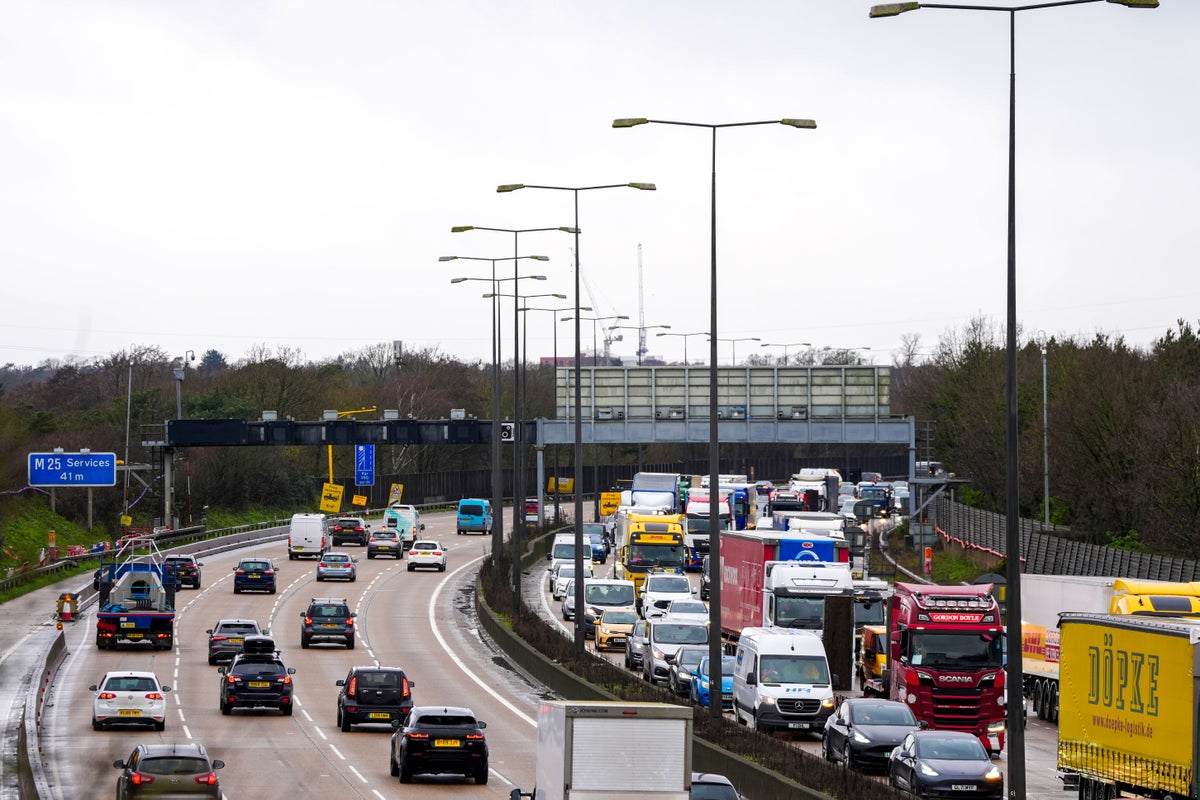
Millions of car finance payouts are in jeopardy after the UK’s financial watchdog indicated its compensation scheme faces significant delays, changes, or even collapse.
This uncertainty stems from four legal challenges against the Financial Conduct Authority (FCA).
The FCA has advised motor finance firms to prepare for the possibility that its redress scheme, which could see an average payout of £829, may not proceed.
The regulator stated that while a hearing date is unclear, these cases are unlikely to be heard before October.
In the meantime, it is in discussions about the “possibility of suspending some elements” of its compensation scheme, while still urging lenders to prepare for payouts.
But the regulator said it was also considering its options should parts of the scheme be quashed by the courts, including proceeding with a revised version or asking lenders to plan for a scenario where “there would be no scheme”.
This could mean lenders need to be ready to respond to complaints from car finance customers individually, rather than under the rules of an industry-wide programme set by the FCA.
“Many people will be frustrated that the legal action will delay payouts due to begin this year,” the FCA said.
“We remain committed to ensuring consumers receive any compensation owed as promptly as possible.”
The FCA set out the final details of its compensation scheme in March, which it estimated could cost the industry about £9.1 billion in total.
It had been expecting millions of claims to be paid out this year and the vast majority settled by the end of 2027.
The financial services arms of carmakers Volkswagen and Mercedes-Benz and the car finance arm of French bank Credit Agricole, as well as Consumer Voice, a group representing consumers, are asking the courts to quash the scheme, arguing the rules are unlawful.
“Between the four separate legal challenges, it is claimed in effect that the FCA’s approach to establishing the schemes has been both unduly favourable to consumers and unduly favourable to lenders,” the watchdog said.
At least one claim alleges that the FCA has breached the rights of lenders under the 1998 Human Rights Act, according to the watchdog.
Despite the uncertainty of the legal cases, the watchdog is still advising consumers to complain directly to their lender if they think they might be owed compensation, which they can do for free using a template letter on its website.
Business
Us Job Growth Data 2026: US adds stronger-than-expected 115,000 jobs in April despite Iran war impact – The Times of India
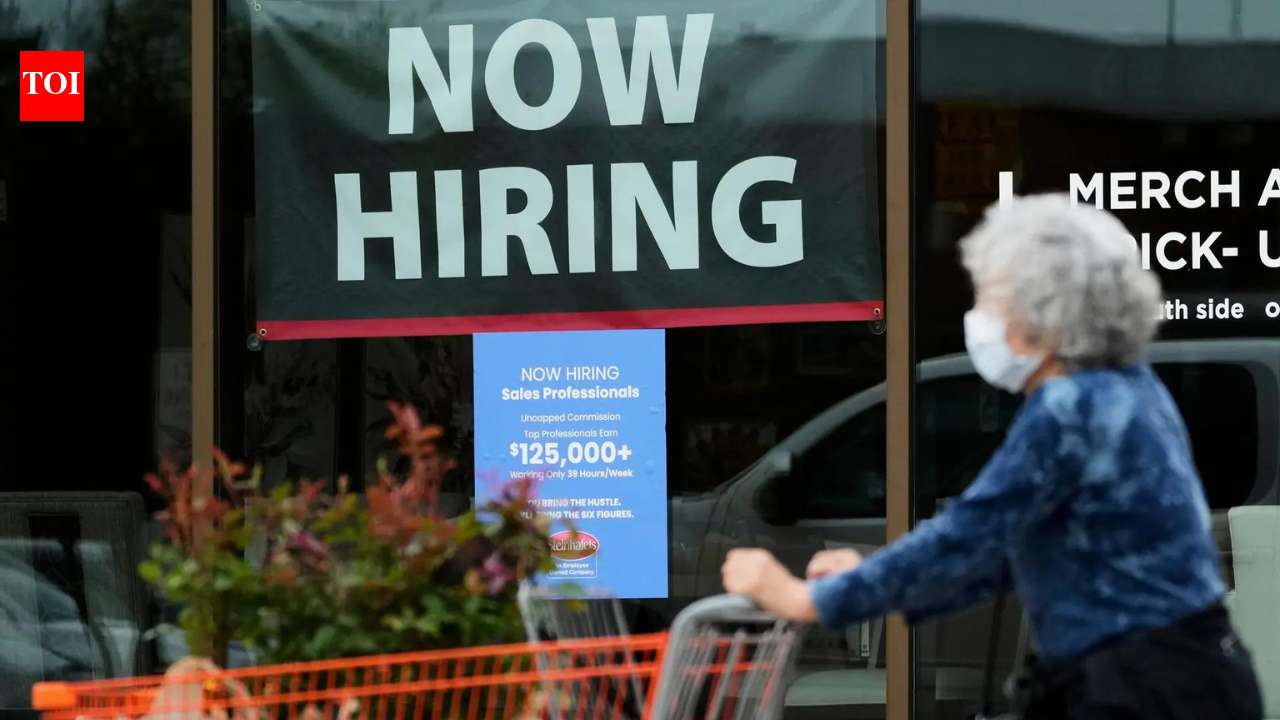
America’s employers added a stronger-than-expected 115,000 jobs in April despite economic uncertainty triggered by the Iran war, according to data released by the US labor department on Friday.The unemployment rate remained unchanged at 4.3 per cent, while hiring beat economists’ expectations of 65,000 new jobs, although it slowed from the revised 185,000 jobs added in March.The latest data suggests the US labour market has remained resilient even as the conflict in West Asia disrupted global oil supplies and pushed average US gasoline prices above $4.50 a gallon this week.“The labor market is not booming, but it is proving harder to break than many feared,” Olu Sonola, head of US economics at Fitch Ratings, said, as quoted by news agency AP.
Healthcare, transport sectors lead hiring
Healthcare companies added 37,000 jobs in April, while transportation and warehousing firms added 30,000 positions, according to the report.However, manufacturers cut 2,000 jobs during the month and have shed 66,000 jobs over the past year despite President Donald Trump’s protectionist trade policies aimed at boosting factory employment.Average hourly earnings rose 0.2 per cent from March and 3.6 per cent year-on-year, broadly aligning with the Federal Reserve’s inflation target.The labour force participation rate fell to 61.8 per cent, its lowest level since October 2021, as retirements and tighter immigration policies reduced the number of people seeking work.
Iran war and inflation concerns remain
Economists said the economy has so far weathered the impact of the Iran conflict better than expected, although risks remain if high energy prices persist.“Businesses to some extent are viewing the conflict in Iran as temporary,” Gus Faucher, chief economist at PNC, told AP. “We continue to see solid growth in consumer spending. And we’re seeing strong business investment, particularly around tech and AI.”However, Faucher warned that “the longer conflict in Iran lasts, the higher energy prices go, the longer they stay elevated the greater the drag on the economy.”The Iran war sharply disrupted shipping through the Strait of Hormuz after Iran closed the crucial route following US-Israeli strikes on February 28. The move caused oil prices to surge and raised fears of slower global economic growth.
Fed likely to hold rates steady
The stronger-than-expected jobs report is also expected to reduce pressure on the Federal Reserve to cut interest rates soon.Inflation climbed to 3.3 per cent in March, its highest level in two years, driven largely by rising fuel prices.Friday’s employment data “actually makes it less likely that we see a rate cut anytime soon,” Faucher said, adding that the Fed may prefer to focus on bringing inflation back towards its 2 per cent target before easing borrowing costs.

The solid figures came despite rising gas prices and economic uncertainty sparked by the Iran war.
Source link


Renée Zellweger joins cast of ‘A Woman in the Sun’

Terrell Owens declares he ‘couldn’t care less’ about the Cowboys years after tumultuous exit

The Best LED Skincare Deals I’ve Seen This Mother’s Day Are at Megelin

-

 Politics5 days ago
Iran weighs US reply delivered via Pakistan as Trump signals opposition to deal terms
-

 Tech1 week ago
This Indigenous Language Survived Russian Occupation. Can It Survive YouTube?
-
 Business1 week ago
PSX plunges over 4,800 points | The Express Tribune
-

 Fashion1 week ago
Canada’s Lululemon appoints Esi Eggleston Bracey to board of directors
-

 Fashion7 days ago
US’ J.Jill, Inc. appoints Kimberly Wallengren as CMO
-

 Tech1 week ago
Almost half of UK businesses hit by cyber attacks | Computer Weekly
-

 Entertainment1 week ago
David Allan Coe, country singer who wrote “Take This Job and Shove It,” dies at age 86
-
 Business1 week ago
Government hikes jet fuel prices by 5% for international airlines – The Times of India