Business
FTSE 100 in the green after lower-than-expected US inflation figures
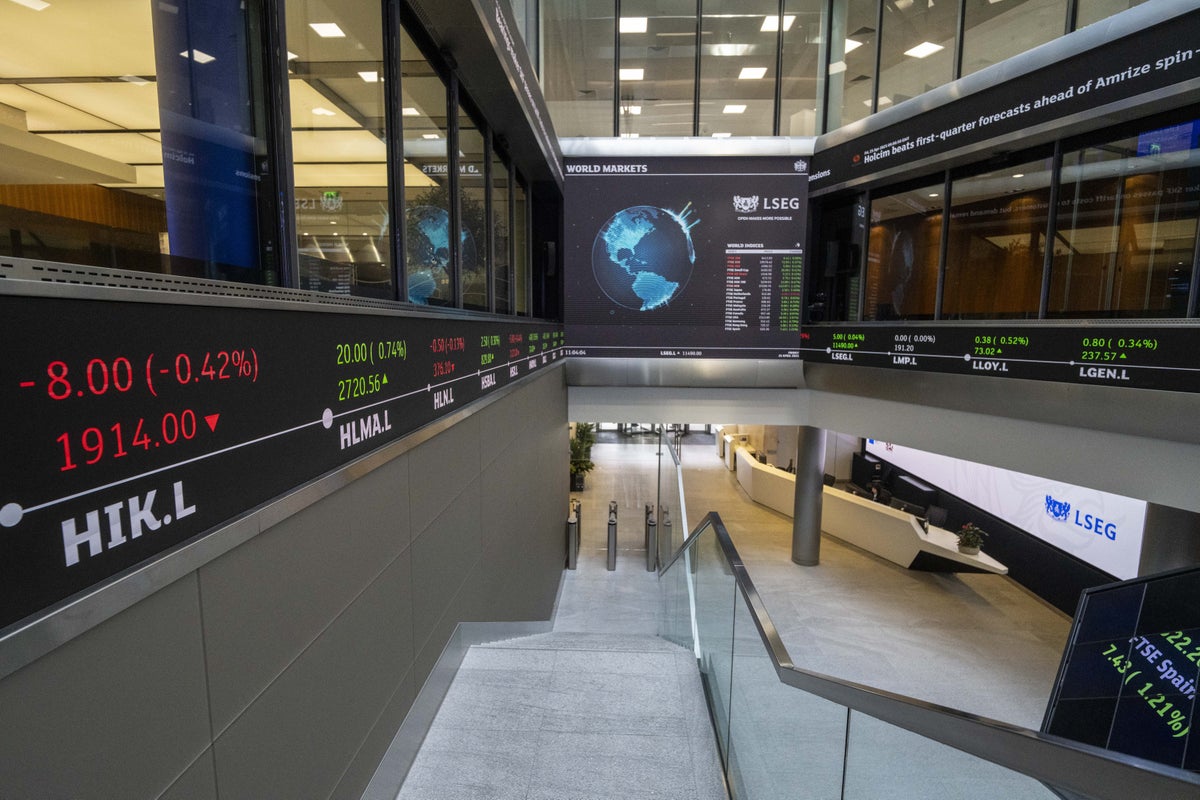
Stock prices in London closed mostly higher on Friday, in light of lower-than-expected US inflation the day before.
The US consumer price index rose by 2.7% in November from a year before, slowing from 3.0% annual inflation in September. Market consensus cited by FXStreet had expected inflation to increase to 3.1% in November.
“The knife-edge nature of yesterday’s rate decision by the Bank of England is keeping UK stocks in check and stalled the FTSE 100’s push towards the 10,000 mark,” said AJ Bell’s Danni Hewson. “Investors have responded to the reality that we could be approaching the end of the current rate-cutting cycle.”
She continued: “Across the Atlantic, the sharply lower-than-anticipated CPI reading in the US suggests the Federal Reserve might have more scope for rate cuts next year.”
The FTSE 100 index closed up 59.65 points, 0.6%, at 9,897.42. The FTSE 250 ended down 12.88 points, 0.1%, at 22,312.71, and the AIM All-Share closed up 1.03 points, 0.1%, at 757.39.
On the FTSE 100, Anglo American edged up 0.4% after reporting that it was striving to wrap up the sale of its nickel business and that it had restarted efforts to dispose of its remaining coal operation.
The London-based diversified miner previously suffered a setback, after Peabody Energy abruptly ended its bid to acquire Anglo American’s steelmaking coal assets in Australia.
Anglo American said on Friday it has reinitiated a formal process to sell the remaining steelmaking coal business.
The miner also said it is working to finalise the last regulatory approval with the European Commission required to complete the transaction, first announced in February this year.
Carnival, on the FTSE 250, jumped 17%.
The Florida-based cruise operator’s pre-tax profit jumped 45% to a “record” 2.77 billion dollars in the financial year ended November 30, from 1.92 billion dollars a year ago. Revenue climbed 6.4% to 26.62 billion dollars, also a record, from 25.02 billion dollars, with passenger ticket revenue growing 5.8% to 17.42 billion dollars.
Carnival also announced the reinstatement of dividends, declaring a quarterly payout of 15 US cents.
For the full year 2026, the company expects adjusted net income to grow by 12%.
In small caps, Seraphim Space rose 8.8%.
The space technology-focused investor’s largest holding, ICEYE, has won a 1.7 billion euro deal through a joint venture with arms firm Rheinmetall AG. The JV will provide the German armed forces with radar services.
On AIM, Revel Collective plunged 74%.
The bar and pub company said that “a number of credible parties” were in talks with the firm to potentially acquire the businesses it operates, but it warned that any deal is unlikely to return any value to shareholders.
Caledonia Mining rose 11%.
The Zimbabwe-focused gold miner has “welcomed” revised provisions announced by the Zimbabwean government on the gold mining sector.
A proposal to up a royalty rate to 10% from 5% will now only apply if the bullion price tops 5,000 dollars an ounce, and not 2,500 dollars. Also, a proposed tax change on capital expenditure treatment has been withdrawn.
Caledonia said that so long as the gold price remains below 5,000, dollars there will be no change to its financial outlook.
In European equities on Friday, the CAC 40 in Paris closed up 0.3%, while the DAX 40 in Frankfurt ended up 0.3%.
The pound was quoted at 1.3373 dollars at the time of the London equities close on Friday, lower compared with 1.3387 dollars on Thursday. The euro stood at 1.1715 dollars, lower against 1.1730 dollars. Against the yen, the dollar was trading higher at 157.46 yen compared with 155.46 yen.
Stocks in New York were higher. The Dow Jones Industrial Average was up 0.6%, the S&P 500 index up 0.7%, and the Nasdaq Composite up 0.8%.
The yield on the US 10-year Treasury was quoted at 4.14%, widening from 4.11%. The yield on the US 30-year Treasury was quoted at 4.82%, widening from 4.79%.
Brent oil was quoted at 60.16 dollars a barrel at the time of the London equities close on Friday, down from 60.23 dollars late Thursday.
Gold was quoted lower at 4,348.80 dollars an ounce, against 4,370.61 dollars on Thursday.
The biggest risers on the FTSE 100 were Endeavour Mining, up 120.00p at 3,910.00p, Rolls-Royce, up 26.00p at 1,170.00p, DCC, up 103.52p at 5,019.52p, Melrose Industries, up 11.20p at 576.60p, and Spirax, up 120.00p at 6,850.00p.
The biggest fallers on the FTSE 100 were Barratt Redrow, down 10.16p at 368.64p, Persimmon, down 32.00p at 1,317.00p, JD Sports Fashion, down 2.05p at 84.63p, Berkeley Group, down 70.00p at 3,884.00p, and Marks & Spencer, down 5.50p at 326.60p.
On Monday’s economic calendar, the UK releases current account and gross domestic product data.
On Monday’s UK corporate calendar, no significant events are scheduled.
– Contributed by Alliance News

Business
MCX Silver Jumps 6% To Hit Upper Circuit After 46% Crash; Can India–US Deal Spark A Sustained Rally?
Last Updated:
Silver prices staged a sharp rebound on Tuesday after an intense phase of liquidation that followed the abrupt unwinding of a record-setting rally
Silver Rates Surge Today
Silver Rates Today: Silver prices staged a sharp rebound on Tuesday after an intense phase of liquidation that followed the abrupt unwinding of a record-setting rally. The earlier sell-off had pulled prices down more than 46% from their peak in just three sessions, highlighting the extreme volatility in the precious metals space. Gold prices also recovered alongside silver.
On the MCX, silver hit the 6% upper circuit at Rs 2,50,436 per kg on February 3, while MCX gold climbed 3% to Rs 1,48,310 per 10 grams.
A key macro catalyst emerged after US President Donald Trump announced a trade agreement with India. The deal lowers US tariffs on Indian goods to 18% from 50% in exchange for India halting Russian oil purchases and easing certain trade barriers. The development added a fresh geopolitical layer to already jittery commodity markets.
Gold mirrored silver’s recovery in global trade. Spot gold rose as much as 4.2% to move above $4,855 an ounce after sliding 4.8% in the previous session. That decline had extended Friday’s slump, the steepest in over a decade.
Earlier, on January 30, spot gold had tumbled nearly 10% in its sharpest single-day fall since 1983, dragging prices back below the $5,000-an-ounce mark that had been crossed only days before and erasing a sizable portion of the year’s gains.
The rebound extended beyond gold and silver. Spot platinum advanced 3% to $2,183.64 an ounce after touching a record $2,918.80 on January 26, while palladium rose 2.7% to $1,765.75, joining the broader recovery across precious metals.
What drove the rebound after the crash?
Domestic sentiment got a lift from the India–US trade deal, while investors also reassessed geopolitical risks, currency movements and the outlook for US monetary leadership. Strong buying from Chinese retail investors ahead of the Lunar New Year further supported demand, although China’s markets are set to shut for over a week from February 16, temporarily sidelining a key source of consumption.
Traders are also watching developments involving Iran after Trump signalled that talks on a potential new nuclear agreement could begin soon. Any diplomatic progress could reduce gold’s safe-haven appeal and cap gains.
The earlier sell-off in bullion was initially triggered by Trump’s nomination of Kevin Warsh as the next Federal Reserve chair, which strengthened the US dollar and pressured metals. The slide intensified after CME Group raised margin requirements for precious metals futures, forcing leveraged traders to unwind positions quickly. A stronger dollar combined with higher trading costs led to a sharp liquidity squeeze, accelerating the fall.
Will the rally sustain?
Hareesh V, Head of Commodity Research at Geojit Investments, said longer-term drivers such as geopolitical tensions, central bank buying and macro uncertainty remain supportive for precious metals.
He noted that the previous correction was magnified by extremely overbought conditions after gold and silver had surged to record highs, with silver rallying more than 60% in a month and gold over 20%. Profit-booking snowballed into panic selling as liquidity thinned and volatility spiked.
“The violent drop was more of a technical correction than a deterioration in core fundamentals,” he said, suggesting that the broader structural support for the metals remains intact.
February 03, 2026, 11:07 IST
Read More
Business
Why Are Gold Prices Swinging? Nirmala Sitharaman Breaks It Down
Gold prices are no longer being watched only at home but across global markets, as sudden and unexpected swings keep investors on edge. Addressing the volatility, Finance Minister Nirmala Sitharaman stated that a deepening uncertainty in international markets is driving the fluctuations. Speaking to reporters on Monday, she pointed to rising anxiety among investors in global commodity trade, explaining that unstable conditions worldwide have eroded confidence in individual currencies. As a result, many investors are turning to gold as a haven, a shift she said is naturally fuelling the sharp ups and downs in gold prices.

According to data from the Multi-Commodity Exchange (MCX), gold prices slipped slightly on Monday evening. Compared to the previous session’s closing rate, the price of ten grams of gold declined by around Rs 280, marking a fall of less than 1%. Market experts note that daily price movements are largely driven by international trends. Due to this volatility, many buyers are adopting a wait-and-watch approach.

Over the past five days, gold prices in India’s spot market have fallen sharply. On January 29, the price of ten grams of gold stood above Rs 1.7 lakh, but it has now dropped to nearly Rs 1.4 lakh. This represents a decline of over 13% in just five days, a shift that has caught regular buyers by surprise. For investors hoping for substantial gains, the sudden drop has served as a cautionary signal.

Responding to questions on the Union Budget, the Finance Minister said that investment remains the primary driver of sustained economic growth. She noted that the government is prioritising sectors that generate employment and is strengthening the economy through reforms aimed at long-term outcomes. While increasing public investment, she said, the government continues to follow disciplined fiscal policies. The overarching goal, she added, is to ensure that growth is inclusive and that every citizen becomes a stakeholder in the nation’s development.

Nirmala Sitharaman expressed confidence that India is steadily progressing towards becoming a developed nation. She stated that as a growing economy, India must play a significant role in global trade and is actively working to boost exports by integrating with international markets. She also clarified that efforts are underway to make domestic markets resilient enough to compete globally.

She further explained the decision to raise the Securities Transaction Tax (STT) in the Futures and Options segment. According to her, the move is aimed at discouraging uninformed, gambling-like participation in derivative trading. The government, she said, has taken these steps to protect small and retail investors from potential losses and to maintain overall market stability.

The Finance Minister also revealed that the disinvestment process of public sector enterprises is progressing swiftly. She said this would encourage greater public participation in government-owned companies and allow more efficient use of financial resources to fund development projects. Through transparent policies, the central government aims to maximise the value of public assets, a move she believes will yield long-term financial benefits for the country.

She concluded by stating that global economic conditions are clearly influencing domestic markets, and while price fluctuations are inevitable, the government’s reforms will help bring stability. She advised investors to avoid hasty decisions and to carefully assess market conditions before acting, adding that every reform undertaken to strengthen the economy is a step towards a developed India.
Business
Trade deal done, says Trump; PM Modi thanks him for cutting tariff to 18% – The Times of India
NEW DELHI/ WASHINGTON: After months of bruising trade tensions, India and the US on Monday announced a bilateral trade deal that will see Washington slash additional tariffs on Indian imports to 18%, from the current 50%, making it more competitive for textiles, leather and seafood exporters.While PM Narendra Modi, in a post on X, which followed US President Donald Trump’s announcement on Truth Social, said he had a wonderful conversation with “dear friend” Trump and thanked him on behalf of 1.4 billion people for the reduced tariff of 18% on Indian goods, he did not mention the trade deal at all in his post on X that followed Trump’s “wonderful” announcement.
PM Modi and Trump
Modi also did not comment on Trump’s claim that in their conversation the PM had agreed to stop buying Russian oil and purchase much more energy from the US, and potentially Venezuela. Trump had said Modi had agreed to stop buying Russian oil and to buy much more from the US — $500 billion of energy, technology and farm products — a step that the President claimed would help end the war in Ukraine.According to the American President, Modi also agreed to bring down tariff and non-tariff barriers against the US to zero. A US embassy spokesperson confirmed that the final tariff now on India is 18%, down from the earlier 50%. This is a better deal for India than countries such Vietnam, Bangladesh, Indonesia, South Korea and China, which face higher tariffs. The Trump-Modi conversation coincided with the visit of EAM S Jaishankar to US for a critical minerals ministerial that will be chaired by Secretary of State Marco Rubio this week.The announcement came six days after India and the EU announced the completion of talks for a comprehensive trade agreement.Trump leadership vitalfor global peace: ModiThe deal had drawn sharp comments from some members of the Trump administration, including attacks on the EU.In his X post, PM said, “When two large economies and the world’s largest democracies work together, it benefits our people and unlocks immense opportunities for mutually beneficial cooperation”. He added that Trump’s leadership was vital for global peace, stability, and prosperity. India fully supports his efforts for peace. Modi said he was looking forward to working closely with Trump to take the partnership to unprecedented heights.Apart from reciprocal tariff, Trump had announced an additional 25% tariff on India for its purchase of Russian oil.Trump said the US had agreed to the trade deal with India out of friendship and respect for Modi, and at the latter’s request. “Our amazing relationship with India will be even stronger going forward. PM Modi and I are two people that GET THINGS DONE, something that cannot be said for mos,” he added.Trump in his social media post also said that it was an honour to speak with Modi whom he described as “one of my greatest friends and, a Powerful and Respected Leader of his Country”.
Ties set to get boost
While the US had acknowledged in past few months that India had cut down its Russian purchase, it had not eliminated the additional tariff.Trump also said, “We spoke about many things, including Trade, and ending the War with Russia and Ukraine. He agreed to stop buying Russian Oil, and to buy much more from the US and, potentially, Venezuela. This will help END THE WAR in Ukraine, which is taking place right now, with thousands of people dying each and every week!”Following the announcement last week of the successful conclusion of FTA negotiations with EU, India had suggested that India and US might be close to finalising the trade agreement they have been discussing since Feb last year.Trump’s disclosure of the trade deal was preceded by two India-related posts a few hours before, one of which featured him and Modi on a magazine cover with the caption “The Mover and the Shaker”. Another post featured New Delhi’s India Gate, which Trump called “India’s beautiful Triumphal Arch” and said, “Ours will be the greatest of them all!” — referring to a similar monument he wants to build in Washington DC.
-
Sports7 days agoPSL 11: Local players’ category renewals unveiled ahead of auction
-
Entertainment6 days agoClaire Danes reveals how she reacted to pregnancy at 44
-
Sports6 days agoCollege football’s top 100 games of the 2025 season
-
Business7 days agoBanking services disrupted as bank employees go on nationwide strike demanding five-day work week
-
Politics6 days agoTrump vows to ‘de-escalate’ after Minneapolis shootings
-
Sports6 days agoTammy Abraham joins Aston Villa 1 day after Besiktas transfer
-
Tech7 days agoBrighten Your Darkest Time (of Year) With This Smart Home Upgrade
-
Entertainment6 days agoK-Pop star Rosé to appear in special podcast before Grammy’s