

Business
Fuel costs and fiscal realities: Pakistan’s tightrope walk | The Express Tribune

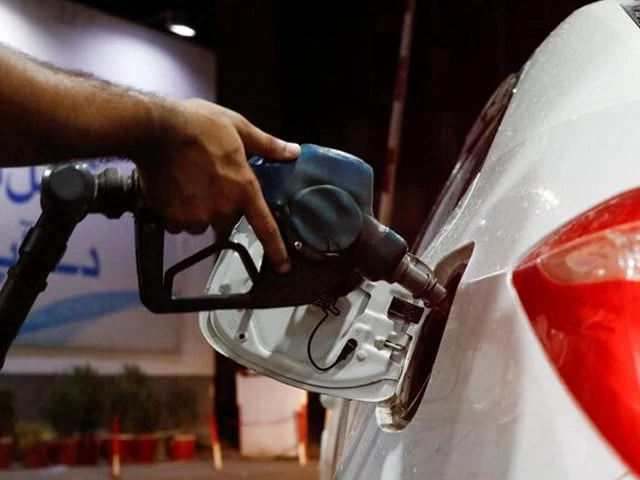
Pakistan faces rising fuel costs due to imports; govt balances price hikes with targeted subsidies and relief measures
KARACHI:
Fuel price increases in Pakistan almost always trigger a strong public reaction. That response is understandable, given the direct impact on household budgets. But these recurring adjustments, and the policy responses that follow, are best understood in the context of a deeper structural reality: Pakistan’s significant reliance on imported energy.
The figures illustrate the point clearly. Domestic refineries meet roughly 30 per cent of the country’s petrol demand, while the remaining 70 per cent is fulfilled through imported refined fuel. When crude imports are included, Pakistan sources nearly 80 per cent of its oil requirements from abroad. This is not a temporary imbalance but a longstanding feature of the country’s energy economy.
One important consequence of this dependence is the way fuel prices are determined. Even locally refined products are priced on import parity. In effect, whether petrol is produced domestically or imported, its price is linked to international oil benchmarks and the rupee’s exchange rate against the dollar. This limits the extent to which domestic policy alone can shield consumers from global market movements.
At the same time, Pakistan’s fuel consumption patterns make these price changes particularly impactful. The country uses an estimated 50 to 75 million litres of fuel daily. While petrol is widely used, diesel plays an equally vital role in supporting transport, agriculture, and logistics. As a result, any increase in fuel prices tends to ripple through the broader economy, affecting transport costs, food prices, and overall inflation.
Against this backdrop, the recent price adjustment can be seen as part of a broader effort to align domestic prices with international realities. The initial increase of Rs137 per litre — from Rs321 to Rs458 — reflected the scale of external pressures. Shortly thereafter, however, the government revisited the decision. Following intervention by Prime Minister Shehbaz Sharif, the increase was moderated by Rs80, bringing the final price to Rs378 per litre.
While the revised price still represents an increase, the adjustment indicates a willingness to respond to public concerns while navigating fiscal and external constraints. As Shehbaz Sharif has emphasised, the government is seeking to balance economic necessity with social protection, particularly in the context of rising global uncertainty.
This balancing approach is also evident in the relief measures introduced alongside the price revision. These initiatives are wide-ranging and aim to cushion the impact on both households and key sectors of the economy.
In Punjab and Islamabad, public transport has been made free to support daily commuters. In Sindh, a proposal has been put forward to provide registered motorcycle owners with Rs2,000 per month, helping offset basic fuel expenses.
At the federal level, targeted measures have been designed to reach both individuals and productive sectors. Motorcycle users are to receive a subsidy of Rs100 per litre, capped at 20 litres per month for an initial period. Small farmers will benefit from a one-time payment of Rs1,500 per acre, recognising the importance of diesel in agricultural activity.
Particular attention has also been given to the transport and logistics sector, where fuel costs have broader economic implications. Goods transport vehicles are set to receive Rs70,000 per month, with additional support for those carrying essential commodities.
Larger transport operators will receive Rs80,000 monthly, while inter-city and public service vehicles may receive up to Rs100,000 per month to help maintain stable fares. There is also a commitment to subsidise rail travel for lower-income passengers.
Importantly, the prime minister has also pointed out that the federal government is absorbing a substantial fiscal cost to protect vulnerable groups. The prime minister has said recently that a subsidy of Rs129 billion is being provided to shield poorer segments of society from the spillover effects of the Gulf war and rising international oil prices.
Taken together, these measures are intended to ease the transmission of higher fuel costs into overall inflation—especially food inflation. By supporting transport and supply chains, the government aims to limit secondary price increases that affect a wider segment of the population.
Of course, such interventions come with challenges. They require fiscal space and careful implementation to ensure that benefits reach the intended recipients. At the same time, they reflect an effort to provide targeted relief within the constraints of available resources.
More broadly, the current situation highlights an underlying vulnerability that extends beyond any single policy decision. As long as Pakistan continues to import the majority of its fuel, it will remain sensitive to global price movements, exchange rate fluctuations, and external supply conditions. In that sense, recent developments serve as a reminder of the structural nature of the issue.
Looking ahead, the path forward involves both immediate management and longer-term reform. In the short term, a combination of calibrated price adjustments and targeted relief measures remains a practical approach given existing constraints.
Over the medium to long term, however, reducing this vulnerability will be key. Expanding domestic refining capacity, diversifying the energy mix, and strengthening macroeconomic stability to support the rupee can all play a role in easing exposure to external shocks.
These are gradual processes rather than quick fixes. Yet they are essential if Pakistan is to move toward a more resilient energy framework.
The recent fuel price adjustment, and the steps taken to soften its impact, should therefore be seen as part of a broader and ongoing effort to navigate complex economic realities. Managing this balance between external pressures and domestic needs will remain a central policy challenge in the years ahead.
The writer is a research economist.

FILE PHOTO: A for sale sign is shown for a residential home in Encinitas, California, U.S. July 25, 2025.
Mike Blake | Reuters
A version of this article first appeared in the CNBC Property Play newsletter with Diana Olick. Property Play covers new and evolving opportunities for the real estate investor, from individuals to venture capitalists, private equity funds, family offices, institutional investors and large public companies. Sign up to receive future editions, straight to your inbox.
The all-important spring housing market is well underway, but expectations are falling short due to the war in Iran and its impact on both the U.S. economy and consumer sentiment.
Mortgage rates, which were previously forecast to be far lower this spring than last, are now much higher, and concerns over employment and inflation are throwing cold water on pent-up homebuyer demand.
Buyers in the first quarter of this year were more concerned about the economy and mortgage rates than they were about home prices, according to real estate agents who participated in the quarterly CNBC Housing Market Survey.
“They’re fearful of the war, they’re fearful of gas prices, [for] their job security,” said Faith Harmer, an agent in the Las Vegas metropolitan area.
The CNBC Housing Market Survey is a national inquiry of real estate agents selected randomly across the United States. Responses for the first-quarter survey were collected between March 24 and March 30. This quarter, 70 agents shared their insights.
When asked about their buyers’ primary concern, about one-third of agents said the economy, while another third said mortgage rates. The latter marked a big jump from just 26% in the fourth quarter.
Only 9% of agents in the first-quarter survey said prices were their buyers’ biggest concern, down from 18% in the previous period.
This should come as no surprise, as the average rate on the 30-year fixed mortgage hit a low of 5.99% the day before the Iran war started and then began to climb. It’s now hovering around 6.5%.
Still, while most agents said prices were either flat or falling, nearly twice as many agents, 29%, reported home prices rising during the first quarter than did in the previous quarter. Price dynamics can vary widely depending on the market and region of the country.
But affordability is not improving as much as most experts had forecast. When asked how affordability was hitting buyers, 19% of agents said it was causing them to get out of the market. That was up from just 11% at the end of last year.
More than half of agents reported at least one contract cancellation.
“Buyers that were on the fence and deciding to buy are now on the fence and going the other direction, saying, ‘I’m not going to buy,'” said Eric Bramlett, an agent in Austin, Texas.
As buyer demand drops, homes are sitting on the market longer. In the first quarter, 31% of agents reported that their listings were on the market for more than six weeks, compared with 26% in the fourth quarter.
“We just had one recently where they wanted what they wanted, and they wouldn’t come down to a price that the market could bear,” Harmer, the agent in Las Vegas, said. “So, in the end, they just pulled it off the market.”
Sellers are now more worried about that wait time. Fully 37% of responding agents said time on the market was their sellers’ top concern, compared with 30% at the end of last year.
That took share from price as sellers’ top concern, falling from nearly half of agents ranking it first to 39%.
Still, fewer agents reported price cuts than the previous quarter, but that may be the result of seasonal dynamics and the impact of lower mortgage rates in the middle of the first quarter, which gave buyers more purchasing power.
That may also be why fewer agents said they had to delist homes compared with the fourth quarter, when agents reported a slower-than-usual fall market with more frustrated sellers.
Even as concerns over the economy and interest rates rise, agents in the first quarter still said the market was either in the buyer’s favor or balanced. The share that called it a buyer’s market did drop quarter to quarter, from 42% to 36%, likely due to those new buyer headwinds – higher mortgage rates, the war and a weaker job market. And sellers are taking note.
“We’ve had two sellers who were planning on listing in May already decide, ‘Let’s hold, let’s search later in the summer for our next home to buy, and then we’ll try and list in the fall,'” said Dana Bull, an agent in the Boston area. “So they originally thought that the spring would be perfect for them, because it just felt like it was going to be the best time, and now they don’t feel as confident, and they want to wait and see.”
Just over half of agents surveyed said they expect the market to improve as the spring goes on, but that share is way down from the end of last year, when there was no war in the picture.
A higher share of agents said they expect the market to stay the same as last quarter, which is significant, given that the market is going from the historically slowest season for housing to the usually busiest.

The price of oil moved higher on Tuesday amid caution from investors ahead of Donald Trump’s deadline for Iran to agree to reopen the Strait of Hormuz.
The US president has threatened to launch a major attack on Iranian infrastructure if a ceasefire deal is not reached by 1am UK time on Wednesday.
Global financial markets were tentative ahead of the deadline as a result.
The price of Brent crude oil increased by around 1.5% to 111.4 US dollars a barrel in early trading.
It is around 53% higher than before the conflict started at the end of February, and has resulted in sharp increases in petrol and diesel costs as a result.
Traders are still hopeful a diplomatic breakthrough can be secured but have seen little headway from recent peace talks.
In London, the FTSE 100 opened a touch higher but quickly swung into the red. It was down 0.1% at 10,426.05 points shortly before 9am.
Elsewhere, the German Dax index was down 0.2% while the French Cac 40 was up 0.4% in early trading.
Richard Hunter, head of markets at Interactive Investor, said: “In the immediate term investors are facing a binary event – ceasefire or further escalation of the conflict.
“Asian markets provided little direction overnight, leading to a subdued UK mood although the main indices made cautious progress in opening exchanges.
“The FTSE 250 remains down by 3.4% so far this year, weighed down by a cocktail of domestic economic issues and the more general risk-off approach which has blighted other global markets.”
Business
Air India revises fuel surcharge amid energy crunch; here’s how much more you will pay – The Times of India

Aviation giant Air India group on Tuesday revised its fuel surcharge across domestic and international routes, as Middle East tensions continued to weigh oil supplies across the globe. The move follows the decision by the ministry of petroleum & natural gas and the ministry of civil aviation to cap the increase in domestic aviation turbine fuel (atf) prices at 25%. For domestic travel, the airline will replace its existing flat surcharge with a distance-linked structure. The revised domestic surcharge will come into effect from 0901 hrs IST on April 8, 2026, and will apply across the group, including Air India Express flights.As per the latest data released by the International Air Transport Association (IATA), the global average jet fuel price nearly doubled within a month, rising from $99.40 per barrel at the end of February to $195.19 for the week ending March 27, 2026.
Here’s how much more you will pay from Wednesday:
- Passengers flying up to 500 km will pay an additional Rs 299 per sector.
- Those travelling between 501 and 1,000 km will be charged Rs 399.
- Journeys of 1,001 to 1,500 km will attract Rs 549.
- For distances between 1,501 and 2,000 km, the surcharge will be Rs 749.
- The surcharge will further increase to Rs 899 for sectors beyond 2,000 km.
On the international front, the airline has introduced steeper revisions, citing the lack of similar price controls on ATF. Effective from 0901 hrs IST on April 8, 2026, passengers flying to SAARC destinations (excluding Bangladesh) will pay a surcharge of $24 per sector. Charges for the Middle East have been set at $50, while routes to China and Southeast Asia (excluding Singapore) will attract $100. The surcharge for Singapore stands at $60, and for Africa at $130.For flights to Europe, including the United Kingdom, the surcharge has been fixed at $205. Meanwhile, passengers travelling to North America and Australia will be charged $280 per sector, with these rates taking effect from 0001 hrs IST on April 10, 2026.
Why Air India introduced the surcharge?
The airline pointed out that the increase is not limited to crude oil prices alone. Refinery margins, referred to as ‘crack spread’, have also surged sharply, climbing from $27.83 per barrel for the week ending February 27 to $81.44 by March 27. This combination has intensified cost pressures for airlines worldwide. Air India stated that even after the revision, the updated international fuel surcharge does not fully offset the rise in fuel costs, and a substantial portion continues to be absorbed by the airline. The airline added that revisions for flights to and from Bangladesh, along with Far East destinations such as Japan, Hong Kong and South Korea, will be announced later, subject to regulatory approvals. Air India clarified that tickets issued before the revised timelines will not be subject to the new surcharge unless passengers make changes to their travel plans that require a recalculation of fares.


Blake Lively, Justin Baldoni refuse to settle legal battle amid chaos

Relive the best moments of March Madness through the lenses

India’s exports face reset as EU links trade to carbon metrics: EY

-
Uncategorized5 days ago
[CinePlex360] Please moderate: “Trump signals p
-
Uncategorized1 week ago
[CinePlex360] Please moderate: “Further tariff
-

 Tech4 days ago
Our Favorite iPad Is $50 Off
-

 Entertainment4 days ago
Joe Jonas shares candid glimpse into parenthood with Sophie Turner
-

 Fashion6 days ago
China’s Anta Sports posts record $11.62 bn revenue in 2025
-

 Politics4 days ago
Iran can sustain Strait of Hormuz closure for years, will cut US military logistics: Official
-
 Business6 days ago
UPI transactions hit record Rs 29.53 lakh crore in March; volumes cross 22.6 billion – The Times of India
-

 Politics1 week ago
Trump considers asking Arab allies to help to pay for Iran war