

Business
Gabion Technologies IPO Day 2: Issue Receives 140.95x Subscription So Far; GMP At 37%


Last Updated:
Unlisted shares of Gabion Technologies are trading at Rs 111 apiece in the grey market, which is 37% premium over the upper IPO price of Rs 81, indicating a strong listing.



Gabion Technologies IPO.
Gabion Technologies IPO GMP: The initial public offering (IPO) of Gabion Technologies Ltd is witnessing its second day of bidding today, Wednesday, January 7. The price band of the Rs 29.16-crore IPO has been fixed in the range of Rs 76 and Rs 81. Till 1:25 pm on the second day of bidding on Wednesday, the IPO received a total of 140.95x times subscription, garnering bids for 33,78,17,600 shares as against 23,96,800 shares on offer.
Its retail category got a 192.20x subscription, while its non-institutional investor (NII) quota got a 204.82x subscription. Its qualified institutional buyer (QIB) category has received a 2.91x subscription.
Incorporated in February 2008, Gabion Technologies India Limited is engaged in the manufacturing of steel gabions and offers geosynthetics, geotechnical engineering and ground improvement solutions, catering to both domestic and international markets.
Gabion Technologies IPO GMP Today
According to market observers, unlisted shares of Gabion Technologies Ltd are currently trading at Rs 111 apiece in the grey market, which is a 37.04 per cent premium over the upper IPO price of Rs 81. It indicates a strong listing. Its listing will take place on January 13, Tuesday.
The GMP had stood at 33.3 per cent last week.
The GMP is based on market sentiments and keeps changing. ‘Grey market premium’ indicates investors’ readiness to pay more than the issue price.
Gabion Technologies IPO: More Details
Gabion Technologies is tapping the primary market with a book-built IPO of Rs 29.16 crore, comprising an entirely fresh issue of 0.36 crore equity shares. The public issue opened for subscription on January 6, 2026, and will close on January 8, 2026, with allotment likely to be finalised on January 9. The shares are proposed to be listed on the BSE SME platform, with a tentative listing date of January 13, 2026.
The IPO has been priced in a band of Rs 76 to Rs 81 per share. Investors can bid in lots of 1,600 shares. At the upper end of the price band, retail investors are required to invest a minimum of Rs 2,59,200 for two lots or 3,200 shares, while high net-worth individuals need to apply for at least three lots, or 4,800 shares, involving an investment of Rs 3,88,800.
GYR Capital Advisors Pvt Ltd is acting as the book-running lead manager for the issue, while Kfin Technologies Ltd has been appointed as the registrar. Giriraj Stock Broking Pvt Ltd will serve as the market maker.
On the financial front, the company reported a 4% decline in revenue in FY25 compared with FY24, even as its profit after tax rose by 14 year-on-year.
 Click here to add News18 as your preferred news source on Google.
January 07, 2026, 11:01 IST
Read More
Business
Govt to return unclaimed EPFO deposits, expand scholarships for unorganised workers’ children – The Times of India
The labour ministry has initiated a process to return unclaimed funds lying in inoperative Employees’ Provident Fund Organisation (EPFO) accounts to subscribers, a move expected to benefit over 3.1 million account holders, labour minister Mansukh Mandaviya said.A pilot phase covering about 0.7 million subscribers will be rolled out shortly after the decision was taken during a weekly review meeting chaired by the minister, according to an ET report.EPFO currently has around 31.86 lakh inoperative accounts holding deposits worth Rs 10,903 crore. Nearly 7.11 lakh of these accounts contain unclaimed balances of up to Rs 1,000, totalling Rs 30.52 crore.The ministry said several accounts are as old as 20 years and have recorded no transactions for the past three years, leading to their classification as inoperative.Accounts selected for the pilot phase already have Aadhaar-linked bank details available with EPFO, enabling the retirement fund body to directly credit the pending amounts to subscribers.Under provisions of the EPF & MP Act, beneficiaries must file claims to withdraw their provident fund savings. However, authorities observed that in many cases the balance amount is too small compared with the documentation required, resulting in a buildup of unclaimed deposits over time.
Scholarship scheme to be strengthened
Alongside the payout initiative, the labour ministry said its education assistance programme for children of unorganised workers will now include a merit-based scholarship of up to Rs 25,000 in addition to the existing welfare-based support.“In order to enhance equity, remove unintended exclusions and ensure policy clarity, the ministry is amending the scheme guidelines to allow a student who is availing the ministry’s welfare-based scholarship to also receive a merit-based scholarship from any central or state government agency, wherever eligible,” the labour ministry said in a statement.The ministry said about 0.16 million students have so far received welfare-based financial assistance amounting to Rs 77.9 crore this year, compared with 92,118 beneficiaries who received Rs 31.65 crore in 2024-25.According to the ministry, the initiative aligns with the Code on Social Security, 2020, which seeks to expand social security and welfare measures, including education support, for unorganised workers and their families.
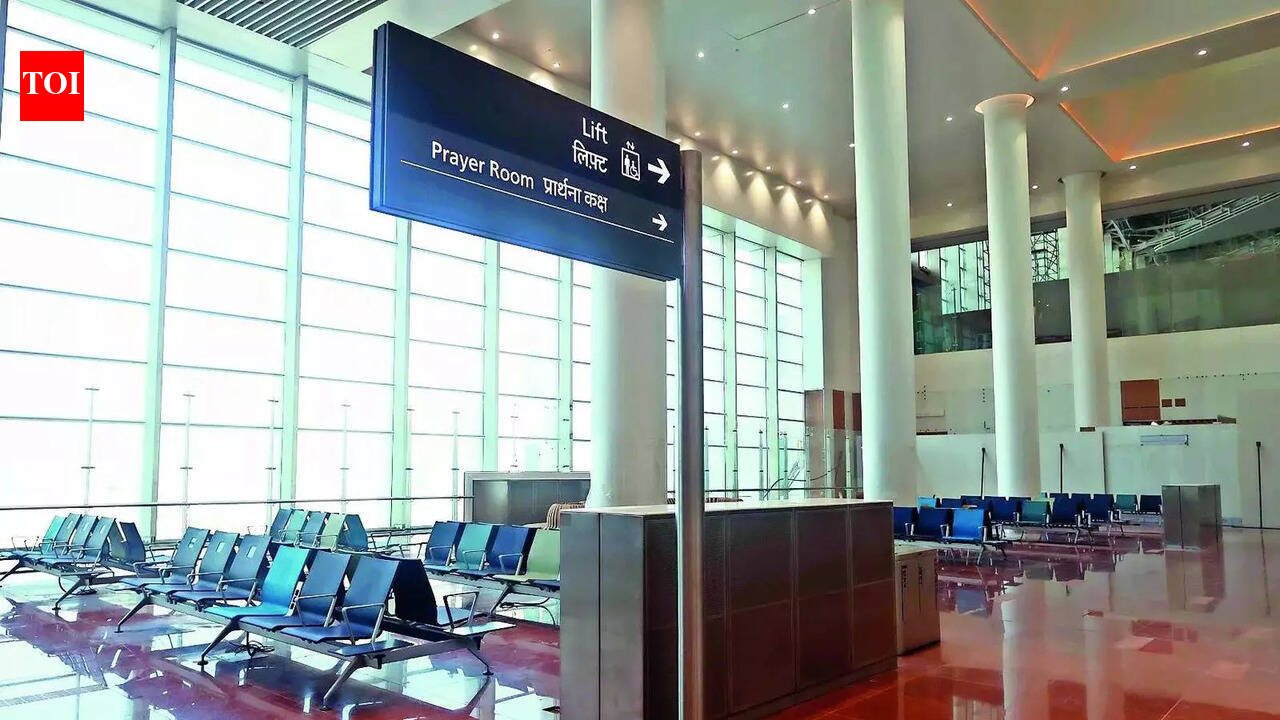
NEW DELHI: Prime Minister Narendra Modi will inaugurate the Noida international airport at Jewar next month, Uttar Pradesh chief minister Yogi Adityanath said during an interaction with the Indian diaspora in Singapore.Highlighting the state’s aviation infrastructure, Yogi said Uttar Pradesh currently has the highest number of airports in the country and that the upcoming airport at Jewar would be the largest in India.“Uttar Pradesh has the highest number of airports in India. PM Modi will inaugurate Noida International Airport, Jewar, next month. This is about to be the biggest airport in India,” he said.He added, “Uttar Pradesh has it and today Uttar Pradesh also has the maximum number of airports in India and next month, Noida International Airport Jewar of Uttar Pradesh, which is going to be the biggest airport of India, is also going to be inaugurated by the hands of Prime Minister Modi. It will emerge as the biggest centre not only for passengers but also for cargo. A very big centre is being built and we are taking it forward.”The Noidai international airport at Jewar is expected to serve as a major passenger and cargo hub for the region once operational.

The equity market came under heavy pressure on Monday, with investors remaining cautious amid escalating tensions between the United States and Iran, while the start of the roll-over period added to volatility.
The benchmark Pakistan Stock Exchange (PSX) KSE-100 Index closed at 167,691.08 points, falling 5,478.63 points or 3.16% from the previous session’s close of 173,169.71.
During intraday trading, the index touched a high of 174,336.85 before sliding to a low of 166,886.63, reflecting sharp swings throughout the session.
Market analysts attributed the decline to geopolitical uncertainty. Huzaifa Riaz, Director at Mayari Securities, said investors adopted a cautious stance due to rising US-Iran tensions and the absence of strong near-term market triggers.
US President Donald Trump recently stated he would decide within “10 to 15 days” whether to order strikes on Iran if nuclear negotiations fail.
Reports indicated that military options were presented to him, including potential actions targeting Iran’s leadership.
On the economic front, data from the State Bank of Pakistan (SBP) showed that profit and dividend repatriation by foreign investors rose to $1.677 billion during the first seven months of FY26, compared to $1.328 billion a year earlier.
Pakistan recorded a current account surplus of $121 million in January, supported by strong remittances and controlled imports.
However, the cumulative current account balance showed a deficit of $1.07 billion in 7MFY26, compared to a $564 million surplus in the same period last year.
Meanwhile, weekly inflation measured by the Sensitive Price Indicator (SPI) rose 1.16% for the week ended February 19, according to the Pakistan Bureau of Statistics (PBS), with year-on-year inflation recorded at 5.19%.
The previous session had seen the KSE-100 gain nearly 1,000 points, but Monday’s sharp sell-off reversed those gains as geopolitical concerns dominated investor sentiment.


Why Man United fan’s viral haircut challenge might not end anytime soon
Govt to return unclaimed EPFO deposits, expand scholarships for unorganised workers’ children – The Times of India

Robert Aramayo BAFTA acceptance speech moves Ethan Hawke to tears

-

 Entertainment6 days ago
Queen Camilla reveals her sister’s connection to Princess Diana
-

 Tech6 days ago
Rakuten Mobile proposal selected for Jaxa space strategy | Computer Weekly
-

 Politics6 days ago
Ramadan moon sighted in Saudi Arabia, other Gulf countries
-

 Entertainment6 days ago
Robert Duvall, known for his roles in "The Godfather" and "Apocalypse Now," dies at 95
-

 Politics6 days ago
Tarique Rahman Takes Oath as Bangladesh’s Prime Minister Following Decisive BNP Triumph
-
 Business6 days ago
Tax Saving FD: This Simple Investment Can Help You Earn And Save More
-

 Tech6 days ago
Businesses may be caught by government proposals to restrict VPN use | Computer Weekly
-

 Sports6 days ago
Usman Tariq backs Babar and Shaheen ahead of do-or-die Namibia clash