

Fashion
Gen X is now highest-spending generation – report


Published
August 28, 2025
Expect big changes in how consumers shop. Oh, and move over Baby Boomers, because Gen X-ers are now the biggest spenders.
This year, Generation X (born between 1965 and 1980) consumers will outspend Baby Boomers (1946-1964) for the first time globally, and will remain the biggest spenders until at least 2033, according to home delivery giant Parcelhero.
It says the passing of the baton “will mean big changes on the High Street, online and even to society in general”.
New figures revealed by the data analyst and consumer researcher NeilsenIQ show Gen X consumers will spend £11.28 trillion this year worldwide, eclipsing the Baby Boomers’ £10.02 trillion. In fact, Baby Boomers are also likely to be outspent by Millennials (born between 1981 and 1996) this year.
Millennials’ spending could reach £10.91 trillion, knocking Boomers into third place.
Parcelhero’s head of Consumer Research, David Jinks, said: “While the postwar Boomer generation has seen the values of their houses and pensions soar, leaving many comfortably off, many of them are now retired. That means Generation Xs… are now the UK’s biggest spenders.
“There are approximately 13.7 million people in the UK who belong to Generation X, making up about 20% of the total population. [They] are now the biggest earners and highest contributors of tax, despite being a smaller cohort than the 14.1 million Millennials.”
Jinks added: “The new dominance of Gen X is going to mean significant changes, both on the High Street and online, as their preferences start to lead many retail trends. Gen X-ers have been called ‘the latch key generation’ as many grew up with both their parents working and/or divorced, letting themselves in when they returned home from school. Consequently, Gen X-ers became one of the most self-reliant of recent generations, as well as the last to grow up without the support of mobile phones and the internet.
“Whereas Boomers still preferred to make their biggest spending commitments in-store, Gen X is equally happy to splash the cash online. They may be the last analogue generation but they are also enthusiastic digital adopters.
He also noted that brand loyalty is highest among Gen X consumers, “who respond best to transparency, product performance and customer reviews, rather than flashy advertising”, according to research by the customer engagement platform Salesfloor.
The report said Gen X are also the most omnichannel of all generations. They research carefully online, reading experts’ and consumers’ reviews, but are equally likely to make their final purchase online or in-store.
“It’s also a generation less likely to be swayed by the opinions or promotions of online influencers. Indeed, Gen X may be the last generation willing to pay significantly more for proven quality and reliability.”
Copyright © 2025 FashionNetwork.com All rights reserved.









The gross margin expanded to 47.3 per cent and diluted earnings per share more than doubled to $1.14 from $0.55.
Wolverine Worldwide has reported revenue of $1.874 billion in 2025, up 6.8 per cent, led by Active Group growth and strong Saucony performance.
Margins and earnings improved, while cash rose and debt declined.
Fourth-quarter revenue increased 4.6 per cent.
CEO Hufnagel highlighted brand momentum and transformation progress.
The company expects 2026 revenue growth with steady margins.
The company strengthened its balance sheet during the year, ending with cash of $206 million, up 35.6 per cent, and net debt reduced 16.2 per cent to $415 million. Inventory increased 10.7 per cent to $274 million, Wolverine Worldwide said in a press release.
The fourth quarter (Q4) revenue rose 4.6 per cent YoY to $517.5 million, supported by strong Active Group growth, particularly Saucony and Merrell. Active Group revenue increased 12.4 per cent to $372.7 million, while Work Group declined 11.3 per cent to $134 million. Gross margin improved to 47 per cent from 43.6 per cent, reflecting product cost savings, favourable mix and price increases, partly offset by higher US tariffs. Diluted earnings per share climbed to $0.38 from $0.28.
“We exceeded our expectations across all key metrics in the fourth quarter, finishing a solid year for the Company. Our biggest brands are growing around the world, direct-to-consumer (DTC) continues to improve, earnings per share increased meaningfully YoY, and I believe we’re finding our footing where we’ve underperformed,” said Chris Hufnagel, president and chief executive officer of Wolverine Worldwide. “I am pleased with our progress in transforming the company and encouraged by the momentum we have carried into 2026. We’re focused squarely on executing our brand-building model with pace and distinction—building awesome products, telling amazing stories, and driving the business each day.”
Looking ahead, Wolverine Worldwide expects fiscal 2026 revenue of $1.96-1.985 billion, representing growth of 4.6-5.9 per cent YoY. The company anticipates gross margin of about 46 per cent, operating margin of roughly 8.8 per cent and diluted earnings per share between $1.31 and $1.46, signalling continued but measured expansion as brand-driven strategy execution progresses, added the release.
Fibre2Fashion News Desk (SG)
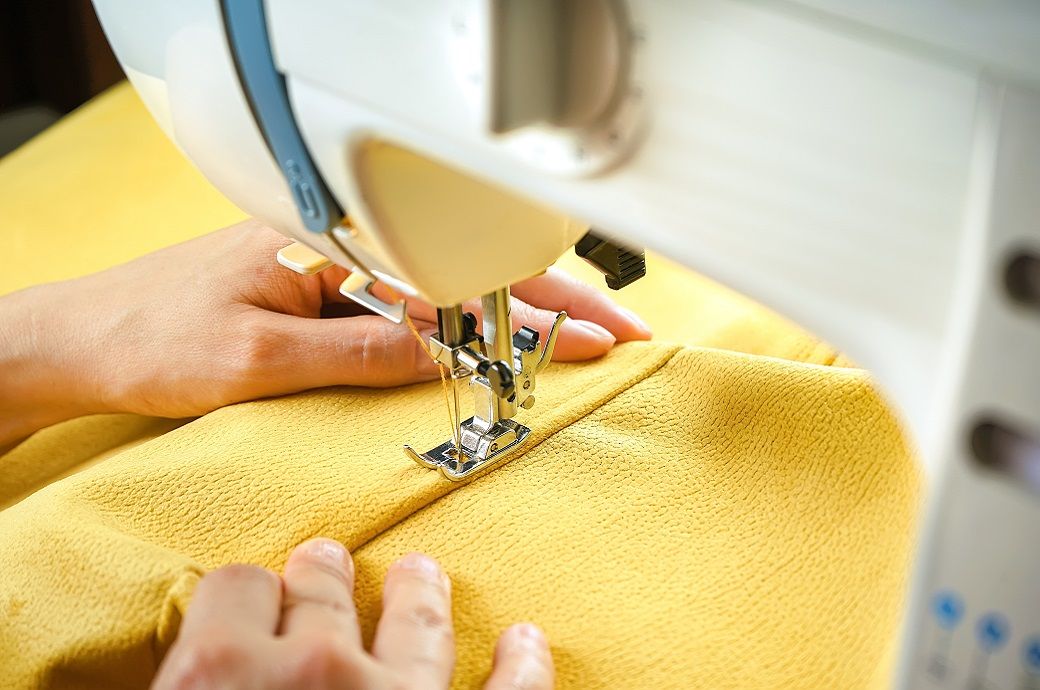
The report, ‘Breaking Point: Heat and the Garment Floor’, by Tata Institute of Social Sciences and HeatWatch, documents widespread heat stress and major gaps in workplace protections across factories in Tamil Nadu, Delhi-NCR and Gujarat. Based on surveys of 115 workers and 47 in-depth interviews, along with factory case studies, the study highlights how extreme heat combines with production pressure and gendered workplace dynamics to intensify risks.
Severe heat stress and weak protections plagued India’s garment factories, employing 45 million people, mostly women, a new report found.
It urged legal recognition of heat stress as an occupational risk, stronger labour rights, enforceable safety standards and infrastructure upgrades such as ventilation, cooling and medical access to protect workers’ health, productivity and incomes.
Survey findings reveal limited access to basic protections. Over 36 per cent of workers reported irregular or unclean drinking water, 78 per cent struggled to access toilets, and 80 per cent said their workstations lacked air movement. Nearly 88 per cent felt completely drained during peak summer months, while 87 per cent reported heat-related ailments such as headaches, dizziness and muscle cramps in the past year.
Women workers reported acute impacts, with 96.8 per cent experiencing burning sensations during urination and 92.6 per cent reporting menstrual disruptions linked to heat and production pressure.
Factory assessments across 15 surveyed units across different states showed 60 per cent lacked on-site medical facilities, 73.3 per cent had metal or asbestos roofs, and nearly half did not monitor temperature or humidity. In some cases, monitoring devices were installed only during buyer inspections.
The report warns that extreme heat is not merely seasonal discomfort but a structural labour and public health issue. It calls for legal recognition of heat stress as an occupational disease, expanded social protection, mandatory work-rest cycles, infrastructure upgrades and stronger worker participation in safety decisions.
With India projected to lose 35 million jobs and 4.5 per cent of GDP by 2030 due to heat stress, the study urges urgent structural reforms to protect one of the country’s largest employment sectors.
Fibre2Fashion News Desk (CG)
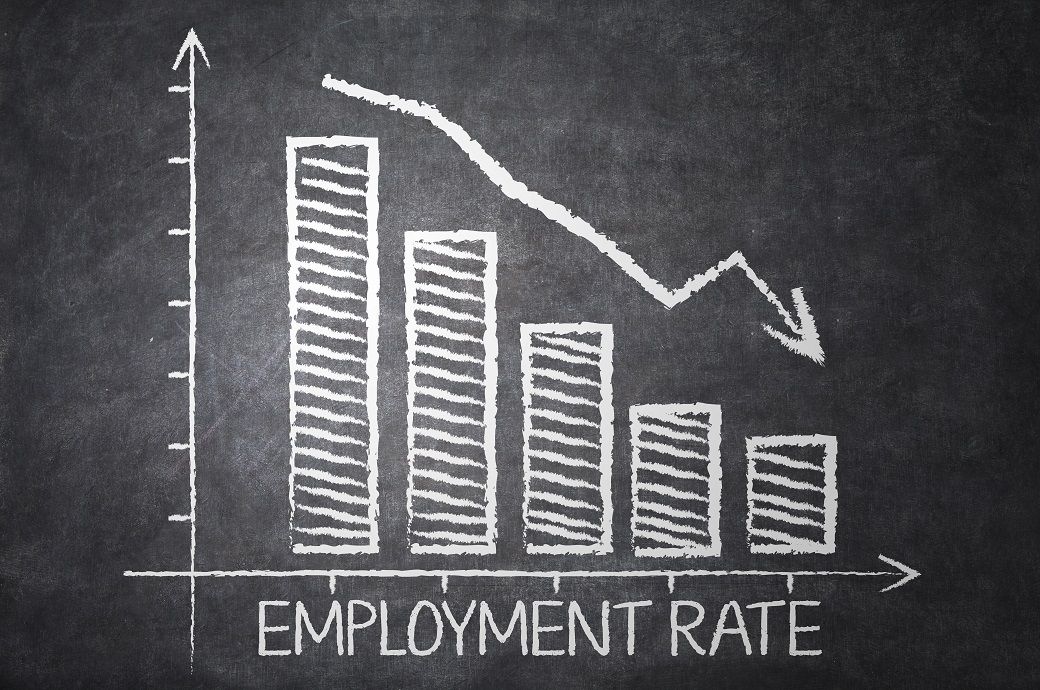
Without seasonal adjustment, this number dropped by 369,000, or 0.8 per cent MoM, with the decrease being a usual seasonal phenomenon.
The seasonally-adjusted number of employed in Germany fell by 14,000 month on month (MoM) in January to 45.5 million, provisional data show.
This number was down by 0.2 per cent YoY in the month.
Around 1.86 million were unemployed in January—a rise of 11.7 per cent YoY.
The unemployment rate rose to 4.2 per cent—a rise of 0.5 pp YoY.
The number of unemployed, at 1.75 million, rose by 0.4 per cent MoM.
In the period from May to December 2025, the number was down by an average of 12,000 MoM.
The number of employed in January 2026 was down by 88,000, or 0.2 per cent, year on year (YoY).
The downward trend in the YoY labour market figures, observed since August 2025, continued, a Destatis release said.
According to the Destatis Labour Force Survey, 1.86 million were unemployed in January 2026—an increase of 195,000, or 11.7 per cent, YoY. The unemployment rate rose to 4.2 per cent—an increase of 0.5 percentage point (pp) YoY.
Adjusted for seasonal and irregular effects, the number of unemployed in January stood at 1.75 million—a MoM increase of 6,000, or 0.4 per cent. The adjusted unemployment rate remained unchanged at 4 per cent.
Fibre2Fashion News Desk (DS)


US’ Wolverine Worldwide 2025 revenue rises 6.8% on Active Group growth

Brooklyn Beckham finally reacts to special birthday wish

Extreme heat threatens health, jobs in Indian textile sector: Report

India Us Trade Deal: Fresh look at India-US trade deal? May be ‘rebalanced’ if circumstances change, says Piyush Goyal – The Times of India

What are Iran’s ballistic missile capabilities?

Attock Cement’s acquisition approved | The Express Tribune

-
Business6 days ago
India Us Trade Deal: Fresh look at India-US trade deal? May be ‘rebalanced’ if circumstances change, says Piyush Goyal – The Times of India
-
 Politics7 days ago
What are Iran’s ballistic missile capabilities?
-
Business7 days ago
Attock Cement’s acquisition approved | The Express Tribune
-

 Politics1 week ago
US arrests ex-Air Force pilot for ‘training’ Chinese military
-
 Business1 week ago
Households set for lower energy bills amid price cap shake-up
-

 Fashion1 week ago
OECD GDP growth slows to 0.3% in Q4 amid mixed trends
-

 Fashion7 days ago
Policy easing drives Argentina’s garment import surge in 2025
-

 Fashion6 days ago
Texwin Spinning showcasing premium cotton yarn range at VIATT 2026