

Fashion
German shirt-making pioneer Eberhard Bezner turns 90


Published
December 30, 2025
Eberhard Bezner turns 90. The long-standing managing director and current co-owner of Olymp Bezner KG, and co-founder of the eponymous foundation in Bietigheim-Bissingen, Baden-Württemberg (Ludwigsburg district), will celebrate his milestone birthday on December 31. As a German fashion entrepreneur, Bezner brought numerous innovations in modern shirt-making to fruition, laying the foundations for the company’s outstanding market position today.
Eberhard Bezner was born on December 31, 1935 in Stuttgart, Württemberg, the only child of company founder Eugen Bezner and his wife, Wilma (née Klaus).
Bezner grew up in Bietigheim and Ingersheim in the district of Ludwigsburg. After completing his schooling in Bietigheim in 1950, he began a structured apprenticeship as a textiles and retail merchant with a textile wholesaler in Ludwigsburg.
Bezner then joined his parents’ company in September 1953, initially as a junior employee. Following the sudden death of his father, Eugen, in January 1960, he had to take responsibility for the fast-growing, medium-sized shirt manufacturer overnight, at just 24 years of age.
As managing partner, he devoted himself to this role for many decades, until the complete handover to his son and successor, Mark Bezner, who now successfully runs the internationally active family business in its third generation.
One of Eberhard Bezner’s key entrepreneurial achievements was recognising, as early as the late 1960s, the growing difficulties facing domestic textile production in Germany.
The demand for qualified production workers could scarcely be met at that time. In the face of near-full employment, the local textile and clothing industry, particularly in the Middle Neckar region, continuously lost workers to traditionally strong sectors such as mechanical engineering and the automotive industry.
As a result, alternatives for shirt production had to be found abroad- this was the only way to preserve the medium-sized company and safeguard jobs in Germany.
In addition to his many years as an entrepreneur, Eberhard Bezner also took on political responsibility at municipal level in his hometown of Bietigheim for decades. From 1968 to 2004, he was at times the longest-serving councillor in the CDU group on the Bietigheim-Bissingen city council and also served, on an honorary basis, as deputy to the then Lord Mayor, Manfred List (CDU).
For his numerous services to the community as a citizen, patron, sponsor, and elected official, he received the Badge of Honour of the state of Baden-Württemberg and also holds the Cross of Merit on ribbon of the Order of Merit of the Federal Republic of Germany. In October 2013, Eberhard Bezner was additionally honoured by the Baden-Baden Economic Forum for his life’s work as the doyen of the German shirt industry and as a shareholder of OLYMP.
Guided by the humanist maxim “It is far more blessed to give than to receive,” the committed philanthropist Eberhard Bezner has long been active in charitable humanitarian projects. Together with his son, Mark Bezner, and his daughter, Birgit Bezner-Fischer, he founded the Olymp Bezner Foundation in 2008 with a private endowment of one million euros, which has since worked worldwide to support the education, health, and welfare of children and young people.
In 2010, Eberhard Bezner opened the “EBERHARDS” hotel and restaurant, now run by his grandson Bastian Fischer, as a stylish address in Bietigheim-Bissingen. In a prime city-centre location- right on the River Enz, beside the Bietigheim railway viaduct, the town’s landmark, and opposite the municipal indoor swimming pool- EBERHARDS combines high-quality accommodation for business travellers and holidaymakers with culinary experiences for connoisseurs and lovers of regional cuisine.
Eberhard Bezner is also an avid music lover and the initiator of the “Jazz im OLYMP” festival, which has been held annually on the company premises since 2001 and has established itself as a cultural highlight in the Stuttgart region with its numerous international music groups, performers and bands. As a sports fan and sponsor, Bezner has also been a major supporter of local sports clubs in Bietigheim-Bissingen for decades.
This article is an automatic translation.
Click here to read the original article.
Copyright © 2025 FashionNetwork.com All rights reserved.








Current account excluding gold and energy indicated net deficit of $3.9 billion, while goods saw a deficit of $9.5 billion.
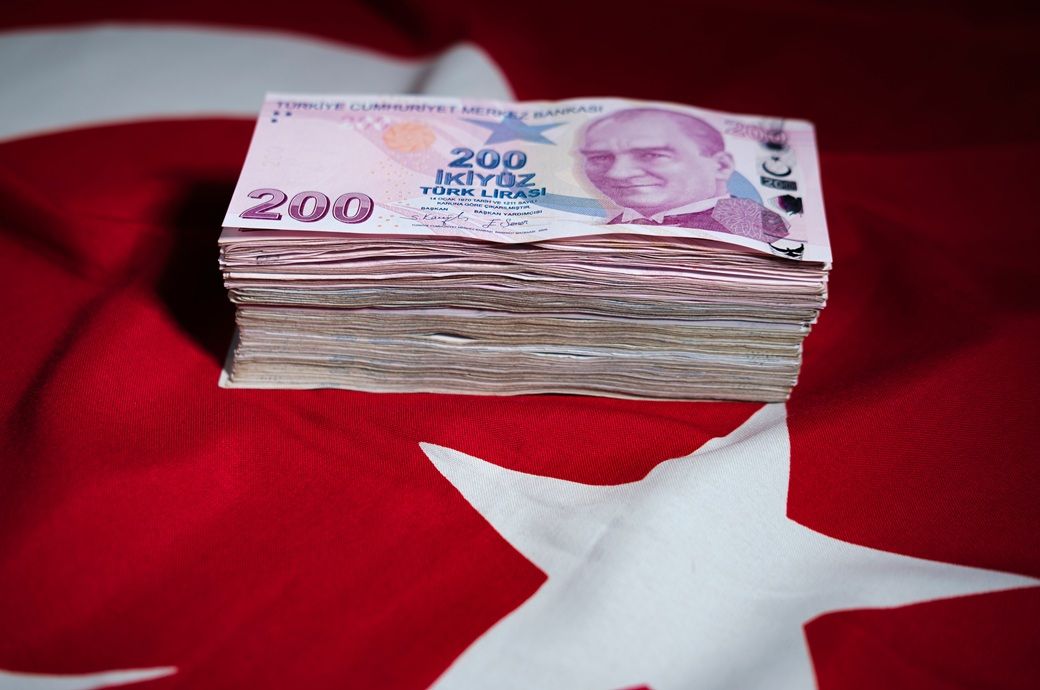
Turkiye recorded a current account deficit (CAD) of $9.6 billion in March, the country’s central bank said.
Treasury and Finance Minister Mehmet Simsek said the CAD is expected to widen this year, due to high energy and non-energy commodity prices.
Simsek said the deterioration is likely to remain temporary and manageable, thanks to stronger macroeconomic fundamentals and policy gains.
According to annualised data, current account deficit recorded as $39.7 billion (2.6 per cent of gross domestic product) in March, while the goods deficit recorded as $77.8 billion.
Simsek said the deterioration is likely to remain temporary and manageable thanks to stronger macroeconomic fundamentals and policy gains, domestic media outlets reported.
Turkiye is heavily reliant on imported energy, whose prices spiralled due to the Middle East conflict.
Simsek said elevated global commodity prices would put pressure on the external balance, but emphasised that the government’s economic programme had improved resilience against such shocks.
He said foreign direct investment (FDI) inflows totalled $1 billion in March, bringing annualised foreign direct investment to $12.6 billion.
The new investment incentive package under discussion in parliament now is expected to strengthen the country’s financing structure and support long-term capital inflows, he added.
Fibre2Fashion News Desk (DS)
During the first quarter of ****, the UK’s imports of textile fabrics eased down *.** to £*,*** million (~$*,*** million), against £*,*** million in January-March **** but slightly higher from £*,*** million in the fourth quarter of ****. Its imports of fibre were noted at £** million (~$***.** million) steady as £** million in Q*, **** but slightly lower than £** million in Q*, ****.
During the third month of this year, the country’s clothing imports declined *.** per cent to £*.*** billion (~$*.*** billion), compared with £*.*** billion in March ****. But the inbound shipment was slightly higher month on month compared with £*.*** billion in February ****.

Higher rents, utility bills and fuel prices are eating away at already thin profit margins, it found.
High inflation is cutting deep into Bangladesh consumer spending, with weak demand turning one of the biggest concerns for businesses, DCCI said.
Higher rents, utility bills and fuel prices are eating away at already thin profit margins.
DCCI’s economic position index revealed that consumers have sharply reduced spending as the cost of living continues to rise.
SMEs are feeling the pressure the most.
The chamber’s economic position index (EPI) revealed that consumers have sharply reduced spending as the cost of living continues to rise, putting pressure on retailers, transport operators and other service providers.
Small and medium enterprises (SMEs) are feeling the pressure the most as they struggle to manage higher operating costs without losing customers.
Businesses also cited difficulties in obtaining bank loans, while delays in licensing and other regulatory procedures are adding to costs.
The DCCI report identified a shortage of skilled workers, particularly in technical and customer service roles, as another challenge for the sector.
The country’s inflation rose to 9.04 per cent in April from 8.71 per cent in March, according to official statistics.
Fibre2Fashion News Desk (DS)


Turkiye’s current account deficit expected to widen in 2026: Minister

UK’s clothing imports fall 3% in Q1, sharply lower than Q4 2025

RBI sees no signs of excess credit risk, keeps countercyclical capital buffer inactive

-

 Entertainment6 days ago
Conan O’Brien hat tricks as Oscar host
-

 Tech1 week ago
Could Contact-Tracing Apps Help With the Hantavirus? Not Really
-

 Fashion5 days ago
Italy’s Zegna Group’s Q1 growth boosted by strong organic performance
-

 Sports1 week ago
Bobby Cox, legendary Atlanta Braves manager who led 1995 World Series champions, dead at 84
-

 Entertainment1 week ago
Martin Short: Facing tragedy with joy
-

 Entertainment1 week ago
Tom Brady gets back at Kevin Hart during Netflix roast
-

 Sports1 week ago
Jacob Fatu unleashes vicious assault on Roman Reigns after World Heavyweight Championship loss at WWE Backlash
-

 Entertainment1 week ago
Martha Stewart: How to make an omelet