

Fashion
Germany’s Birkenstock Q1 revenue rises 11.1% on strong holiday demand

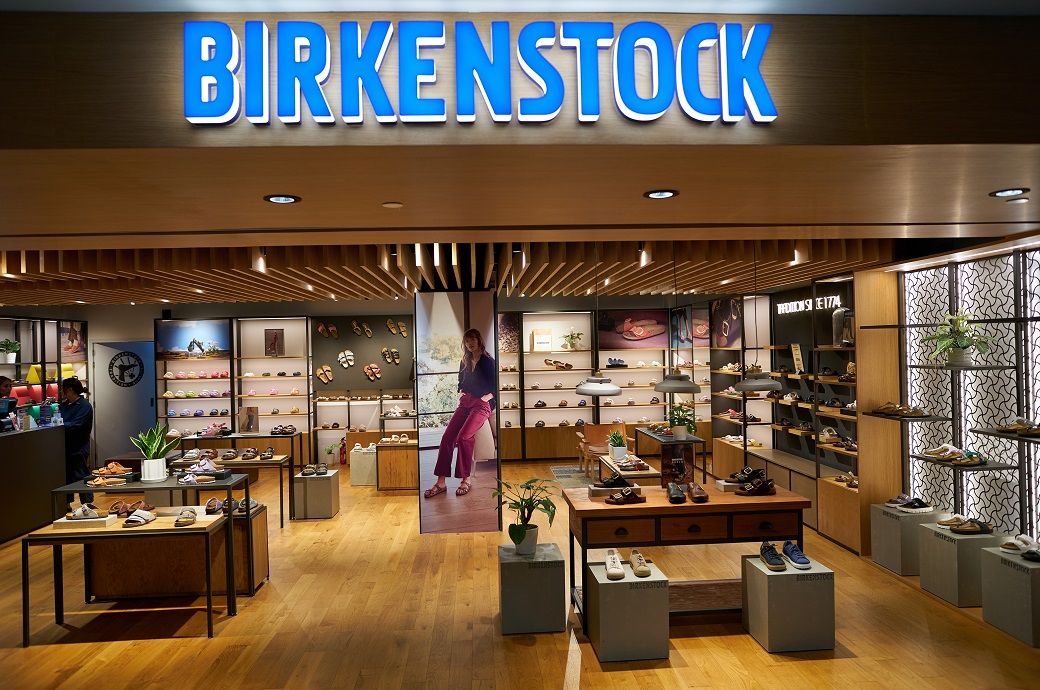
Regional performance remained broad-based, with double-digit constant currency growth across all segments. In the Americas, revenue increased 5 per cent on a reported basis and 14 per cent in constant currency, led by business to business (B2B) expansion and improved sell-through at key wholesale partners, including youth-focused and sports specialty retailers. The company operated 15 own retail stores in the region after opening one new store during the quarter.
Birkenstock has reported revenue of €402 million (~$478.4 million) in Q1 FY26, up 11.1 per cent YoY and 17.8 per cent in constant currency, exceeding guidance.
Growth was broad-based across regions and channels, led by strong holiday demand.
Net profit surged 151 per cent to €51 million (~$60.5 million).
The company reaffirmed its three-year growth and profitability targets.
Europe, the Middle East and Africa (EMEA) posted revenue growth of 16 per cent on a reported basis and 17 per cent in constant currency, again led by the B2B channel. Three new own retail stores were added, taking the regional total to 45 stores by quarter-end, Birkenstock said in a press release.
Asia-Pacific (APAC) delivered the strongest performance, with revenue rising 28 per cent on a reported basis and 37 per cent in constant currency. Direct-to-consumer (DTC) growth outpaced B2B by more than two times in the region, supported by strength in both online and physical retail. Five new stores were opened, bringing the APAC store count to 46.
By channel, B2B revenue grew 18 per cent on a reported basis and 24 per cent in constant currency, primarily driven by growth within existing doors through expanded assortments and strong full-price sell-through. DTC revenue increased 4 per cent on a reported basis and 12 per cent in constant currency. During the quarter, Birkenstock added nine new own retail stores globally, bringing the total to 106 as of December 31, 2025.
Profitability metrics reflected both operational strength and external cost pressures. Gross profit margin declined 460 basis points to 55.7 per cent from 60.3 per cent in the prior-year period. The decrease was mainly attributable to unfavourable currency translation (220 basis points), incremental US tariffs (130 basis points), channel mix and a 170 basis points (bps) impact from the mark-up to cost of sales linked to the acquisition of Birkenstock Australia Pty Ltd, completed on October 23, 2025. These pressures were partly offset by sales price adjustments net of inflation and improved capacity absorption.
Adjusted gross profit margin stood at 57.4 per cent, down 290 basis points YoY, reflecting similar currency and tariff headwinds, partially mitigated by pricing actions and operational efficiencies.
Net profit surged 151 per cent YoY to €51 million (~$60.5 million), while earnings per share (EPS) increased 157 per cent to €0.27. Adjusted net profit rose 47 per cent and adjusted EPS climbed 50 per cent YoY.
Adjusted EBITDA grew 4 per cent to €106 million, with an adjusted EBITDA margin of 26.5 per cent, down 170 basis points from 28.2 per cent in the prior-year quarter. The margin contraction was largely due to currency effects (230 basis points) and incremental US tariffs (130 basis points), partly offset by pricing measures and better production absorption.
To support sustained demand, Birkenstock continued to invest in production capacity, spending approximately €38 million in capital expenditure during the quarter. This included around €18 million for the acquisition of a new site in Wittichenau.
The company ended the quarter with cash and cash equivalents of €229 million. Net leverage stood at 1.7x as of December 31, 2025, compared with 1.5x on September 30, 2025, reflecting typical seasonal cash patterns.
Oliver Reichert, CEO and member of the board of directors of the company, said: “Our results for the first quarter of fiscal 2026 show the continued strong demand for our brand throughout the important holiday season. As we discussed during our Capital Markets Day in New York on January 28th, we believe we are a one-of-a-kind purpose-driven brand with a huge runway for growth ahead. Our unique business model is designed for resilience. We presented our three-year plan which calls for 13-15 per cent revenue growth in constant currency and 30 per cent EBITDA margin. Our vertically integrated supply chain means we are capacity constrained by design. We will steer our business by geography, channel and product to maximise profit per pair and maintain strong brand equity.”
Fibre2Fashion News Desk (SG)








Sarbananda Sonowal, Union Minister of Ports, Shipping and Waterways, said, “The record cargo handling of over 915 million tonnes by our major ports is a testament to the government’s unwavering commitment to strengthening India’s maritime sector. We are building world-class port infrastructure, improving efficiency, and enabling seamless logistics to support India’s growing economy.”
Among the ports, Deendayal Port Authority led with 160.11 MT, followed by Paradip Port Authority at 156.45 MT and Jawaharlal Nehru Port Authority (JNPA) at 102.01 MT. Other major contributors included Visakhapatnam, Mumbai, Chennai, and New Mangalore ports. In terms of growth, Mormugao Port Authority recorded the highest increase at 15.91 per cent, followed by Kolkata Dock System at 14.28 per cent and JNPA at 10.74 per cent, the ministry said in a press release.
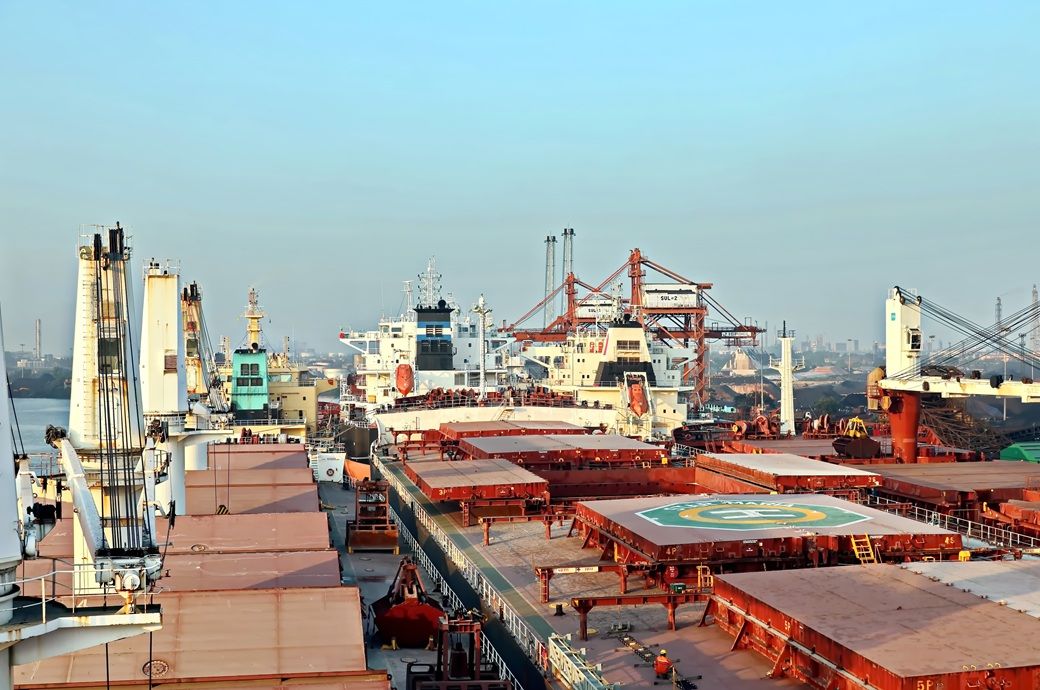
India’s major ports handled a record 915.17 MT of cargo in FY 2025-26, exceeding the 904 MT target and growing 7.06 per cent YoY, according to the Ministry of Ports, Shipping and Waterways.
The rise was driven by infrastructure upgrades, digitalisation, and improved logistics, with Deendayal, Paradip and JNPA leading volumes.
Strong gains were seen in Mormugao and Kolkata ports.
The growth has been supported by capacity expansion, enhanced multimodal connectivity, digitalisation initiatives, and increased handling of commodities such as coal, crude oil, containers, fertilisers, and petroleum, oil, and lubricants (POL). Improved turnaround time and ease of doing business have also contributed to higher cargo volumes.
The ministry continues to focus on port-led development, logistics integration, and sustainability under the Maritime Amrit Kaal Vision 2047, aiming to strengthen India’s position in global trade.
Fibre2Fashion News Desk (JP)

Turkiye’s apparel exports fell 2.88 per cent YoY to $2.599 billion in January-February 2026, pressured by weak EU demand, which accounts for nearly 70 per cent of shipments.
Knitted exports dipped 1.6 per cent, while woven declined 4.6 per cent.
Rising costs and currency volatility continue to erode competitiveness, extending a three-year export decline trend.
Source link
During a session conducted jointly by the Tiruppur Exporters’ Association (TEA) and Adani Total Gas, K. M. Subramanian, President, TEA, highlighted that gas connectivity will become an essential requirement for industries in the coming years, adding that Adani Total Gas is prepared to accelerate PNG rollout in Tiruppur.
Tiruppur’s textile industry is accelerating its shift towards PNG as LPG shortages and rising energy costs disrupt operations.
With production costs up nearly 15 per cent and ESG compliance tightening, PNG is emerging as a reliable and cleaner alternative, helping exporters ensure supply stability, meet global standards, and sustain competitiveness.
He also pointed to upcoming Digital Product Passport (DPP) regulations which will mandate stricter digital monitoring and sustainability compliance across production processes under European ESG norms.
Kumar Duraiswami, Joint Secretary, TEA underscored PNG as a strategic necessity rather than a temporary alternative. He stated that the adoption of PNG is not merely a response to any temporary geopolitical situation, but an essential step as the global industry moves towards sustainable production.
He further noted that exporters to Europe will be required to comply with ESG norms within the next two years, necessitating a gradual shift away from fuels such as LPG and coal.
According to a TEA press release, industry concerns over rising costs were also flagged, with Subramanian noting that energy shortages have already pushed production costs up by nearly 15 per cent, creating operational challenges. He stressed the need for a stable and reliable gas supply to sustain Tiruppur’s large manufacturing ecosystem and urged faster implementation of PNG infrastructure.
Providing operational insights, K. R. Venkatesan, Cluster Head at Adani Total Gas, outlined PNG connectivity availability, registration procedures, and industrial pricing, while Karthik B, Joint Marketing Manager, elaborated on practical applications and addressed industry queries during the session.
Tiruppur’s move towards PNG reflects a broader transition in India’s textile sector, where cleaner energy adoption is becoming central to ensuring supply security, cost stability, and compliance with evolving global sustainability standards.
Fibre2Fashion News Desk (KUL)


Europe Gets Serious About Age Verification Online

Supreme Court: No personal oral hearing needed before labelling bank accounts as fraud: SC | India News – The Times of India

Pakistan commits to IMF on civil servants’ asset disclosures, NAB autonomy

-
Uncategorized5 days ago
[CinePlex360] Please moderate: “Trump signals p
-
Uncategorized1 week ago
[CinePlex360] Please moderate: “Further tariff
-

 Tech3 days ago
Our Favorite iPad Is $50 Off
-

 Entertainment4 days ago
Joe Jonas shares candid glimpse into parenthood with Sophie Turner
-
 Fashion6 days ago
China’s Anta Sports posts record $11.62 bn revenue in 2025
-
 Business6 days ago
UPI transactions hit record Rs 29.53 lakh crore in March; volumes cross 22.6 billion – The Times of India
-

 Politics1 week ago
Trump considers asking Arab allies to help to pay for Iran war
-

 Sports1 week ago
Fakhar Zaman denies ball-tampering charge in PSL match | The Express Tribune