

Tech
Giant, Spooky Animatronics Are 75 Percent Off at the Home Depot


I know you’ve seen it. The glowing eyes. The gangly frame that should not be able to stand, propped by rods unseen in the dark.
It is Skelly, the Home Depot skeleton—the most fashionable Home Depot product of probably the past decade. If you live in America, this skeleton presides over a yard near you. And newly this year, a smaller, 6.5-foot “Ultra Skelly” is outfitted with motion sensors and motors to make life truly weird—and also act as a strange alarm system against package thieves and hungry opossums.
Anyway, it’s usually well north of $200. But because Halloween is pretty much already happening, Skelly and its entire skeleton brood of giant cat and dog are all 75 percent off.
Which, finally, is a price I’m willing to pay. I have secretly coveted this skeleton and its kin, the comically grim watchmen of American October. But I, like my father before me and his father before him, am a cheapskate about all things but food and drink, and will talk myself out of anything that’s not a) edible b) potable or c) verifiably “a deal.”
Well, here I am, world. This is a deal. Ultra Skelly is $70. The sitting Skelly dog is $63, not $249. The 5-foot-long Skelly cat is a mere $50. Beware the Skelly cat, my friend! The eyes that light, the claws that do nothing in particular!
Availability is, let’s say, scarce. Skelly is already out of stock for delivery from The Home Depot, at least in my zip code: Just the dog and cat can speed their way through the night to join you before Halloween.
Courtesy of Home Depot











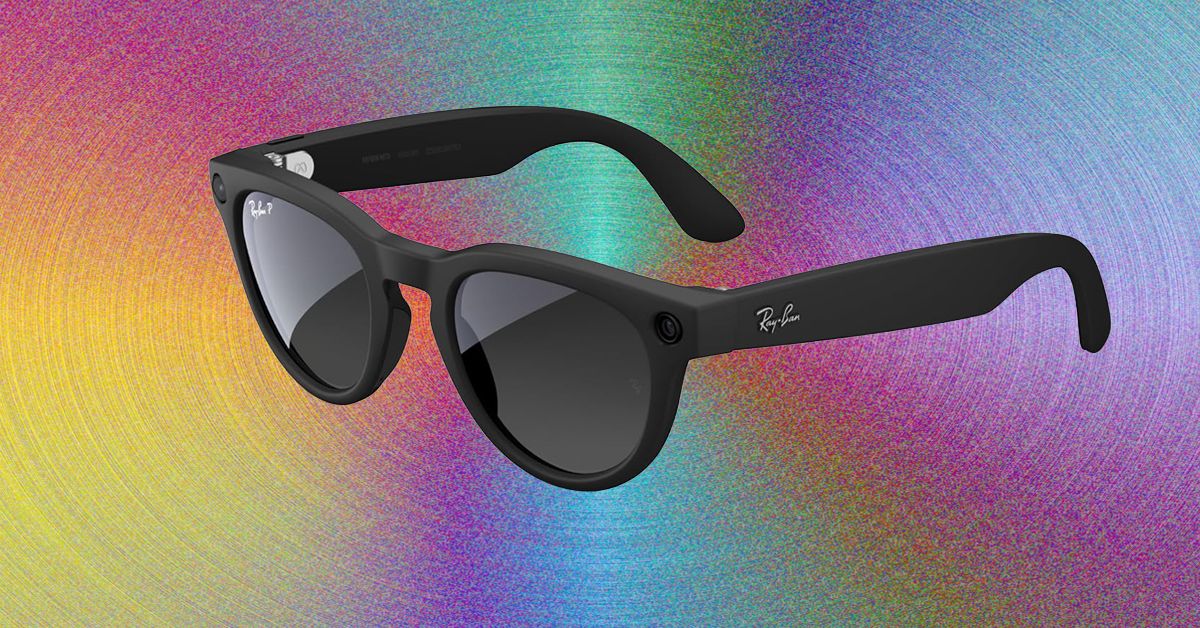
Every time I’ve written about Meta’s AI-enabled glasses, I invariably get asked these questions: Why do you even want these? Why do you want smart glasses that can play music or misidentify native flora in a weirdly cheery voice? I am a lifelong Ray-Ban Wayfarer wearer, and I’m also WIRED’s resident Meta wearer. I grab a pair of Meta glasses whenever I leave the house because I like being able to use one device instead of two or three on a walk. With Meta glasses, I can wear sunglasses and workout headphones in one!
Meta sold more than 7 million pairs in 2025. Take a look at any major outdoor or sporting event, and you’ll see more than a few people wearing these to record snippets for Instagram or TikTok. Meta’s partnership with EssilorLuxottica has made smart glasses accessible, stylish, and useful and is undoubtedly the reason why Google, and now Apple, are trying to horn in on the market. After the notable flop that is the Apple Vision Pro, Apple is recalibrating its face-wearable strategy, moving away from augmented reality (AR) toward simpler, display-less, and hopefully good-looking glasses.
That’s not to say that you shouldn’t be careful how you use these glasses. Meta doesn’t have the greatest track record on privacy, and the company has continued to push forward with policies that are questionable at best. Even if you’re not concerned that face recognition will allow Meta to target immigrants or enable stalkers to find their victims, at the very least, people really do not like the idea that you could start recording them at any moment.
Probably the biggest hurdle to wearing Meta glasses is that even doing so seems like a gross violation of the social contract. After all, these are Mark Zuckerberg’s “pervert glasses.” When I pop these on my head, I’ve had friends (and my spouse) recoil and say, “I have apps to warn me away from people like you.” The best part, though, is that Oakley and Ray-Ban already make really great sunglasses. Even if the battery runs out or you don’t use Meta AI at all, these are stellar at shading your eyes from the sun.
Anyway, if you decide to try them, here’s what you should get. If you do chicken out, check out our buying guides to the Best Smart Glasses or the Best Workout Headphones for more.
Table of Contents
Best Overall
-
Photograph: Boone Ashworth
-
%2520Shiny%2520Black%2520Green%2520Lenses.png)
Ray-Ban
Meta Glasses (Gen 2)
Last year, Meta upgraded the original Meta Ray-Ban Wayfarers that became a smash hit. These are Meta’s entry-level glasses, and they come in a variety of lens styles. You can order them with clear lenses, prescription lenses, transition lenses, or the OG sunglass lenses, as well as in a variety of fits, including standard, large, or high-bridge frames. Improvements to this generation include an upgrade to a 12-MP camera and up to eight hours of battery life; writer Boone Ashworth’s testing clocked in at five to six hours.
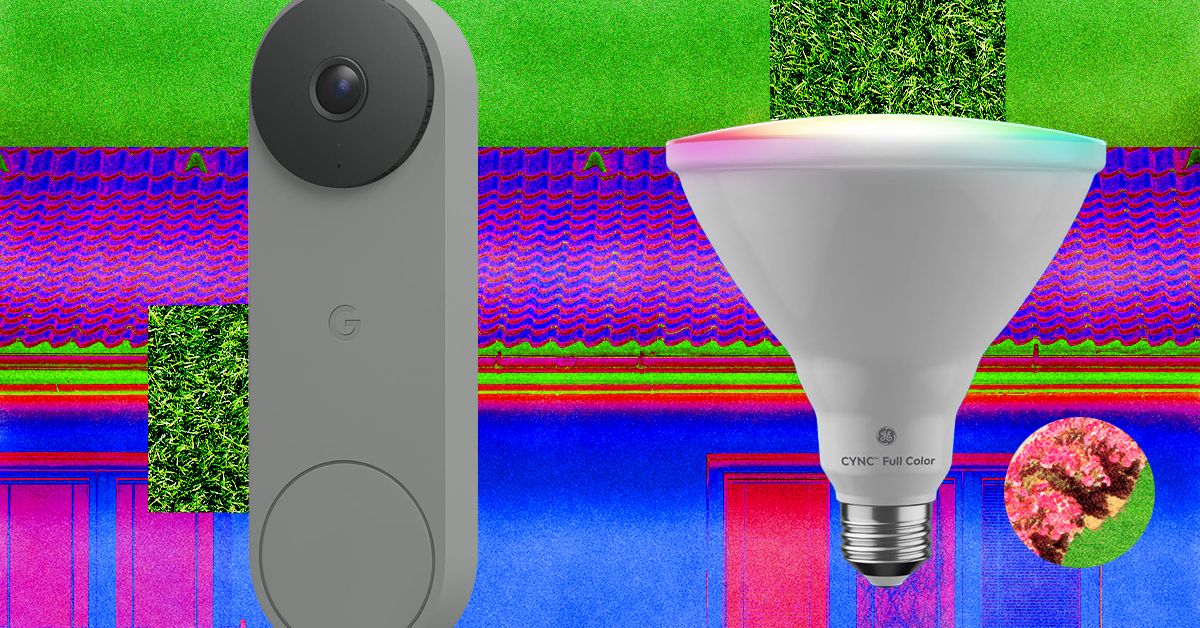
I tried the battery version, which does require you recharge it every couple of weeks, but the wired-in version is the top recommendation on our guide to the Best Video Doorbells.
A Better Birdhouse
I had a new-to-me problem this spring: bird invasion. A little bird made a nest in my front-door wreath without us noticing. One evening, my sister opened the door, and the bird flew out of the nest and straight into our house. After a 30-minute battle to get it outside again (and keep my cat from eating it), it wasn’t until we saw the bird fly off the door again the next day that we realized it was calling our home its home, too.
If this is a common problem at your house, our resident bird-gear tester Kat Merck has a solution: a smart nesting box. Birdfy makes a few different smart bird feeders we like for bird-watching, and the Nest Duo is a birdhouse that lets you watch the birds while they nest inside of it. It’s a slim, attractive box that will add to your front yard’s style while also packing two solar-powered cameras (one facing the entrance, one focused inside) so you can bird-watch from multiple angles. It comes with different hole sizes to appeal to different species, metal predator guards to prevent chewing around the hole, and a remote control to reset or recharge the camera without disturbing your feathered neighbors.
Stylish Smart Lights

Govee
Outdoor Clear Bulb String Lights
I’ve liked Govee’s smart outdoor string lights before, usually for my holiday decor, and have previously recommended something similar with a bistro-light-like look that happened to be smart. These clear bulb string lights are part of Govee’s current lineup and have a contemporary twist with a triangle in the center instead of the wire filament. These are a fun option for outdoor lights you can enjoy on warm nights, and they can do every color and shade of white without looking as bulky as permanent outdoor lights. (Added bonus, these lights are also Matter compatible!)
Fresh Bulbs

Cync
Smart LED Light Bulb, PAR38
If you have light fixtures you want to remote-control, add an outdoor smart bulb. There are tons to choose from, and you can usually find one from any brand you already have at home. The only downside is that outdoor-rated smart bulbs are usually 4.75-inch-diameter PAR38-style bulbs, so they’re best for downward-facing floodlights on your porch or balcony. They’ll likely be too big to fit in a wall fixture as a replacement for a normal-sized bulb. Don’t just grab any smart bulb—not all are outdoor-rated. Check for mentions of outdoor use and waterproof ratings to make sure they’re safe to use. I’m a big fan of Cync bulbs, and the brand has an outdoor version of the Cync Full Color bulbs I like to use indoors. You’ll be able to add fun colors as well as shades of white, so you can turn the porch a spooky orange or red for Halloween, pink for Valentine’s Day, or the colors of your favorite sports team on game day.
Remote-Controlled Garage
If your garage is the centerpiece of your home’s curb appeal, you can control it as easily as a smart door by adding a smart controller. You can do two different styles: I have the Chamberlain MyQ professionally installed smart garage opener, which means the device that controls my garage has these smarts built into it (plus a camera, but I find it doesn’t work great with how far the device is from my Wi-Fi router), or you can get a smart garage controller that can add smart features onto an existing garage door. Both let you check whether the garage is open or closed and operate it remotely, and you can add a video keypad that doubles as a video doorbell and can let you open or close the garage without your phone.
Smart Shades
The front of my home faces west, so it’s absolutely baking at the end of the day. What I need to add are some of our favorite smart shades to automate closing the shades on that side of the house at the right time of day. These also give your home a nice, cohesive look and immediate, controllable privacy from the outside world. WIRED reviewer Simon Hill recommends the SmartWings shades as his top picks, and Lutron’s Caseta shades if you’re looking for a more upgraded look.
Invisible Swaps
Looking to add some smarts without touching your existing setup? These switch-ups can make your front door and yard smart without being visible.
Power up with unlimited access to WIRED. Get best-in-class reporting and exclusive subscriber content that’s too important to ignore. Subscribe Today.

April might be springtime in the northern hemisphere, but some of the best streaming services seem to think it’s the perfect time for a dry run of spooky season. How else to explain the arrival of some exquisitely dark slices of horror, like 28 Days Later: The Bone Temple arriving on Netflix, Weapons coming to Prime Video, or Shelby Oaks landing on Hulu? If you prefer your off-season Halloween viewing to be in the vein of campy B movies rather than serious scares though, horror specialist Shudder has you covered with Deathstalker, a gloriously cheesy reboot of a near-forgotten ’80s series.
Reality is often scarier than fiction though, as shown by Louis Theroux’s Inside the Manosphere—his first documentary film with Netflix, exploring the dark side of social media and the world of toxic male influencers. (Be sure to read our interview with the filmmaker.) And if the thought of that leaves you wanting something a bit more wholesome to watch, thankfully Zootopia 2 has popped up on Disney+—and there’s even a rabbit in that, for some appropriately springtime imagery.
Here are WIRED’s picks of the best movies to watch right now.
28 Years Later: The Bone Temple
The fourth film in the long-running postapocalyptic horror series switches focus from rampaging rage zombies to a more dangerous threat: humans. OK, OK, “people are the real monsters” isn’t a hot take for the genre, but The Bone Temple offers a unique twist, with 28 Years Later survivor Spike (Alfie Williams) trapped in the company of a murderous gang led by deranged satanist “Sir Lord” Jimmy Crystal (Sinners’ Jack O’Connell). The villain is modeled on disgraced British TV presenter Jimmy Savile, whose sexual abuse crimes hadn’t been revealed by the time of the initial outbreak in 28 Days Later, adding a dash of real-world terror.
As the group stalks what remains of the English countryside, Spike’s only hope might be Dr. Ian Kelson (Ralph Fiennes), whose experiments on curing alpha zombie Samson (Chi Lewis-Parry) might hold humanity’s last hope. Although best watched back to back with its predecessor for the full, horrifying picture, director Nia DaCosta’s chapter stands on its own—and earns bonus points for one of the best uses of Iron Maiden’s “Number of the Beast” in film history.
Louis Theroux: Inside the Manosphere
It’s the silence that does the trick; British documentarian Louis Theroux always knows when not to speak and instead let his subject expose themselves for the world to see. It’s a masterful technique whether Theroux is investigating the Westboro Baptist Church or UFO conspiracy theorists, but it is rarely put to better use than in his latest outing: exploring the online “manosphere” subculture of self-appointed “alphas” offering toxic advice on how to be a “real man.” Speaking with key figures in the loosely defined movement, Theroux’s mild-mannered approach often leaves them to do most of the talking, exposing shockingly misogynistic and extremist views. Even more distressing? The quiet revelation that for many of them their performative masculinity is all just one big grift, and how they rationalize the harm they cause in pursuit of a payout. Depressing but compelling viewing—not all men, but definitely all of these men.
Crime 101
Jewel thief Mike (Chris Hemsworth) is the best in the business, a meticulous planner who pulls off his heists without leaving a shred of evidence—much to the consternation of LAPD detective Lou Lubesnick (Mark Ruffalo), who doesn’t even know exactly who he’s hunting for a string of thefts. Elsewhere in the City of Angels, Sharon (Halle Berry) is an underappreciated VP at an insurance firm, frustrated at being passed over for promotion for years. She’s the perfect insider to help Mike orchestrate an elaborate $11 million diamond heist. But as Lou uncovers evidence connecting to Mike’s past, and the chaotic, violent biker Ormon (Barry Keoghan) aims to take the score for himself, even the most masterful planning can’t prevent everything spiraling dangerously out of control.


NFL star George Kittle intercepts NBA player Tyrese Haliburton’s beer WrestleMania 42

Cole Sprouse reacts to brother Dylan confronting house intruder

2026 NFL draft: Louis Riddick’s favorite prospects, sleepers

The case for Man United’s Fernandes as Premier League’s best

Palace left in shock as Prince William cancels grand ceremony

100% road tax waiver for electric cars, new rules for 2, 3 and 4 wheelers – what Delhi govt’s draft EV policy says – The Times of India

-
 Sports6 days ago
The case for Man United’s Fernandes as Premier League’s best
-
 Entertainment6 days ago
Palace left in shock as Prince William cancels grand ceremony
-
Business1 week ago
100% road tax waiver for electric cars, new rules for 2, 3 and 4 wheelers – what Delhi govt’s draft EV policy says – The Times of India
-

 Entertainment1 week ago
Dua Lipa hits major career high ahead of wedding with Callum Turner
-
 Business6 days ago
UK could adopt EU single market rules under new legislation
-
 Business1 week ago
The FAA wants gamers to apply for air traffic control jobs
-

 Fashion6 days ago
Energy emerges as biggest cost driver in textile margins
-

 Sports1 week ago
Lamar Jackson hits back at critics with faithful message on social media