

Fashion
Giorgio Armani: Giuseppe Marsocci appointed Chief Executive Officer


Published
October 16, 2025
Giorgio Armani has always valued executives who truly ’embrace’ a company’s vision and do not depart after just two or three years to chase the next highest bidder- each time with a lavish severance. The appointment, announced a short while ago, of Giuseppe Marsocci as CEO of the Armani Group with immediate effect (together with his simultaneous entry to its Board of Directors) reflects this philosophy. As confirmed in a statement by the Board of Directors of Giorgio Armani SpA, Marsocci brings more than 35 years of international experience in the fashion and luxury sector, 23 of them within the Armani Group, in roles of increasing responsibility in Milan and abroad; most notably in New York, where he served as CEO of the Americas.
Over the past six years, from 2019 to the present, the Piedmontese executive has reported directly to Giorgio Armani, serving as the group’s deputy general manager and global chief commercial officer. He has sat on numerous corporate boards and served as chairman of Giorgio Armani Retail Srl, as well as CEO and/or president of various overseas subsidiaries of the group.
Proposed unanimously by the Armani Foundation, Marsocci will report to the board chaired by Leo Dell’Orco, on which Silvana Armani will serve as vice-chair. In the coming weeks, the company notes, the Board of Directors of Giorgio Armani SpA “will take its final shape upon completion of probate procedures and execution of the will, but it was decided to move ahead now by appointing the CEO in advance, to inaugurate the new course without any interruption in the management of the company,” the fashion group’s statement reads.
Leo Dell’Orco, chairman of the company’s board, highlighted Marsocci’s key qualities in the statement: “His international professional experience, deep knowledge of the sector and of the company, discretion, loyalty, and team spirit, together with his closeness in recent years to Mr Armani, make Giuseppe the most natural choice to ensure continuity along the path mapped out, built and perpetuated for 50 years by the founder,” in keeping with the company’s founding principles and the enduring direction set by the Piacenza-born designer, who passed away earlier this month.
Giuseppe Marsocci expressed his gratitude “for the trust placed in me. This is a project of extraordinary importance, focused on continuity and on enhancing one of the world’s most prestigious Made in Italy brands which, for clients and the market, has transcended the status of a simple label to rightfully become a lifestyle brand.”
‘The objective is demanding,” continued the new CEO, “all the more so in a luxury market engaged in deep self-reflection, but it is achievable thanks to the fundamental contribution of an outstanding network of clients, suppliers, partners, and passionate colleagues around the world, particularly in Milan, many of whom have been close to Mr Armani for many years. Together we will do everything to perpetuate his model of enterprise and his idea of beauty, and we will carry it forward with consistency and sensitivity, taking into account the values and expectations of a changing world.”
Giuseppe Marsocci, a 61-year-old from Turin with a degree in Economics and Business from the University of Turin, has prior experience in sales, marketing and brand management at the Turin-based GFT Group, a licensee of Valentino, Dior, Ungaro, Stone Island and Armani. Other notable roles include five years at Fila Sport (HDP Group) as head of international business development.
Marsocci joined the Armani Group in 2003, taking on roles of increasing responsibility both at the Milan headquarters and in the group’s overseas subsidiaries. These included: commercial director of Armani Collezioni; CEO of the Swiss subsidiary (formerly the logistics and customer service hub for all overseas markets); global director for diffusion/wholesale lines; and, for more than ten years in the New York office, first as president of Trimil US, the Zegna/Armani joint venture, before serving as CEO of the Americas from 2014 to 2019.
This article is an automatic translation.
Click here to read the original article.
Copyright © 2025 FashionNetwork.com All rights reserved.









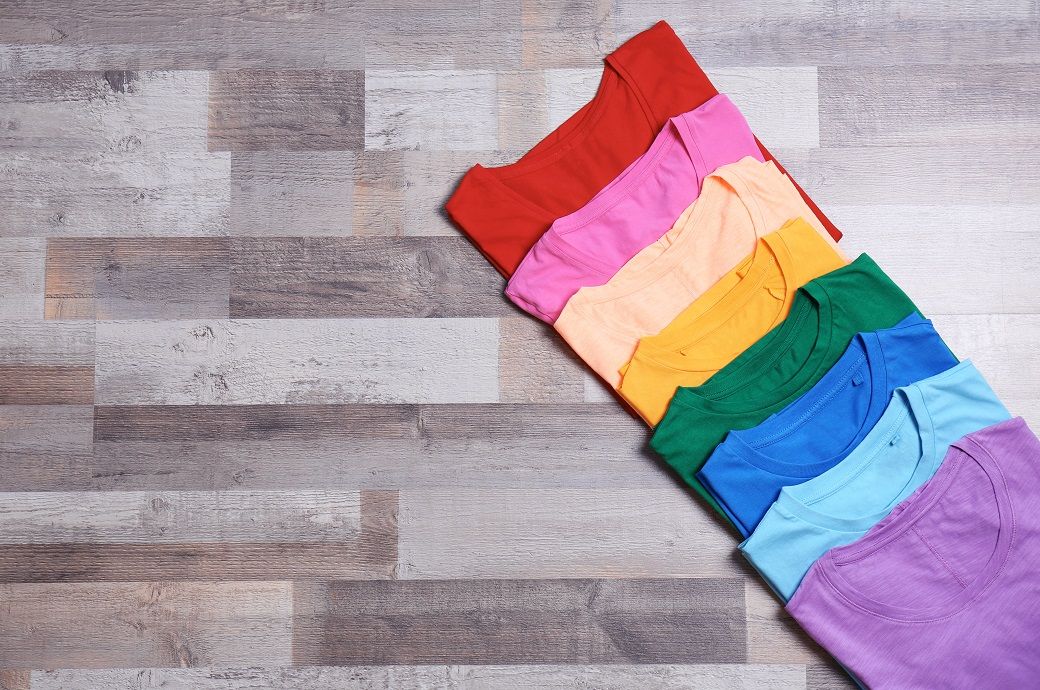
Imports of knitted apparel and clothing accessories (Chapter **) were valued at $***.*** million in January ****, slightly lower than $***.*** million a year earlier. The imports of non-knitted apparel and clothing accessories (Chapter **) totalled $***.*** million, down *.** per cent from $***.*** million in January ****.
South Korea typically exports fabrics and textile materials while importing readymade garments. During January ****, exports of man-made filaments, strips and similar materials (Chapter **) were valued at $***.*** million, down *.** per cent from $***.*** million a year earlier. Exports of knitted or crocheted fabrics (Chapter **) reached $***.*** million, easing *.** per cent from $***.*** million.

The additional week in the fourth quarter of fiscal 2025, compared to the fourth quarter of fiscal 2024, contributed approximately $37.0 million in consolidated net sales. On a comparable week basis, net sales grew 3.4 per cent. On a reported basis including the extra week in fiscal 2025, the US retail, international, and US wholesale segments grew 9.4 per cent, 10.2 per cent, and 3.4 per cent, respectively. US retail comparable net sales increased 4.7 per cent. Changes in foreign currency exchange rates used for translation in the fourth quarter of fiscal 2025, as compared to the fourth quarter of fiscal 2024, had a favourable effect on consolidated net sales of approximately $3.0 million, or 0.3 per cent.
Carter’s reported Q4 fiscal 2025 sales of $925.5 million, up 7.6 per cent, boosted by a $37 million extra week; on a comparable basis, sales rose 3.4 per cent.
Growth spanned US retail, international, and wholesale segments.
Operating income edged up to $84.7 million, though margin dipped to 9.2 per cent.
Full-year sales increased 1.9 per cent to $2.9 billion.
Operating income increased $1.5 million, or 1.8 per cent, to $84.7 million, compared to $83.2 million in the fourth quarter of fiscal 2024. Operating margin decreased 50 basis points to 9.2 per cent, reflecting incremental tariff costs, investments in product mix and make, and higher performance-based compensation provisions, partially offset by higher pricing, lower corporate expenses, and an asset impairment charge in the prior year period.
“Carter’s delivered improved fourth quarter results with each of our business segments posting sales growth over last year. We see momentum building behind our products and demand creation initiatives, which have driven an improvement in the rate of traffic, new customer acquisition, higher realised pricing, and increased penetration of the best portions of our product assortments. All of this gives us confidence that our strategies are gaining traction,” said Douglas C Palladini, chief executive officer & president.
“2025 was a year of meaningful progress in stabilising our business while responding to significant new tariffs. We took actions to right-size our cost structure and we launched several important initiatives to improve the productivity of our merchandise assortments and store fleet. We also strengthened our balance sheet and liquidity with the successful refinancing of our long-term debt and a new asset-based revolving credit facility in place,” Palladini added.
Consolidated net sales increased $54.3 million, or 1.9 per cent, to $2.90 billion, compared to $2.84 billion in fiscal 2024, reflecting growth in our US retail and international segments that were partially offset by a decline in the US wholesale segment. The additional week in fiscal 2025, compared to fiscal 2024, contributed approximately $37.0 million in consolidated net sales. On a comparable week basis, net sales grew 0.6 per cent. On a reported basis including the extra week in fiscal 2025, the company’s US retail and international segments grew 3.5 per cent, and 6.3 per cent, respectively, while US wholesale net sales declined 2.0 per cent. US retail comparable net sales increased 1.4 per cent. Changes in foreign currency exchange rates used for translation in fiscal 2025, as compared to fiscal 2024, had an unfavourable effect on consolidated net sales of approximately $6.7 million, or 0.2 per cent, the company said in a press release.
“While we are encouraged by our progress, much work remains. Excluding the recent tariff developments, for 2026 we are planning growth in net sales as we build on the momentum of our product and demand creation strategies. We are also planning growth in operating income. We will remain focused and disciplined in our investments and overall spending and expect solid contributions from productivity initiatives. We believe the recent news regarding tariffs will be net positive for Carter’s, but it will take some time to fully understand the implications for our business and the broader marketplace. Our talented and dedicated teams and I are committed to returning Carter’s to long-term sustainable, profitable growth over time,” Palladini concluded.
Fibre2Fashion News Desk (RR)

The model will be fuelled by both domestic and foreign direct investment. The country’s tax-to-GDP ratio currently sits at the bottom level globally.
Rashed Al Mahmud Titumir, Prime Minister’s Adviser Finance and Planning, recently outlined a comprehensive road map to overhaul the country’s economic framework, setting a target to raise the tax-GDP ratio to 15 per cent by 2035, while taking the nation forward on a path of investment-led growth.
A key pillar of this transition is a significant increase in internal resource mobilisation, he said.
A key pillar of this transition is a significant increase in internal resource mobilisation, he said.
“The previous consumption-led growth model was unsustainable and had left the country burdened by a mountain of debt accumulated particularly between 2009 and 2024,” he told a recent roundtable on the government’s priorities in the short-to-medium term.
The roundtable was organised by the Centre for Policy Dialogue (CPD) and The Daily Star newspaper.
There is a need for a tax culture rooted in investment, production and employment, he was cited as saying by domestic media reports.
He identified several systemic maladies in the current revenue structure that require urgent reform.
The government intends to move from greenfield incentives (based on identity and influence) to performance-based subsidies (ex-post subsidies), he said, adding that this model, which proved successful in the garments sector, will reward actual results rather than potential.
Fibre2Fashion News Desk (DS)


Holly Willoughby spotted with Nicole Appleton as she prepares for Youtube comeback

Want To Buy A House In Karnataka? Know About The ‘Namma Mane’ Scheme With Affordable Housing & Subsidies

South Korea’s apparel imports slightly lower at $1 billion in January

-
 Business1 week ago
Attock Cement’s acquisition approved | The Express Tribune
-

 Fashion1 week ago
Policy easing drives Argentina’s garment import surge in 2025
-

 Politics1 week ago
What are Iran’s ballistic missile capabilities?
-
 Business1 week ago
India Us Trade Deal: Fresh look at India-US trade deal? May be ‘rebalanced’ if circumstances change, says Piyush Goyal – The Times of India
-

 Sports1 week ago
LPGA legend shares her feelings about US women’s Olympic wins: ‘Gets me really emotional’
-

 Entertainment1 week ago
Bobby J. Brown, “The Wire” and “Law & Order: SUV” actor, dies of smoke inhalation after reported fire
-

 Fashion1 week ago
South Korea’s Misto Holdings completes planned leadership transition
-

 Entertainment1 week ago
Pakistan’s semi-final qualification scenario after England defeat New Zealand