

Fashion
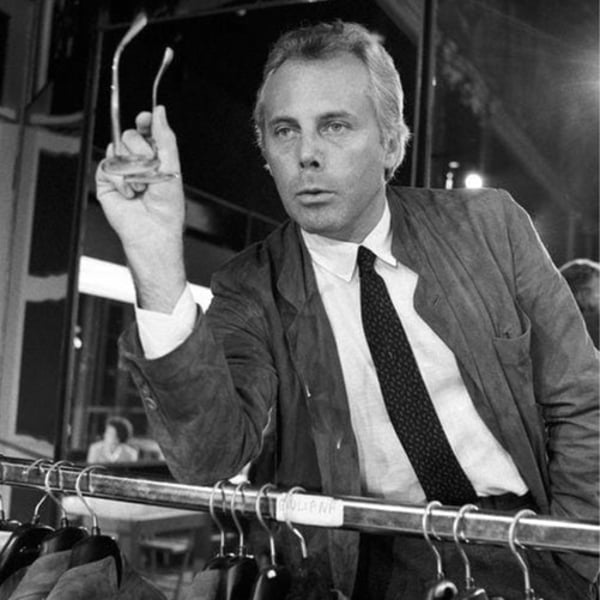
Giorgio Armani remembered

Published
September 4, 2025
Giorgio Armani, who passed away peacefully among his family in Milan on Thursday, will be remembered as one of the greatest single Italian designers and the figure who spearheaded the remarkable renaissance of Italian fashion in the post-war era.
It’s hard to overstate the importance of Armani in fashion and design, especially following his passing, and his remarkable name recognition wherever one travels. In fact, if one were to ask a passing stranger to name a fashion designer, Giorgio Armani would be the most likely choice.
Those of us who had the honor to spend time with Armani – from Milan to New York, from Shanghai to Tokyo – were always struck by the easy grace with which he handled fame. When meeting Giorgio, Gulf sheiks placed their hands on their hearts; in Hong Kong he stopped traffic when strolling to lunch; in Milan shows movie stars and Oscar winners greeted him backstage with the deepest of bows. Once, when walking with him near the Spanish Steps in Rome, a passerby stopped him and insisted on kissing his hand. Which he gently accepted, before turning to me in a Shakespearean aside: “You know, I didn’t pay her ahead of time to do that!”

Though he became enormously wealthy and famous, he wore his success with levity and grace. He spoke to young assistants, security guards or total strangers with the same avuncular tone with which he addressed heads of state. Though courtly, precise and ironic in manner, Armani could have a volcanic temper, but only when he felt his own exacting standards were not being met.

Today, it’s impossible to travel to any major city and not find some of Armani’s influence. His various elegant collections – Armani Privé, Giorgio Armani, Emporio Armani, Armani Exchange – along with his network of Armani cafés, Armani/Dolci and Armani/Casa stores all herald the blend of refined minimalism and Oriental fantasy that was his signature style.
And in an era when just about every designer sold control of their brand – Dior, Chanel, Valentino and Versace, to name a few – Armani left this life as the sole owner of his massive empire. Last year alone, Armani scored a net profit of €398 million on a turnover of €2.3 billion.

Although he left his hometown of Piacenza in the early 1950s to study medicine in Milan, after completing two years of compulsory military service, he shifted his career and became a window dresser in Italy’s largest department store, La Rinascente. That early training in display and editing remained with him all his life, as I noticed on a journey with Armani to open his first hotel inside the world’s tallest building – the Burj Khalifa in Dubai in 2006. During a morning visit to an Armani café in a mall, Giorgio spent 45 minutes altering lighting, repositioning chairs, straightening waiters’ shirts and folding napkins just so.
Like a true aesthete, he devoted his life to creation, and only when he was 100 percent satisfied would he consider socializing. On another occasion, I spent a day following Giorgio when he staged his first “Armani One Night Only” in London, an outlandishly cool and huge bash to support the fight against AIDS in Africa and Bono’s charity RED. Staged inside Earl’s Court, done up like an Ibiza nightclub, with Leonardo DiCaprio, Alicia Keys, Lady Helen Taylor and Minnie Driver in the audience; Elle MacPherson and James Franco serving as MCs. After several runway shows, Beyoncé performed “Crazy in Love”; Bryan Ferry sang “Slave to Love”; and Alicia Keys and Andrea Bocelli serenaded Giorgio. But what most sticks in my mind was the night before, when Giorgio was meticulously editing the collections, and his communications director quietly reminded him he was expected at a dinner in his honor with Tony Blair. Whereupon Armani harrumphed: “Qui, sto lavorando! Here, I am working!” dismissing the very idea he might leave a job early to meet a prime minister. Forget that.
An autodidact, Armani received his first lessons in making clothes from his mother and would later name both of his fabulous superyachts Mariù in her honor. After spending a decade working his way up in fashion, Giorgio—encouraged by his partner Sergio Galeotti—first opened a design office, then launched his own brand in 1975, reportedly financed by the sale of his Volkswagen.

By October 1975, Giorgio staged his first menswear collection to immediate acclaim. It was a pivotal moment when a group of exceptionally talented Italian designers—Gianni Versace, Gianfranco Ferré, Valentino Garavani, among others—began utilizing Italy’s exceptional artisans and clothing manufacturing to challenge France’s long-time leadership in fashion. A movement where Armani was the de facto leader among some brilliant peers, often nicknamed Il Re della Moda or Imperatore Giorgio. Generally, Giorgio remained very publicly respectful of his peers, though he certainly did not like any of their clothes being mixed with his—except for the high‑octane Versace, whose dazzle seemed to offend him.
And whereas practically every designer on the planet hired an independent stylist to help create their campaigns, Armani never did, to avoid any digression from his strictest fashion vision. Giorgio’s style was always a balancing act – the perfect silhouettes of his menswear combined with the opulent delicacy of his couture.
Enamored, like most Italians, of movies, it was cinema that catapulted Armani into global prominence when he created the wardrobe of Richard Gere in the 1980 film “American Gigolo.” The famed scene of Gere tossing beautiful Armani shirts onto a bed before deciding on a suitable seductive outfit expressed a new era of modern elegance and the suddenly vital role of fashion in contemporary living. It also linked Giorgio indelibly to cinema, where he would go on to costume over 100 films—from “The Untouchables” and “The Dark Knight Rises” to “Ocean’s Thirteen” and “Inglourious Basterds.” Since “American Gigolo,” no Armani front row was complete without half a dozen movie stars joining football greats, sporting superstars and cultural icons at his shows.

Two decades ago in Cannes, he kindly invited me to supper on Mariù I, a beautiful boat with a black hull, pale wood paneling, and muted non‑colors—the diametric opposite of a typical superyacht. Then, when a fresh group of about a dozen people appeared after an evening screening—including the likes of Kevin Klein and Sheryl Crow—Giorgio had his three handsome chefs whip up a large bowl of simple but delicious pasta made with just olives, garlic, pepperoncino and Parmesan. Before insisting on personally serving everyone himself, something I never saw any other designer do.
For many years, he staged most of his shows in his own private show‑space in his headquarters on central Via Borgonuova, which is where I first met him as the young, freshly appointed editor‑in‑chief of Vogue Hommes in 1995. Having spent five years in Italy, I was able to converse with him in Italian. Armani spoke excellent French, though, like many pre‑war‑born Italians, his English was limited.

I proudly showed off my first edition, which included a wonderful shoot by Albert Watson titled “Mafia Crooner.” Featuring a dashing Latin couple, the man looking sensational in a classic cement‑hued Armani double‑breasted jacket inside a café in Little Italy. Giorgio seemed suitably impressed and shook my hand firmly as he exited our meeting, before later finding me at the door of his palazzo, evidently irate. “Have you seen this!?” he said, showing off the shot of the crooner in his jacket. “Somebody has put an appalling Vivienne Westwood tie on my jacket! Allora?” he bristled. To which I responded, “Sorry, Signor Armani, but you know how difficult it is to control stylists.” To which he replied, placated: “Finally, an editor who knows what he is talking about!”
Later shows were staged in South Milan inside Armani/Teatro, designed by Japanese architect Tadao Ando, inside a former Nestlé chocolate factory. It is where Armani’s coffin will be set up in a funeral chamber all this weekend, open to the public. It was also the site of his last show in June, when he was too frail to take a bow, and his right‑hand man, Leo Dell’Orco, took the bow. A faithful partner to the end, who is expected to continue to guide the house with Armani’s surviving sister, nieces, and nephews.
Even into his 90s, Giorgio never slowed down. He staged another One Night Only last November with a star‑packed show inside the New York Armory, where Orlando Bloom, Liev Schreiber and Pamela Anderson posed proudly.

The day before, Giorgio had unveiled yet another project— a brand‑new $400 million complex named Armani Residences on Madison Avenue. It includes three floors of retail space, two restaurants and more than a score of apartments. Giorgio reserved the penthouse for himself. In fact, many days in his final decade were spent building Armani hotels and residences, with a series of luxury towers due to open in the coming years.

Giorgio’s day last November began with a personal appearance at his boutique in Bergdorf Goodman, signing copies of his book Per Amore. Outside, ten windows of the world’s most luxurious department store were customized with looks from Armani men’s and women’s collections. An elegant celebration of his historic ties with Bergdorf—the first American store to carry the Giorgio Armani men’s collection back in the 1980s. All told, yet another remarkable two days by the Italian maestro, the designer who never seemed to sleep in the city that never sleeps.

At the time, I asked Giorgio what he hoped his legacy would be, and he responded: “The legacy I hope to leave is one of dedication, respect and an eye for reality. Success in fashion comes from observing people, understanding their needs and creating clothes that meet those needs. At the heart of it, I focus on making beautiful garments. Fashion is a serious but deeply rewarding profession.”
Summing up his life—the greatest brand builder in Italian design, the hardest‑working designer I ever met, and a gentleman who left this earth a far better place than he found it.
In a very real sense, Armani became far more important than being an iconic fashion designer. The greater Italian public, and indeed an international audience, treated Giorgio like the president of Italian style and taste. His longevity and his devotion to his art made him a hallowed figure. In future years, when people come to write fresh histories of Italy, Armani will be ranked with Galileo, Leonardo Da Vinci, Michelangelo and Christopher Columbus—and deservedly so. Beyond his fashion empire, hundreds of stores, Armani Casa skyscrapers and a massive perfume business, his aesthetic has influenced the past half‑century more than any other living designer. In an era of style, he was the Doge of design.
The Imperatore has left us, and we will not see his like again.

Copyright © 2025 FashionNetwork.com All rights reserved.










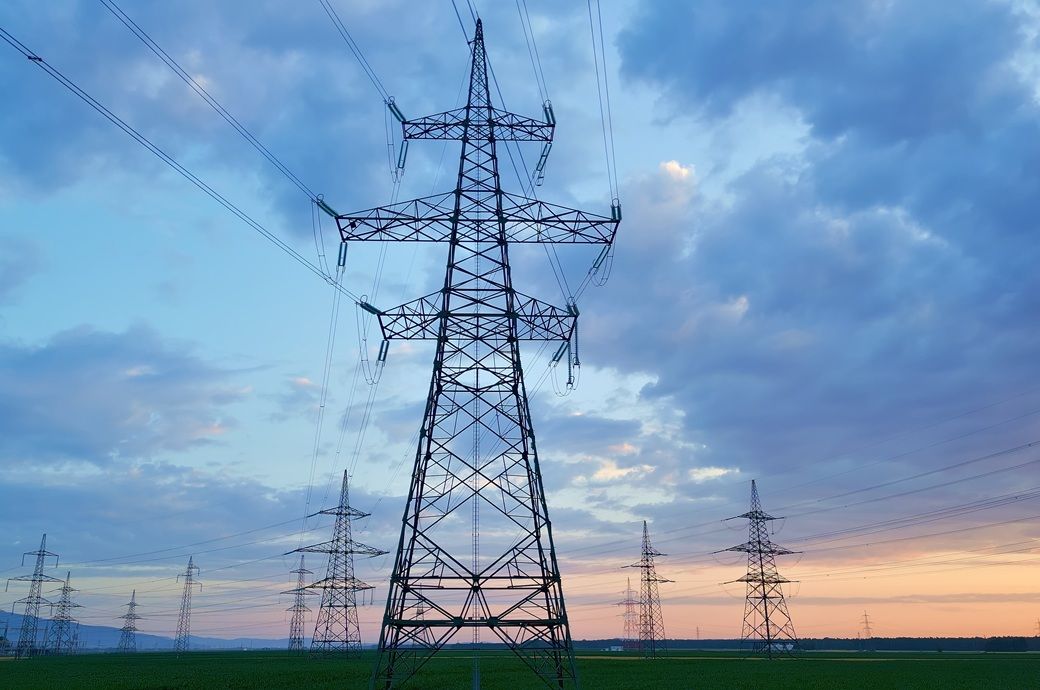
The report highlighted that although overall energy demand growth slowed compared with 2024 and remained slightly below the previous decade’s average, electricity demand rose by around 3 per cent, driven by increased usage across buildings, industry, electric vehicles, and data centres.
Global energy demand growth slowed to 1.3 per cent in 2025, while electricity demand rose around 3 per cent, driven by EVs, industry, and data centres, according to IEA.
Solar PV led supply growth for the first time.
Oil demand grew modestly, and coal growth slowed.
CO2 emissions rose slightly.
Renewables and nuclear expansion highlighted an accelerating shift towards cleaner energy systems.
Solar photovoltaic (PV) emerged as the largest contributor to global energy supply growth for the first time, accounting for over 25 per cent of the increase. Natural gas followed with a 17 per cent share, while renewables and nuclear together met nearly 60 per cent of additional demand.
Global oil demand rose modestly by 0.7 per cent, reflecting the continued expansion of electric vehicles, with sales surpassing 20 million units in 2025. Coal demand growth slowed overall, with declines in China offset by increases in the United States due to high natural gas prices.
“Global energy demand continued to increase in 2025 against a complex economic and geopolitical backdrop, with one trend unmistakeable: the expanding electrification of economies,” said Fatih Birol, IEA executive director.
He added that electricity consumption was growing much faster than overall energy demand, with one energy source outpacing all others. He noted that solar PV accounted for over a quarter of global energy demand growth for the first time, followed by natural gas, and added that countries prioritising resilience and diversification would be better placed to manage volatility and ensure secure, affordable energy.
Regional trends varied significantly. Energy demand growth in the United States rose sharply, supported by industrial activity, data centre expansion, and colder weather, while China’s growth slowed to 1.7 per cent due to rising renewable adoption and improved efficiency.
Global energy-related CO2 emissions increased marginally by around 0.4 per cent. Emissions declined in China and remained flat in India, aided by renewable deployment and favourable weather conditions, while advanced economies recorded higher emissions growth due to colder winter conditions.
In the power sector, solar PV generation surged by a record 600 terawatt-hours, marking the largest annual increase for any electricity generation technology. Battery storage emerged as the fastest-growing segment, with around 110 gigawatts of new capacity added, while nuclear energy also saw renewed momentum with over 12 gigawatts of new reactors under construction.
The IEA noted that cumulative deployment of low-emissions technologies since 2019 now offsets fossil fuel consumption equivalent to the entire energy demand of Latin America, underscoring the accelerating transition towards cleaner energy systems.
Fibre2Fashion News Desk (SG)
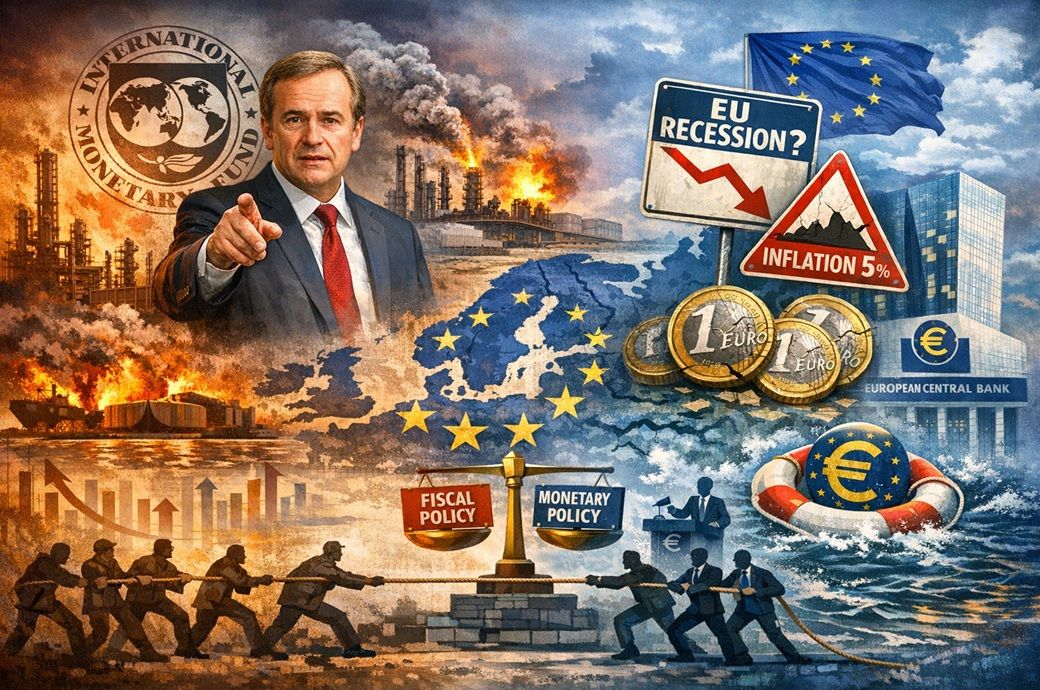
In a blog post, Alfred Kammer, director of the IMF’s European department, said his organisation sees growth slowing down in the continent. Initial data point already to weaker private investment and consumption.
The energy shock that has hit Europe due to the Middle East conflict, though smaller than in 2022, is weighing on growth and pushing inflation higher, an IMF expert recently cautioned.
IMF sees growth slowing down in the continent.
Initial data point already to weaker private investment and consumption.
Central banks must remain laser focused on keeping inflation expectations anchored, he wrote.
The outlook for euro area growth is projected at just 1.1 per cent in 2026, for the European Union it is 1.3 per cent; and this forecast comes with a high degree of uncertainty.
In a more severe scenario as described in the World Economic Outlook—a persistent supply shock compounded by tightening financial conditions—the EU could come close to recession with inflation approaching 5 per cent. No European country is spared, Kammer observed.
Policymakers face intense pressure—to act fast, visibly and for all, which results in policies that have more long-term downsides than short-term benefits, he wrote.
Targeted support is much more effective. Europe’s response to this shock should be shaped by two imperatives, he suggested. First, robust macroeconomic policy that is fit for a world with unpredictable and frequent shocks, and second, resilience built without wasting fiscal resources or getting in the way of markets.
The first imperative involves getting monetary and fiscal policy right. Central banks must remain laser focused on keeping inflation expectations anchored, the IMF expert wrote.
In the euro area, where inflation is close to target and medium-term expectations are broadly anchored, the European Central Bank has some scope to wait and observe the shock evolve before acting. IMF now expects a cumulative 50 basis point increase in the policy rate by the end of this year, maintaining a broadly neutral monetary stance in light of higher near-term inflation expectations, Kammer noted.
A rise in core inflation or increasing medium-term expectations would warrant a more restrictive stance, he wrote.
“Europe must reform under pressure. The current shock is not an argument for delay. It is all the more reason to push forward the reform agenda,” Kammer added.
Fibre2Fashion News Desk (DS)

The text of the agreement was released on February 7.
India and the US will today resume talks on the first phase of their bilateral trade agreement in Washington, DC.
The three-day talks will discuss the situation that has evolved under the changed US tariff regime.
The two unilateral probes launched by the USTR against India may also be discussed at the meeting.
Darpan Jain, additional secretary in the department of commerce, is leading the Indian team.
Darpan Jain, additional secretary in the department of commerce, is leading the Indian team.
The three-day talks will discuss the situation that has evolved under the changed US tariff regime, according to Indian media reports.
Following the US Supreme Court decision against the sweeping tariffs imposed by President Donald Trump on several countries, the US administration imposed a 10-per cent tariff on all countries beginning February 24 for 150 days.
This led to a meeting between chief negotiators of both sides scheduled in February getting postponed to this month.
The two unilateral investigations launched by the US Trade Representative (USTR) against India may also be discussed at the meeting. India has rejected allegations made by the USTR in these two probes under its Section 301 of Trade Law and has called for termination of the probes as the initiation notice has failed to provide cogent rationale to substantiate the claims.
Fibre2Fashion News Desk (DS)


Global energy growth slows to 1.3% in 2025: Report

UK’s Starmer seeks to deflect blame over Mandelson appointment

How to Watch the Lyrids Meteor Shower at Its Peak

-

 Fashion5 days ago
France’s LVMH Q1 revenue falls 6%, shows resilience amid Iran war
-

 Sports1 week ago
The case for Man United’s Fernandes as Premier League’s best
-

 Entertainment1 week ago
Palace left in shock as Prince William cancels grand ceremony
-
 Business1 week ago
UK could adopt EU single market rules under new legislation
-

 Entertainment6 days ago
Is Claude down? Here’s why users are seeing errors
-

 Fashion1 week ago
Energy emerges as biggest cost driver in textile margins
-
 Business1 week ago
Delta Air Lines unveils first new Delta One suite in premium cabin arms race
-

 Tech1 week ago
A Lot of Shops Won’t Fix Electric Bikes. Here’s Why