

Fashion
Giorgio Armani: What does the future hold for the group?


Translated by
Nazia BIBI KEENOO
Published
September 6, 2025
The legendary Italian couturier, who passed away on 4 September, leaves behind a highly coveted luxury empire. As succession questions multiply, the future of the Giorgio Armani brand now takes center stage.
“Giorgio Armani has always made independence of thought and action his trademark. Today, as in the past, the company reflects this spirit. His family and collaborators will continue the adventure of the group in respect and continuity of these values,” stated the company when announcing the death of the iconic designer. These clear words, however, open the door to many questions about the future of the empire left behind by “King Giorgio.”
Between the company and his personal estate — including properties, artworks, real estate investments, shares, the Olimpia Milano basketball team, and the Armani/Silos museum — Giorgio Armani leaves behind a fortune estimated between €11 billion and €13 billion. With no direct heirs, he was free to designate how his estate would be managed. His last wishes will be revealed once his will is opened.
His immediate family includes his sister, Rosanna (86), and her son, Andrea Camerana (55), as well as his two nieces, Silvana (69) and Roberta (54), the daughters of his late brother, Sergio. All are members of the board of Giorgio Armani SpA, as is his longtime right-hand and managing consultant, Pantaleo “Leo” Dell‘Orco (72), who oversees the menswear collections. The designer has long referred to them as his intended successors.
The board also includes Yoox founder Federico Marchetti and Rothschild banker Irving Bellotti, who is also a board member of the Giorgio Armani Foundation, created in 2016 to ensure continuity of the company’s vision.
In a recent interview with How To Spend It, the Financial Times supplement, Giorgio Armani reiterated this succession plan: “My succession plan consists of gradually transferring the responsibilities I have always assumed to those closest to me, such as Leo Dell’Orco, to family members and to the entire team.” He added, “I would like the succession to be organic and not a moment of rupture.”
The founder controlled 99.9% of Giorgio Armani SpA, with the Giorgio Armani Foundation holding the remaining 0.1%. In 2024, the group employed nearly 8,700 people globally and posted €2.3 billion in revenue — a 6% drop from the previous year. Net profit also fell sharply, from €163 million in 2023 to €51.6 million. Europe accounts for 49% of revenue, with the Americas and Asia-Pacific each contributing 21%.

Armani meticulously prepared for this transition. The company’s revised articles of association were first approved in 2016 and finalized in September 2023. These statutes will take formal effect upon the opening of the succession. According to press reports at the time, the structure includes various share categories and voting rights, with a potential public listing allowed five years after the statutes take effect. Furthermore, 75% of shareholders must approve any mergers, spin-offs, amendments, or capital increases at an extraordinary general meeting.
During the transition, management may be handled by a select leadership committee. Creatively, Armani leaves behind a globally recognized design language and aesthetic. For now, it’s difficult to imagine another designer stepping into his shoes. The in-house design studio, led in part by Leo Dell’Orco, is expected to continue developing upcoming collections.
The responsibility of preserving the brand’s identity and value, estimated to be worth between €6 billion and €12 billion, depending on the analysts, will rest with the family and senior leadership. How this heritage is managed and evolved in the near future will shape Giorgio Armani SpA’s trajectory — and may invite interest from global luxury groups and investment funds.
This article is an automatic translation.
Click here to read the original article.
Copyright © 2025 FashionNetwork.com All rights reserved.



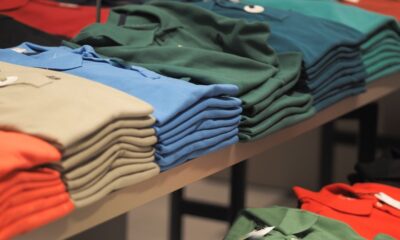



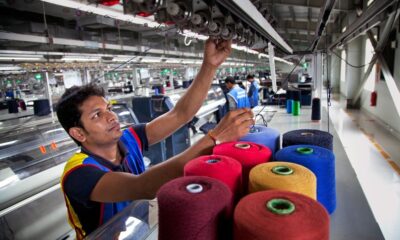



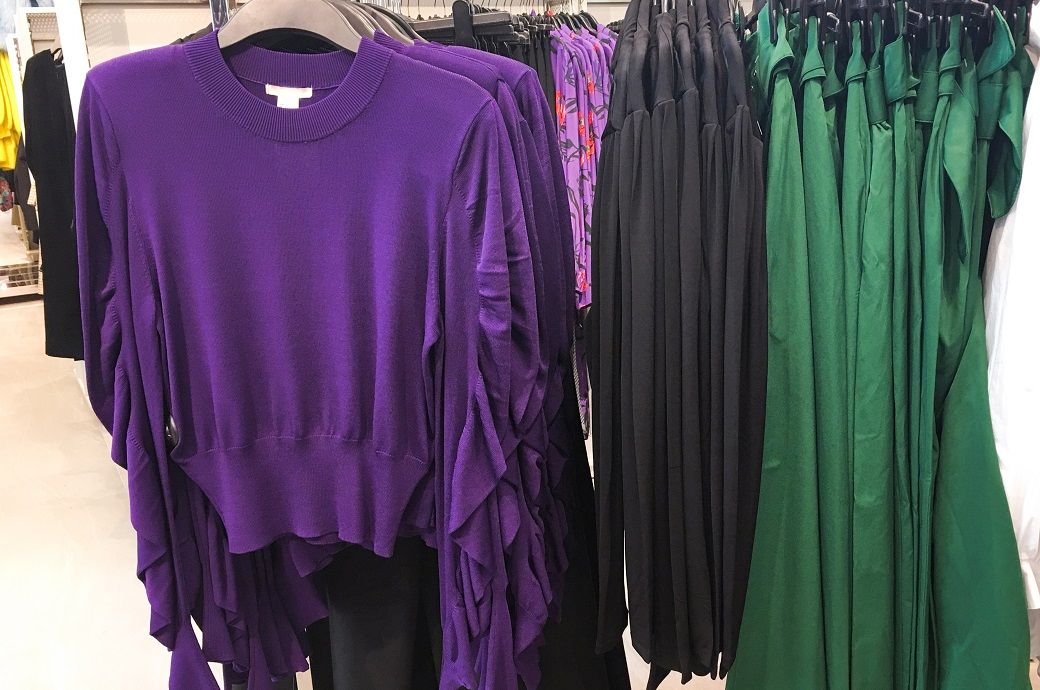
During the period, apparel imports declined by *.** per cent to **,***.*** million SME from **,***.*** million SME in ****. Imports of textiles (non-apparel) reached **,***.*** million SME in ****, marking a decline of *.** per cent compared with **,***.*** million SME in ****.
The import volume of cotton products fell by *.** per cent to **,***.*** million SME during the review period, compared with **,***.*** million SME a year earlier. Meanwhile, imports of man-made fibre (MMF) products decreased to **,***.*** million SME in ****, down from **,***.*** million SME in ****.
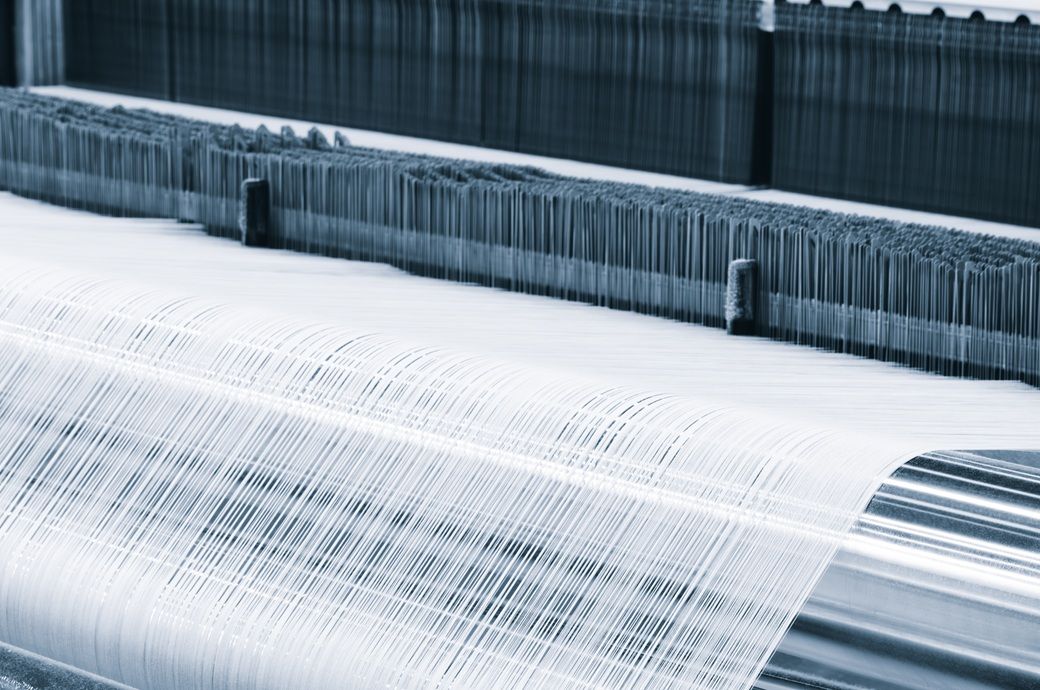
Stäubli will showcase innovative solutions designed to empower mills to produce the next generation of advanced fabrics.
Stäubli will showcase advanced weaving solutions at Techtextil 2026, highlighting technologies for high-performance technical textiles such as 3D composites and industrial fabrics.
Key exhibits include the MAGMA tying machine, TF series weaving systems, and UNIVAL Jacquard, enabling precision, efficiency, and flexibility for next-generation applications.
Stäubli will exhibit its trend-setting technologies at the Swiss Pavilion Booth B01.6 in Hall 12.0.
Technical Textiles: A market accelerating toward high-performance innovation
The global rise in demand for reinforcement fabrics, multilayer structures, 3D composites, and high value industrial textiles is reshaping manufacturing expectations. Reliable equipment, flexible weaving architectures, and precise material handling have become essential for weaving mills pursuing new applications and higher performance products. This expansion underscores the critical role of advanced weaving solutions in meeting evolving industry needs. Stäubli’s decades long know how in technical weaving positions the company as a key contributor to this transition.
Stäubli weaving systems are widely used to produce demanding technical fabrics — from lightweight reinforcement materials, OPW airbags, to filtration fabrics, medical textiles, and specialized industrial materials.
By combining cutting edge mechanical engineering, advanced electronic control, and long term customer support, Stäubli ensures stable performance and high fabric quality across all applications.
Stäubli Solutions to discover at Techtextil 2026
At this year’s edition, Stäubli will display its MAGMA Tying Machine, a robust and high efficiency solution specifically engineered to handle the increasingly diverse and demanding yarns used in today’s technical textile applications, including polypropylene tapes and other challenging filament structures. MAGMA delivers consistent tying quality while reducing the downtime traditionally associated with warp changes.
Stäubli will also present its TF series weaving machines, engineered for the production of advanced 3D, multilayer, and high performance fabrics using demanding materials such as carbon, glass, and aramid fibers.
- The TF20 offers high-speed capability and a double rapier option, increasing output for industries requiring lightweight composite reinforcements.
- The TF30 ensures gentle yarn handling while supporting highly sophisticated weave structures, making it ideal for aerospace grade and industrial textiles.
Part of our other solutions for technical textile, the UNIVAL 100 electronic Jacquard machine provides unparalleled flexibility for weaving complex and sophisticated technical fabrics. Featuring individually controlled harness cords and exceptional motion precision, the UNIVAL 100 is particularly suited for 3D weaving and the processing of demanding materials such as glass and carbon fibers.
The Jacquard machine LX 2494 is ideal for weaving technical fabrics on all types of weaving machines. Very robust and wear-resistant, it opens new avenues in heavy fabrics and is designed for many years of daily use with a minimum of maintenance. The Stäubli M6T 3-position module principle makes the machine particularly compact, and plays an important role in exploiting its performance potential.
Stäubli’s heavy dobbies deliver the power and precision required for weaving complex, high tension structures in technical and industrial fabrics. Designed for demanding applications, they ensure exceptional shedding accuracy, stable high speed performance, and long term mechanical reliability.
Discover Stäubli’s weaving technologies at Swiss Pavilion Booth B01.6 in Hall 12.0 during Techtexil 2026
Note: The headline, insights, and image of this press release may have been refined by the Fibre2Fashion staff; the rest of the content remains unchanged.
Fibre2Fashion News Desk (MS)
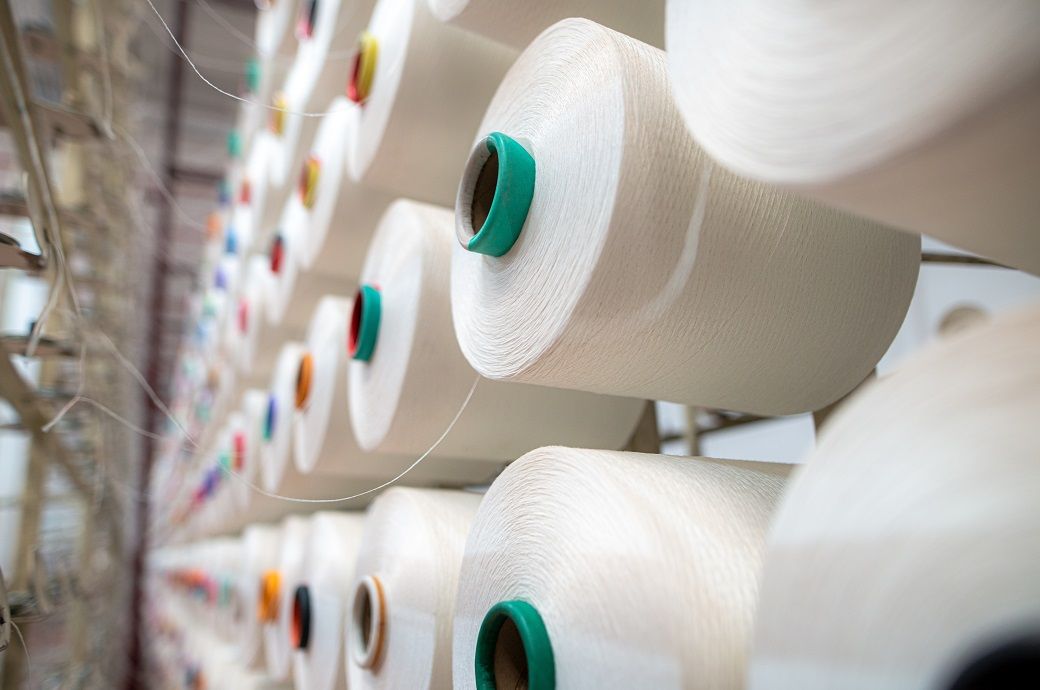
The investigation, initiated in March ****, covered the period from October **** to September **** and was based on a petition filed by Indorama India Private Limited. The authority found that dumped imports from the subject countries had caused material injury to the domestic industry, as per notification issued in this regard by the DGTR.
The product under consideration includes elastomeric filament yarn of all deniers, commonly known as spandex or elastane, widely used in stretch garments such as hosiery, activewear and innerwear. However, certain categories have been excluded, including coloured yarn (except black), elastomeric yarn on beam, LYCRA branded products, and yarn used in diapers.


US apparel imports fell 5% in terms of volume in 2025

Stäubli to showcase advanced weaving solutions at Techtextil 2026

Iran oil attacks trigger 35% gas price spike – and fears of interest rate rises

Stock market crash today (March 12, 2026): Nifty50 opens below 23,600; BSE Sensex down over 900 points on continuing US-Iran war – The Times of India

UK’s Topshop unveils Tolu Coker capsule collection

India’s textile recycling market may reach $3.5 bn by 2030: Report

-
Business1 week ago
Stock market crash today (March 12, 2026): Nifty50 opens below 23,600; BSE Sensex down over 900 points on continuing US-Iran war – The Times of India
-
 Fashion1 week ago
UK’s Topshop unveils Tolu Coker capsule collection
-
 Fashion1 week ago
India’s textile recycling market may reach $3.5 bn by 2030: Report
-
 Tech1 week ago
Meta Developed 4 New Chips to Power Its AI and Recommendation Systems
-
 Business1 week ago
8th Pay Commission: How Much Will Central Govt Employees’ Salaries Rise? What We Know So Far
-

 Sports1 week ago
Bangladesh crush Pakistan in ODI series opener | The Express Tribune
-

 Entertainment1 week ago
Ed Sheeran makes surprising Benny Blanco confession after hygiene uproar
-

 Entertainment1 week ago
Gas, food, household prices explained