

Business
Global cues, AI disruption fears to steer markets this week: Analysts – The Times of India

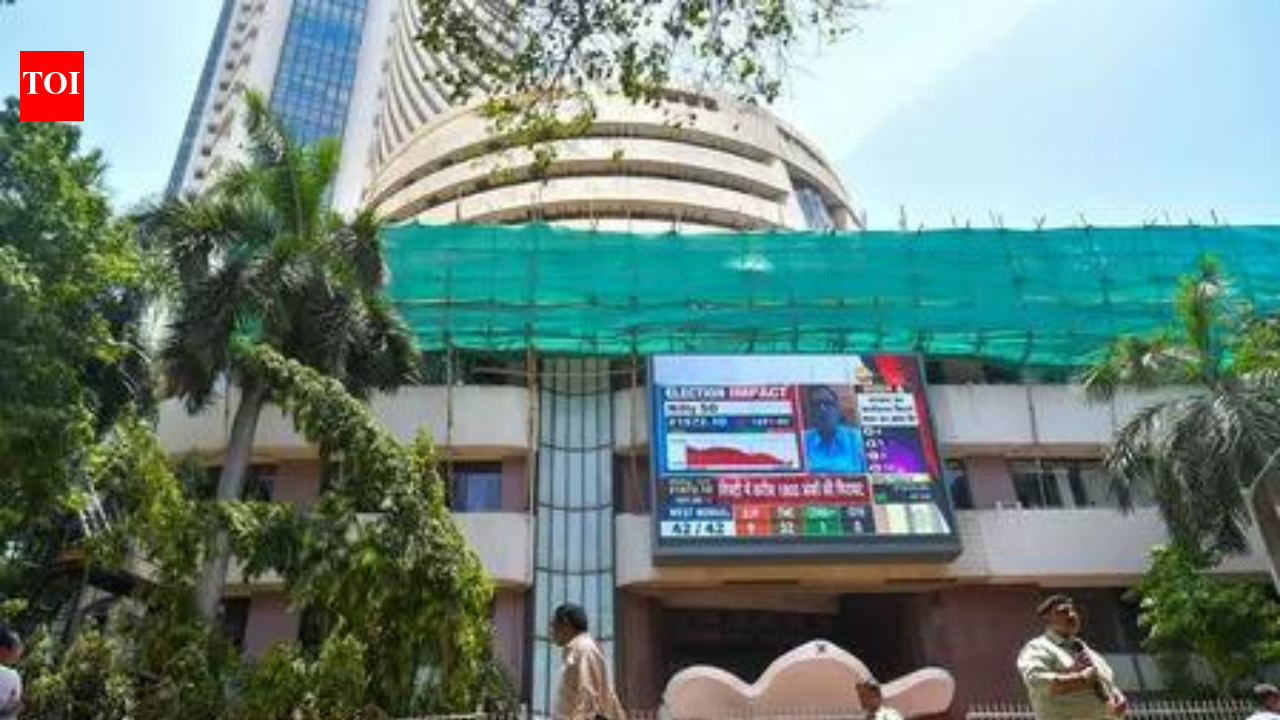
Macroeconomic data, global geopolitical developments and rising concerns over AI-related disruptions are likely to dictate stock market sentiment in the coming week, analysts said, even as investors remain cautious amid persistent volatility.Trading activity of foreign investors and movements in the domestic currency are also expected to influence market direction.
Focus on US data, fed outlook and AI risks
“In the near term, with tariff-related concerns easing and the domestic earnings season drawing to a close on a mixed trend, market focus will hinge largely on global cues, including the US labour data and shifting expectations surrounding the US Fed’s policy path”, Vinod Nair, head of research at Geojit Investments Ltd, said, as quoted by news agency PTI.“However, the overall sentiment is likely to remain cautious as investors monitor global AI-driven disruptions and geopolitical risks, while improved valuations and constructive GDP forecasts may help sustain FII inflows”, Nair added.He added that with IT and metals facing persistent structural and external headwinds, market leadership may rotate towards domestically oriented sectors such as banking, automobiles and select consumption-driven segments. However, broader indices are expected to remain range-bound until clearer macroeconomic and policy signals emerge.Analysts said investors will also watch the minutes of the Federal Open Market Committee (FOMC), scheduled for release on Thursday, for cues on the US Federal Reserve’s monetary policy outlook.
Inflation, PMI and external data in spotlight
Ajit Mishra, SVP, research at Religare Broking Ltd, said markets will track wholesale price index (WPI) inflation and balance of trade data for signals on price trends and external sector dynamics.“High-frequency indicators due include HSBC flash PMI readings for manufacturing, services, and composite, along with bank loan growth and foreign exchange reserves data.“These releases will be evaluated for confirmation of growth momentum amid volatile global cues and continued repricing in technology stocks,” he said, as per PTI.Strong US jobs data has already reduced expectations of near-term Federal Reserve rate cuts, pressuring global risk assets and contributing to domestic market weakness, Mishra added.
Benchmarks end lower amid tech selloff
On a weekly basis, the 30-share BSE Sensex slumped 953.64 points, or 1.14 per cent, while the NSE Nifty dropped 222.6 points, or 0.86 per cent.Both indices ended the week on a negative note as a global selloff in technology stocks and concerns over artificial intelligence-led disruptions weighed on sentiment.On Friday alone, the Sensex tumbled 1,048.16 points to close at 82,626.76, while the Nifty plunged 336.10 points to settle at 25,471.10 amid a broad-based selloff, particularly in metal, IT and commodity stocks.“The Nifty IT index touched a 10-month low during the session before closing 1.4 per cent lower… The sector continues to face headwinds amid rising concerns that rapid AI advancements could disrupt traditional service models and weigh on future revenue visibility,” Siddhartha Khemka of Motilal Oswal Financial Services Ltd said, as per PTI.Metal stocks also saw profit-booking amid a stronger dollar index and reports that Russia may consider re-entering the US-dollar settlement system, raising concerns over weaker realisations for metal companies, Nair said.The broader market remained under pressure, with the BSE SmallCap Select Index falling 1.90 per cent and the MidCap Select Index slipping 1.19 per cent.
Rupee, FII flows and global markets
The rupee consolidated in a narrow range and settled 5 paise lower at 90.66 against the US dollar on Friday.Foreign institutional investors bought equities worth Rs 108.42 crore on Thursday, while domestic institutional investors were also net buyers of Rs 276.85 crore, according to exchange data.Analysts noted that while the previous week saw support from favourable developments in the India-US trade deal and renewed FII inflows, sentiment turned cautious following escalating concerns over AI-led disruptions and a global technology selloff.Geopolitical tensions and continued repricing in technology stocks have increased sectoral volatility, prompting widespread selling pressure.Market experts said broader indices are likely to stay range-bound until clearer macroeconomic signals and policy clarity emerge, with global cues continuing to dominate investor sentiment in the near term.

The U.S. Food and Drug Administration approved Eli Lilly‘s GLP-1 pill, the company said, a major milestone for the Indianapolis-based drugmaker and one that will test the market for new weight-loss medications.
Lilly said the once-daily pill, Foundayo, will start shipping from direct-to-consumer platform LillyDirect on Monday and will be available at pharmacies and on telehealth platforms “shortly after.” People with insurance coverage could pay $25 a month with a coupon from Lilly, while people paying out of pocket could pay between $149 and $349, depending on the dose.
The approval comes just a few months after Lilly submitted the drug to the FDA as part of a program that grants speedy reviews for drugs that are considered national priority interests. That means Lilly will introduce its Foundayo only about three months behind Novo Nordisk’s Wegovy pill, setting the stage for the next battle between the rival drugmakers in the next frontier for GLP-1 drugs.
“It’s a big moment,” Eli Lilly CEO Dave Ricks said in an interview with CNBC. “We’ve obviously been working in this category of medicines for a while with the first GLP-1 medication 20 years ago and improving ever since. Here is an option that’s not more effective … but it’s more accessible, it’s easier to fit into your daily routine.”
Lilly licensed the molecule, orforglipron, from Japanese drugmaker Chugai in 2018, paying just $50 million upfront for global rights to the drug. But there are still questions about how big the drug will become. It doesn’t produce as much weight loss as Lilly’s best-selling shot Zepbound. Millions of people are already used to the routine of injecting themselves once a week.
Eli Lilly Foundayo GLP-1 weight loss pill.
Courtesy: Eli Lilly
Analysts estimate Foundayo sales will reach $14.79 billion by 2030, according to FactSet. That compares to expectations of $24.68 billion for the weight-loss drug Zepbound and $44.87 billion for Mounjaro, which is marketed for diabetes in the U.S. and obesity and diabetes in the rest of the world.
Ricks said shots haven’t been as big of a barrier to uptake as Lilly once thought they would be. He still sees Foundayo as an attractive option for people who would rather take a pill or who are searching for a lower price than the injectables.
He sees it playing a role in maintenance, for people who achieve their goal weight with a shot and want to keep the weight off. And he sees Foundayo as a way to “reach the planet” without manufacturing constraints or cold-chain requirements that come with Zepbound.
Foundayo is a small molecule whereas Zepbound and Wegovy are peptides, which require more intensive manufacturing processes, a barrier Ricks thinks will hinder generic versions of Wegovy that have recently launched in some other countries like India.
“[Foundayo] does allow for scalability, and that will allow us to launch this globally on the first instance,” Ricks said. “So today, you can get the oral [Wegovy] in the U.S., but you really can’t get it elsewhere. This will be marketed around the world. As soon as we have regulatory approvals, we essentially have as much scale as we need to supply the world with an oral GLP-1 inhibitor.”
Lilly expects approval for Foundayo in more than 40 countries over the next year. The company since 2020 has invested more than $55 billion in manufacturing, which includes opening new sites and expanding existing plants to produce the pill.
In the U.S., Lilly will compete with Novo’s newly launched Wegovy pill. Early demand for that pill has been stronger than expected, with Novo reporting more than 600,000 prescriptions in March.
Novo CEO Mike Doustdar told CNBC in February that one of the earliest takeaways from the launch is that the pill appears to be expanding the obesity treatment market, drawing in new patients rather than converting existing ones from injections. Ricks agreed with that assessment and said Lilly doesn’t care whether people take Foundayo or Zepbound.
“We want people to be on the medicine that meets their health goals,” Ricks said. “If it has Lilly on the box, that’s the goal we have.”
Novo plans to argue that the Wegovy pill is more effective than Foundayo. The Wegovy pill showed around 16.6% weight loss on average in a late-stage trial, while Lilly’s oral drug caused roughly 12.4% on average in a separate study, when analyzing patients who stayed on treatment. Lilly’s Zepbound has consistently shown it can help people lose more than 20% of their body weight.
Meanwhile, Lilly plans to tout the fact that Foundayo can be taken any time without any restrictions, while the Wegovy pill needs to be taken first thing in the morning on an empty stomach with only a few ounces of water.
Where the two drugs are the same is the starting price. The lowest doses of both drugs will cost $149 for cash-paying customers thanks to an agreement the companies struck with the Trump administration last fall. And price is the most important factor for patients, said Dr. Nidhi Kansal, an obesity medicine doctor at Northwestern Medicine.
“Unfortunately, price is what is driving the decision making between clinicians and patients for these drugs because they’re all excellent drugs and we have lots of options now, but it’s still a financial decision at the end of the day,” Kansal said.
The lower price point and the approachability of a pill versus a shot opens up the market to casually interested patients, said BMO Capital Markets analyst Evan David Seigerman. Seniors on Medicare will be able to access Foundayo and other GLP-1 obesity medicines for $50 a month starting this summer as part of Lilly and Novo’s deals with the Trump administration. Ricks expects a “pretty robust” response to the program, which Lilly built into its financial guidance for the year.
Analysts say a successful launch of Foundayo is key to Lilly’s stock recovering from recent weakness. The company’s shares have fallen about 14% this year after a meteoric rise that briefly made Lilly the first trillion dollar market cap health-care company. Sales are a lagging indicator, so analysts will be tracking prescriptions to monitor uptake of the pill, said Cantor Fitzgerald analyst Carter Gould.
“If scripts are going in the right direction, and you’re seeing the continued gains, my guess is people will look through any sort of choppiness around [the first or second quarter],” Gould said.
Another factor for Lilly’s performance this year is a forthcoming readout for its more potent obesity shot, retatrutide. The company has already shared some late-stage data on that drug, but the most important trial is one studying the treatment specifically for weight loss. If retatrutide lives up to its expectations, Lilly would be on its way to creating a portfolio of obesity medicines.
“The future will be more choices, and that’s a great thing,” Ricks said. “And we hope Lilly is the one presenting those choices.”
Business
UPI transactions hit record Rs 29.53 lakh crore in March; volumes cross 22.6 billion – The Times of India

Unified Payments Interface (UPI) transactions touched a record high in March, with both value and volume hitting new peaks, driven by festive spending and financial year-end activity, according to PTI.Data released by the National Payments Corporation of India (NPCI) showed that UPI transactions totalled Rs 29.53 lakh crore in value during March, up 19 per cent from Rs 24.77 lakh crore in the same month last year.On a month-on-month basis, transaction value rose 10 per cent from Rs 26.84 lakh crore recorded in February.In volume terms, UPI registered 22.64 billion transactions during the month, marking a 24 per cent increase from 18.3 billion transactions a year ago. The volume was 20.39 billion in February.Average daily transactions stood at 730 million, with an average daily value of Rs 95,243 crore, as spending picked up during festivals such as Holi and Eid.“The sustained growth in the digital payment ecosystem in India is an affirmation of the penetration of real-time payment systems in the day-to-day life of the people. UPI processed 22.64 billion transactions worth 29.53 lakh crore in March 2026, marking its emergence as one of the trusted payment systems in the country,” said Anand Kumar Bajaj, MD & CEO of PayNearby.UPI now accounts for around 85 per cent of all digital transactions in India and contributes nearly 50 per cent of global real-time digital payments.The platform is operational in seven countries, including the UAE, Singapore, Bhutan, Nepal, Sri Lanka, France and Mauritius, with its entry into France marking its first expansion into Europe.NPCI, an initiative of the Reserve Bank of India and the Indian Banks’ Association, operates UPI, enabling real-time peer-to-peer and merchant payments across the country.

But Spencer says his business is being squeezed from every angle – as well as minimum wage, he has had increases in business rates, national insurance, and statutory sick pay. He also expects energy bills to go up because of the war in the Middle East.

FDA approves Eli Lilly’s GLP-1 pill, opening the next phase of the weight loss drug market

The New Era of Militia Influencers
UPI transactions hit record Rs 29.53 lakh crore in March; volumes cross 22.6 billion – The Times of India

-

 Politics1 week ago
Afghanistan announces release of detained US citizen
-

 Sports1 week ago
Broadcast industry CEO says consolidation is ‘essential’ to compete for NFL soaring media rights prices
-

 Entertainment1 week ago
UN warns migratory freshwater fish numbers are spiralling
-

 Tech1 week ago
Can a Home Appliance Fix the Problem of Soft-Plastic Waste?
-
 Business1 week ago
Property Play: Home flippers see smallest profits since the Great Recession, real estate data firm says
-
 Business1 week ago
Gold prices soar in Pakistan – SUCH TV
-

 Fashion1 week ago
ICE cotton slips on weaker crude, profit booking
-
 Business1 week ago
More women are entering wealth management, but few are in advisory roles, study finds