

Business
Global cues, AI disruption fears to steer markets this week: Analysts – The Times of India

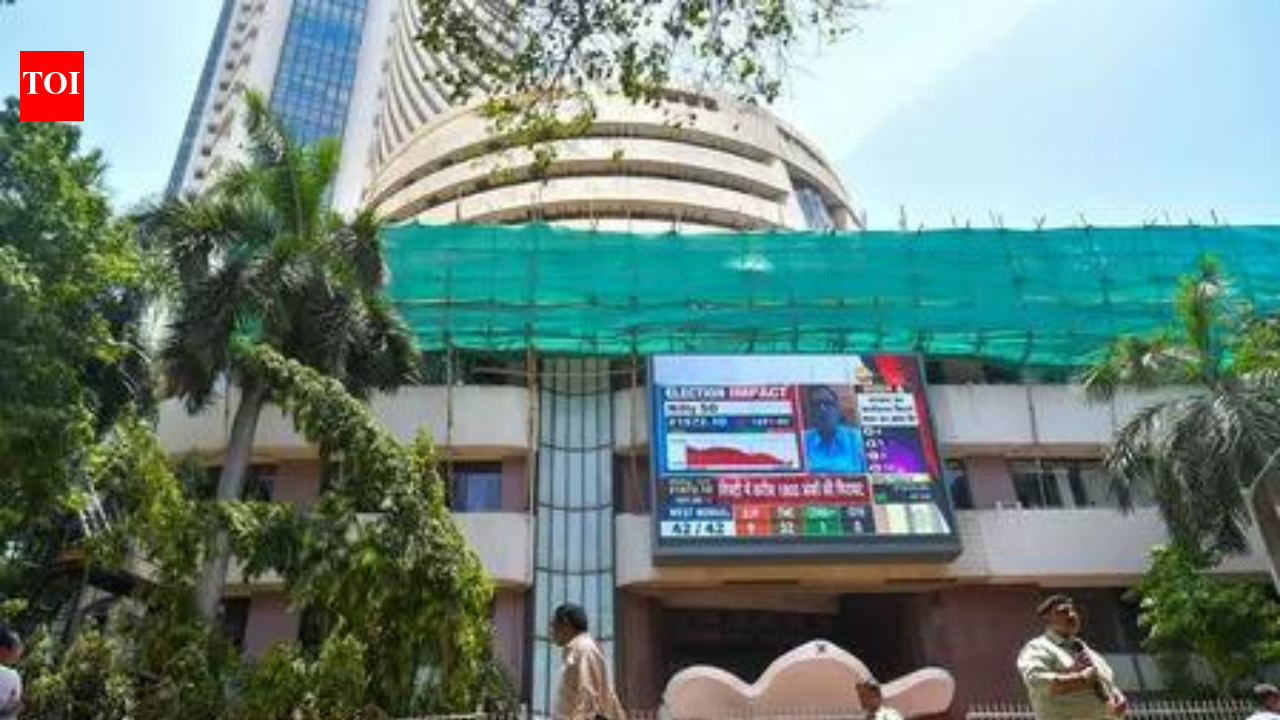
Macroeconomic data, global geopolitical developments and rising concerns over AI-related disruptions are likely to dictate stock market sentiment in the coming week, analysts said, even as investors remain cautious amid persistent volatility.Trading activity of foreign investors and movements in the domestic currency are also expected to influence market direction.
Focus on US data, fed outlook and AI risks
“In the near term, with tariff-related concerns easing and the domestic earnings season drawing to a close on a mixed trend, market focus will hinge largely on global cues, including the US labour data and shifting expectations surrounding the US Fed’s policy path”, Vinod Nair, head of research at Geojit Investments Ltd, said, as quoted by news agency PTI.“However, the overall sentiment is likely to remain cautious as investors monitor global AI-driven disruptions and geopolitical risks, while improved valuations and constructive GDP forecasts may help sustain FII inflows”, Nair added.He added that with IT and metals facing persistent structural and external headwinds, market leadership may rotate towards domestically oriented sectors such as banking, automobiles and select consumption-driven segments. However, broader indices are expected to remain range-bound until clearer macroeconomic and policy signals emerge.Analysts said investors will also watch the minutes of the Federal Open Market Committee (FOMC), scheduled for release on Thursday, for cues on the US Federal Reserve’s monetary policy outlook.
Inflation, PMI and external data in spotlight
Ajit Mishra, SVP, research at Religare Broking Ltd, said markets will track wholesale price index (WPI) inflation and balance of trade data for signals on price trends and external sector dynamics.“High-frequency indicators due include HSBC flash PMI readings for manufacturing, services, and composite, along with bank loan growth and foreign exchange reserves data.“These releases will be evaluated for confirmation of growth momentum amid volatile global cues and continued repricing in technology stocks,” he said, as per PTI.Strong US jobs data has already reduced expectations of near-term Federal Reserve rate cuts, pressuring global risk assets and contributing to domestic market weakness, Mishra added.
Benchmarks end lower amid tech selloff
On a weekly basis, the 30-share BSE Sensex slumped 953.64 points, or 1.14 per cent, while the NSE Nifty dropped 222.6 points, or 0.86 per cent.Both indices ended the week on a negative note as a global selloff in technology stocks and concerns over artificial intelligence-led disruptions weighed on sentiment.On Friday alone, the Sensex tumbled 1,048.16 points to close at 82,626.76, while the Nifty plunged 336.10 points to settle at 25,471.10 amid a broad-based selloff, particularly in metal, IT and commodity stocks.“The Nifty IT index touched a 10-month low during the session before closing 1.4 per cent lower… The sector continues to face headwinds amid rising concerns that rapid AI advancements could disrupt traditional service models and weigh on future revenue visibility,” Siddhartha Khemka of Motilal Oswal Financial Services Ltd said, as per PTI.Metal stocks also saw profit-booking amid a stronger dollar index and reports that Russia may consider re-entering the US-dollar settlement system, raising concerns over weaker realisations for metal companies, Nair said.The broader market remained under pressure, with the BSE SmallCap Select Index falling 1.90 per cent and the MidCap Select Index slipping 1.19 per cent.
Rupee, FII flows and global markets
The rupee consolidated in a narrow range and settled 5 paise lower at 90.66 against the US dollar on Friday.Foreign institutional investors bought equities worth Rs 108.42 crore on Thursday, while domestic institutional investors were also net buyers of Rs 276.85 crore, according to exchange data.Analysts noted that while the previous week saw support from favourable developments in the India-US trade deal and renewed FII inflows, sentiment turned cautious following escalating concerns over AI-led disruptions and a global technology selloff.Geopolitical tensions and continued repricing in technology stocks have increased sectoral volatility, prompting widespread selling pressure.Market experts said broader indices are likely to stay range-bound until clearer macroeconomic signals and policy clarity emerge, with global cues continuing to dominate investor sentiment in the near term.
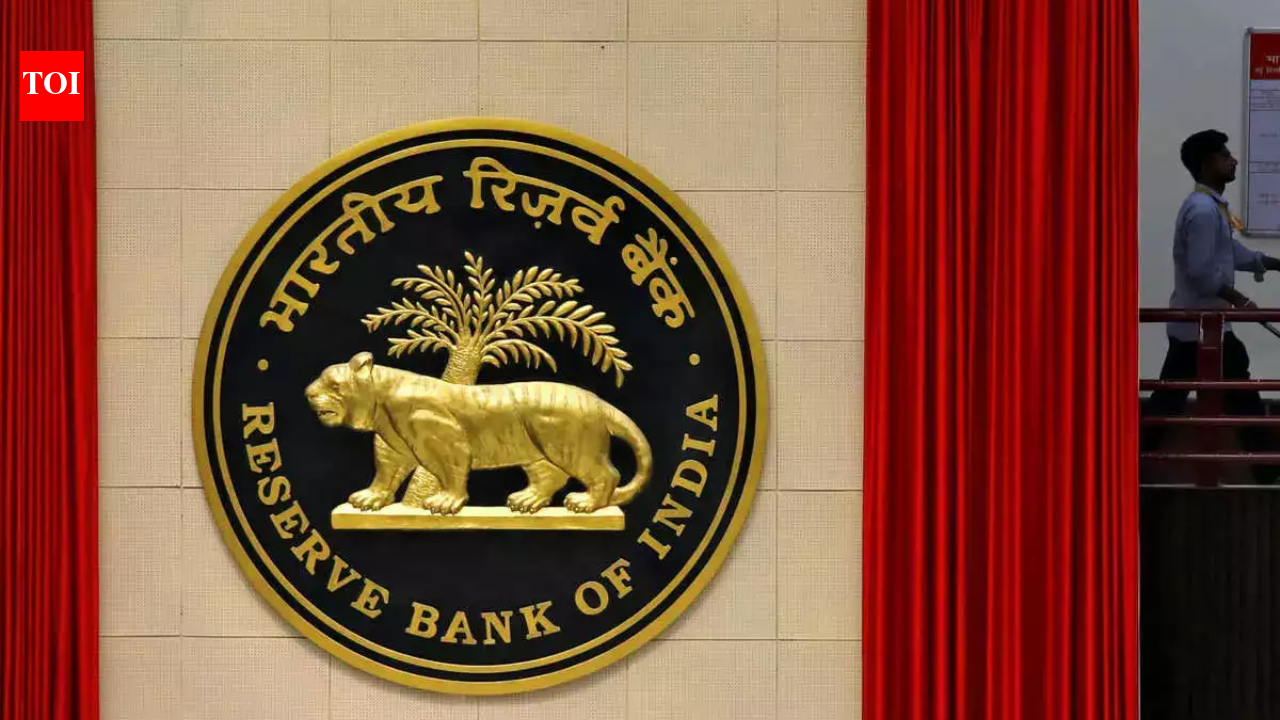
The Reserve Bank of India (RBI) on Monday decided against activating the countercyclical capital buffer (CCyB), indicating that current financial and credit conditions do not warrant an additional capital requirement for banks, PTI reported.The central bank said the decision followed a review and empirical assessment of indicators used under the CCyB framework.“Based on review and empirical analysis of CCyB indicators, it has been decided that it is not necessary to activate CCyB at this point in time,” RBI said in a statement.Under the RBI (Commercial Banks – Prudential Norms on Capital Adequacy) Directions, 2025, the CCyB framework is activated when financial conditions indicate rising systemic risks linked to excessive credit growth.The framework primarily relies on the credit-to-GDP gap as a key indicator, along with supplementary metrics.According to the RBI, the CCyB mechanism is intended to serve two broad objectives.Firstly, it requires a bank to build up a buffer of capital in good times, which may be used to maintain the flow of credit to the real sector in difficult times.Secondly, it achieves the broader macro-prudential goal of restricting the banking sector from indiscriminate lending in the periods of excess credit growth that have often been associated with the building up of system-wide risk.The framework was introduced globally after the 2008 financial crisis as part of measures proposed by the Group of Central Bank Governors and Heads of Supervision (GHOS) under the Basel framework to strengthen financial system resilience.

The company has announced plans to build seven new models in Europe including a small electric hatchback.
Source link

“Today’s policymaking is constrained by a more volatile external environment with more frequent and overlapping shocks, a rising public interest bill, in part reflecting market concerns with countries’ elevated debt, and the long-standing challenge of weak productivity growth,” he said.


Two Americans arrested at Japanese zoo

Turkiye’s current account deficit expected to widen in 2026: Minister

UK’s clothing imports fall 3% in Q1, sharply lower than Q4 2025

-

 Entertainment6 days ago
Conan O’Brien hat tricks as Oscar host
-

 Tech1 week ago
Could Contact-Tracing Apps Help With the Hantavirus? Not Really
-

 Fashion5 days ago
Italy’s Zegna Group’s Q1 growth boosted by strong organic performance
-

 Sports1 week ago
Bobby Cox, legendary Atlanta Braves manager who led 1995 World Series champions, dead at 84
-

 Entertainment1 week ago
Martin Short: Facing tragedy with joy
-

 Entertainment1 week ago
Tom Brady gets back at Kevin Hart during Netflix roast
-

 Sports1 week ago
Jacob Fatu unleashes vicious assault on Roman Reigns after World Heavyweight Championship loss at WWE Backlash
-

 Entertainment1 week ago
Martha Stewart: How to make an omelet