

Politics
Global science heavyweights converge in UAE for World Laureates Summit

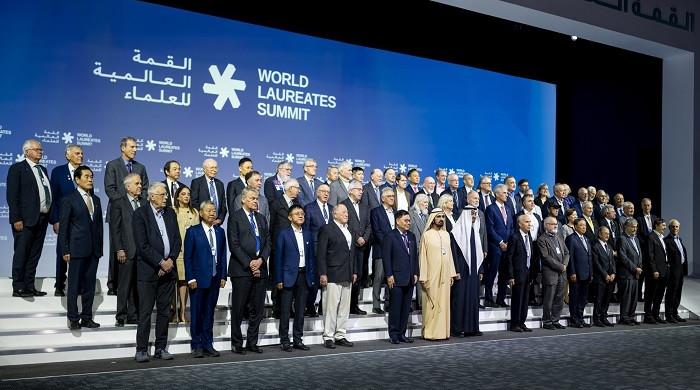
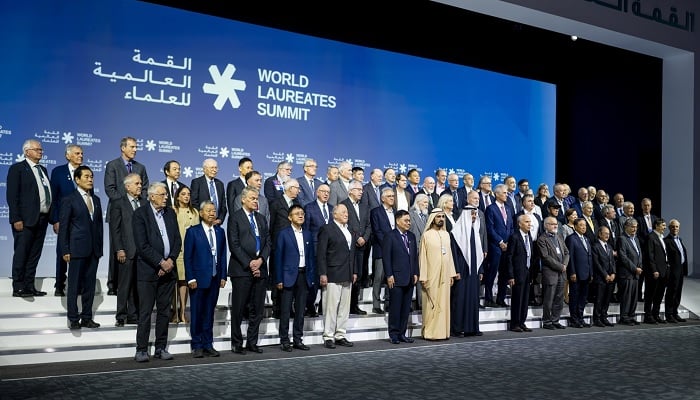
DUBAI: The United Arab Emirates on Sunday opened the World Laureates Summit, the world’s largest gathering of Nobel Prize winners, bringing leading scientists and thinkers to Abu Dhabi to discuss some of the most pressing global challenges.
The summit brings together more than 150 Nobel laureates, scientists and policymakers from around the world to exchange ideas on issues ranging from climate change and health to technology, education and sustainable development, highlighting the UAE’s growing role as a hub for global scientific dialogue.
The three-day summit runs alongside the World Governments Summit 2026. It was inaugurated by UAE President Sheikh Mohamed bin Zayed and UAE Vice-President, Prime Minister and Dubai ruler Sheikh Mohammed bin Rashid Al Maktoum.
Discussions focus on artificial intelligence, quantum science, nanotechnology, biotechnology, and energy.
Experts say fundamental science is key to shaping global policy and sustainable development.
Sheikh Mohamed bin Zayed said scientists were “essential partners in building the future.” Sheikh Mohammed called science “the true wealth of nations.”
The World Laureates Association also announced a new UAE base. Organisers said it will turn the country into a hub for international research collaboration.
The summit aims to link scientific innovation directly to policy decisions. It highlights the UAE’s growing role as a global platform for knowledge and technology.
- Family of US detainee urged Afghan leader to release him for Eid.
- Afghan top court deems detention sufficient, orders release.
- Coyle, 64, arrested by Afghan authorities in January 2025.
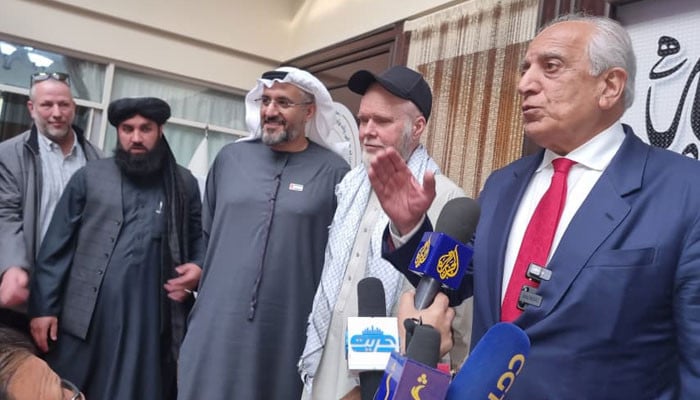
KABUL: Afghanistan’s Taliban government announced on Tuesday that it was freeing a US national who had been detained for more than a year.
The foreign ministry said the family of linguist and researcher Dennis Coyle had written to the supreme leader of Afghanistan, requesting his release for Eid.
“The Supreme Court of the Islamic Emirate deemed his period of detention sufficient and decided on his release,” a statement read.
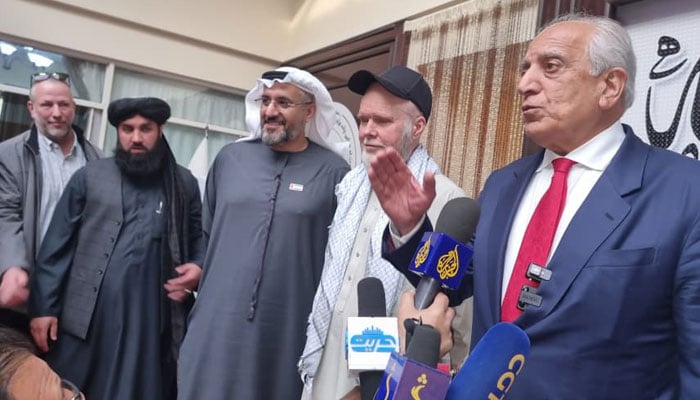
The announcement came after a meeting of Foreign Minister Amir Khan Muttaqi, US former special envoy to Afghanistan Zalmay Khalilzad, the UAE ambassador to Kabul Saif Mohammed Al-Ketbi, and a member of Coyle’s family.
The UAE facilitated the release, the ministry said, adding that Coyle had been reunited with his family in Kabul on Tuesday.
Coyle, 64, was arrested by the Afghan authorities in January 2025, according to the Foley Foundation, which advocates for the release of Americans taken hostage or arbitrarily detained abroad.
A website set up by his family, freedenniscoyle.com, said he was “legally working to support Afghan communities as an academic researcher” when he was detained.
They said he had been held in “near-solitary conditions, requiring permission even to use the bathroom, and without access to adequate medical care”.
Coyle first travelled to Afghanistan in the early 2000s “to survey Afghanistan’s rich linguistic diversity and help Afghan communities develop resources in their own languages”, they added.
“Throughout his years of service, Dennis maintained a home in Kabul and built deep, meaningful relationships with the Afghan people,” the website read.
“Those who know him speak with profound appreciation for both the man and his work. Dennis has always embraced Afghan culture with genuine warmth – sharing cups of traditional green tea, enjoying dried fruit snacks, and engaging in the kind of heartfelt conversations that bridge cultures.
“His love for the Afghan people isn’t just professional; it’s personal and deeply felt.”
Earlier this month, Secretary of State Marco Rubio said the United States had formally placed Afghanistan on its list of countries engaged in “wrongful detentions”.
The Afghan authorities called that “regrettable” and pointed to talks between the two sides and previous releases with mediators from Qatar.
In 2025, five American citizens were released in what the Taliban authorities said was a “goodwill gesture”.
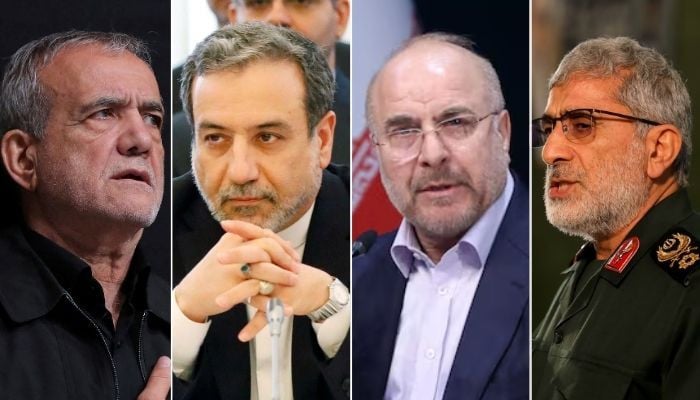
He is, according to President Donald Trump, a “top person” in the Iranian system who is “most respected” and is in an unenviable position.
But who is the senior figure talking with the United States on the future of Iran after over three weeks of the Israeli-US war against the Islamic republic?
The individual, said Trump, is not supreme leader Mojtaba Khamenei, who succeeded his father, Ali Khamenei, after the killing of the ex-number one at the start of the war on February 28.
After the killing of national security chief Ali Larijani in an Israeli strike last week, attention has focused on parliament speaker Mohammad Bagher Ghalibaf, who has survived the war so far.
But Trump gave no names, saying: “I don’t want him to be killed.”
Here are five possible figures.
Parliament speaker Mohammad Bagher Ghalibaf
Ghalibaf has been pinpointed by several analysts as the de-facto wartime leader of Iran following the assassination of Khamenei and Larijani and the failure of Mojtaba Khamenei to make any public appearance.
During three decades at the centre of the Iranian system he has held posts straddling civilian and military life, as commander of the aerospace forces of the Revolutionary Guards, Tehran police chief, Tehran mayor and now parliament speaker.
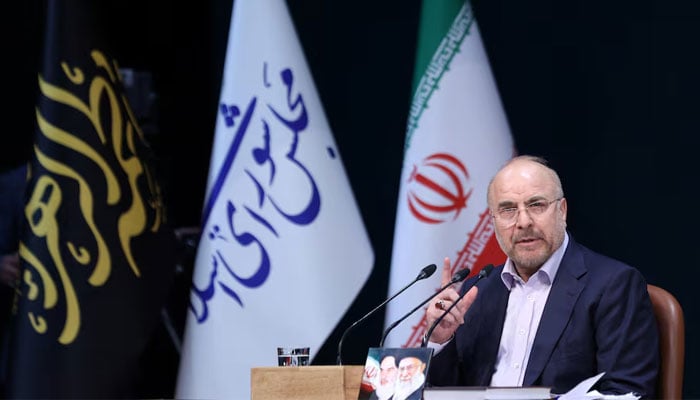
Regarded as deeply ambitious, he stood for president on three occasions but was never successful. After a report in Israeli media said he was the interlocutor of the US, he posted on X that “no negotiations have been held with the US” and denounced “fakenews”.
President Masoud Pezeshkian
President since 2024 after an election held following the death of former president Ebrahim Raisi in a helicopter crash, Pezeshkian is seen as belonging to the more moderate wing of politics in the Islamic republic.
However, his position as president in no way makes him Iran’s number one, with the supreme leader having the final say on all key matters, although how the power structures work in the post-Ali Khamenei era remains unclear.
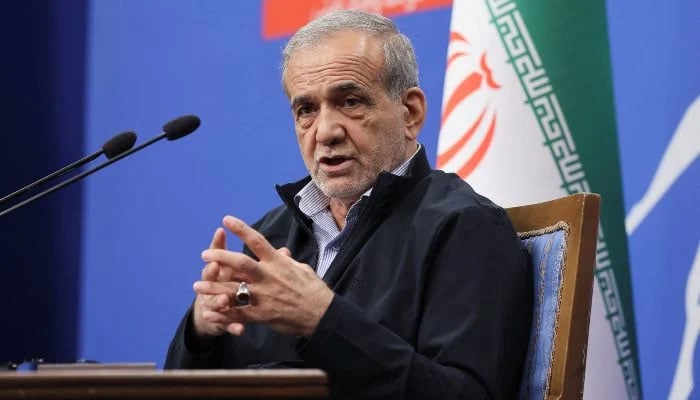
Seeking to promote himself as an ordinary man of the people, Pezeshkian took to the streets earlier this month for a mass pro-government rally in favour of the Palestinian cause, taking selfies with well-wishers. Larijani also took part in the same event, only to be killed days later.
Foreign Minister Abbas Araghchi
A veteran diplomat, Araghchi has held the post since 2024 following the death of former foreign minister Hossein Amir Abdollahian in the same helicopter crash that killed Raisi.
He acted as Iran’s representative in talks last month with US envoys Steve Witkoff and Jared Kushner in Oman that were mediated by the Gulf sultanate and failed to stop the march to war.
The New York Times said Tuesday, citing US and Iranian officials, that Araghchi and Witkoff had “direct communication” in recent days, which, according to Iranian officials, amounted to “essentially probes on how to de-escalate the conflict”.
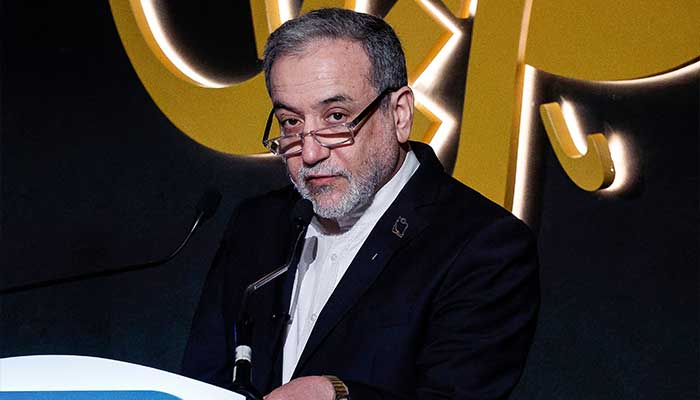
Araghchi, who holds a doctorate in political thought from the University of Kent in England, has vigorously defended Iran’s position in TV interviews including with American media. But his position as foreign minister seems unlikely to equate to that of a “top person”.
Revolutionary Guards Commander-in-Chief Ahmad Vahidi
A former interior and defence minister, Vahidi is the third commander-in-chief of Iran’s ideological army in less than a year after his predecessor Mohammad Pakpour was killed on the first day of the war and Hossein Salami was killed during Israel’s 12-day war against Iran in June 2025.
Possibly for this reason, Vahidi has kept a very low profile in this war, making no public appearance.
Only one statement has been issued in his name as commander on March 19, expressing his condolences for the killing of the commander of the Guards’ Basij militia, Gholamreza Soleimani, in an airstrike.
Quds force commander Esmail Ghaani
Ghaani became commander of the force responsible for the external operations of the Revolutionary Guards after the killing of Qassem Soleimani in a US strike in Iraq in 2020.
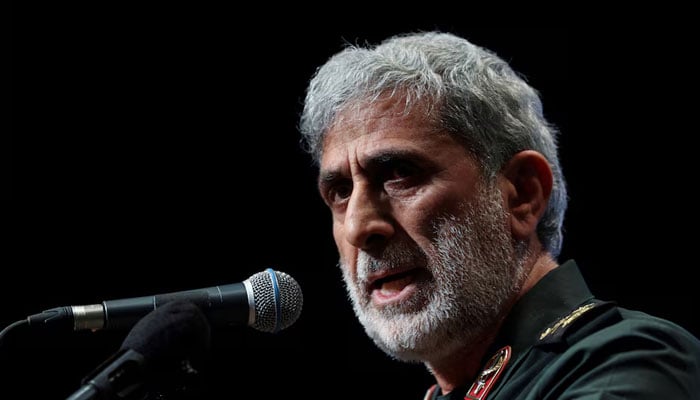
Ghaani was reportedly killed in the June 2025 war, but then later re-emerged in public. Intense speculation has since surrounded his whereabouts and standing, amid reports he has come under pressure due to alleged intelligence lapses, including the 2024 killing in Lebanon by Israel of Hezbollah chief Hassan Nasrallah.
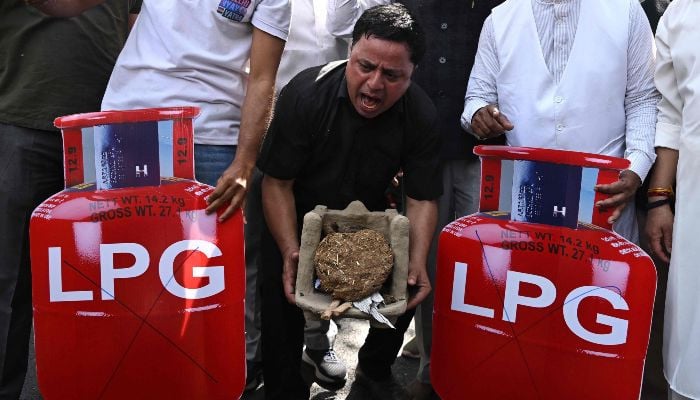
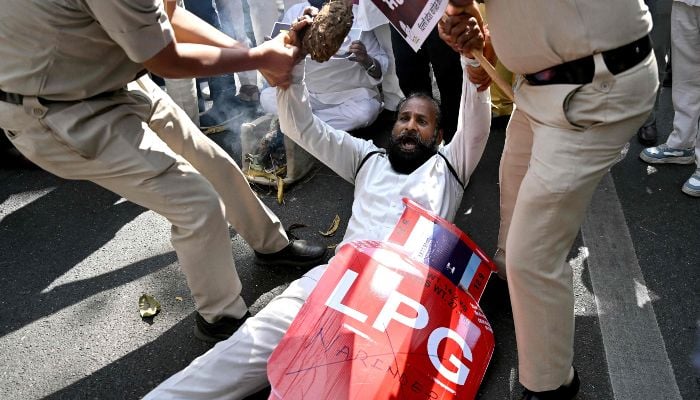
NEW DELHI: Soaring black-market prices of cooking gas in India’s capital are pushing poorer families back to wood and coal, raising health risks and worsening air quality in the highly polluted megacity.
India is the world’s second-largest buyer of liquefied petroleum gas (LPG), which is used for cooking and predominantly sourced from the Middle East — and supplies have been strangled by the ongoing war.
India’s Prime Minister Narendra Modi has urged states to curb black marketing and avoid panic, stressing that India’s energy supplies remain stable.
In the low-income Madanpur Khadar neighbourhood, 36-year-old domestic helper Sheela Kumari says she has been forced to abandon LPG cooking gas cylinders for cooking after prices more than doubled.
“We used to buy cylinders for INR 1,800-2,000 ($19-$21), but now on the black market it has gone up to 5,000 ($53),” she told AFP, nearly as much as she entire monthly salary of INR 6,000.
“It is unimaginable for us,” she said. “The next best option for us was going back to wood and coal.”
Kumari said a 14 kilogramme cylinder lasts only 15-20 days for her family of six, even when they stretch its use out.
But she says a 10 kilogramme bundle of firewood, lasting several days, costs 30 rupees ($0.30).
“There are health repercussions, and my children cough,” she said. “But tell me a way out?”
‘Too expensive’
Her neighbour, 45-year-old Munni Bai, who has asthma, had switched to using an electric cooker as well as biogas from cow dung, to help her breathing.
But now she said she was being forced to resume use of alternative fuels.
“Gas is too expensive,” she said. “We cannot depend on it — we moved from coal and wood, due to my health issue, but now it is difficult to sustain.”
But activists say the problem is more about access.
Many migrant workers lack documentation needed for subsidised LPG and rely on informal markets, where hoarding has pushed up prices.
“There is no major shortage yet, but hoarding has increased,” said Deepak, who uses only one name, from the Centre for Advocacy and Research (CFAR).
“Many migrants depend on black-market cylinders, and prices have gone up two to three times”.
New Delhi, and its wider sprawling metropolitan region of 30 million residents, is regularly ranked among the world’s most polluted capitals, due to a deadly mix of emissions from power plants, heavy traffic, as well as the burning of rubbish and crops.
For the past decades, India’s government has pushed its “Ujjwala” or “light” clean-energy scheme, to provide over 100 million LPG connections to poor households.
Burning wood, coal and biomass indoors exposes families to high levels of smoke and toxic particles, increasing the risk of respiratory illnesses.
Women and children, who spend more time near cooking areas, are especially vulnerable.

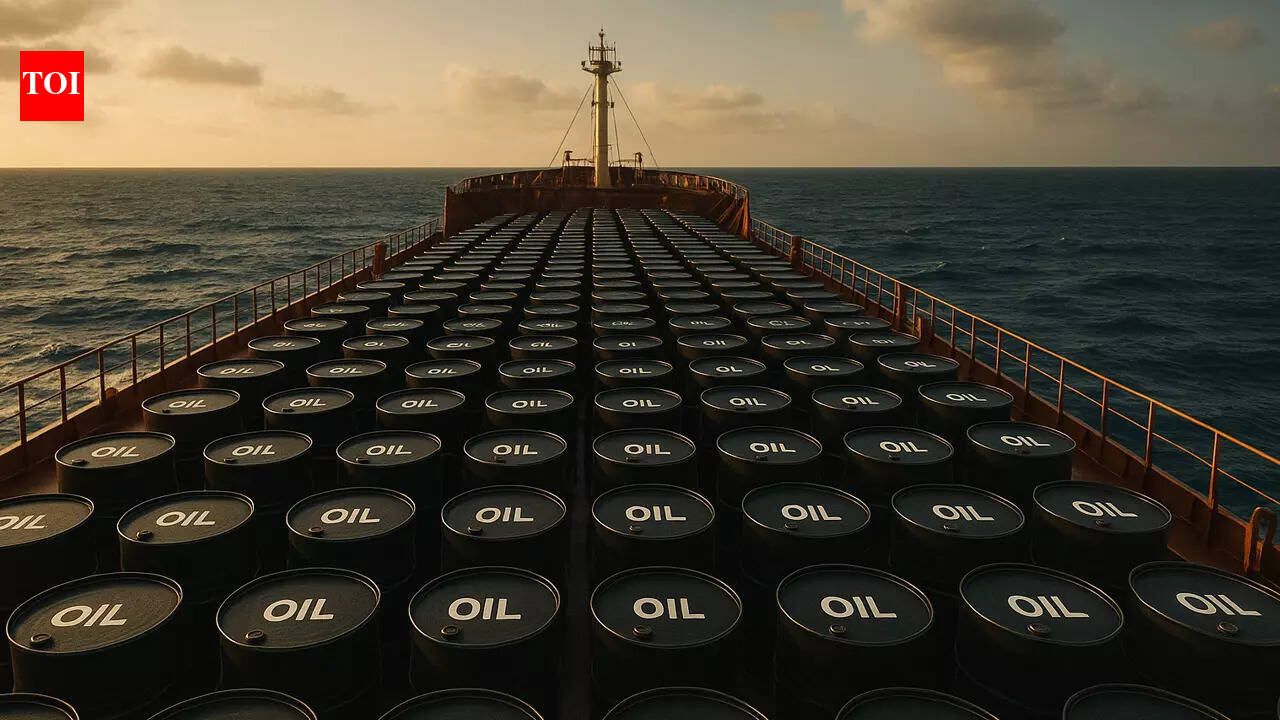
After Trump’s sanction waiver, Reliance Industries procures 5 million barrels of Iran crude oil: Report – The Times of India

Kate Hawley wins Best Costume Design for ‘Frankenstein’ at Oscars 2026

Zayn Malik sends fans into meltdown with new music video

-
 Entertainment1 week ago
Strategic oil stocks to be released ‘immediately’ in Asia and Oceania: IEA
-
 Tech7 days ago
Justice Department Says Anthropic Can’t Be Trusted With Warfighting Systems
-
 Business1 week ago
UK looking at all options to secure Strait of Hormuz, says Ed Miliband
-

 Tech1 week ago
Early Deals From the Amazon Spring Sale That Passed Our BS Test
-

 Sports6 days ago
March Madness 2026 – How to watch in SA, start time, schedule, TV channel for NCAA championship basketball tournament
-

 Fashion1 week ago
Trump signs order to combat fraudulent ‘Made in America’ labels
-
 Business1 week ago
Stocks To Watch: Tata Motors, IndiGo, Jindal Stainless, GMR Airports, Hindalco, And Others
-

 Sports1 week ago
Men’s March Madness 2026 bracket: Get to know all 68 teams