

Business
GM tops earnings expectations, announces dividend increase and stock buyback program


DETROIT – General Motors beat Wall Street’s fourth-quarter earnings expectations Tuesday, while guiding for another year of “strong financial performance” in 2026.
The Detroit automaker, which slightly missed revenue expectations, also announced a 20% increase in its quarterly dividend and a new $6 billion share repurchase authorization.
GM stock rose 8.75% Tuesday.
Here’s how the company performed in the fourth quarter, compared with average estimates compiled by LSEG:
- Earnings per share: $2.51 adjusted vs. $2.20 expected
- Revenue: $45.29 billion vs. $45.8 billion expected
GM’s 2026 earnings guidance is better than its expectations and results from last year. It includes net income attributable to stockholders of between $10.3 billion and $11.7 billion; adjusted earnings before interest and taxes of $13 billion to $15 billion; and EPS of between $11 and $13 for the year.
Those expectations include anticipated spending of between $10 billion and $12 billion for the automaker, which continues to reevaluate its product portfolio away from all-electric vehicles amid billions of dollars in write-downs.
GM CEO Mary Barra told investors during a call Tuesday that the automaker expects to return to adjusted profit margins of between 8% and 10 % this year in North America. It was 6.8% in 2025, down from 9.2% the prior year.
GM’s 2025 results included $2.7 billion in net income attributable to stockholders, or earnings per share of $3.27; EBIT-adjusted earnings of $12.7 billion, or $10.60 per share; and adjusted automotive free cash flow of $10.6 billion. Those results were largely down double digits compared with 2024.
The company’s 2026 adjusted EPS target is in line with consensus of $11.73 per share, according to LSEG.
GM’s 2025 revenue was down 1.3% compared with 2024 to $185.02 billion, including a 5.1% decline, to $45.3 billion from a year earlier, during the fourth quarter.
During the final quarter of last year, the Detroit automaker reported EBIT-adjusted earnings of $2.8 billion and a net loss attributable to stockholders of $3.3 billion, or a loss of $3.60 a share, compared with a net loss of $2.96 billion, or a loss of $1.64 a share, a year earlier. The loss includes more than $7.2 billion in special charges largely related to its pullback in electric vehicles and restructuring efforts in China.
GM preannounced $7.1 billion of the special charges for the fourth quarter earlier this month. The additional special charges included $357 million in “legal matters,” related to OnStar and airbags, $5 million for its recent headquarters move and $133 million related to its defunct Cruise robotaxi unit.
Automakers commonly exclude “special items” or one-time charges from their adjusted financial results to provide investors with a clearer picture of their core, ongoing business operations.
Barra said the automaker’s significantly downsized headquarters in Detroit is expected to save the automaker hundreds of millions of dollars annually.
Despite the automaker’s ongoing reevaluation, Barra said GM remains in a strong position to return capital to shareholders.
To continue those efforts, the company said Tuesday that its board is authorizing a new $6 billion share repurchase and increasing its quarterly common stock divided by 3 cents to 18 cents per share.
Mary Barra, chairman and chief executive officer of General Motors Co., speaks during the grand opening of General Motors global headquarters at Hudson’s Detroit in Detroit, Michigan, US, on Monday, Jan. 12, 2026.
Jeff Kowalsky | Bloomberg | Getty Images
That continues GM’s ongoing effort to reduce its outstanding shares to help boost its stock price. To end last year, the company had 904 million shares outstanding. That was down from 995 million at the end of the prior year, and 1.2 billion to end 2023.
Regionally, GM’s North American operations continued to lead the automaker’s results, but were down 28.1% last year to $10.45 billion, including a 1.3% loss during the fourth quarter to $2.24 billion.
GM CFO Paul Jacobson said U.S. tariffs cost the automaker $3.1 billion in 2025, below the company’s previous expectations of between $3.5 billion and $4.5 billion.
The Detroit automaker’s international operations — such as South Korea, Brazil and the Middle East — reported adjusted earnings of $737 million last year, up $434 million compared with 2024. Its equity income from China was a loss of $316 million, down from a $4.4 billion loss in 2024.
Barra on Tuesday said GM is “hopeful” the U.S. and South Korea can finalize a new trade deal with South Korea that includes a 15% tariff on vehicles exported to the U.S. from South Korea, which was used in GM’s 2026 forecast.
President Donald Trump on Monday said the U.S. would increase the tariff back to 25% after the South Korean legislature failed to approve the pact.
“We’re really encouraging the countries to get the trade deal done that they agreed to last October,” Barra told CNBC’s Phil LeBeau during “Squawk Box.”
GM is the second-largest U.S. importer of vehicles behind South Korean automaker Hyundai Motor. The Detroit automaker relies heavily on plants in the country for entry-level vehicles such as the Chevrolet Trax and Buick Envista.





Business
Coal gasification to boost energy security and cut imports, says G Kishan Reddy – The Times of India
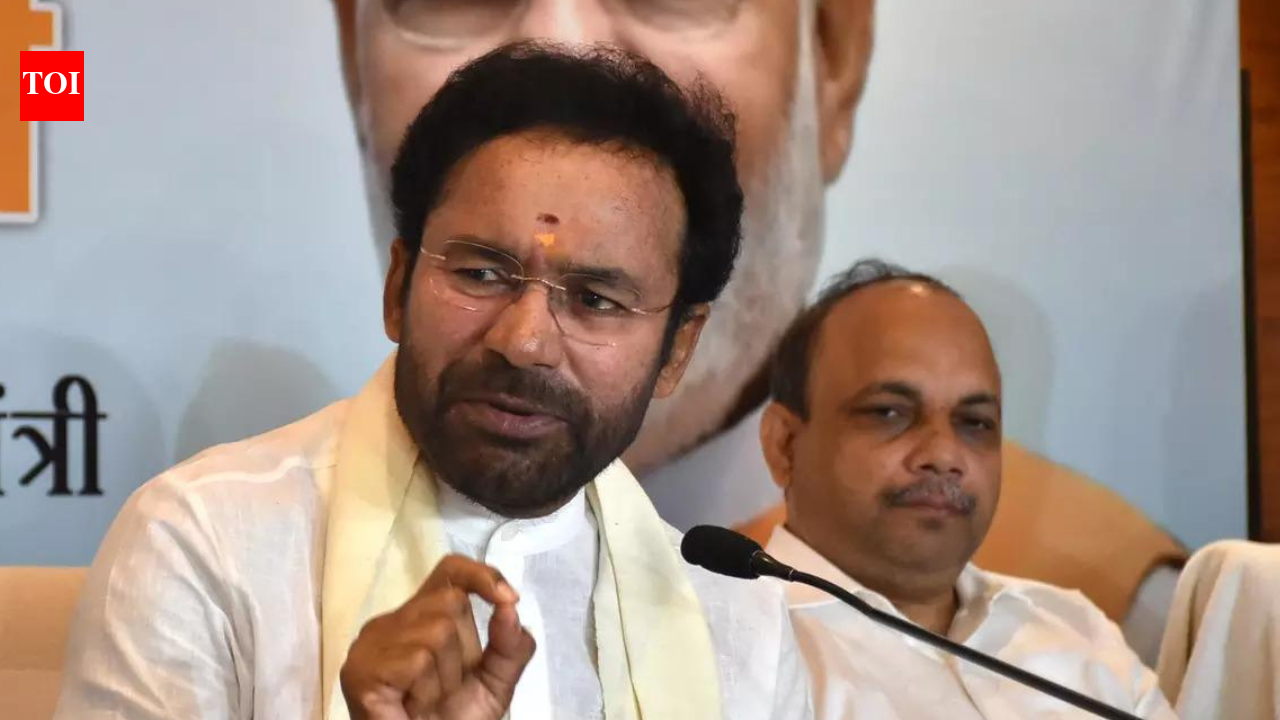
Union coal and mines minister G Kishan Reddy on Sunday said coal gasification will play a critical role in enhancing India’s energy security, reducing import dependence and supporting industrial growth.The renewed push has gained urgency amid the ongoing Middle East conflict, which has led to a surge in global energy prices.Speaking at the Bharat Electricity Summit 2026, the minister described coal gasification as a transformative technology that converts coal into syngas, which can be used to produce cleaner fuels, chemicals, fertilisers and hydrogen, as reported by PTI.He said the approach would enable more efficient and sustainable utilisation of domestic resources while strengthening economic resilience.Reddy highlighted India’s dependence on energy imports, noting that the country imports about 83 per cent of its crude oil requirements, 50 per cent of natural gas and more than 90 per cent of methanol and fertilisers, making energy security a strategic priority.To promote adoption of the technology, the Centre has launched the National Coal Gasification Mission with a target of achieving 100 million tonnes of coal gasification by 2030.“…. An incentive framework of Rs 8,500 crore has been introduced to support public and private sector projects, with several large-scale initiatives already underway and investments exceeding Rs 64,000 crore in the pipeline,” he said.The minister also pointed to advanced technologies such as Underground Coal Gasification, which can help tap previously inaccessible reserves while lowering environmental impact.Calling for greater collaboration, Reddy said coal gasification spans multiple sectors including power, oil and gas and fertilisers, and requires a coordinated ecosystem involving industry, academia, start-ups and research institutions.He reiterated the government’s commitment to streamlined approvals, supportive policies and incentives to encourage early participation and investment.Expressing confidence in India’s potential, the minister said that with innovation, indigenous technology development and coordinated efforts, the country can emerge as a global leader in clean coal technologies while advancing energy security, sustainability and self-reliance.
Business
Sri Lanka increases fuel prices around 25% as Middle East tensions disrupt global oil supplies – The Times of India
Sri Lanka on Sunday raised fuel prices by around 25 per cent, marking the second increase within a week as the ongoing Middle East conflict continues to disrupt global energy markets, news agency PTI reported.The price revision, effective from midnight, comes as tensions triggered by joint US–Israel strikes on Iran and retaliatory action by Tehran have spread across the Gulf region, leading to the closure of the Strait of Hormuz — a key global energy transit route.According to official announcements, the price of auto diesel rose 26.1 per cent from Sri Lankan rupees (LKR) 303 to LKR 382 per litre, while super diesel increased 25.5 per cent from LKR 353 to LKR 443. Petrol 92 octane climbed 25.6 per cent from LKR 317 to LKR 398, petrol 95 octane rose 24.7 per cent from LKR 365 to LKR 455, and kerosene jumped 30.8 per cent from LKR 195 to LKR 255.This is the third fuel price hike since March 1 and comes as the conflict, which has unsettled global oil markets, entered its fourth week.With the latest revision, retail fuel prices in Sri Lanka are set to return close to levels seen during the 2022 economic crisis, when the country declared its first-ever sovereign default since independence in 1948. The unprecedented financial turmoil at the time forced then president Gotabaya Rajapaksa to resign amid widespread civil unrest.The steep increase has sparked concern among transport operators. Non-state bus owners warned that up to 90 per cent of their fleet could be taken off the roads unless fares are revised.“This is the biggest rise of diesel ever. We will not be able to operate buses without an adequate fare revision. We need a minimum 15 per cent fare hike to stay afloat,” Gamunu Wijeratne, chairman of the Lanka Private Bus Owners’ Association, told reporters.The association threatened a nationwide strike if authorities fail to announce a scheduled fare revision.Responding to the developments, the National Transport Commission (NTC) said the latest diesel price increase, when applied to its fare formula, translates into a rise of more than 10 per cent in current bus fares. NTC Director General Nilan Miranda said Cabinet approval is expected on Monday to implement revised fares, according to media reports.Private operators account for about 65–75 per cent of the island nation’s public transport fleet, while the state-run share stands at around 25–35 per cent.Three-wheeler taxi operators, many of whom use petrol vehicles dominated by India’s Bajaj brand, said the price of commonly used petrol had risen to nearly LKR 400 per litre.“Who would want to ride with us at this rate?” a three-wheeler driver said, as quoted news agency PTI.Apart from state-owned Ceylon Petroleum Corporation (CPC), fuel retailing in Sri Lanka is also carried out by Lanka IOC — a subsidiary of IndianOil –as well as China’s Sinopec and Australia’s United Petroleum. Following CPC’s decision, LIOC and Sinopec also revised their retail fuel prices, media reports said.Opposition leaders criticised the government’s tax policy, claiming that authorities collect about LKR 119 per litre of petrol and LKR 93 per litre of diesel in taxes. They demanded that these levies be scrapped to provide relief to consumers.Analysts warned that the fresh fuel price hike could push inflation higher by 5–8 per cent.Earlier, government spokesman and minister Nalinda Jayatissa said that despite the price revisions, the government continues to bear a monthly subsidy burden of around Rs 20 billion by subsidising diesel by Rs 100 per litre and petrol by Rs 20 per litre.He said that without the revision, the state would have faced an additional financial burden of approximately $1.5 billion. Jayatissa urged the public to consume electricity and fuel “mindfully” and warned against hoarding, calling on citizens to report any such attempts.

The discussion of ways to mitigate any energy price rises came after the government’s cost-of-living tzar, Lord Walker, who is also chief executive of supermarket chain Iceland, suggested in the Sunday Times that energy companies and petrol stations should have their profits temporarily capped as oil prices jump.


Men’s March Madness live tracker: Updates from all of Sunday’s games

Man City beat passive Arsenal in Carabao Cup; Premier League title race not over?

Uma Thurman bags praise from ‘Pretty Lethal’ director Vicky Jewson

Tips and Advice for Buying Used or Refurbished Electronics

UAE savings strategies 2026 explained: Best apps, tools, budget rules and smart money hacks to beat rising cost of living in emirates – The Times of India

Iran threatens US-linked oil facilities after Kharg Island bombed

-
 Tech1 week ago
Tips and Advice for Buying Used or Refurbished Electronics
-
Business1 week ago
UAE savings strategies 2026 explained: Best apps, tools, budget rules and smart money hacks to beat rising cost of living in emirates – The Times of India
-

 Fashion1 week ago
US court to review de minimis ban on imports from China & Hong Kong
-
 Politics1 week ago
Iran threatens US-linked oil facilities after Kharg Island bombed
-

 Entertainment1 week ago
Iran at war
-

 Sports1 week ago
Japan suffers shocking collapse to Venezuela in World Baseball Classic
-
 Entertainment1 week ago
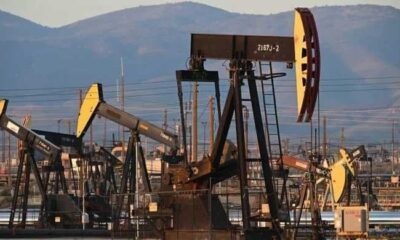
Strategic oil stocks to be released ‘immediately’ in Asia and Oceania: IEA
-

 Sports1 week ago
College Basketball Invitational abruptly cancels 2026 tournament