

Business
Gold is still expensive by Rs 2,000 today, how much has it become per tola? – SUCH TV


Gold and silver prices in Pakistan continue to climb, setting new all-time highs in both local and international markets.
Today, 24-carat gold per tola surged by Rs 2,000, reaching Rs 472,862, while silver also posted significant gains.
The price of 24-carat gold per tola increased by Rs 2,000, marking a historic record in Pakistan. Meanwhile, ten grams of gold rose by Rs 1,714, reaching Rs 405,402.
Globally, gold per ounce crossed the $4,500 mark, up $20 from previous levels, closing at $4,505. Experts attribute the surge to growing demand and international market fluctuations.
Silver follows upward trend
Silver prices also recorded notable gains today. In Pakistan, silver per tola rose by Rs 500 to a record Rs 7,705. Similarly, ten grams of 24-carat silver reached Rs 6,605, while international silver touched $72.30, up $5 from previous trading levels.
The All-Pakistan Sarrafa-Gems and Jewellers Association noted that these increases reflect both local demand and global market trends.




When you think of an investor, what kind of person comes to mind? What are their interests, their job? Are they an older man wearing a pin-striped suit and a bowler hat?
It might surprise you that the average investor age in the UK is 49 years old – down from 55 years old over the last five years.
And with more than 13 million DIY investor accounts in the UK, it’s likely that the average investor looks more like one of your mates than someone out of The Wolf of Wall Street.
The UK is historically quite wary of investing, and it’s been something that the financial industry and governments have been trying to tackle for years.
We’re starting to see the fruits of these efforts trickle through; latest Boring Money data reveals that DIY investing accounts grew over 19 per cent in the last year. Roughly one-third of the population now invests, up from about a quarter in 2020, and it’s becoming more mainstream by the day.
Start small, stay consistent – let the market do the work
It’s a common misconception that you need to have a lot of money to be an investor. The median amount invested by DIY investors is around £15,000, but you can start with as little as £1.
Neither does it have to be done in one big hit. Lots of providers allow you to set up regular investing – often £25 a month minimum, but a few let you regularly invest less.
Setting up these direct debits can also be a good idea – you drip feed into markets and average out the price which you buy at, so smoothing out any ups and downs along the way.
And you don’t have to be a maths genius or obsessively checking the markets – there are plenty of tools and account types that can do this for you.
Get a free fractional share worth up to £100.
Capital at risk.
Terms and conditions apply.
ADVERTISEMENT

Get a free fractional share worth up to £100.
Capital at risk.
Terms and conditions apply.
ADVERTISEMENT

Robo-advisors are automated, algorithm-driven financial planning and investment services requiring little to no human supervision. A typical robo-advisor asks questions about your financial situation and future goals when you set up the account, then will match you to one of their ready-made portfolios and automatically invest for you.
Find your investment “playlist”
If you don’t want to go down the robo-route, but aren’t sure which to pick, you can take a look at some of last year’s best-selling funds for inspiration. These four funds below appeared on multiple investment platforms’ best-selling lists every month in 2025.
They are all low-cost global collections of shares which are well diversified. Think of them like an investment playlist curated for you to serve up a bundle of shares in one easy-to-buy package.
The idea is that you can buy one product which is very broadly spread around lots of different companies which minimises the risk of any one thing going horribly wrong.
Fidelity Index World: a very cheap way to buy about 1,300 of the world’s largest companies in one go, pre-wrapped into one single investment product which costs about £1.20 a year for every £1,000 invested here.
HSBC FTSE All-World Index: a similar global option with over 3,000 companies and emerging markets too, so you get exposure to India, China and Brazil too, for example. Good if you don’t want too much exposure to the US.
Vanguard FTSE Global All Cap Index: a very diversified option. It has shares in about 7,000–8,000 companies with a small proportion in smaller companies, about 10 per cent in emerging markets, and slightly less in the US than some peers – a bit pricier than some trackers but still really good value – about £2.30 a year for every £1,000 invested here.
Vanguard LifeStrategy 100% Equity: one with a heavier British weighting – about 20 to 25 per cent invested in the UK.
Starting from scratch
If you’re a total beginner and want one of these global options to get started, you could compare platforms which will let you buy funds and won’t cost a lot for a small amount. Hargreaves Lansdown and AJ Bell are good options if you have small balances and want to buy a fund like the above. Or you can open an ISA with Vanguard and pop one of their ready-made ‘LifeStrategy’ funds into it.
If you prefer to buy and sell shares or exchange traded funds then Trading 212 and Freetrade are good low-cost ISA providers for smaller balances.
Investing has never been easier.
The average investor age is dropping, the amount you need to invest is low, and people are investing less, but more regularly. There are plenty of different platforms, things to invest in and ways to invest.
People talk about “time in the market, not timing the market” – that means if you’re in it for the long-haul, and can afford to invest small amounts regularly, you’ll be in a great place further down the line. The most important thing is to just get started and build up over time.
When investing, your capital is at risk and you may get back less than invested. Past performance doesn’t guarantee future results.

Britain’s competition watchdog has vowed to tackle fake and misleading online reviews “head on” as it launched investigations into firms including Just Eat and Autotrader.
The Competition and Markets Authority (CMA) said reviews are used by 90% of consumers when they buy over the internet and play a large part in the UK’s over £200 billion online retail sector.
But up to 50% of online reviews are fake, according to recent research by tech firm Truth Engine.
The CMA said its latest action against firms comes as part of a clampdown on fake and misleading reviews as shoppers increasingly rely on customer feedback when shopping online.
Emma Cochrane, executive director for consumer protection at the CMA, told the Press Association: “It’s so important that consumers can have trust in those reviews because we know that nine in 10 of us rely on them when we’re shopping, and that retail shopping in the UK is billions of pounds worth a year.
“It’s so important that consumers can have trust and confidence when they’re shopping online.”
Here are the CMA’s tips for spotting and avoiding fake reviews:
– Read the reviews
Shoppers often get taken in by five-star ratings without actually reading what people have to say about a product or service.
“You’ll be surprised at how many reviews sound dubious, overly vague or even totally unrelated to the item they’re supposedly endorsing,” the CMA said.
– Be alert to AI-generated reviews
Artificial intelligence (AI) can be used to make fake reviews sound fluent, polished and highly convincing.
“If a review feels a bit too slick, reads like it’s been perfectly crafted, or uses very similar wording to others, it may not reflect a real customer’s experience,” the CMA warned.
– Take a look at the other ratings
Look beyond the five-star ratings.
Three or four-star reviews are less likely to be fake, and they can be more useful to give a genuine, overall assessment.
– Check out multiple sites
Looking across several sites can help shoppers see patterns and provide a more consistent picture.
“Check a few different review sites. If you’re seeing the same kind of reviews coming up again and again, it’s more likely to be fake,” said Ms Cochrane.
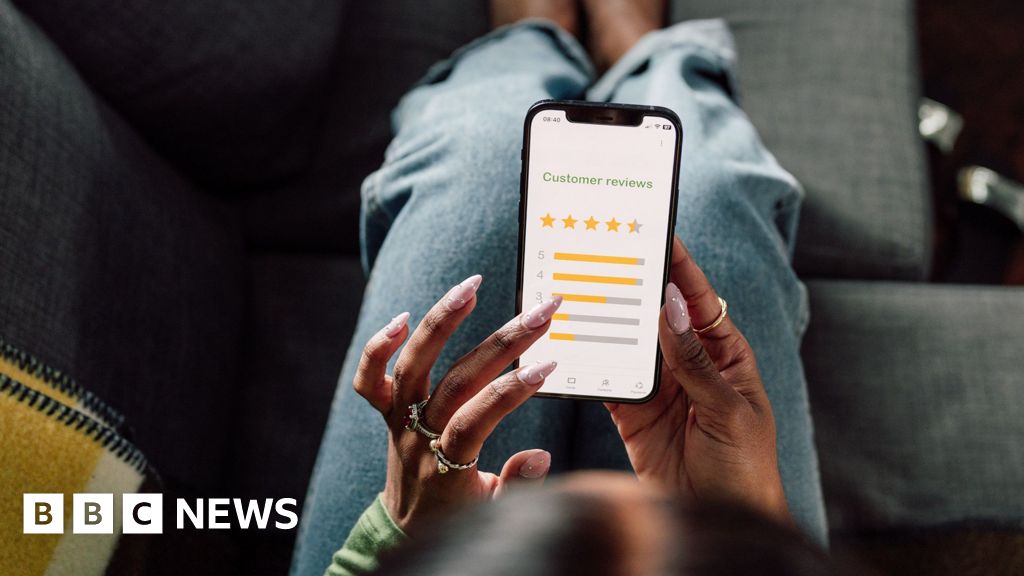
The UK’s competition watchdog says it is looking at five firms in its investigation into misleading online reviews.
Source link


China rolls out tariff cuts on Congo imports from April 1

Lee Sang-bo dies at 45: Funeral details revealed
It has never been easier to start investing. As more take advantage, should you?

-

 Entertainment1 week ago
Val Kilmer revived 1 year after death through AI
-

 Fashion6 days ago
China’s textile & apparel exports surge 17% to $50 bn in Jan-Feb 2026
-
 Business7 days ago
Flipkart group CFO to leave co amid IPO plans – The Times of India
-

 Sports7 days ago
Rating Adidas’ 2026 World Cup away shirts: Argentina, Spain, Mexico and more
-
 Business1 week ago
Video: The Effects of High Oil Prices
-

 Sports7 days ago
American Conference Commissioner Tim Pernetti thanks Trump for Army-Navy game executive order
-
Tech1 week ago
The Corsair 4000D RS PC Case Keeps Your System Cool
-

 Tech1 week ago
‘Uncanny Valley’: Nvidia’s ‘Super Bowl of AI,’ Tesla Disappoints, and Meta’s VR Metaverse ‘Shutdown’