

Business
Gold price shines by Rs8,500 per tola – SUCH TV


The price of per tola 24-karat gold in Pakistan increased by Rs8,500 on Tuesday, reaching Rs470,862 compared to Rs462,362 on the previous day.
According to the All Pakistan Sarafa Gems and Jewellers Association, the price of 10 grams of 24-karat gold rose by Rs7,288, climbing to Rs403,688 from Rs396,400 on last day.
Likewise, the rate of 10 grams of 22-karat gold went up by Rs6,681, closing at Rs370,060 against Rs363,379.
In the international market, gold prices increased by $85, reaching $4,485 compared to $4,400 on the previous day.
Meanwhile, the price of per tola silver and that of 10-gram remained stagnant at Rs Rs7,205 and Rs6,177, respectively. International silver prices also remained unchanged at $69.30.



Business
India ramps up 5-kg LPG supply, accelerates PNG rollout amid Middle East crisis – The Times of India
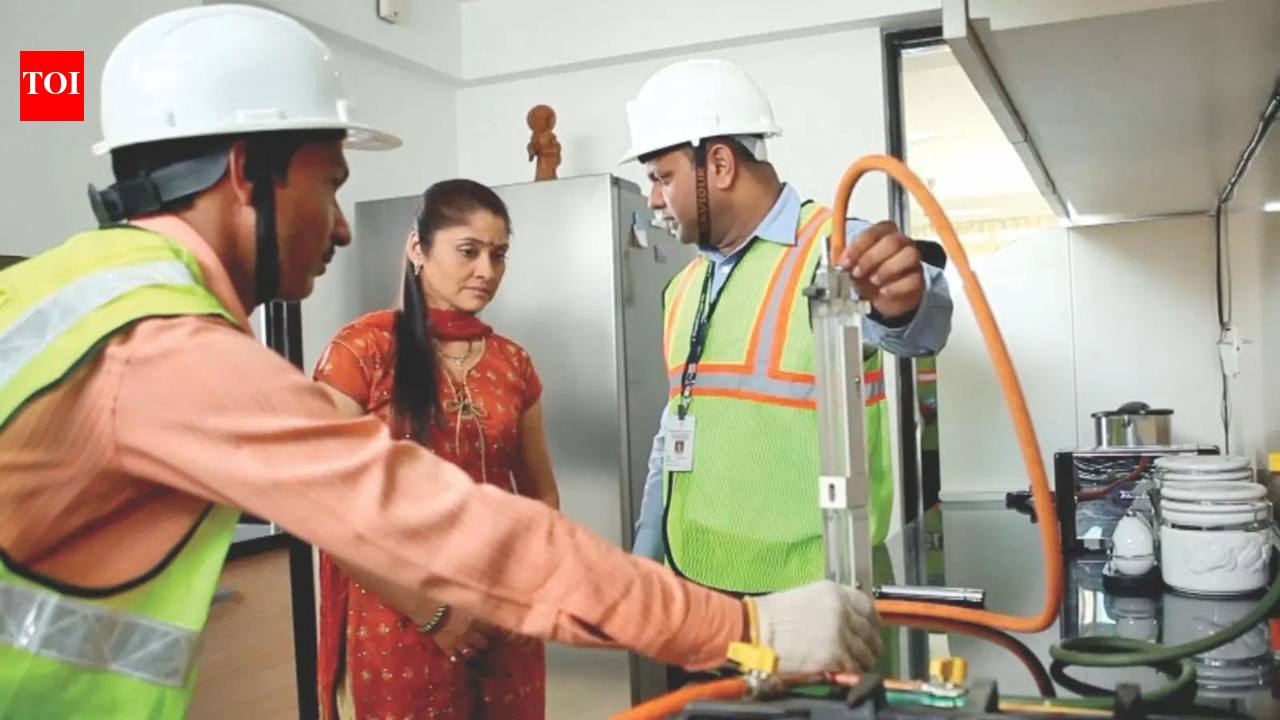
India has stepped up supply of smaller 5-kg LPG cylinders and accelerated the rollout of piped natural gas (PNG) connections to manage fuel availability amid disruptions caused by the Middle East conflict, with domestic supplies remaining stable, according to an official statement.More than 13 lakh 5-kg free trade LPG cylinders have been sold since March 23, with daily sales crossing 1 lakh units, as authorities expand access for migrant workers and low-income consumers, PTI reported.At the same time, over 4.24 lakh new PNG connections have been activated since March, with more than 30,000 consumers surrendering LPG connections as part of the transition.The six-week-long war in West Asia has disrupted global energy supply. India relied on import of half of its crude oil, 40 per cent of its gas and 85-90 per cent of LPG from the region, all of which have been impacted.While the country has managed to offset the shortfall in crude oil by sourcing from other regions, LPG supplies have been affected.The government has prioritised LPG supply to domestic households, reducing supplies to commercial users such as hotels and restaurants. To bridge the gap for those without subsidised LPG connections, it has increased supply of market-priced 5-kg cylinders.As against daily sales of about 77,000 5-kg cylinders in February before the crisis, volumes have crossed over 1 lakh per day in the last two to three weeks.The statement said domestic LPG supplies remain stable overall, with no reported stockouts and over 52 lakh cylinders delivered on April 11.Online bookings account for about 98 per cent of demand, while delivery authentication systems now cover 93 per cent of transactions to curb diversion.Commercial LPG availability has been restored to about 70 per cent of pre-crisis levels, supported by targeted allocations and increased supply measures. State-run oil marketing companies — Indian Oil Corporation, Bharat Petroleum Corporation Limited and Hindustan Petroleum Corporation Limited — are coordinating with state governments to streamline distribution.The government has prioritised natural gas allocation, ensuring full supply for household PNG and CNG transport, while increasing supplies to fertiliser plants to about 95 per cent of recent average consumption, aided by additional LNG imports.City gas distributors, including Indraprastha Gas Ltd, Mahanagar Gas Ltd, and GAIL Gas Ltd, have been directed to prioritise PNG connections for commercial users, as part of a broader push to shift demand away from LPG.Refineries are operating at high utilisation with adequate crude inventories, and domestic LPG production has been stepped up. To shield consumers from rising global oil prices, the government has cut excise duty on petrol and diesel by Rs 10 per litre, while raising export levies on diesel and aviation turbine fuel to ensure domestic availability, the statement added.
Business
Indian electronic firms seek PLI 2.0, eye 30–35% share in global mobile production by FY31 – The Times of India
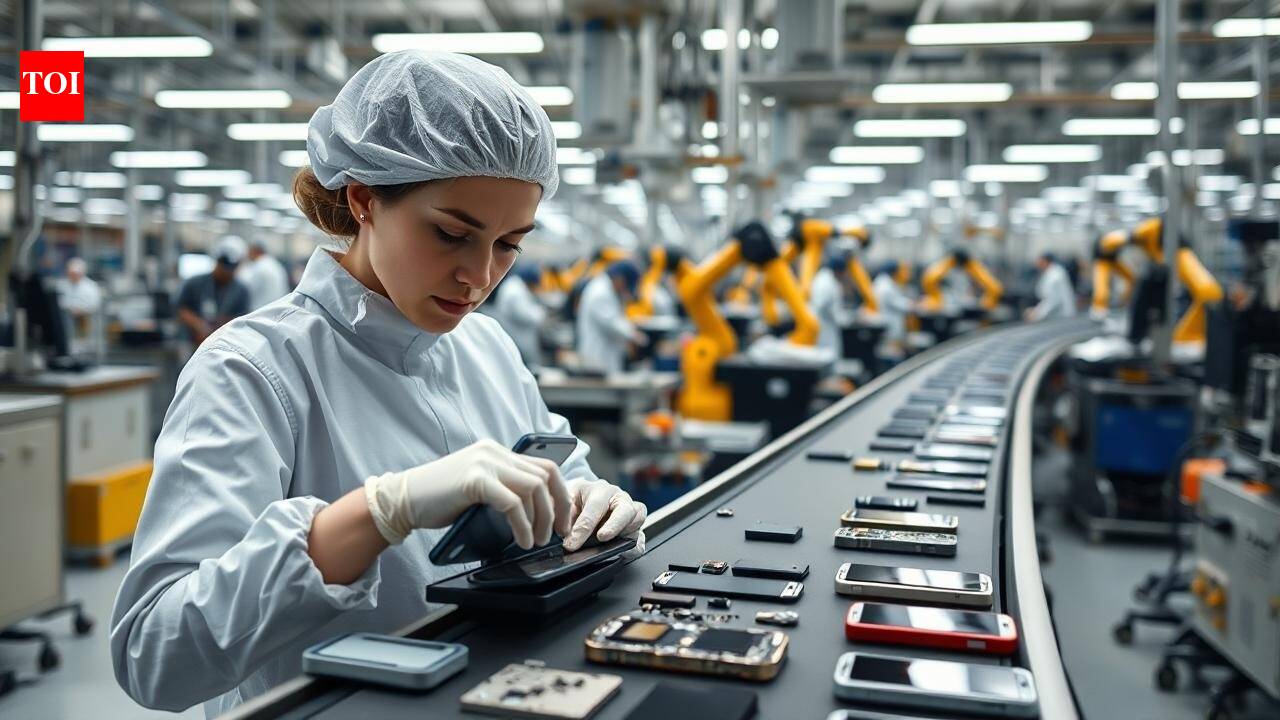
With the production-linked incentive (PLI) scheme now over, India’s electronics industry has pitched a fresh expansion plan, seeking continued government support as it eyes a strong jump in manufacturing and exports over the next five years. During discussions with the ministry of electronics and IT (MeitY), the industry said that by FY31, India could capture 30–35% of global mobile production. This would take annual output to $110–130 billion, with exports estimated at $55–70 billion. At present, according to ET, India accounts for about 15% of global mobile phone production, with manufacturing output exceeding $64 billion. Industry executives said the current production-linked incentive (PLI) scheme has played a key role in this growth. With the scheme set to end on March 31, companies are pushing for a new version to keep the momentum going. Talks are underway on a proposed PLI 2.0 scheme, which is likely to run from 2026 to 2031. Government officials said a new incentive programme is being considered, though details have not yet been finalised. The industry has also shared a roadmap with the government to meet production and export targets by FY31. “With a strong foundation, we have an opportunity to achieve 30-35% of global mobile production in the next five years,” Pankaj Mohindroo, chairman of India Cellular and Electronics Association (ICEA), told ET. “To realise this ambition, it is critical to sustain the current momentum and continue investments. We are actively engaging with the government to shape the next phase of this growth journey.” Industry players said increasing India’s global share would help strengthen the supply chain, deepen the manufacturing ecosystem and support research and development at scale. One executive said scale is more important than value addition alone for long-term sustainability. The government is also examining how much domestic value addition should be required for incentives and how exports can be increased without breaching World Trade Organization norms. Experts said the growth in production will depend largely on exports, as domestic demand is expected to weaken. India’s smartphone market could shrink by more than 13% this year due to rising memory costs, which may push device prices up by 15–40%, according to an earlier report. Data from the commerce ministry showed smartphone exports rose 47.4%, from $20.44 billion in 2024 to $30.13 billion in 2025. The United States accounted for $19.7 billion, or 65% of total exports. Meanwhile, China’s smartphone exports fell from $132.6 billion to $120.6 billion during the same period, with shipments to the US declining sharply due to fentanyl-related tariffs. India’s tariff advantage in the US market has narrowed after the US Supreme Court struck down sweeping global tariffs imposed by the Trump administration. China continues to have an advantage due to its strong supply chain and advanced manufacturing capabilities, while India is still developing these.
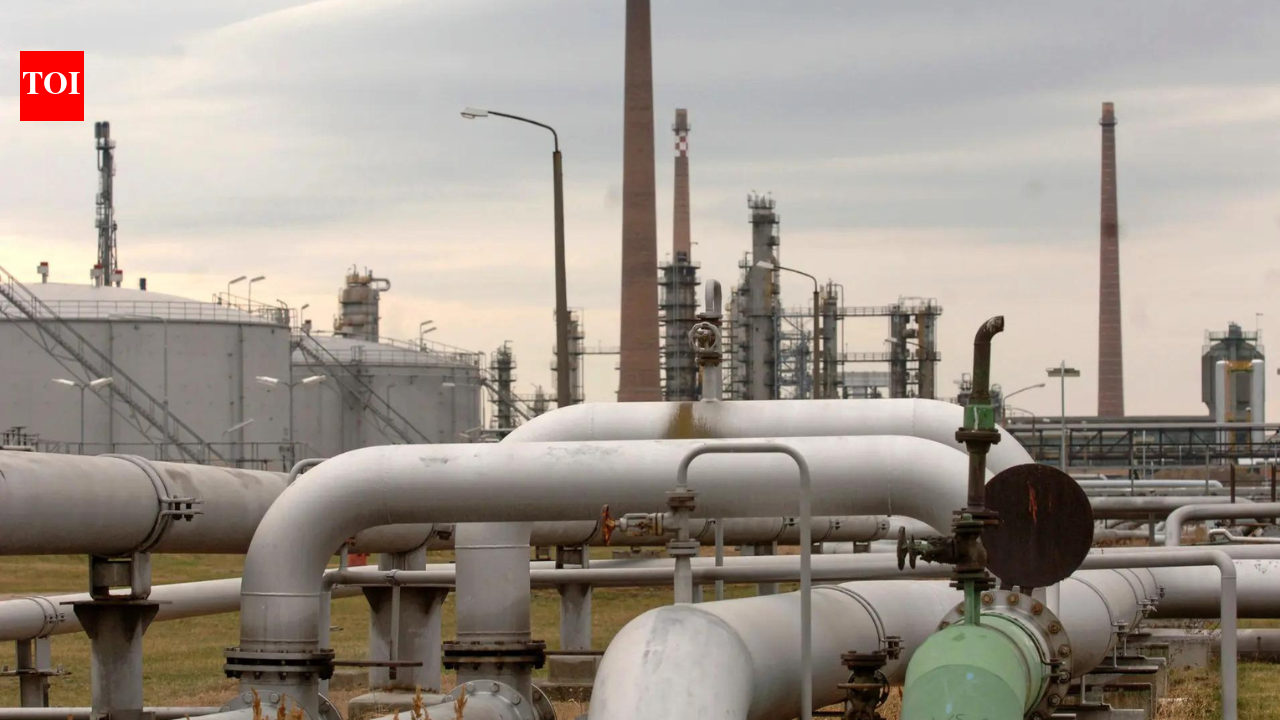
NEW DELHI: Govt on Saturday significantly increased export duties on diesel and aviation turbine fuel to dissuade oil refiners from exporting these fuels and to ensure adequate availability in the domestic market amid ongoing tensions in West Asia. The ministry of finance issued a series of notifications hiking the export duty on diesel by more than 150% – from Rs 21.5 per litre to Rs 55.5 per litre – with immediate effect. The levy on ATF, or jet fuel, was increased from Rs 29.5 per litre to Rs 42 per litre. The export duty on petrol continues to be nil. Under the revised structure, the special additional excise duty on high-speed diesel has been raised to Rs 24 per litre, while the road and infrastructure cess now stands at Rs 36 per litre, which means a large chunk will now flow to the Centre. Govt said these duties are not meant to boost revenue, but to stop fuel exporters from taking undue advantage of price differences. The Centre had, on March 27, imposed an export duty of Rs 21.5 per litre on diesel and Rs 29.5 per litre on ATF in a bid to check windfall gains, as fuel was in short supply in international markets due to a squeeze on energy supplies amid the military conflict and export curbs imposed by China. It had also slashed excise duty on diesel and petrol to shield consumers and oil companies from the impact of high crude prices. Retail prices of automobile fuels in India have not increased despite high volatility in the international crude market, while only a small part of the international price pressure has been passed on to domestic flights. The windfall tax on exports of diesel and ATF helps the Centre partly offset the impact of the excise duty cut. On March 27, govt had estimated revenue gains from export duties at around Rs 1,500 crore in a fortnight. The further hike in export duties is likely to lead to higher revenue gains. In a statement, the ministry of petroleum had said, “At a time when international diesel prices have surged sharply, the levy is designed to disincentivise exports and ensure that refinery output is directed first tow-ards meeting domestic demand.“


American Girl: Celebrating girl power
India ramps up 5-kg LPG supply, accelerates PNG rollout amid Middle East crisis – The Times of India

For Stacey Lee Webber, there is money in art

-

 Entertainment1 week ago
Joe Jonas shares candid glimpse into parenthood with Sophie Turner
-

 Tech1 week ago
Our Favorite iPad Is $50 Off
-

 Sports1 week ago
UConn Final Four run could trigger a $50M furniture giveaway for Massachusetts-based Jordan’s Furniture
-

 Fashion5 days ago
India’s exports face reset as EU links trade to carbon metrics: EY
-

 Entertainment1 week ago
Blake Lively reacts to harassment claims dismissal against Justin Baldoni
-
 Business1 week ago
Video: Why Is the Labor Market Stuck?
-

 Politics1 week ago
Iran can sustain Strait of Hormuz closure for years, will cut US military logistics: Official
-

 Entertainment1 week ago
Barbie Ferreira reveals where she stands with ‘Euphoria’ girls after exit