

Business
Gold Prices: Gold, silver may see more corrective moves this week as Middle East tensions, central bank cues drive volatility – The Times of India


Gold and silver prices are likely to remain volatile and could see further corrective moves in the coming week, with investors closely watching developments in the Middle East conflict and a packed calendar of major central bank policy meetings, analysts said.Market participants are expected to remain focused on the evolving geopolitical situation, as any sign of escalation or de-escalation in the Middle East could trigger sharp swings across commodities, currencies and broader financial markets.
Middle East conflict to remain key trigger
Analysts said traders will continue to track the conflict in the Middle East closely, with geopolitical headlines likely to remain the biggest short-term driver for bullion prices.“In the week ahead, focus will remain in the Middle East region as any signs of further escalation or de-escalation may lead to increased volatility in the financial markets,” Pranav Mer, vice president, EBG – commodity & currency research at JM Financial Services Ltd, was quoted as saying by news agency PTI.While gold and silver are traditionally seen as safe-haven assets during times of crisis, recent sessions have shown that broader market stress can also lead to profit-booking and cash-raising, which can weigh on prices even when geopolitical risks remain elevated.
Fed, ECB, BoE and PBOC decisions in focus
On the macroeconomic front, investors will also monitor a heavy lineup of central bank meetings this week.The US Federal Reserve will announce its policy decision on Wednesday, followed by the European Central Bank and the Bank of England on Thursday, and the People’s Bank of China on Friday.These central banks are widely expected to keep interest rates unchanged, but traders will be closely watching their forward guidance for clues on the path of global monetary policy, especially at a time when higher crude oil prices are complicating inflation expectations.
Bullion under pressure last week
Bullion prices remained under pressure in domestic markets last week. On the Multi Commodity Exchange (MCX):
- Silver fell Rs 8,850, or 3.3%
- Gold declined Rs 3,168, or 2%
In the international market, Comex silver dropped nearly $3, or 3.52%, during the week, while gold fell $97, or 2%.Mer told PTI that gold broke down from a consolidation range on Friday and ended the week nearly 2 per cent lower, dragged by a stronger US dollar and growing expectations that major central banks may delay interest rate cuts because of the inflationary impact of surging crude oil prices.
Why bullion fell despite safe-haven demand
The fall in bullion prices came even as equities and other risk assets saw broad pressure.According to PTI, Mer said gold prices slipped despite a wider sell-off in risk assets because traders and investors may have chosen to book profits at higher levels or sold holdings to meet margin calls and liquidity needs.Still, he said bullion continues to retain an important support base from safe-haven demand because of the escalating conflict in the Middle East.“Silver prices closed in negative for the second consecutive week, weighed by a stronger dollar and a consolidative/ corrective move in the industrial metals,” Mer told PTI.
Long-term allocation still favoured
Despite near-term volatility, analysts said gold and silver continue to play an important role in portfolio construction.“Gold and silver earn their place not because of what they return in isolation, but because of how they behave relative to everything else,” Vijay Kuppa, CEO of InCred Money, said, as per PTI.He said the two metals remain valuable because of their low correlation with equities and their ability to act as a hedge against currency debasement.Kuppa also cautioned investors against trying to time the market, saying that while broader commodity markets have been disrupted by supply chain issues and changing trade routes amid the conflict, investors should maintain a long-term allocation to bullion rather than chase short-term price swings.






Last Updated:
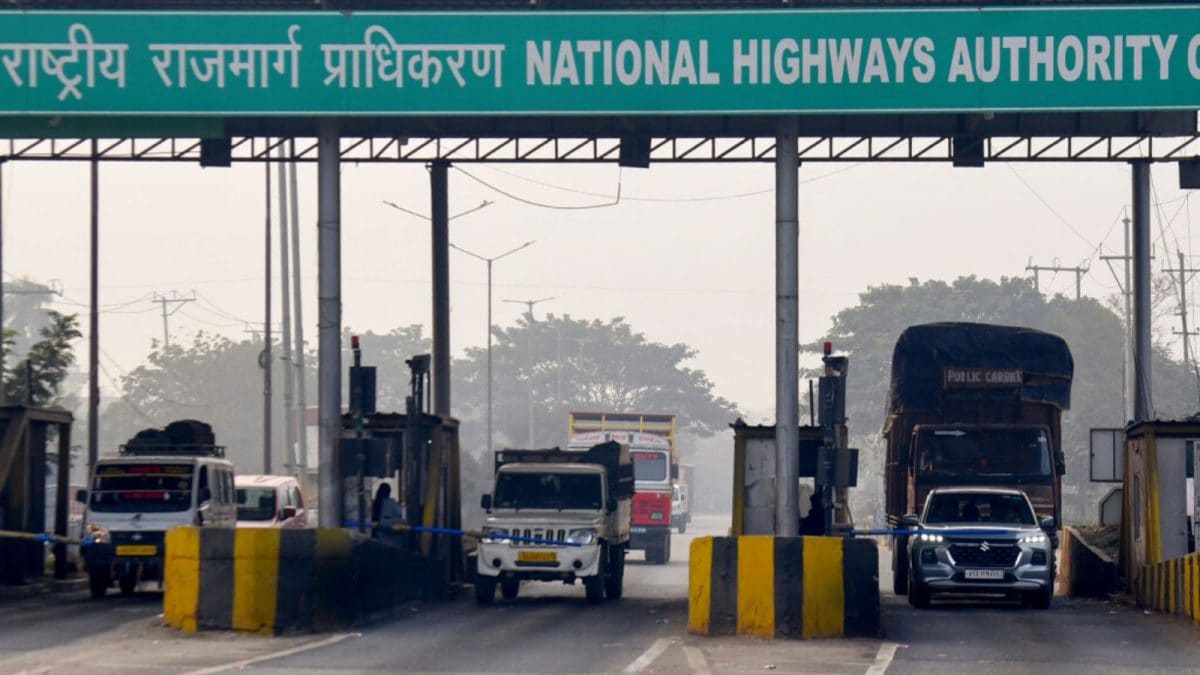
NHAI raised the FASTag Annual Pass fee from Rs 3,000 to Rs 3,075 for 2026–27, effective April 1, 2026. The pass covers 1,150 toll plazas for non-commercial vehicles.




NHAI Revises FASTag Annual Pass Fee for FY27; Price Increased to Rs 3,075
The National Highways Authority of India (NHAI) has announced a revision in the FASTag Annual Pass fee, increasing the charge from Rs 3,000 to Rs 3,075 for the financial year 2026–27. According to an official statement released on March 15, the revised fee will come into effect from April 1, 2026.
The change has been implemented in accordance with the National Highways Fee (Determination of Rates and Collection) Rules, 2008, which allows periodic revision of toll charges. The FASTag Annual Pass facility is available to eligible non-commercial vehicles with a valid FASTag, enabling users to travel across around 1,150 toll plazas on national highways and expressways.
The annual pass allows private vehicle owners to pay a one-time fee for toll usage instead of recharging FASTag frequently. Once activated, the pass remains valid for one year or up to 200 toll plaza crossings, whichever occurs earlier, making it a convenient option for frequent highway commuters.
Users can activate the annual pass on their existing FASTag linked to the vehicle by paying the fee through the Rajmarg Yatra App or via the official NHAI website. According to the authority, the pass is typically activated within two hours of payment.
Launched on August 15, 2025, the FASTag Annual Pass has seen growing adoption among private vehicle owners. NHAI said more than 56 lakh users have already opted for the facility, highlighting its popularity as a convenient and cost-effective option for travellers on national highways across India.
March 15, 2026, 16:25 IST
Read More
.jpeg?width=1200&height=800&crop=1200:800 "UK interest rate cut hopes dashed as Iran war sends energy prices soaring")
Economists have dramatically revised their forecasts for interest rates, now deeming a cut by the Bank of England next week “senseless” as escalating conflict in the Middle East drives up energy prices.
The shift means the Monetary Policy Committee (MPC) is widely expected to hold borrowing costs steady at 3.75% at its upcoming announcement on Thursday, a stark reversal from previous expectations of a reduction.
This sudden change in outlook is directly linked to the recent surge in oil and gas prices, which threatens to reignite UK inflation.
While the Bank had anticipated Consumer Prices Index (CPI) inflation falling close to 2% by April, experts now warn that price rises could accelerate in the latter half of the year if higher wholesale energy costs translate into steeper household electricity and fuel bills.
The Office for Budget Responsibility (OBR), the government’s official forecaster, cautioned earlier this week that persistent energy price spikes could add a full percentage point to UK inflation this year.
Edward Allenby, senior UK economist for Oxford Economics, commented on the situation: “The UK inflation outlook was starting to brighten, but the conflict in the Middle East has thrown a spanner in the works.
“Against this backdrop, it’s almost certain that the MPC will keep bank rate unchanged at 3.75% at the March meeting. If the shock proves short-lived and recent price rises fully reverse, we still think there’s a reasonable chance that the MPC will resume its cutting cycle either in April or June.
“However, if the surge in energy prices persists or goes higher, the MPC will be set for an extended pause.”
Thomas Pugh, chief economist for RSM UK, echoed this sentiment, suggesting that a rate cut is now off the table for this month and potentially April too.
He stated: “Reflecting the scale of volatility we’re all coming to terms with, it was only two weeks ago that a March rate cut looked like a dead cert. A cut clearly makes no sense now.
“Given uncertainty about the outlook for energy prices, inflation and the economy, the most sensible thing for the Bank of England to do now is wait for more clarity. This rules out a rate cut next week and probably one in April too, unless there’s a rapid resolution to the crisis.”

The ripple effect of the conflict is already being felt in the UK mortgage market, with major lenders hiking rates in response to a sharp rise in swap rates, which underpin mortgage pricing.
Financial information website Moneyfacts reported that at least 530 homeowner mortgage deals have vanished from the market since Monday, representing approximately 7.5% of available products.
This turbulence, it noted, is some of the most significant since the aftermath of the September 2022 mini-budget.
Business
Gudhi Padwa, Eid-Ul-Fitr And Weekend Holidays Next Week: Banks Closed On These Days Between March 16-22

Last Updated:
Banks across India will observe several public and regional holidays next week in March 2026 under the RBI holiday calendar.
Bank Holiday This Week: Full RBI Holiday List
Bank Holiday In February 2026: Banks across India will observe several public and regional holidays next week in March 2026 under the RBI holiday calendar. These holidays are not uniform nationwide and vary from state to state. That means on some dates, banks in certain states will remain closed, while in others, they will function normally.
During bank holidays, customers can continue to access services through net banking, mobile banking, UPI, and ATMs. However, cheque clearing and other over-the-counter services under the Negotiable Instruments Act will not be available.
March 17: Shab-I-Qadr
Banks will be closed in Imphal, Jammu, and Srinagar.
March 19: Gudhi Padwa / Ugadi Festival / Telugu New Year’s Day / Sajibu Nongmapanba (Cheiraoba) / 1st Navratra
Banks will be closed in Belapur, Bengaluru, Chennai, Hyderabad, Imphal, Jammu, Mumbai, Nagpur, Panaji, Srinagar, and Vijayawada.
March 20: Eid-Ul-Fitr (Ramzan) / Jumat-ul-Vida
Banks will be closed in Agartala, Ahmedabad, Aizawl, Belapur, Bengaluru, Bhopal, Bhubaneswar, Chandigarh, Dehradun, Gangtok, Guwahati, Hyderabad, Imphal, Itanagar, Jaipur, Kanpur, Kochi, Kohima, Kolkata, Lucknow, Mumbai, Nagpur, New Delhi, Panaji, Patna, Raipur, Ranchi, Shillong, Shimla, Srinagar, Thiruvananthapuram, and Vijayawada.
March 21: Ramzan-Id (Id-Ul-Fitr) (Shawal-1) / Khutub-E-Ramzan / Sarhul
Banks will be closed in Ahmedabad, Aizawl, Belapur, Bhopal, Chandigarh, Dehradun, Jaipur, Kanpur, Kolkata, Lucknow, Mumbai, Nagpur, Patna, and Ranchi.
March 22: Sunday
Bank branches across India will be closed for the weekend.
Upcoming Bank Holidays In March 2026
March 26: Shree Ram Navami
Banks will be closed in Ahmedabad, Bhopal, Bhubaneswar, Belapur, Hyderabad, Jaipur, Kanpur, Kolkata, Lucknow, Mumbai, Nagpur, Patna, Ranchi, and Shimla.
March 27: Shree Ram Navami (Chaite Dasain)
Banks will be closed in Ahmedabad, Bhopal, Dehradun, Jaipur, Kanpur, Kolkata, Lucknow, Mumbai, Nagpur, Patna, Ranchi, and Gangtok.
March 31: Mahavir Janmakalyanak / Mahavir Jayanti
Banks will be closed in Ahmedabad, Belapur, Bengaluru, Chennai, Hyderabad, Jaipur, Kanpur, Kolkata, Lucknow, Mumbai, Nagpur, New Delhi, Patna, Raipur, Ranchi, and Vijayawada.
| Holiday Description | Day |
|---|---|
| Holika Dahan | 2 |
| Holi (Second Day)/Dol Jatra/Dhulandi/Holika Dahan | 3 |
| Holi/Holi 2nd Day – Dhuleti/Yaosang 2nd Day | 4 |
| Chapchar Kut | 13 |
| Shab-I-Qadr | 17 |
| Gudhi Padwa/Ugadi Festival/Telugu New Year’s Day/Sajibu Nongmapanba (Cheiraoba)/1st Navratra | 19 |
| Eid-Ul-Fitr (Ramzan)/Jumat-ul-Vida | 20 |
| Ramzan-Id (Id-Ul-Fitr) (Shawal-1)/Khutub-E-Ramzan/Sarhul | 21 |
| Shree Ram Navami | 26 |
| Shree Ram Navami (Chaite Dasain) | 27 |
| Mahavir Janmakalyanak/Mahavir Jayanti | 31 |
March 15, 2026, 09:13 IST
Read More


Peaky Blinders: The Immortal Man” star Cillian Murphy on playing complicated characters: “That’s where good art exists

More Iran women’s soccer players decide to leave Australia

Prince William takes firmer role while royals step back from Andrew’s circle

-

 Politics1 week ago
India let Iran warship dock the day US sank another off Sri Lanka, say officials
-

 Sports1 week ago
Pakistan set for FIH Pro League debut | The Express Tribune
-

 Entertainment1 week ago
Harry Styles kicks off new era with ‘One Night Only’ comeback show
-
 Business1 week ago
Restaurant group changes name after bid to buys pubs across the UK
-
 Business4 days ago
Stock market crash today (March 12, 2026): Nifty50 opens below 23,600; BSE Sensex down over 900 points on continuing US-Iran war – The Times of India
-
 Business1 week ago
Home heating oil: ‘Most of my pension has gone on home heating oil’
-

 Sports1 week ago
Winners and losers of the 2026 NHL trade deadline
-

 Entertainment1 week ago
Kanye ‘Ye’ West trips during trial: ‘Is he asleep?’