

Business
Gold prices in Pakistan Today – October 23, 2025 | The Express Tribune


At current prices, the looted gold is worth around $70 million. PHOTO: PIXABAY
Gold prices continued their downward trend on Thursday, witnessing a significant drop both in the international and domestic markets.
In the international bullion market, the price of gold fell by $35 per ounce, reaching $4,115. The decline in global prices directly impacted local rates, with gold in Pakistan falling by Rs3,500 per tola, bringing the new price to Rs433,862 per tola.
Similarly, the price of 10 grams of gold decreased by Rs3,100, now standing at Rs371,966.
Traders attribute the fall to fluctuations in the global bullion market and a stronger US dollar, which continue to influence precious metal prices both internationally and domestically.
Earlier on Wednesday, gold prices also declined, mirroring losses in the international market, where the precious metal fell to a near two-week low amid profit-taking ahead of key US inflation data due later this week.
According to the All-Pakistan Gems and Jewellers Sarafa Association (APGJSA), the price of gold dropped by Rs7,538 per tola to settle at Rs437,362, compared to Rs444,900 a day earlier. Similarly, the rate for 10 grams of gold fell by Rs6,463, closing at Rs374,967.
In the international market, spot gold extended Tuesday’s steep slide, its biggest single-day fall in five years, as investors booked profits and awaited economic cues from upcoming US inflation figures and next week’s monetary policy decision by the Federal Reserve.
Spot gold was down 2% at $4,038.89 per ounce as of 11:19 am ET (1519 GMT), after rising to as much as $4,161.17 earlier in the session, according to Reuters. US gold futures for December delivery fell 1.3% to $4,055.40 per ounce.





Oil prices have fallen sharply to below 100 US dollars a barrel on fresh hopes of an end to the Iran war and unblocking of the crucial Strait of Hormuz.
The cost of benchmark Brent crude dropped 11% to under 98 dollars a barrel in afternoon trading on Wednesday as US President Donald Trump said he was pausing efforts to guide stranded ships out of the strait to finalise a deal with Iran on ending the conflict.
But he confirmed a US blockade of Iranian ports would remain in place while talks were held to end the war.
Stock markets across the UK and Europe surged in response, with London’s FTSE 100 Index soaring 2.6% to 10485.9.
In France, the Cac 40 was 3.3% higher and Germany’s Dax was 2.8% higher.
Investor sentiment was boosted on reports that Iranian officials were travelling to China ahead of a summit between Mr Trump and Chinese leader Xi Jinping.
A ceasefire with Iran is already in place, but it has been increasingly fragile.
The US military is trying to reopen a path in the Strait of Hormuz, which would allow oil tankers to resume shipments from the Persian Gulf.
The blockage of the strait, through which a fifth of the world’s oil is carried, has sent oil and energy prices soaring worldwide.
Chris Beauchamp, chief market analyst at investing and trading platform IG, said: “There does seem to have been some real progress on key issues, and perhaps a pathway has been found that strikes a deal amenable to both sides.
“Such a result would allow markets to go back to focusing on earnings growth and a recovery in economic momentum, putting the worries of the last two months behind them.”
Long-term UK government borrowing costs also eased back, as gilts recovered from Tuesday’s sell-off thanks to optimism over inflation concerns should the Iran war come to an end.
The yield on 30-year UK government bonds, also known as gilts, fell back to 5.63%, having reached their highest level since 1998 on Tuesday, at 5.798%.
Ten-year gilt yields fell to 4.94%, having hit a six-week high of 5.102% on Tuesday.
Gilt yields move counter to the value of the bonds, meaning their prices fall when yields rise.
Business
Sebi sets Rs 20,000 crore threshold for ‘significant indices’; Sensex, Nifty among benchmarks covered – The Times of India
Markets regulator Sebi has introduced a new framework to classify stock market benchmarks as “significant indices” if mutual fund schemes tracking them have a daily average cumulative assets under management (AUM) of more than Rs 20,000 crore for each of the preceding six months, PTI reported.The move is aimed at strengthening transparency, governance and accountability in the index ecosystem.“It is specified that a Benchmark or Index (including index of indices) based on listed securities shall be considered as ‘significant Indices’, if the daily average cumulative AUM tracking the Benchmark or Index across schemes of Mutual Fund(s) exceeds Rs 20,000 crore for each of the past six months, ending on June 30 and December 31 each year,” Sebi said in a circular.The regulator said the threshold will be reviewed on a half-yearly basis, and once classified as significant, an index will continue in that category unless its tracked AUM falls below the threshold for three consecutive years.The framework follows the introduction of the Sebi (Index Providers) Regulations, 2024, which govern entities administering such indices.Sebi also released an initial list of indices that qualify under the new norms. These include major benchmarks such as the BSE Sensex, Nifty 50, Nifty 500 and BSE 500, along with several sectoral, debt and hybrid indices managed by NSE Indices Ltd, BSE Index Services Pvt Ltd and CRISIL.Under the new rules, index providers offering significant indices must apply for Sebi registration within six months.However, indices already notified or authorised as benchmarks by the Reserve Bank of India under relevant RBI provisions have been exempted from this requirement.Existing index providers can continue operations during the transition phase if they file registration applications within the stipulated timeline.Sebi also said entities already registered in another category with the regulator but engaged in index-related activities will have to create a separate legal entity within two years to undertake index provider operations.The regulator clarified that grievance redressal mechanisms under the new regulations will apply only to significant indices administered by Sebi-registered index providers.
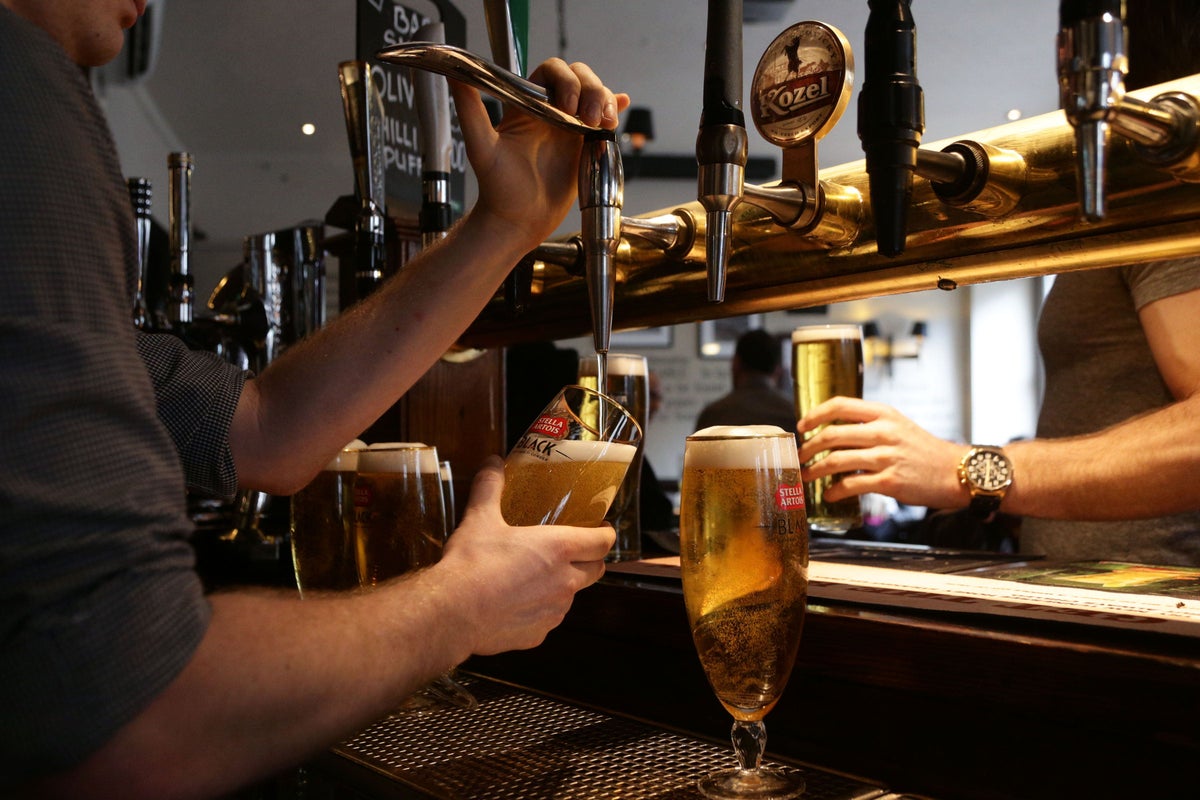
Growth in the UK’s services sector rebounded last month with business activity picking up, but firms face a “short-lived” recovery amid surging costs and lower demand linked to war in the Middle East, a new survey has shown.
Experts cautioned that the outlook for firms may be weaker after a rush of activity in April.
The S&P Global UK services PMI survey showed a reading of 52.7 in April, up from 50.5 the previous month.
Any reading above 50.0 means the sector is growing while any reading below signals it is contracting.
Activity across the industry, which spans businesses from hospitality and leisure to healthcare and transport, has been increasing for almost a year.
But while the latest reading marked an improvement from March – when the US-Israel’s conflict with Iran escalated – it signals a slower rate of growth than at the start of the year.
Businesses taking part in the survey, which is watched closely by economists, cited worries about intensifying pressures on inflation, global supply shortages and elevated borrowing costs as factors holding back business and consumer demand in April.
Some firms said export sales were lower due to disruptions to business travel and weaker demand in the Middle East.
Nevertheless, others pointed out resilient global demand for technology services while backlogs of work also decreased.
But the survey revealed that cost pressures ramped up for businesses in the service industry last month.
Costs for companies rose at the fastest pace since November 2022, with firms widely attributing the increased bills to fuel costs and higher prices for raw materials including metals and plastics, which have been driven up by soaring energy prices since the start of the war.
Many firms also cited pressure from higher wages, following the increase to the national minimum wage at the start of April.
Tim Moore, economics director at S&P Global Market Intelligence, said April’s “modest recovery” for the industry could “easily prove short-lived as new business intakes remained subdued in comparison to the start of 2026”.
Mr Moore said: “Survey respondents widely noted that the Middle East conflict and subsequent global supply chain disruptions had weighed heavily on business and consumer confidence.”
Matt Swannell, chief economist for the Item Club, agreed that there were “already some signs that this jump will be short-lived as businesses reported little improvement in new work amidst weak domestic and foreign demand”.
“We think that the outlook for private sector activity is gloomier,” he went on.
“A sharp rise in inflation will cause households’ real incomes to fall and spending growth to slow.
“Supply chain disruption, rising costs and lingering geopolitical uncertainty will cause some businesses to put their investment plans on hold.”
Mr Swannell added that the survey suggests the Bank of England will prefer to keep interest rates held steady for the rest of the year, but that there was the potential for a hike in the summer.
Thomas Pugh, chief economist at RSM UK, said firms showed “resilience” last month, adding: “However, the rebound is partly fuelled by a rush of activity before price rises and supply shortages start to bite.”
He said future interest rate hikes were “more likely” as a result, but that “everything depends on how energy prices move going forward”.


I’ve Tried Every Digital Notebook. These Are the Best Ones

ASEAN manufacturing momentum eases in April amid rising cost pressures
Oil prices drop below 100 dollars a barrel on renewed hopes over peace deal

A Brain Implant for Depression Is About to Be Tested in Humans

Pro wrestling star Steph De Lander reveals how colleague’s advice helped lead her to title triumph at ACW

‘I had £20,000 stolen and had to fight a 13-month fraud reporting rule to get it back’

-
 Tech1 week ago
A Brain Implant for Depression Is About to Be Tested in Humans
-
 Sports1 week ago
Pro wrestling star Steph De Lander reveals how colleague’s advice helped lead her to title triumph at ACW
-
Business1 week ago
‘I had £20,000 stolen and had to fight a 13-month fraud reporting rule to get it back’
-

 Entertainment1 week ago
Norway joins Type 26 Frigate Programme to boost NATO naval power
-

 Entertainment1 week ago
Melania Trump says ABC should ‘take a stand’ on late-night host Kimmel
-

 Tech1 week ago
Are tech leaders risking a cyber resourcing crisis? | Computer Weekly
-
 Business6 days ago
PSX plunges over 4,800 points | The Express Tribune
-

 Tech1 week ago
This Ambitious Laptop Doesn’t Leave Much Room for Your Hands