

Business
Google UK boss issues new warning over potential social media ban for under-16s


Google’s UK boss has warned that a ban on social media for under-16s is not the “right approach” and risks driving children towards “more dangerous and unsupervised corners of the internet.”
Kate Alessi, managing director and vice-president of Google UK and Ireland, said that the tech giant, which owns YouTube, does not support “blanket bans.”
Her intervention comes amid mounting calls for the government to prevent children from accessing social media, with an outright ban for under-16s currently under active consultation.
The discussion gained further urgency after Prime Minister Sir Keir Starmer indicated his preparedness to take action against features designed to keep young people addicted to social media.
This follows a landmark US court case last week, which saw Facebook owner Meta and Google found liable for a woman’s childhood social media addiction.
They were ordered to pay $6m (£4.6m) in damages, having been deemed responsible for “deliberately designing addictive products.”
Ms Alessi said Google does not agree with the verdict and plans to appeal.
She said a social media ban is not the answer to children’s online wellbeing and cautioned if countries such as the UK followed the lead of Australia, which introduced a world-first social media ban for under-16s in December, it could have unintended consequences.
Ms Alessi said: “We don’t believe that’s the right approach.
“We believe blanket bans take choices away from parents and push kids out of supervised spaces.”
But she said it was important that “appropriate guardrails” are in place, with YouTube recently introducing features to help prevent addictive behaviours in children and teenagers, such as timers for its Shorts format, as well as customised “Bedtime” and “Take a break” functions.
“We want to make sure our products are built to be as safe as possible,” Ms Alessi said.
“We’ll work with government and continue to partner with them as they work through this,” she added.
The comments come as Google announced its latest community programme to boost artificial intelligence (AI) knowledge and skills to help Britons progress professionally.
It is launching pop-up hubs across the UK to train people on how to get the best out of AI, including “quick win” demos on areas such as how to automate admin tasks and use agentic tools to carry out tasks and research, as well as guides on building a social media presence.
The pop-up hubs – called Squeeze the Juice bars – will be based in Leeds, Liverpool and Birmingham and the Government’s so-called AI Growth Zones in Oxfordshire, the North East, Wales and Lanarkshire.
The firm is also launching a tour of university campuses nationwide, while it has earmarked nearly £2 million in funding through its Google.org charitable arm to help fund AI initiatives run by social enterprise group Inco, children’s charity Chance and the Good Things Foundation.
Google hopes the programme will “uplevel” AI use, with recent research commissioned by the firm showing only a quarter of AI users believe they are getting significant value and only one in 10 see themselves as advanced users.
Ms Alessi said: “Unlocking real value means moving beyond basic adoption to ‘squeeze the juice’ from these tools.
“With AI Works for Britain, we’ll bring practical AI skills to people in every corner of the UK – from juice bars to Jobcentres – to help them use AI to achieve their goals.”

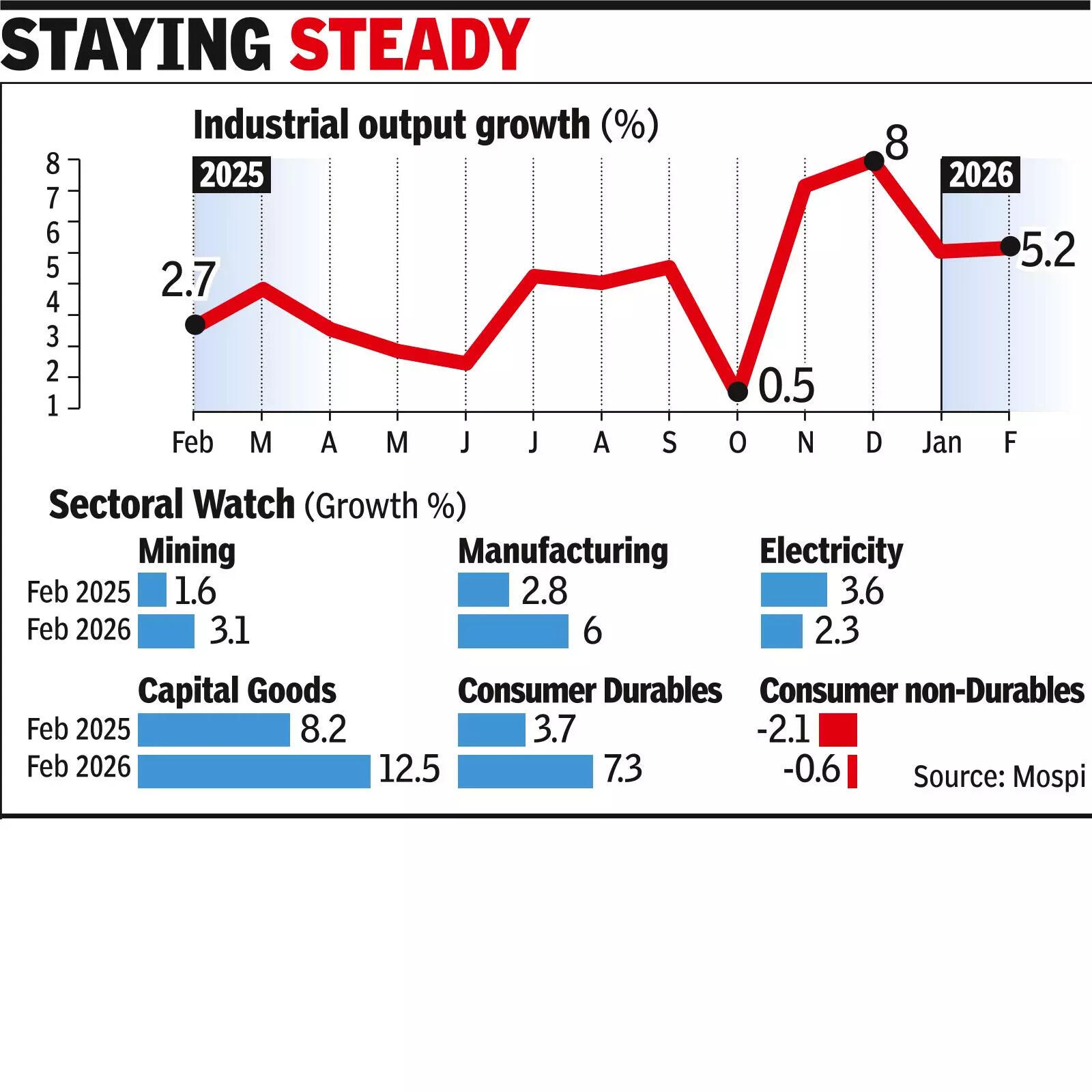
NEW DELHI : The country’s industrial output growth accelerated in Feb, led by a recovery in the manufacturing sector, but the West Asia conflict is expected to weigh heavily on the crucial sector in the months ahead.Data released by the National Statistics Office (NSO) on Monday showed the index of industrial production rose 5.2 per cent in Feb, a tad higher than the upwardly revised 5.1% in Jan. The manufacturing sector rose 6 per cent in Feb, higher than 2.8 per cent in Feb last year and above the 5.3 per cent in Jan.Within the manufacturing sector, 14 out of 23 industry groups grew in Feb compared to the same month a year earlier. The top three positive contributors in Feb were — manufacture of basic metals (13.2 per cent), manufacture of motor vehicles, trailers and semitrailers (14.9 per cent) and manufacture of machinery and equipment (10.2 per cent), according to the statistics office. The electricity and mining sectors remained sluggish, rising 2.3 per cent and 3.1 per cent respectively.Experts expect the West Asia conflict to hurt factory sector expansion. Aditi Nayar, chief economist, ICRA, said the agency expects IIP growth to decelerate to 3 per cent-4 per cent in March, amid the unfolding adverse impact of the West Asia crisis on some manufacturing segments, both through the price and availability channels, and weaker electricity performance in the month.

Oil markets have been sensitive to Donald Trump’s comments on the war. But are traders growing less responsive?
Source link
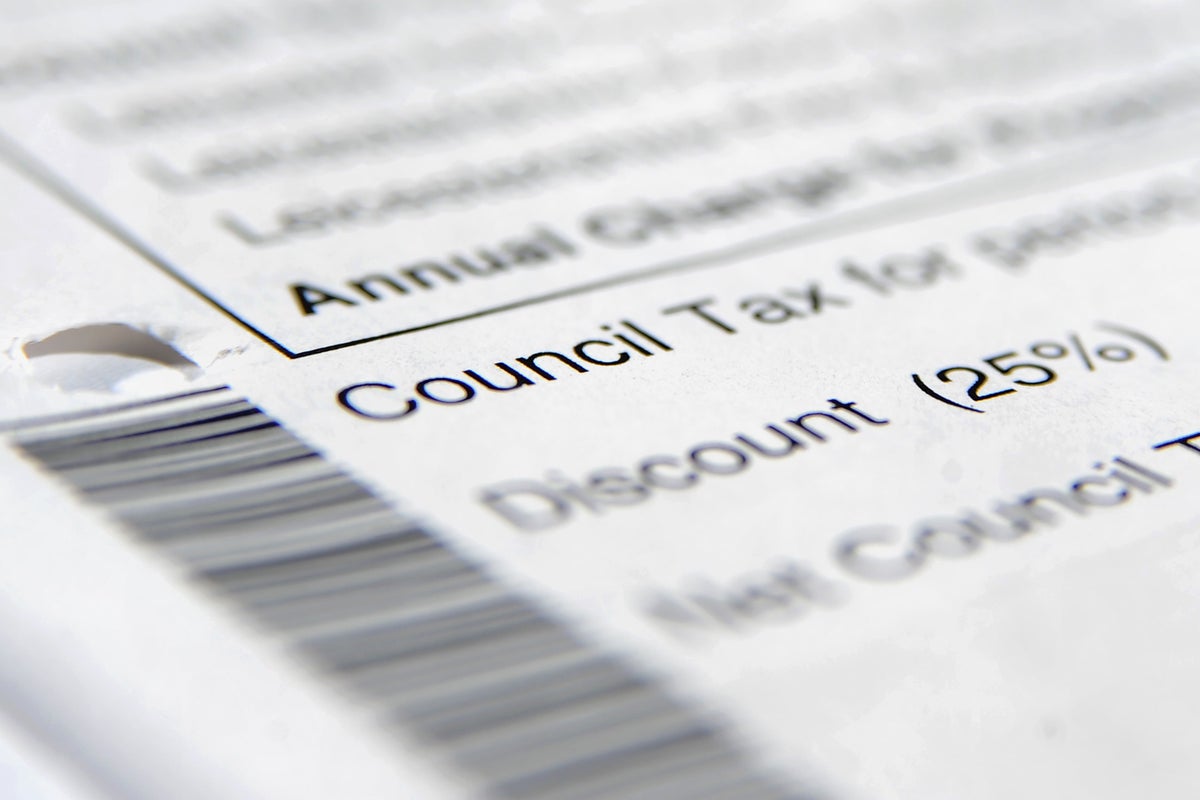
Households are facing near across-the-board increases in their bills as yet another “awful April” takes effect.
While energy bills are falling – for the time being at least – hikes to council tax, water, broadband and mobile phone costs are threatening to stretch many households to breaking point, charities have warned.
Across England, the average Band D council tax in 2026/27 will be £2,392 – an increase of £111 or 4.9% on 2025-26, according to the Ministry of Housing, Communities & Local Government.
The figures include all additional charges, including adult social care, parish precepts and costs levied by police, fire and regional authorities where appropriate.
It is the fourth year in a row that the England-wide increase has averaged around 5%.
Household water bills across England and Wales are to rise by an average of 5.4%, equating to £33 a year for the average household.
There is significant regional variation in bill increases, with Severn Trent customers seeing a 10% increase, Sutton and East Surrey imposing an 11% increase, Bristol Water a 12% rise and Affinity Water (central region) customers warned they have a 13% jump coming.
Around 2.5 million households are eligible for social tariffs, with savings of around 40%.
A host of broadband providers are hiking prices by almost £50 per year, with one in four customers (28%) free to leave and already paying between £7 and £9 a month more than in-contract customers.
Totally Money said “millions” of people are out of contract with their mobile phone provider, and so also free to leave and find a better deal – with some SIM only deals available for less than £5 a month.
In a sliver of good news, the price most households pay for energy will fall by 7% from April 1, driven by promised Government cuts to bills.
Ofgem’s price cap will drop from the current £1,758 to £1,641 – a reduction of £117 or around £10 a month for the average household using both electricity and gas.
However, the reduction is lower than the average £150 cut to bills pledged by the Chancellor in November, when she moved 75% of the cost of the renewables obligation from household bills onto general taxation and scrapped the energy company obligation (Eco) scheme.
And of increasing concern is the amount energy bills could rise by from July as a result of the Middle East conflict, with latest predictions suggesting this could be by well over £300 a year.
In the meantime, consumer groups have urged households to send in meter readings ahead of April 1 to ensure their energy usage is billed at the lowest possible rate, and investigate fixed rate deals.
TotallyMoney spokesman James McCaffrey said: “With around 22 million households on their supplier’s standard variable rate, most are paying the maximum allowed by the regulator.
“Check your current contract, and if you haven’t switched in the past year, it’s likely you’ll be free to leave – and you could save up to £917.”
He added: “One in four broadband customers are out of contract, paying up to £9 per month more than those in contract. To add salt to the wound, BT, EE, Plusnet and Virgin Media are all hiking broadband prices by £4 a month, Sky by £3, and Vodafone by £3.50 – adding nearly £50 more per year to bills.
“If you’re out of contract, then you’re free to leave and find a better deal. If you want to stay with your current provider, pick up your phone and haggle for a new deal.
“They won’t want to lose you to a competitor, and should offer you a better deal.”
Citizens Advice chief executive Dame Clare Moriarty said: “Many households never saw the back of the last cost-of-living crisis, with millions of people still unable to make ends meet.
“With key bills such as council tax and water rising from April and global instability threatening further price shocks, we’re concerned about those who have exhausted every option to keep pace.
“So far this year, we’re helping someone every 30 seconds with crisis support – that’s food bank referrals and charitable grants. And average debt owed is hitting record levels.
“Those struggling most need a lifeline. This should include better targeted energy bill support for people on low incomes, help with soaring rent costs, and support to help people get out of debt.”


Jennifer Lopez bids farewell to ‘Up All Night’ Las Vegas residency in style

Litter-Robot Promo Codes: $150 Off Bundles, $50 Off the Starter Bundle, and More

ITCPE Guangzhou 2026 to showcase next-gen embroidery innovations

-

 Politics7 days ago
Afghanistan announces release of detained US citizen
-

 Sports7 days ago
Broadcast industry CEO says consolidation is ‘essential’ to compete for NFL soaring media rights prices
-

 Entertainment7 days ago
UN warns migratory freshwater fish numbers are spiralling
-
 Business7 days ago
Property Play: Home flippers see smallest profits since the Great Recession, real estate data firm says
-

 Tech7 days ago
Can a Home Appliance Fix the Problem of Soft-Plastic Waste?
-
 Business7 days ago
Gold prices soar in Pakistan – SUCH TV
-

 Fashion7 days ago
ICE cotton slips on weaker crude, profit booking
-
 Business7 days ago
More women are entering wealth management, but few are in advisory roles, study finds