

Business
Govt approves Letter of Comfort for Rs1.23tr loan | The Express Tribune

ISLAMABAD:
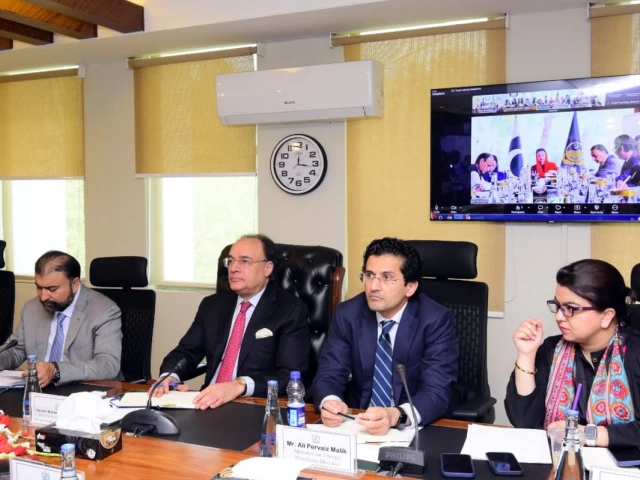
The government on Friday approved the issuance of a Letter of Comfort in favour of banks to meet the condition for disbursement of a loan of Rs1.23 trillion obtained for the settlement of circular debt, taking responsibility in case the cash-starved power sector fails to repay the debt.
In another decision, the Economic Coordination Committee (ECC) of the cabinet, which met under the chairmanship of Finance Minister Muhammad Aurangzeb, approved an arrangement for waiving Rs120 billion in late payment interest the Pakistan Atomic Energy Commission (PAEC) owed to its fuel suppliers. It also decided to pass on the financial obligation of Rs22 billion to gas consumers under the same arrangement.
The ECC approved the issuance of Rs659.6 billion worth of sovereign guarantees for circular debt financing of Rs1.225 trillion, according to an official statement. The guarantee is intended for the settlement of Power Holding Limited’s (PHL) debt and overdue payments to the independent power producers (IPPs).
Last month, the government and commercial banks signed financing and security agreements for taking Rs1.225 trillion loans for payment to power producers. Electricity consumers will pay the principal and the interest on loans through a surcharge of Rs3.23 per unit.
Due to the poor fiscal health of the power sector, the banks refused to lend the money and demanded the Letter of Comfort from the Ministry of Finance. An official handout stated that the “ECC authorised the Finance Division to issue a Letter of Comfort”.
Subsequently, Habib Bank Limited will accept the letter as satisfactory compliance before the first drawdown of circular debt financing.
The ECC approved the Memoranda of Understanding (MoUs) with PAEC and authorised the Central Power Purchasing Agency-Guarantee (CPPA-G) to execute negotiated settlement agreements (NSAs) based on the MoU signed for the restructuring of power purchase agreements.
The ECC authorised CPPA-G and PAEC to amend the relevant agreements and make any relevant changes to standardise such amendments. It also authorised PAEC to file tariff petitions with Nepra for new tariffs for five nuclear power plants based on debt adjustments among the parties.
However, some of the ECC members said those agreements did not help to reduce tariffs in a major way and prices were again set to increase on account of quarterly tariff adjustments and monthly fuel cost adjustments.
The ECC approved the waiver of Rs119.5 billion on account of late payment interest. As part of the agreement, it authorised CPPA-G to pay Rs89.5 billion to OGDCL through Uch Power Limited (UPL-I) and UPL-II from the circular debt financing facility, as a lump sum instead of 18 monthly instalments.
The government will issue a policy guideline to enable Ogra to incorporate the adjustment of Rs21.9 billion into the cost of RLNG supply.
The ECC agreed to shift Fatima Fertiliser, Agritech and Fauji Fertiliser Bin Qasim plants on the gas supply network of Mari Energies. Mari will provide 170 mmcfd of gas to these plants over the next two years from a new field that will be developed with an investment of $200 million.
With the decision, all the 10 fertiliser plants have been shifted to Mari Energies to ensure adequate and affordable supply of fertiliser.
The raw gas from Ghazij-Shawal facility will be delivered within Mari gas field. The respective fertiliser customers shall install facilities for gas processing and compression, injection and transportation in Sui companies’ network to their respective plant sites.
The gas price at the delivery point shall be equal to the applicable wellhead price as notified by Ogra from time to time. Fertiliser customers shall enter into bilateral gas sale and purchase agreements with Mari Energies.
Mari will have the flexibility to supply any volume that becomes available from any of the reservoirs to any of its customers including SNGPL/SSGCL, as “swing volume” on “as and when available basis” at the applicable gas price as notified by Ogra.
The committee approved a proposal of the Ministry of National Food Security for the reallocation of funds within the division. The approval allows transfer of resources from the IPC Division through a technical supplementary grant to support ongoing agricultural research initiatives.




GST collections: India’s net Goods and Services Tax (GST) collections increased to Rs 1.78 lakh crore in March 2026, marking a rise of 8.2% compared to the previous month, according to official figures released on Wednesday.Gross GST revenue for March stood at Rs 2 lakh crore, which is an 8.8% increase over the same month last year.Abhishek Jain, Indirect Tax Head & Partner, KPMG says, “GST collections continue to show steady 9% annual growth, supported by strong import activity this month and consistent compliance. While export refunds have eased this month but remain healthy overall for the year”Refunds during the month totalled Rs 0.22 lakh crore, up 13.8% on a year-on-year basis, which resulted in net GST collections of Rs 1.78 lakh crore.Domestic GST revenue reached Rs 1.46 lakh crore, registering a growth of 5.9%, while revenue from imports was recorded at Rs 0.54 lakh crore, rising sharply by 17.8% during the period.Post-settlement GST figures across states presented a varied trend. While industrially advanced states recorded strong growth, several others reported a decline.Maharashtra contributed the highest amount to the overall collections at Rs 0.13 lakh crore on a pre-settlement basis, followed by Karnataka and Gujarat.Among states showing an increase in post-settlement SGST collections were Himachal Pradesh, Punjab, Uttarakhand, Haryana, Rajasthan, Uttar Pradesh, Bihar, Gujarat, Maharashtra, Karnataka, Kerala, Tamil Nadu, Telangana and Andhra Pradesh, among others.On the other hand, states such as Jammu and Kashmir, Chandigarh, Delhi, Arunachal Pradesh, Meghalaya, Assam, West Bengal, Jharkhand, Odisha, Chhattisgarh and Madhya Pradesh, among others, registered a decline in post-settlement SGST revenues.
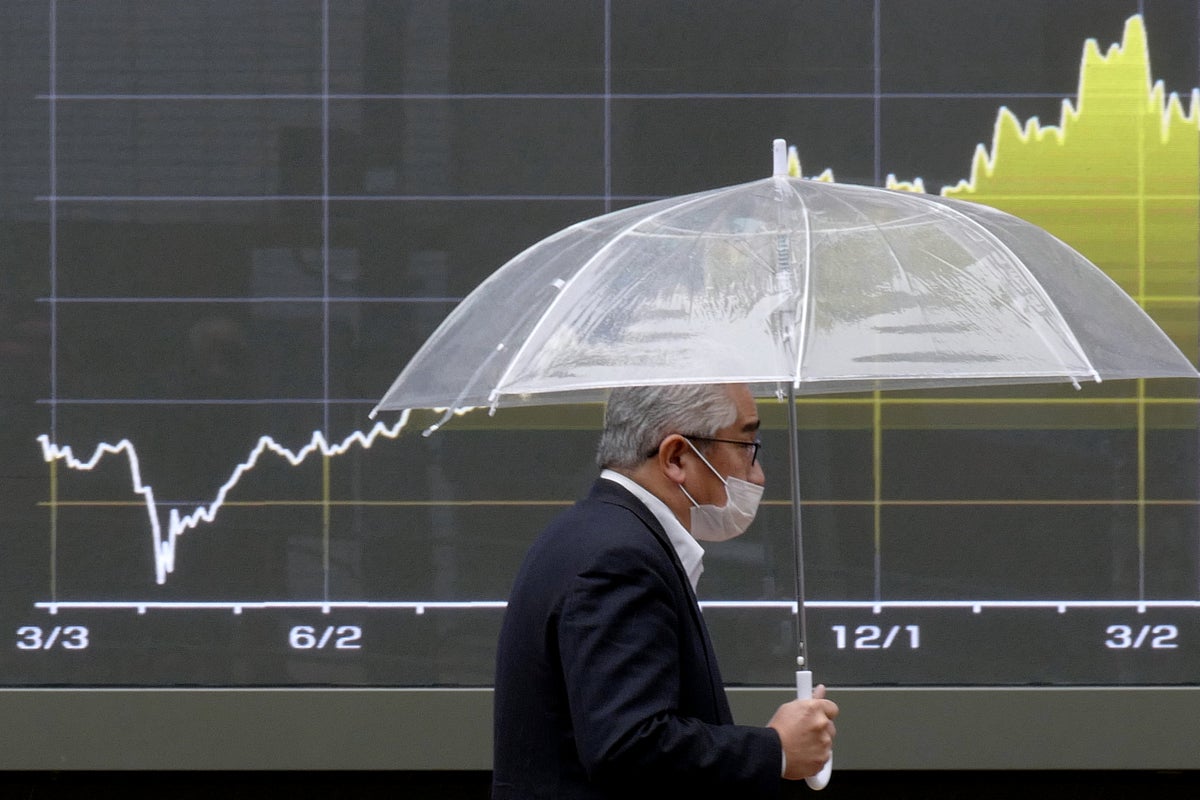
Business sentiment among major Japanese manufacturers rose from 16 to 17 in March, according to the Bank of Japan’s quarterly survey released on Wednesday.
The improvement in the so-called diffusion index in the closely watched “tankan” report, recorded for the fourth quarter straight, comes even as worries grow about Japan’s economic growth and oil supplies because of the US-Israeli war on Iran.
The survey is an indicator of companies foreseeing good conditions minus those feeling pessimistic.
The index for large non-manufacturers, such as the service sector, stood unchanged from the last tankan at 36.
Japan’s inflation has so far remained relatively moderate, but worries are growing about prices at the gas stands and other products. Investors and consumers alike are filled with uncertainty about how much longer the war may last and what US president Donald Trump might say next. Japan’s benchmark Nikkei 225 has gyrated wildly in recent weeks.
Analysts say the Bank of Japan may start to raise interest rates because of concerns about inflation, given the soaring energy costs and declining yen, two elements that greatly affect living costs for the average Japanese consumer.
Historically, Japan has benefited from a weak yen because of its giant exports, exemplified in autos and electronics. A weak yen raises the value of exports’ earnings when converted into yen.
But in recent years, a weak yen is working as a negative, as resource-poor Japan imports much of its energy, as well as other key products such as food and manufacturing components.
The US dollar has been soaring against the yen lately.
Japan’s central bank had a negative interest rate policy for years to fight deflation until it normalised policy in 2024. It kept the rate unchanged at 0.75 per cent in March. The next Bank of Japan monetary policy board meeting is set for April 27 and 28.

The price of Brent crude oil to be delivered in May rose by a record 64% in March as the conflict disrupted energy supplies.
Source link


China’s Anta Sports posts record $11.62 bn revenue in 2025
GST collections rise 8.2% in March 2026 to hit Rs 1.78 lakh crore – The Times of India

UK commits $1.25 mn to trade facilitation programme for 2026–29

Afghanistan announces release of detained US citizen

Property Play: Home flippers see smallest profits since the Great Recession, real estate data firm says

Broadcast industry CEO says consolidation is ‘essential’ to compete for NFL soaring media rights prices

-
 Politics1 week ago
Afghanistan announces release of detained US citizen
-
Business1 week ago
Property Play: Home flippers see smallest profits since the Great Recession, real estate data firm says
-
 Sports1 week ago
Broadcast industry CEO says consolidation is ‘essential’ to compete for NFL soaring media rights prices
-

 Entertainment1 week ago
UN warns migratory freshwater fish numbers are spiralling
-

 Tech1 week ago
Can a Home Appliance Fix the Problem of Soft-Plastic Waste?
-
 Business1 week ago
Gold prices soar in Pakistan – SUCH TV
-

 Fashion1 week ago
ICE cotton slips on weaker crude, profit booking
-
 Business1 week ago
More women are entering wealth management, but few are in advisory roles, study finds