

Business
Govt increases petrol tax to Rs161 per litre, sets new price at Rs459 per litre | The Express Tribune

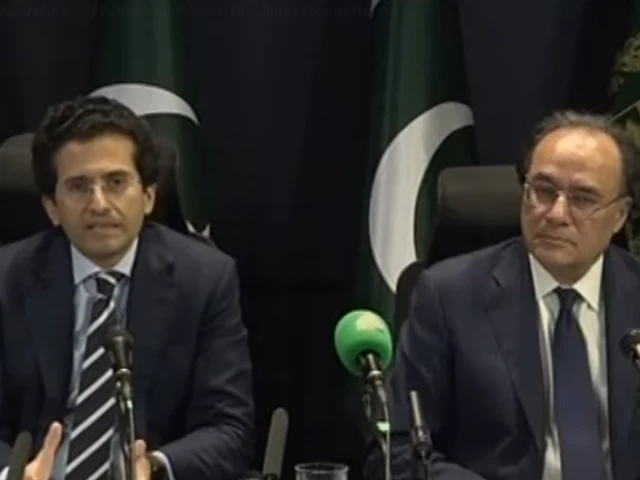
Petroleum Minister Ali Pervaiz Malik and Finance Minister Muhammad Aurangzeb address a press conference in Islamabad on Thursday. SCREENGRAB
The government on Thursday further increased petrol price by Rs137 per litre, or by 43%, to history’s highest ever level of Rs458.4 after Prime Minister Shehbaz Sharif decided to impose more taxes on consumers.
The Rs458.4 per litre new price of petrol is also far higher than the increase in the international market, as PM Shehbaz decided to increase the petroleum levy to a record Rs160.61 per litre on petrol. With one stroke of a pen, the premier increased the petroleum levy on petrol from Rs106 to Rs161 per litre — an increase of Rs55 in taxes.
His government also increased the high-speed diesel price to Pakistan’s highest level of Rs520.35 per litre — an increase of Rs185 per litre or 55%. But the prime minister abolished the petroleum levy on high-speed diesel and decided to retain Rs2.5 per litre carbon levy in addition to all import taxes.
The government increased the prices after it failed to convince the International Monetary Fund (IMF) to allow it to give more subsidies. The IMF capped the maximum subsidies on fuel at Rs152 billion.
The failure to convince the IMF also underscores that PM Shehbaz remained unable to leverage his relations with United States President Donald Trump in convincing the IMF to allow the country to absorb the price shock.
It is also the failure of the Finance Minister Muhammad Aurangzeb and his ministry, which could not convince the IMF and failed to meet the tax targets. Failure to meet tax targets consumed the additional fiscal space available in the budget.
However, the most shocking action of the government was to increase the petroleum levy rate to Rs161 per litre on petrol to raise additional funds for cross-subsidising the diesel prices. The government outsourced the state’s core function to protect its citizens to the petrol consumers.
It was the second major increase in the fuel prices in less than a month after PM Shehbaz increased the diesel and petrol prices by Rs55 per litre or 20%. The cumulative increase in the petrol price within a month stands at 63%, and that of the high-speed diesel at 75%.
Petroleum Minister Ali Pervaiz Malik and Aurangzeb announced the new rates in a pre-recorded video statement. The prime minister could not face the people, and unlike the last two occasions when he addressed the nation to tell them that he was not increasing the prices, this time he sent the two federal ministers to convey the message.
The petroleum minister said that in the past week, the petrol prices further increased by 6.5% to $136.4, and high-speed diesel by 20% to $285 in the international market. He announced the prices a day before the regular increase to avoid hoarding and running to the petrol stations.
The Express Tribune reported today that the government assured the IMF that it stood ready to increase the fuel prices. It was one of the poorest negotiated staff-level agreements, where the government pretended before the IMF that everything was normal with the economy despite the worst-ever fuel crisis since 1973.
The political and bureaucratic failures will now hurt every household at a time when poverty in Pakistan is at 11 years’ highest level, income inequality at 27 years highest level and unemployment at 21 years’ highest level.
Regional tensions escalated sharply after the US and Israeli attacks on Iran, killing thousands. Iran, in retaliation, has closed the Strait of Hormuz.
Kerosene oil price has been increased by Rs34 per litre to Rs468, while light diesel oil price has been increased by Rs30 to Rs395 per litre.
The global oil prices have increased massively amid the closure of some major oil and gas fields due to Iran’s decision to hurt American interests in the region and close the Strait of Hormuz.
In June last year, the IMF had asked Pakistan to set aside about Rs390 billion for contingency needs. The money was set aside for unforeseen events such as war and natural disasters, which the government did not use and instead put more burden on the users of petrol and high-speed diesel.
The government did provide Rs129 billion subsidy during the past three weeks by deducting the salaries of employees and slashing the Public Sector Development Programme.
The cost of the war will be paid by the ordinary consumers, as the government functionaries and the bureaucrats get a free transport facility. Despite so-called austerity measures, the federal government has recently bought new cars for its top bureaucrats.
PM Shehbaz had announced austerity measures, but his cabinet ministers did not change their travelling patterns. The ministers’ vehicles are still escorted by additional security vehicles even in the red zone, which is supposedly the most protected area of Pakistan.
These ministers go to the Prime Minister’s House from their offices with their full escorts.
The Federal Bureau of Revenue’s administration is also using heavy-duty cars in breach of the transportation policy and the Punjab government recently bent the policy for its top provincial bureaucrats.






The order does not affect generic medicines, the most commonly used in the US.
Source link

Los Angeles Dodgers pitcher Yoshinobu Yamamoto and actor and musician Donald Glover greet Nintendo’s Yoshi after the ceremonial first pitch before a baseball game against the Cleveland Guardians at Dodger Stadium in Los Angeles, March 31, 2026.
Ryan Sirius Sun | Getty Images Sport | Getty Images
A group of regional sports networks is set to wind down, marking the demise of a once-lucrative business and leaving the fate of local baseball, basketball and hockey broadcasts in the balance — even as live sports command the highest TV ratings.
RSNs have felt arguably the greatest pressure from the losses that plague the pay TV bundle as consumers switch to streaming. Now, the model is in rapid decline.
Last week, as the 2026 MLB season got underway, the league announced it was taking over media distribution for 14 teams. In large part, this was the result of the inevitable wind down of Main Street Sports — formerly Fox Sports networks, which have been through different owners since 2019 and several name changes since 2021.
Main Street emerged from bankruptcy protection in late 2024, and despite touting subscriber growth as recently as last spring, the operator faced another liquidity crunch earlier this year when MLB rights payments were due, according to people familiar with the matter, who asked not to be named because they were not authorized to speak publicly.
Main Street owned roughly 15 channels, but at one point aired 30 MLB, NHL and NBA teams after exiting bankruptcy.
Though the company was in sale talks earlier this year with the likes of streaming platforms DAZN and Fubo, the discussions never amounted to a deal, according to the people.
Rumors of liquidation circulated — in the middle of the NBA and NHL seasons — but Main Street has so far been able to stave that off. Instead, MLB teams went their separate ways at the beginning of the season, with some shifting to MLB distribution and some, like the Los Angeles Angels and Atlanta Braves, taking over the production and distribution of their own regional channels.
The NBA and NHL regular seasons are expected to be completed through their current Main Street-owned networks — now branded as FanDuel Sports networks. But after the NBA regular season and the first round of the NHL playoffs, Main Street plans to begin an earnest end-of-business process, one of the people said.
The future for the remaining NBA and NHL teams are yet to be determined, although some are likely to find homes with broadcast station owners that have been acquiring local rights, such as Scripps, according to a person close to the negotiations, who asked not to be named because the matter is confidential.
And the end of the RSN model doesn’t stop there.
The fees long paid by the networks to host games have propped up professional sports leagues for a long time — especially MLB, known to have some of the most expensive rights fees and the most local games. The upending of the RSN model is sure to send ripple effects throughout these teams.
Those that have already exited the RSN model have sought refuge in direct-to-consumer streaming apps, which are pretty expensive monthly or annual costs for fans, and through agreements with broadcast station owners, which argue they offer the widest reach of any platform for sporting events.
There’s also been an increased emphasis on advertising, but while that revenue stream is helpful when it comes to the NBA and NHL, it doesn’t go as far to support MLB, according to industry insiders.
There’s also been little, if any, crossover for MLB teams to the affiliate networks, once again because of the expense and number of games, according to people familiar with the matter, who asked not to be named because they were not authorized to speak publicly.
Going it alone
While not every channel is made equal, even those airing games for big-market teams are facing the same pressures as the Main Street-owned channels — just not as severely.
Last year MSG Network, which airs games for the NBA’s New York Knicks as well as the NHL’s New York Rangers, Buffalo Sabres and New Jersey Devils, was facing financial turmoil as it needed to refinance a whopping debt load and dealt with a carriage dispute that resulted in a blackout for nearly two months. Bankruptcy was reportedly on the table until the James Dolan-owned company refinanced its debt.
Also in the New York-area, SNY, the regional home of the New York Mets, had been exploring its options in the past year, according to people familiar with the matter, who asked not to be named because the discussions are private.
The network had earlier put itself up for sale, some of the people said. While no deal was ever reached, sources say Mets owner Steve Cohen was part of the discussions at one point as a potential acquirer.
The network, which is majority backed by former Mets owners the Wilpon family, has also counted Comcast and Charter Communications as investors for some time. But in recent months, Comcast sold its stake to Charter for an undisclosed amount, according to people familiar with the matter, who asked not to be named because the deal is confidential.
Comcast owns a handful of networks but has been slowly inching away from the RSN world.
Comcast has also been one of the toughest distributors for RSNs to deal with recently, pushing to move the networks into the tiered model. That would mean subscribers would opt in for the local channels rather than automatically receiving them — and automatically paying for them.
This had been a sticking point in Comcast’s carriage negotiations last year with the YES Network — a top-tier RSN with some of the highest fees and biggest audiences, as it airs New York Yankees and Brooklyn Nets games.
Comcast wanted to shift YES to a tiered model; YES refused and argued that the Mets’ SNY is spared from such a contract change.
Comcast has a long-term carriage deal with SNY that protects it from being tiered through at least 2030, according to people familiar with the deal, who asked not to be named because it is an internal matter.
Industry insiders surmised that Comcast’s exodus from SNY’s ownership structure freed it from this deal. But people with firsthand knowledge of the deal, who asked not to be named because the matter is private, say nothing has changed on that front. Comcast won’t be returning to the table with YES anytime soon, some of the people said.
It’s not all bad news: Independent RSNs with big-market teams are usually on firmer footing. There’s the Los Angeles Dodgers with their notoriously high-priced media rights deal that Charter inherited from its Time Warner Cable deal.
And then there’s the New England Sports Network, or NESN, which has the benefit of airing some local games to New England’s rabid fan base, as well as Pittsburgh’s.
The network has been quick to shake things up. NESN was the first RSN to offer a streaming service, which has offered deals that include Red Sox tickets. Plus, its recently installed CEO, David Wisnia, credits himself as an “outsider” who is “taking a fresh perspective on everything.”
NESN has changed its cost structure and has sought new revenue opportunities, Wisnia said in an interview.
“It’s reallocating resources and getting out of business that we don’t want to be in,” he said.
NESN has also revamped its look and expanded programming on its channels, which are usually filled with throwback matchups and essentially dead air outside of games.
In recent weeks, NESN has been running victory laps that it has broken records for growth on streaming subscription and engagement. The late-season playoff push by the NHL’s Boston Bruins was a boost, as was the beginning of the Boston Red Sox’s 2026 season.
Correction: This story has been revised to reflect that the Los Angeles Angels are one of the MLB teams taking over the production and distribution of their own regional channel. A previous version misstated the name of the team.
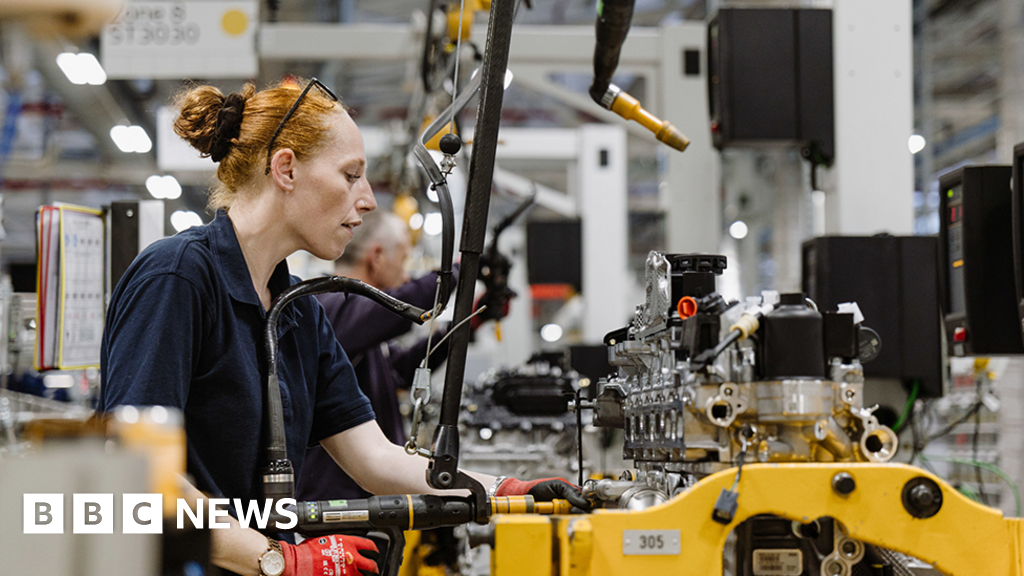
Work at plants in Solihull, Halewood and outside Wolverhampton restarted in October.
Source link


Dan Hurley credits ‘Jersey boss lady’ wife Andrea for keeping UConn out of trouble in wild finish vs Duke
Pharmaceuticals face 100% tariffs in US – unless they have a deal

‘Uncanny Valley’: Iran’s Threats on US Tech, Trump’s Plans for Midterms, and Polymarket’s Pop-up Flop

-
 Fashion1 week ago
Ho Chi Minh City bizs adjust production plans, seek new supply chains
-

 Fashion1 week ago
Japan’s apparel imports rise 22.9% to $2 bn in February 2026
-

 Fashion1 week ago
India’s Gen Z to drive half of fashion market by 2030: Reedseer
-

 Entertainment1 week ago
Andrew holds breath as King Charles plans bombshell move amid probe
-
 Business6 days ago
How do you spot a fake online review?
-
 Business1 week ago
Co-op boss quits after ‘toxic culture’ claims reported by BBC
-

 Entertainment6 days ago
Lee Sang-bo dies at 45: Funeral details revealed
-

 Sports6 days ago
Illinois defense gets tough, ousts Houston to reach Elite Eight